
Navigating Crypto News

CoinFeather
Navigating Crypto News

Quick market read from this story
Political action committee Think Big PAC is leveraging Sam Bankman-Fried's past donations to attack New York congressional candidate Alex Bores, highlighting the ongoing reputational risks associated with past crypto industry funding.
The attack on Bores, who has focused on AI safety legislation, suggests a strategic use of past crypto entanglements to influence political discourse, potentially impacting how candidates engage with or distance themselves from the crypto sector.
This development underscores the persistent negative association of FTX's collapse with political figures, indicating that past crypto-related campaign finance can remain a potent tool for political opposition.
Deep Dive
A political action committee, Think Big PAC, with ties to tech and crypto donors, is targeting New York congressional candidate Alex Bores by highlighting his past financial support from the former head of the failed FTX exchange, Sam Bankman-Fried. A mailer distributed by the PAC informed voters that Bores received over $100,000 from Bankman-Fried's network, alleging that "Bankman-Fried’s buddies are bankrolling Bores for Congress." The PAC criticizes Bores' campaign financing and suggests he is out of step with constituents.
This attack comes as Bores is competing in a crowded Democratic primary for New York's 12th Congressional District, a race to succeed Rep. Jerry Nadler. The primary has attracted several prominent candidates, including Jack Schlossberg and George Conway. The district is considered a deep-blue Manhattan seat, making the primary one of the most closely watched in the 2026 cycle.
A spokesperson for Think Big PAC stated that Bores received over $100,000 from Sam Bankman-Fried's political network, a figure confirmed through state elections filings. The PAC supports candidates aligned with pro-technology policies and opposes those seen as hostile to artificial intelligence innovation. Bores, a first-term assemblymember, has recently introduced legislation focused on AI safety and accountability at the state level, aiming to establish guardrails for advanced AI systems.
The mailer references Sam Bankman-Fried's conviction on fraud charges related to the collapse of FTX. In the 2022 election cycle, Bankman-Fried and other FTX executives were significant political donors. A CoinDesk analysis indicated that 196 members of Congress received campaign support from Bankman-Fried or affiliated executives. Bores was noted as one of only two state-level candidates in New York to receive assistance from an SBF-affiliated PAC during that period.
Think Big PAC has previously spent hundreds of thousands of dollars on ads targeting Bores, including spots criticizing his past work at Palantir. Bores's campaign had previously responded to these ads by sending a cease-and-desist letter, accusing the PAC of making "false and defamatory statements." Bores's campaign has not yet responded to CoinDesk's request for comment regarding the latest mailer.
Source, catalyst, and sector overlap from the latest feed.
A compromise on stablecoin yield in the Digital Asset Market Clarity Act could advance the bill toward a Senate hearing, signaling potential regulatory progress for the crypto industry. The agreement on stablecoin yield, which reportedly bars rewards on passive balances, addresses banking concerns and removes a key hurdle for the market structure legislation. While the stablecoin provision is a significant step, unresolved issues regarding DeFi and illicit finance remain, indicating that the legislative path for the Clarity Act is still complex. The potential for a Senate Banking Committee hearing late next month suggests a possible May resolution for the Clarity Act, a development that could provide much-needed regulatory clarity.
Nevada's temporary ban on Kalshi's prediction market contracts highlights ongoing regulatory battles that could impact the broader market for event-based contracts. The legal dispute over jurisdiction between state regulators and the CFTC introduces uncertainty for prediction market platforms and their users. While this is a state-level regulatory action, the involvement of the CFTC suggests potential for broader federal policy shifts impacting decentralized finance and derivatives.
The SEC's approval of Nasdaq's tokenized securities framework signifies a major integration of blockchain technology into U.S. equity markets, primarily for post-trade settlement and record-keeping. While enabling potential benefits like near-instant settlement and 24/7 trading, the current model preserves existing intermediaries and traditional finance structures, limiting transformational efficiency gains. This development indicates a cautious approach by U.S. regulators, prioritizing integration within established systems over radical market restructuring, which may lag behind more progressive international frameworks. The involvement of Kraken suggests a strategy to leverage crypto infrastructure for global distribution of tokenized assets, potentially expanding access for international investors.
Rising inflation fears and geopolitical tensions are driving a global bond market selloff, with traders now pricing in a potential Fed rate hike in April, which could pressure risk assets like Bitcoin. Bitcoin is exhibiting 'canary in the macro coal mine' behavior, potentially pricing in a recession while traditional assets have not, suggesting it may be ahead of the curve in anticipating broader economic downturns. Despite macroeconomic headwinds, Bitcoin remains a strong performer relative to traditional markets and gold since the recent geopolitical escalation, indicating resilience or a flight to perceived digital scarcity.
CoinDesk PitchFest at Consensus events provides early-stage Web3 founders with crucial structured access to influential investors and decision-makers, acting as a significant accelerator for promising projects. The event has a track record of showcasing companies that later achieve substantial milestones, such as securing funding rounds or pivoting successfully, indicating its value as an early validation and networking platform. The introduction of a 'side mission' at Consensus Miami focusing on agentic commerce and one-person startups highlights a potential shift towards more autonomous and rapidly deployable Web3 applications, signaling a new frontier for innovation. While PitchFest itself does not guarantee funding, its role in facilitating direct engagement with key industry players offers founders a tangible pathway to gain credibility and accelerate their growth trajectory in a crowded market.
A guilty plea in an $8 million AI music royalty fraud case highlights the potential for AI-generated content to be exploited for illicit financial gain. The case underscores the challenges streaming platforms face in detecting fraudulent activity and protecting legitimate artists from revenue diversion. This development serves as a cautionary tale for the broader creative industries regarding the misuse of AI tools and the need for robust verification mechanisms.
OpenAI's reported consolidation of ChatGPT, Codex, and Atlas into a single 'superapp' signals a strategic pivot to address competitive pressure from rivals like Anthropic and internal inefficiencies. The move towards a unified desktop experience, focusing on agentic AI workflows, indicates a potential shift in how users interact with AI tools, prioritizing integrated productivity over fragmented applications. This strategic realignment suggests OpenAI is prioritizing revenue-generating enterprise and developer segments, potentially impacting the adoption and development trajectory of its standalone products like Atlas and Sora.
Bitcoin is demonstrating significant resilience, holding a structural floor around $60,000 despite traditional market headwinds like a rising U.S. dollar and bond yields, suggesting a potential divergence from risk assets. Fidelity's analysis indicates that Bitcoin and Ethereum's risk-adjusted returns are improving while traditional assets weaken, hinting at a market anticipating a paradigm shift beyond short-term technicals. The market may be preemptively pricing in future fiscal policy shifts, potentially driven by AI-induced labor displacement and the adoption of MMT and UBI, which could bolster Bitcoin's value proposition as a hedge against currency debasement.
Super Micro Computer (SMCI) shares experienced a significant decline of over 25% following charges against its co-founder and executives for an alleged $2.5 billion AI chip smuggling scheme to China. While SMCI itself was not charged, the indictment raises concerns about supply chain integrity and export control compliance, potentially impacting investor confidence in companies heavily reliant on AI hardware and international distribution. The market reaction highlights the sensitivity to governance and compliance issues within the AI hardware sector, especially given SMCI's prior history of accounting scrutiny, suggesting a heightened risk premium for such developments.
The White House's proposed AI framework aims to establish national standards while leveraging existing agencies, potentially streamlining regulatory approaches for AI development and deployment. By seeking to preempt state-level AI laws, the administration intends to create a more unified regulatory environment, which could reduce compliance burdens for companies operating across different jurisdictions. The framework's focus on child safety, copyright, and infrastructure development indicates potential future policy shifts that could impact AI companies and related technology infrastructure investments. While the proposal aims for a national approach, criticisms suggest internal contradictions and a potential bias towards Big Tech, implying that legislative passage and ultimate impact remain uncertain.
Live Feed
Loading the broader stream in the same flow as the homepage feed.

UK fiscal pressures and rising inflation are eroding the real returns on cash and government bonds, potentially shifting saver behavior towards alternative assets like Bitcoin. The convergence of high government borrowing, persistent inflation, and upcoming mortgage resets in the UK creates a narrative where Bitcoin could be perceived as a hedge against sovereign monetary policy failures. While Bitcoin remains sensitive to liquidity stress, the UK's visible household financial pressures may accelerate the discussion around Bitcoin as an 'opt-out' from traditional financial system risks. Increased crypto awareness and a desire for regulatory clarity in the UK suggest a receptive environment for alternative assets if traditional financial instruments continue to underperform inflation.

Bitcoin's failure to hold above $70,000, coupled with a potential bearish wedge pattern formation, suggests a near-term downside risk towards $52.5K if the lower boundary breaks. Rising inflation concerns, driven by higher crude oil prices and geopolitical tensions, are negatively impacting investor sentiment and mirroring weakness seen in traditional stock markets. Market expectations have shifted dramatically, with a 50% chance of a US Fed rate hike by year-end, a stark contrast to earlier predictions of rate cuts, indicating a tightening monetary policy environment. The unwinding of short gamma at the $75K level and the loss of momentum post-breakout suggest a return to range-bound conditions for Bitcoin, with immediate upside potential limited.
Despite declining volatility and price stabilization around $70,000, traders are exhibiting significant fear by paying substantial premiums for downside protection, a sentiment historically associated with market bottoms. The put/call ratio reaching levels not seen since 2021 indicates an unusually strong demand for hedging relative to bullish positioning, suggesting a potential shift in market sentiment if this fear subsides. Slowing transfers from long-term holders suggest conviction among existing investors, which, combined with high demand for puts, could signal an impending price recovery as fear-driven hedging unwinds.

Despite modest weekly gains for some altcoins like XRP and ETH, collapsing trading volumes across major exchanges suggest a lack of conviction and potential for further downside. The sharp mid-week fades and subsequent price pullbacks for ETH, SOL, and HYPE indicate that recent rallies may be unsustainable without a significant increase in trading activity. Historical data shows that extreme volume contractions at price lows can precede recoveries, but the current macro environment and lack of retail participation temper immediate bullish expectations. While XRP showed relative resilience, the overall altcoin market faces headwinds from underperformance against Bitcoin and unfavorable macroeconomic conditions, warranting a cautious outlook.

Bitcoin's resilience amidst a significant gold sell-off challenges its traditional role as a safe-haven asset, suggesting a potential shift in investor perception towards digital gold. The divergence between Bitcoin's stable performance and gold's sharp decline, with gold experiencing its worst weekly drop since 1983, highlights Bitcoin's increasing decoupling from traditional safe-haven assets. Despite Bitcoin's relative strength, it remains significantly down from its all-time high, indicating that while it may be outperforming gold in the short term, it still has substantial ground to cover to fully reclaim its previous valuation peaks.

Nevada's temporary ban on Kalshi highlights a significant regulatory battleground for prediction markets, potentially impacting their accessibility and operational legality across other states. The ruling suggests a judicial leaning towards state-level regulation of prediction markets as unlicensed gambling, despite CFTC's differing stance, creating uncertainty for platforms like Kalshi and Polymarket. While Kalshi is valued at $22 billion, this regulatory setback in Nevada, the first state to issue such a ban, could signal increased scrutiny and potential future restrictions impacting its business model.

The emergence of 'Ghostblade' malware targeting iOS devices highlights an evolving threat landscape where sophisticated tools are being developed to steal private keys and user data. While overall crypto hack losses decreased in February, the pivot towards phishing and human error exploitation, exemplified by malware like Ghostblade, indicates a persistent and adaptable threat to user security. The stealthy nature of Ghostblade, including its ability to delete crash reports and operate intermittently, poses a significant detection challenge for users and security platforms, underscoring the need for heightened vigilance.

Despite recent market turbulence, a significant majority of institutional investors plan to increase their digital asset allocations, signaling sustained demand for regulated crypto investment vehicles. The expansion of regulated stablecoin products, such as retail USDC lending in Japan and gold-linked yield vaults, indicates a growing trend towards integrating crypto with traditional financial instruments. Abra's planned Nasdaq listing via SPAC highlights continued efforts by crypto firms to access public capital markets, suggesting a path for institutional adoption despite regulatory uncertainties. The increasing interest in tokenized assets and regulated ETPs by institutions points to a maturing market focused on compliance and structured investment pathways.

Bitcoin miner revenue has halved since the bull market peak, indicating significant financial stress that could lead to capitulation and increased selling pressure on BTC. The weakening hash rate post-halving, coupled with declining miner revenue, suggests that less efficient mining operations are shutting down, a classic signal of sector consolidation. The concentration of hash rate from unknown pools raises concerns about network transparency and censorship resistance, a structural issue that could impact long-term confidence in Bitcoin. While miners are resilient, the current revenue compression and lack of easy solutions like immediate hardware upgrades point to a prolonged period of stress, potentially affecting BTC's price stability in the near to medium term.

Ledger's strategic expansion into the US with a new CFO and NYC office signals a strong push for institutional business and potential future public market readiness. The appointment of a former Circle executive as CFO, coupled with a multi-million dollar investment in US operations, indicates Ledger's commitment to scaling its enterprise solutions and custody services. Growing demand from traditional financial entities for secure digital asset infrastructure, as cited by Ledger, suggests a maturing market and increased institutional adoption of crypto services.
Despite a significant increase in XRP's daily transactions nearing 3 million, its price has not mirrored this on-chain activity, suggesting that retail usage alone is insufficient for substantial price appreciation. The divergence between XRP's network adoption and price is attributed to its current role not yet being a 'liquidity bridge at scale,' with sustained utility demand contingent on institutional adoption and working capital utilization. Evernorth's $1 billion plan to institutionalize XRP and its upcoming Nasdaq listing via SPAC merger could provide the necessary catalyst for institutional demand, potentially driving future price performance.

Rising mortgage rates and gas prices are creating a household inflation shock that is impacting consumer sentiment and pushing up inflation expectations, leading to tighter financial conditions. The shift in macro conditions is directly affecting Bitcoin via spot ETF outflows, as investors treat BTC as a higher-beta risk asset sensitive to rising yields and reduced risk appetite. While Bitcoin's long-term scarcity narrative remains, its short-term price action is increasingly dictated by traditional market forces like interest rates and risk sentiment, similar to equities. The market is closely watching upcoming economic data and geopolitical developments to determine if the current inflationary pressures will persist, potentially leading to further Bitcoin repricing or a recovery if energy shocks subside.

Ether's net taker volume has reached a three-year high, historically signaling a potential market bottoming phase. Despite strong on-chain buy signals, muted price action and analyst concerns about buyer conviction suggest ETH may need to hold above $2,000 to avoid further downside. A break below $2,000 could trigger significant liquidations, targeting lower liquidity zones around $1,905 and $1,976.
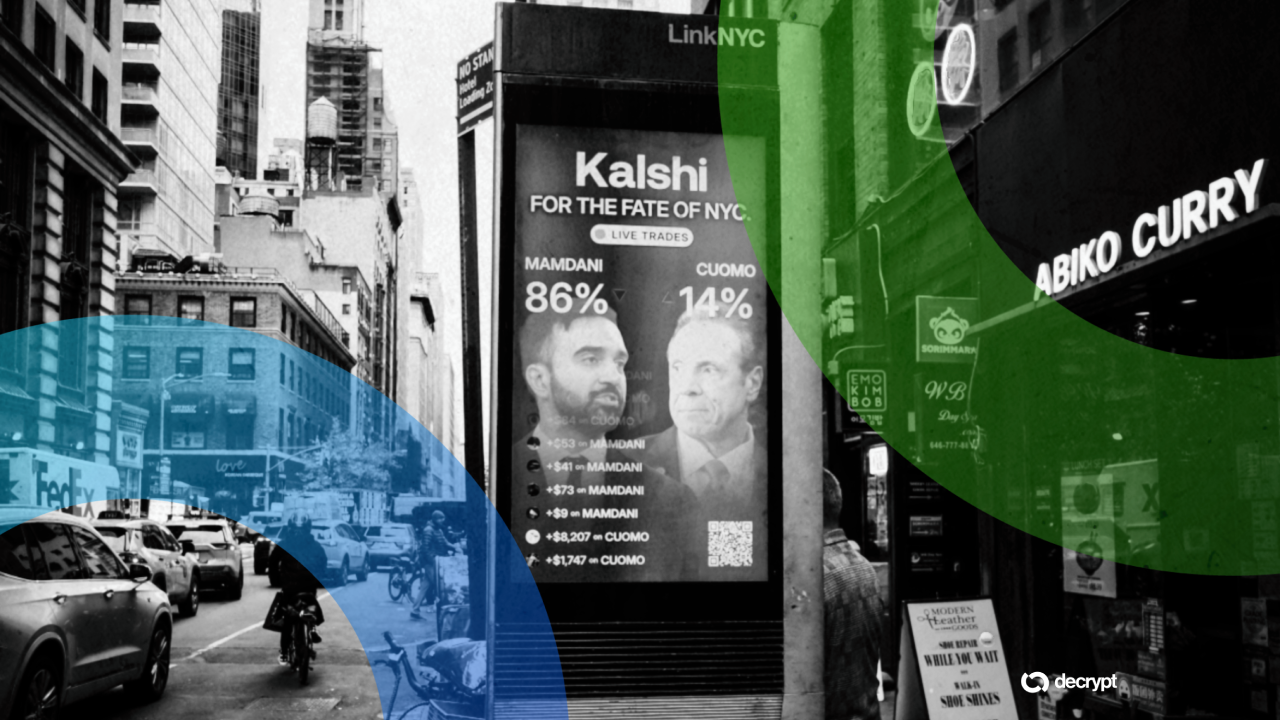
Kalshi's rapid valuation increase from $11 billion to $22 billion in three months, driven by significant funding rounds, signals strong investor confidence in the prediction market sector. The successful funding rounds, despite past regulatory hurdles with election contracts, indicate a maturing prediction market infrastructure and potential for broader adoption. The substantial capital inflow into Kalshi and its competitor Polymarket highlights a growing trend and potential for significant growth in the prediction market space, attracting institutional interest.
Elevated Brent crude prices above $110 persist due to ongoing geopolitical risks and supply threats, indicating a sustained risk premium that traders are factoring into market expectations. The market's pricing of continued turbulence, evidenced by aggressive producer hedging and buyer demand for barrels, suggests that the current high-price environment for oil may extend beyond short-term fluctuations. Sustained high energy costs pose a significant macroeconomic challenge, potentially fueling sticky inflation that complicates central bank policy and negatively impacts broader market sentiment, leading to stock market wobbles and rising bond yields. The persistent premium on oil prices, driven by fears of supply disruptions and the Strait of Hormuz closure, signals a structural concern for global energy security that could influence inflation and interest rate outlooks.
Signal context only. Validate with price action, liquidity, and risk limits before taking a position.
