
Navigating Crypto News

CoinFeather
Navigating Crypto News
Source, catalyst, and sector overlap from the latest feed.
Ledger's significant multi-million dollar expansion into New York City, including hiring a new CFO from Circle, signals a strategic focus on capturing institutional demand for secure digital asset infrastructure. The establishment of a New York hub positions Ledger to directly engage with traditional finance players, potentially accelerating the adoption of its enterprise solutions like Multisig and Tradelink for digital asset governance and trading. By emphasizing its evolution into an 'AI-accelerated security company' and highlighting its role in securing stablecoins and hardware devices, Ledger aims to solidify its foundational infrastructure position for broader institutional digital asset integration.
Live Feed
Loading the broader stream in the same flow as the homepage feed.

Traders underestimating Middle East conflict's economic impact may face a "rude awakening" as sustained high oil prices threaten stagflation. Persistent oil prices above $100 per barrel could lead to higher inflation and delay anticipated interest rate cuts, negatively impacting risk assets like crypto. The Federal Reserve acknowledges the uncertainty of Middle East conflict effects on inflation, suggesting a prolonged period of elevated energy prices could force a hawkish stance, dampening crypto market rally hopes. Disruptions to oil production infrastructure, even if the Strait of Hormuz reopens, will take months to repair, indicating sustained inflationary pressure and potential for a prolonged economic downturn.

The near-complete depletion of the Federal Reserve's overnight reverse repo facility (ON RRP) removes a critical passive liquidity buffer, implying that future market shocks may transmit more directly to reserves and potentially pressure risk assets like Bitcoin without automatic cushioning. Bitcoin's recent price action and ETF outflows, coinciding with a tightening macro backdrop and reduced Fed liquidity, suggest increased sensitivity to interest rate movements and broader liquidity conditions, shifting its trading correlation more towards traditional macro factors. While the Fed has shifted towards active reserve management, the exhaustion of the domestic ON RRP pool means that market participants must now closely monitor Treasury cash balance swings, quarter-end funding pressures, and ETF flows for signs of stress, as the passive support mechanism is largely gone.
The commentary suggests RLUSD acts as an on-ramp, enhancing XRP's utility by facilitating entry into the ecosystem rather than competing with it. Institutional sentiment, with 74% of finance leaders seeing stablecoins improve cash flow, supports the view that stablecoins like RLUSD can drive adoption and liquidity for assets like XRP. Evernorth's CEO positions XRP as a crucial liquidity engine, implying that increased stablecoin usage will directly benefit XRP's role in facilitating value transfer. The narrative framing RLUSD as a gateway and XRP as the liquidity provider suggests a complementary ecosystem strategy that could boost overall network activity.
While a Federal Reserve rate hike scenario is considered unlikely by most economists, the outlined conditions involving sustained energy price shocks and specific economic indicators could trigger short-term selling pressure on Bitcoin and risk assets. Despite potential initial headwinds from a rate hike, analysts suggest Bitcoin could ultimately benefit from a stagflationary environment, acting as a hedge against currency debasement similar to gold, driven by ongoing institutional adoption trends. The article highlights that core inflation remains 'uncomfortably high,' and the potential for broader supply disruptions due to rising shipping costs could influence future Fed decisions, creating a complex macroeconomic backdrop for digital assets.

Speculation is mounting that Japan's financial system, particularly the yen's carry trade dynamics, could act as a significant catalyst for broader market movements, potentially impacting XRP. A potential unwind of the yen carry trade, driven by even minor Bank of Japan rate adjustments, could trigger liquidity crunches and widespread selling across assets, creating a dip-before-rise scenario for crypto. XRP is being positioned as a potential beneficiary in this scenario, not as a dollar replacement, but as a bridge asset for cross-border transfers and institutional liquidity solutions. Bullish divergences on the Japanese yen against the US dollar across multiple timeframes suggest building momentum that could accelerate carry trade unwinds and increase global market pressure.

Professional trader Alessio Rastani suggests Bitcoin may retest levels below $60,000 before a sustainable bottom forms, indicating potential near-term downside risk. Despite bearish short-term outlook, Rastani identifies support zones between $59,000 and $46,000 as attractive for long-term accumulation opportunities. The analysis questions the likelihood of Bitcoin reaching new all-time highs in 2026, suggesting a more protracted recovery timeline than commonly anticipated.
Bitcoin's historical performance on Eid demonstrates a strong long-term upward trend despite significant volatility and drawdowns over 16 years. While the long-term trend is bullish, current price action suggests a potential correction phase, with analysts identifying resistance levels and potential downside targets. Future price movements may be influenced by Federal Reserve monetary policy and the progress of US crypto legislation, such as the CLARITY Act. Corporate treasury strategies, exemplified by MicroStrategy's consistent BTC accumulation, highlight a persistent institutional belief in Bitcoin's long-term value.
Former Ripple employee William Sculley highlights that institutional capital is shifting towards yield-generating strategies rather than pure price appreciation in crypto. Delta-neutral strategies applied to XRP could offer 8-15% annual yields, making the asset attractive for institutions seeking consistent returns independent of market direction. The significant untapped capital in crypto's $2 trillion market cap, with less than 5% in DeFi yield strategies, presents a substantial opportunity for on-chain financial products. The development of 'Financial Grade DeFi' could reframe XRP's investment case from price speculation to yield capture, potentially driving institutional adoption regardless of bull or bear market conditions.

A sustained oil price spike to $180 per barrel could trigger a 70% increase in US inflation, significantly reducing the likelihood of Federal Reserve rate cuts and pressuring Bitcoin's price towards $51,000. The potential for higher inflation and delayed rate cuts due to oil supply shocks creates a bearish macro environment for risk assets like Bitcoin, exacerbated by a recent slowdown in institutional buying from entities like Strategy. While Bitcoin has shown resilience amid geopolitical events, a severe energy shock presents a tangible risk to its price trajectory, potentially negating recent gains and signaling a shift in market sentiment.

XRP is consolidating near a critical long-term ascending trendline, with increasing ETF inflows and whale withdrawals suggesting a potential breakout is imminent. Sustained institutional demand via ETF inflows totaling over $1.4 billion, coupled with significant XRP withdrawals from exchanges by whales, indicates a tightening supply and growing confidence. Technical analysis shows XRP compressing within a descending structure near support, with a breakout above $1.90 resistance potentially initiating a trend reversal towards $2.50-$3.00.
XRP is exhibiting multi-year accumulation patterns with significant whale interest, suggesting a potential setup for a substantial upward price movement if current support levels hold. Rising trading volumes on major exchanges coupled with whale accumulation at $1.40 indicate growing conviction, potentially signaling an early-stage accumulation phase rather than distribution. Analysts project significant upside targets for XRP, ranging from $3 to over $10, contingent on the asset successfully breaking out from its current consolidation range and maintaining upward momentum. While short-term volatility and dips below the established range are possible, they may serve to reset positions and build momentum for a subsequent upward trend.
Signal context only. Validate with price action, liquidity, and risk limits before taking a position.
Quick market read from this story
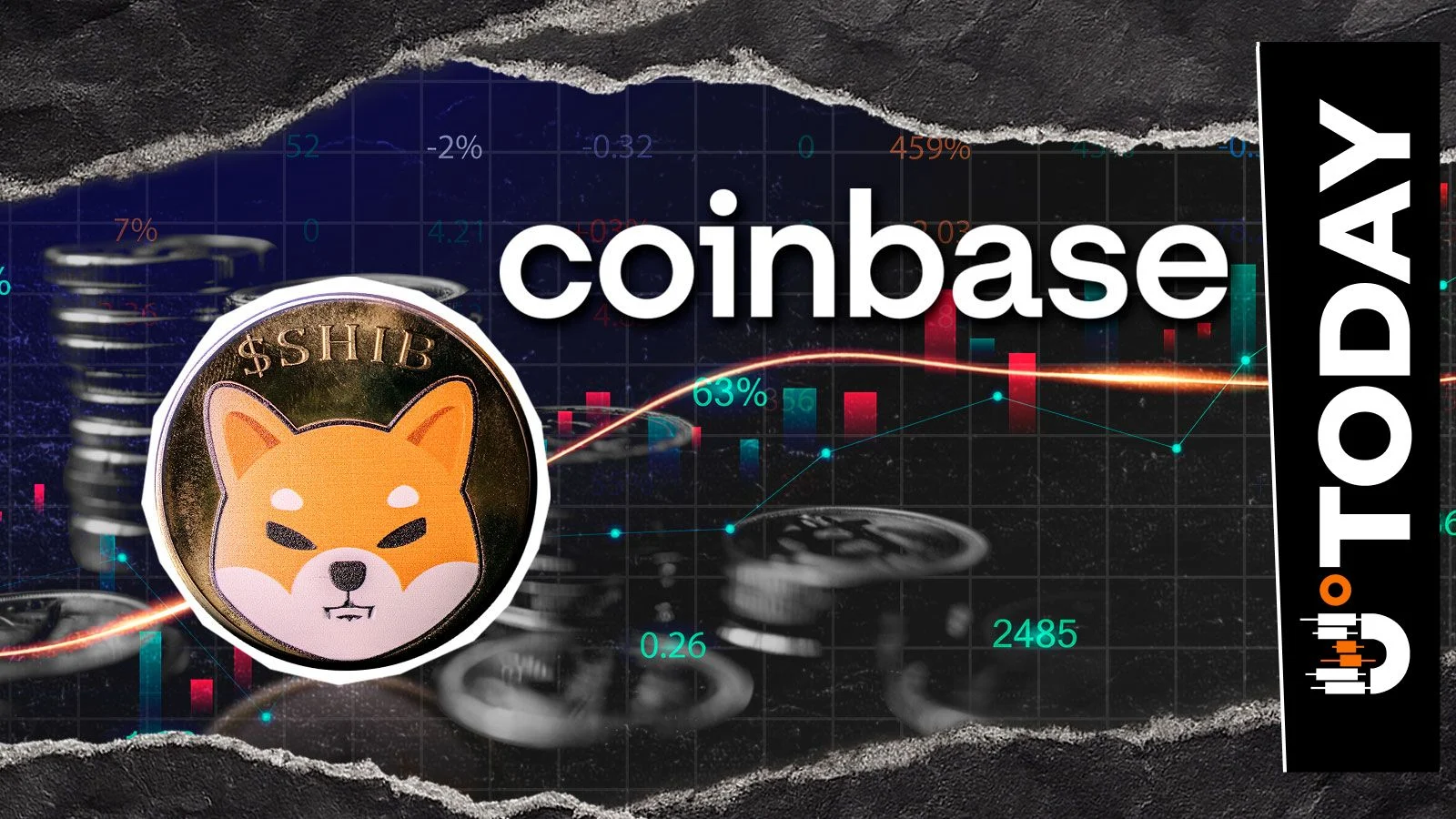
Coinbase's significant positive netflow of 26 billion SHIB suggests increased accumulation by U.S. users, potentially signaling growing demand and supporting spot trading activity.
The influx of SHIB to Coinbase, coupled with a 3.9% price surge and an 11% trading volume increase, indicates positive short-term momentum for the memecoin.
While Coinbase shows accumulation, other exchanges like Upbit and OKX exhibit outflows, highlighting mixed exchange dynamics that warrant monitoring.
Deep Dive
Coinbase has experienced a notable positive netflow of 26 billion SHIB, valued at approximately $155,000, within the last 24 hours. This indicates a substantial increase in Shiba Inu tokens being deposited onto the exchange compared to withdrawals, suggesting growing interest and potential accumulation by U.S.-based users.
The netflow data, tracked by CoinGlass, highlights Coinbase's prominent position in Shiba Inu exchange activity. A positive netflow on Coinbase, the leading U.S. exchange, suggests increased demand and localized liquidity enhancement for SHIB. This contrasts with other exchanges like Upbit, which saw a negative net inflow of -$483,120, and OKX with -$358,500, indicating outflows from those platforms.
The increased activity on Coinbase coincides with a broader positive trend for Shiba Inu. In the past 24 hours, the SHIB price has surged by over 3.9%, trading at $0.0000059. Trading volume also saw an increase of 11% to $158.6 million, supporting potential upward momentum. This price action places SHIB in a consolidation phase, finding support around the $0.0000059 level.
Further bolstering the bullish sentiment for SHIB is a significant 370% surge in the Shiba Inu burn rate over the past day. Additionally, recent regulatory clarity and ongoing ecosystem developments contribute to cautious optimism for future upside potential.
Evernorth's strategic focus on XRP Ledger for tokenization, lending, and settlement signals a potential expansion of XRP's utility beyond payments, aiming to unlock significant liquidity in traditional finance. The firm's emphasis on XRP's regulatory clarity, referencing SEC and CFTC guidance, suggests a growing institutional comfort level with the asset for complex financial operations, potentially driving adoption. Evernorth's plan to actively deploy XRP within its institutional treasury for lending and protocol integration indicates a shift towards utilizing the asset as a functional component of financial infrastructure rather than just a transactional token.
