
Navigating Crypto News

CoinFeather
Navigating Crypto News

Quick market read from this story
A significant 637% surge in Shiba Inu's burn rate, removing over 8 million SHIB from circulation, directly addresses supply scarcity, a key driver for memecoin valuations.
The increased token burn coincides with a 4.17% price increase and a decline in exchange reserves, suggesting growing investor demand and potentially signaling a short-term bullish trend for SHIB.
While the burn rate is a positive deflationary signal, the long-term impact on SHIB's price will depend on sustained demand and the broader market sentiment for memecoins.
Deep Dive
Shiba Inu has experienced a significant surge in its network performance, with its burn rate increasing by 637.44% in the past day. This deflationary activity saw 8,063,851 SHIB tokens permanently removed from circulation, signaling a potential shift in investor sentiment despite ongoing price volatility.
Following the substantial increase in its burn rate, Shiba Inu's price has flipped positive, showing a sharp increase of 4.17% over the last 24 hours. The price stabilized around $0.000005996, according to CoinMarketCap data, sparking optimism among investors. Concurrently, on-chain metrics indicate growing demand, with the total amount of SHIB tokens held on exchanges, including Binance, declining to 80.76 trillion SHIB.
Source, catalyst, and sector overlap from the latest feed.
Cardano's ADA price has reclaimed the $0.26 level with a significant 60% surge in trading volume, indicating renewed buyer interest and potentially reversing its recent downtrend. Despite the short-term positive price action and increased volume, ADA remains range-bound, with analysts suggesting a sustained rally requires breaking key resistance levels at $0.285 and $0.304. The growth in Cardano's DeFi ecosystem, with Total Value Locked (TVL) surpassing 520 million ADA, provides a fundamental tailwind that could support future price appreciation. Historical March performance and analyst predictions of a bullish breakout suggest potential for a near-term upward move, though the broader market context remains a key factor.
Live Feed
Loading the broader stream in the same flow as the homepage feed.

BlackRock CEO Larry Fink's endorsement of tokenization signals a significant potential shift in traditional finance infrastructure, suggesting a future where digital assets streamline issuance and trading. The comparison of tokenization to the internet in 1996 implies a long-term transformative potential, indicating that while immediate repricing may not occur, the underlying infrastructure development is a key structural trend. BlackRock's substantial involvement, with nearly $150 billion in assets connected to digital markets including BUIDL and stablecoin reserves, underscores the firm's strategic commitment and provides a strong signal of institutional adoption.

A sophisticated scam network on X is exploiting geopolitical tensions and war panic to lure users into fraudulent crypto schemes, highlighting a new tactic in social engineering for illicit gains. The identified scam network has generated six-figure profits through pump-and-dump schemes and fake giveaways, demonstrating the significant financial incentives and effectiveness of these coordinated online operations. The use of engagement farming via emotionally charged content, followed by the promotion of crypto scams, and the subsequent changing of usernames by scammers, presents a challenge for user protection and platform moderation.

A bipartisan bill targeting sports prediction markets signals increased regulatory scrutiny on platforms like Kalshi and Polymarket, potentially impacting their operations and associated tokens. The proposed legislation, framing prediction markets as unlicensed sports bets, escalates a conflict between state and federal regulators, suggesting a challenging environment for these platforms. While the bill focuses on sports wagers, it could set a precedent for broader regulatory action against prediction markets, impacting investor sentiment and potentially leading to asset repricing if enacted.
Crypto wallet provider Tangem is issuing a public warning against fraudulent Initial Coin Offerings (ICOs) and impersonation scams, emphasizing they do not conduct airdrops or issue their own tokens. The warning from Tangem highlights a persistent risk of scams targeting crypto users, particularly concerning fake airdrops and token offerings, which could lead to user fund losses. Traders should remain vigilant against phishing attempts and verify all communications through official channels, as impersonation scams can directly impact user trust and security within the ecosystem.
Institutional accumulation by Bitmine, adding 65,341 ETH, signals confidence in Ethereum's long-term prospects despite current market volatility. The CEO's 'mini-crypto winter' comment, coupled with ETH outperforming equities recently, suggests a potential shift in market sentiment towards recovery for Ethereum. Technical analysis indicates ETH is in a short-term downtrend with critical support at $2,070-$2,090; a break below could lead to $1,800, while sustained moves above $2,280 are needed for a trend reversal. With over 3.1 million ETH staked and generating significant annual rewards, Bitmine's strategy highlights the yield-generating potential of ETH as a core holding.

XRP's growth potential is framed as a speculative bet on adoption and utility expansion, contrasting with BNB's established utility within the Binance ecosystem, suggesting different investor profiles for each asset. While neither XRP nor BNB show strong short-term bullish momentum, XRP's regulatory clarity and potential for institutional adoption present a long-term growth narrative, whereas BNB's demand is anchored to existing exchange and ecosystem utility. Surpassing BNB's market cap would require significant, sustained institutional inflows and substantial XRPL transaction volume growth for XRP, indicating a high bar for XRP's potential to overtake BNB's current market position.
The U.S. stock market experienced a significant rally, with the Dow Jones and S&P 500 gaining over 2%, driven by a de-escalation in geopolitical tensions with Iran and a subsequent sharp drop in oil prices. The market's rapid recovery highlights its sensitivity to geopolitical events, suggesting that sentiment can shift quickly based on news flow, particularly concerning energy supply and inflation concerns. While the immediate market reaction is positive, ongoing uncertainty regarding U.S.-Iran relations means that any renewed escalation could quickly reverse these gains, making continued monitoring of Middle East developments crucial for traders. The drop in oil prices, a key inflation driver, eased market concerns about rising costs, contributing to the broader equity market rebound after weeks of pressure.
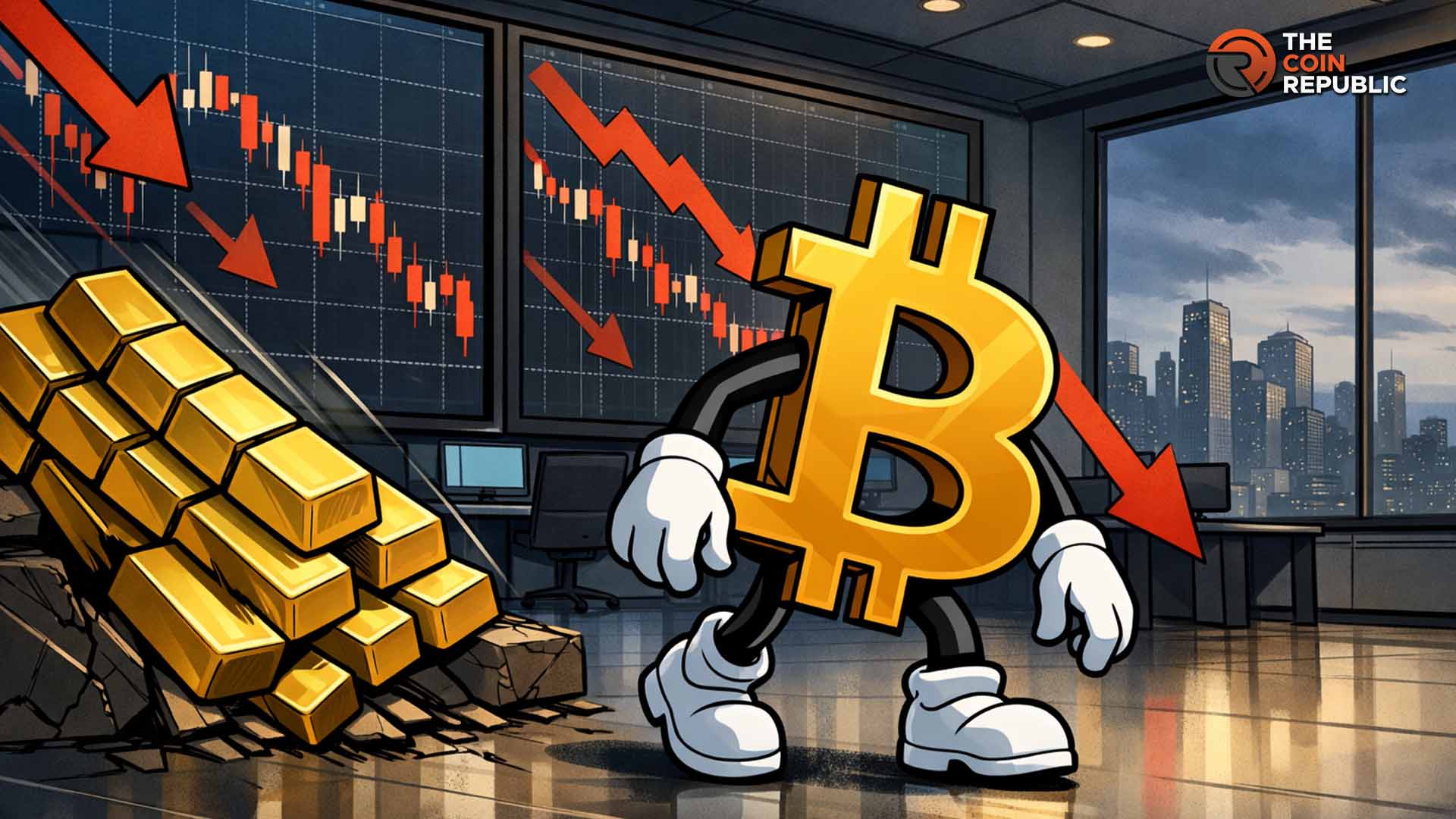
Bitcoin's price decline is attributed to a broad risk-off sentiment driven by geopolitical tensions, causing it to act as a risk asset rather than a safe haven. The crypto market followed Bitcoin lower, with significant liquidations exacerbating the downturn, indicating a macro-driven selloff across multiple asset classes. Despite the broader market slide, U.S. spot Bitcoin ETFs saw net inflows last week, suggesting some continued institutional interest amidst the price pressure. The immediate outlook for Bitcoin hinges on holding the $68,000 support level, with a break below potentially leading to a further drop towards the $65,500-$66,000 range.

MicroStrategy has significantly expanded its capital-raising capacity to $42 billion through new equity programs, signaling continued aggressive accumulation of Bitcoin. The substantial increase in potential funding, coupled with recent Bitcoin purchases, suggests MicroStrategy is positioning itself for further market participation and could act as a significant buyer. The company's strategy of leveraging equity issuance to acquire Bitcoin directly impacts market supply dynamics and reinforces its role as a major institutional holder.

Strategy's announcement of a $44 billion equity issuance plan signals a significant capital raise aimed at fueling future Bitcoin acquisitions, potentially increasing demand for BTC. The firm's reliance on preferred shares like STRC for funding highlights a strategic shift towards alternative financing, though recent performance below par value may impact its immediate Bitcoin buying capacity. Despite a slowdown in recent Bitcoin purchases, Strategy's continued accumulation and substantial holdings position it as a key corporate holder, making its buying activity a notable market signal.
MicroStrategy's aggressive Bitcoin accumulation strategy, aiming for 1 million BTC by end of 2026, continues to be funded via equity issuance, raising concerns about potential share dilution and financial sustainability if BTC prices decline. Michael Saylor's rebranding of MicroStrategy to 'Strategy Inc.' and his continued role as executive chairman underscore the company's deep commitment to Bitcoin as a primary treasury asset, positioning it as a 'Bitcoin Treasury Company'. The article provides a biographical overview of Michael Saylor, highlighting his early career, the founding of MicroStrategy, and his pivot to Bitcoin, which has significantly influenced his net worth and the company's market perception. Despite concerns about funding models and past volatility, Saylor's unwavering conviction in Bitcoin as a long-term asset and inflation hedge continues to drive Strategy's accumulation efforts, impacting institutional adoption narratives.

Major international banks are accelerating pilots for tokenized deposit systems, signaling a strategic shift to integrate blockchain technology rather than compete with stablecoins. The development of tokenized deposits by banks aims to leverage blockchain's programmability while retaining traditional regulatory protections, positioning them as a more stable alternative to existing stablecoins. European infrastructure efforts to link blockchain platforms with existing payment rails by late 2026 indicate a move towards interoperability and the coexistence of traditional and digital money. Banks are increasingly viewing custody and tokenization services as primary business models in digital finance, driven by the perceived risk of disintermediation from fintech and crypto.
Signal context only. Validate with price action, liquidity, and risk limits before taking a position.
US lawmakers are finalizing stablecoin legislation, with key industry and banking representatives reviewing the text this week, signaling a critical juncture for regulatory clarity. The proposed stablecoin bill reportedly removes 'banking language' and may ban yield on stablecoin balances, indicating a significant shift in how stablecoins will be treated under financial regulations. The White House Council of Economic Advisers' findings on stablecoins appear more favorable to the crypto industry than anticipated, potentially countering traditional bank narratives about deposit flight. Ripple's expected participation in discussions, given its lobbying efforts and association memberships, suggests a strong industry voice will be present as the Clarity Act is debated.
