
Navigating Crypto News

CoinFeather
Navigating Crypto News

Quick market read from this story
BlackRock CEO Larry Fink's endorsement of tokenization signals a significant potential shift in traditional finance infrastructure, suggesting a future where digital assets streamline issuance and trading.
The comparison of tokenization to the internet in 1996 implies a long-term transformative potential, indicating that while immediate repricing may not occur, the underlying infrastructure development is a key structural trend.
BlackRock's substantial involvement, with nearly $150 billion in assets connected to digital markets including BUIDL and stablecoin reserves, underscores the firm's strategic commitment and provides a strong signal of institutional adoption.
Deep Dive
BlackRock Chairman and CEO Larry Fink has highlighted the potential of digital assets and tokenization to modernize financial markets and broaden investor access in his latest annual letter to shareholders. Fink expressed concern that the current U.S. economic model disproportionately benefits existing asset owners, leaving many workers excluded from market growth and contributing to rising inequality and high government debt.
Fink proposed that tokenization could significantly improve the financial system's infrastructure, making it easier to issue, trade, and access investments. By recording asset ownership on digital ledgers, the transfer of securities like fund shares and bonds could become faster and more cost-effective. This would enable regulated digital wallets to hold not only payments but also tokenized bonds, ETFs, and fractional ownership in assets such as infrastructure and private credit.
He drew a parallel between current tokenization efforts and the internet in 1996, suggesting a gradual integration of traditional and new financial systems. Fink urged policymakers to prioritize the development of this bridge, emphasizing the need for clear buyer protections, counterparty-risk standards, and digital identity verification to mitigate illicit finance risks.
BlackRock has been actively expanding its presence in the digital asset space. Fink noted the firm's
Source, catalyst, and sector overlap from the latest feed.
MicroStrategy has significantly expanded its capital-raising capacity to $42 billion through new equity programs, signaling continued aggressive accumulation of Bitcoin. The substantial increase in potential funding, coupled with recent Bitcoin purchases, suggests MicroStrategy is positioning itself for further market participation and could act as a significant buyer. The company's strategy of leveraging equity issuance to acquire Bitcoin directly impacts market supply dynamics and reinforces its role as a major institutional holder.
NovaBay Pharmaceuticals' rebranding to Stablecoin Development Corporation and significant SKY token acquisition signals a strategic pivot into the DeFi ecosystem, potentially influencing demand for SKY and related stablecoin infrastructure. The company's substantial holdings (8.78%) and active staking of SKY tokens suggest a long-term commitment, which could stabilize or increase the token's value through reduced circulating supply and yield generation. Despite the company's pivot and staking activities, SKY's recent underperformance relative to the broader market indicates potential headwinds or a lack of immediate market conviction in this development.
Backpack Exchange's launch of its BP token with a 25% user airdrop and no insider allocation signals a user-centric distribution strategy, potentially boosting community engagement. The BP token's structure, with long-term lockups tied to company milestones and a potential IPO, links its value to Backpack's corporate growth and equity, suggesting a dual utility beyond typical exchange tokens. The absence of founder and investor allocations at inception, coupled with the potential for BP conversion to company equity, positions the token as a unique instrument for aligning user and corporate interests.
The CoinDesk 20 Index is showing slight upward momentum, with Bitcoin Cash (BCH) and Solana (SOL) leading the gains, indicating a potential short-term positive sentiment for these specific assets within the broader market. While the CoinDesk 20 Index experienced a modest gain, the performance of individual assets like BCH and SOL suggests selective strength rather than a broad market rally, implying traders should focus on specific asset movements. The report highlights a mixed performance within the CoinDesk 20, with BCH and SOL outperforming while APT and ICP lagged, underscoring the importance of asset-specific analysis in the current market environment.
Bitmine's increased ETH purchasing pace for three consecutive weeks, totaling $138 million in the last week, signals strong conviction from management that the crypto market downturn is nearing its end. Despite significant unrealized losses, the firm's aggressive accumulation of ETH, now representing 3.86% of circulating supply, suggests a strategic bet on a substantial price recovery. The sustained buying activity by a notable entity like Bitmine, led by Thomas Lee, could be interpreted by the market as a bullish signal for Ethereum's future price performance.
Deloitte's collaboration with Stablecorp to build stablecoin infrastructure for Canadian institutions signals growing institutional interest in digital assets, particularly as regulatory frameworks develop. The initiative aims to leverage stablecoins for 24/7 payments and improved settlement efficiency, potentially paving the way for new financial products and increased adoption once regulatory clarity is achieved. This development aligns with global trends in stablecoin regulation and adoption, suggesting a move towards integrating digital assets into traditional financial systems in Canada.
Investors are rotating out of gold, which has entered a bear market, and into Bitcoin ETFs, signaling a shift in traditional safe-haven asset preference. The divergence highlights Bitcoin's increasing acceptance as a macro hedge, driven by ETF inflows despite higher interest rates and geopolitical uncertainty. Gold's decline is attributed to rising opportunity costs from sustained high interest rates and a stronger dollar, while Bitcoin's inflows suggest a continued appetite for digital asset exposure. The interplay of oil prices, inflation expectations, and Federal Reserve policy will be crucial in determining the near-term trajectory for both gold and Bitcoin.
H100 Group's proposed acquisition of two Norwegian Bitcoin treasury firms aims to significantly increase its BTC holdings, positioning it as a major European player and potentially signaling a trend of consolidation within the Bitcoin treasury sector. The all-stock transaction emphasizes a strategic move towards scaling operations and enhancing market relevance, suggesting that larger, more consolidated entities may gain an advantage in the evolving Bitcoin treasury landscape. This consolidation, if successful, could lead to increased institutional interest and liquidity for Bitcoin treasury services, especially given the current market environment where Bitcoin prices have stabilized after significant volatility.
Fidelity's formal request to the SEC for a framework enabling broker-dealers to offer, custody, and trade crypto on regulated systems signals a significant push for mainstream integration of digital assets into traditional market infrastructure. The development highlights the critical need for regulatory clarity in tokenized securities and DeFi reporting, which is a prerequisite for unlocking substantial institutional capital estimated at up to $5 trillion by end of 2026. While RWA tokenization is growing, with U.S. Treasury debt and commodities leading, the current market infrastructure and regulatory ambiguity remain key barriers, underscoring the importance of Fidelity's initiative. Recent regulatory actions, including the CFTC's reclassification of certain tokens as commodities and progress on stablecoin legislation, provide a supportive backdrop, but Fidelity emphasizes that the core market rails for institutional capital are yet to be built.
A sophisticated scam network on X is exploiting geopolitical tensions and war panic to lure users into fraudulent crypto schemes, highlighting a new tactic in social engineering for illicit gains. The identified scam network has generated six-figure profits through pump-and-dump schemes and fake giveaways, demonstrating the significant financial incentives and effectiveness of these coordinated online operations. The use of engagement farming via emotionally charged content, followed by the promotion of crypto scams, and the subsequent changing of usernames by scammers, presents a challenge for user protection and platform moderation.
Live Feed
Loading the broader stream in the same flow as the homepage feed.
A significant 637% surge in SHIB token burns, removing over 8 million tokens, indicates strong community commitment to reducing supply and potentially creating upward price pressure through scarcity. The substantial token burn event coincided with a 5.68% price increase for SHIB, suggesting a short-term positive correlation between deflationary activity and asset performance. While the burn rate spike is notable, its long-term impact on SHIB's price will depend on sustained deflationary efforts and broader market conditions, as the token's quadrillion-scale supply remains a significant factor.
MicroStrategy's expanded $42 billion ATM program signals an aggressive, long-term strategy to accumulate Bitcoin, leveraging equity issuance to continuously increase its BTC holdings. The company's multi-channel capital raising approach, including common and preferred stock, provides significant flexibility to adapt to market conditions and investor appetite for Bitcoin exposure. This strategic capital deployment by a major corporate holder like MicroStrategy can be interpreted as a strong bullish signal for Bitcoin demand, potentially influencing market sentiment and price action.
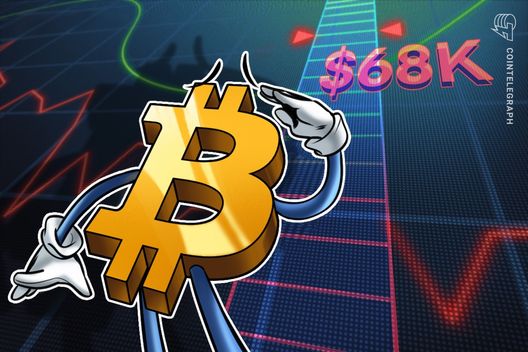
Bitcoin's failure to close above the 200-week EMA at $68,300 signals structural weakness, potentially initiating a downward leg towards the $46,000 to $47,000 support levels. Traders are bracing for further downside as the price action suggests a recent rally may have been a bull trap, with analysts pointing to untapped lows and a breakdown from a rising wedge pattern. The $47,000 level, representing the realized price for the 10-100 BTC holder cohort, is identified as a deep structural support, with a break below this threshold indicating a significant deterioration in market regime.

The arrest of the final suspect in the Ledger co-founder kidnapping case may signal a de-escalation of targeted physical attacks in the crypto space, potentially reducing perceived risk for high-profile individuals. While this specific event is resolved, the continued prevalence of 'wrench attacks' in France highlights an ongoing security concern for crypto holders and executives, suggesting a need for enhanced personal security measures. The resolution of this case, involving a significant crypto ransom demand, reinforces the narrative of crypto's role in illicit activities, which could indirectly influence regulatory sentiment and scrutiny.
PEPE is exhibiting a falling wedge pattern, a technical formation that historically precedes significant upward price movements, with analysts projecting a potential 708% breakout. Buyers are actively defending key support levels around $0.0000031, indicating accumulation interest that could fuel a relief bounce of up to 30% if sustained. Despite bullish technical signals, significant resistance remains between $0.00000414 and $0.00000500, suggesting that traders should await confirmation of a decisive breakout before expecting the projected large-scale rally.

Veteran quant investor Cliff Asness challenges the crypto 'safe haven' narrative, asserting it currently correlates with risk-on equities. Asness's analysis suggests Bitcoin's price action mirrors that of tech stocks, implying it is not a reliable diversifier in the current market environment. The commentary from a prominent figure like Asness may influence investor perception regarding Bitcoin's role in portfolio diversification.

G Coin has rapidly surpassed one million holders within its launch week, indicating strong initial community engagement and market reception following its MEXC listing and staking launch. The rapid holder growth, from 203k to over 1.15M in approximately one week, suggests significant momentum, though its sustainability will be tested as the utility narrative faces market validation beyond the initial listing phase. The project's positioning as a utility token for gameplay, rewards, and ecosystem functions, coupled with its Layer-3 PlayBlock infrastructure, presents a fundamental use case that will be crucial for long-term value accrual.

Michael Saylor's MicroStrategy has filed for new ATM programs totaling $44.1 billion, signaling a significant capital infusion capability to acquire more Bitcoin, despite short-term paper losses. Peter Schiff's public criticism of MicroStrategy's 4.5% weekly loss highlights ongoing debate around Bitcoin's volatility and Saylor's conviction in long-term accumulation strategies. The substantial $44.1 billion liquidity channel via SEC filings indicates MicroStrategy's aggressive stance on Bitcoin acquisition, potentially influencing market dynamics if fully deployed.

Shibarium is undergoing a significant infrastructure upgrade involving a full chain re-indexing and server migration, which is currently 45% complete. The ongoing re-indexing is causing discrepancies in displayed data on the Shibarium explorer, but the underlying blockchain remains intact, reassuring users about asset safety. Development focus is shifting towards Shibarium's Layer 3, with a new L3 explorer live for early testing, indicating future expansion and scalability efforts. The infrastructure upgrade and L3 development signal a strategic move to enhance Shibarium's capabilities for future growth and increased transaction volume.

Cardano's ADA price has reclaimed the $0.26 level with a significant 60% surge in trading volume, indicating renewed buyer interest and potentially reversing its recent downtrend. Despite the short-term positive price action and increased volume, ADA remains range-bound, with analysts suggesting a sustained rally requires breaking key resistance levels at $0.285 and $0.304. The growth in Cardano's DeFi ecosystem, with Total Value Locked (TVL) surpassing 520 million ADA, provides a fundamental tailwind that could support future price appreciation. Historical March performance and analyst predictions of a bullish breakout suggest potential for a near-term upward move, though the broader market context remains a key factor.
US lawmakers are finalizing stablecoin legislation, with key industry and banking representatives reviewing the text this week, signaling a critical juncture for regulatory clarity. The proposed stablecoin bill reportedly removes 'banking language' and may ban yield on stablecoin balances, indicating a significant shift in how stablecoins will be treated under financial regulations. The White House Council of Economic Advisers' findings on stablecoins appear more favorable to the crypto industry than anticipated, potentially countering traditional bank narratives about deposit flight. Ripple's expected participation in discussions, given its lobbying efforts and association memberships, suggests a strong industry voice will be present as the Clarity Act is debated.

Cardano founder Charles Hoskinson's teaser for 'Midnight' and the anticipated mainnet launch this March signals a significant upcoming development for the ADA ecosystem. The Midnight network's expansion with new federated node operators like Worldpay and Bullish indicates growing infrastructure and potential for increased adoption and security. The NIGHT token has shown positive price action, rising over 11% in anticipation of the mainnet launch, suggesting market optimism for the new network's potential.
XRP faces significant downside pressure with a 60% crash from its peak and a large percentage of holders underwater, suggesting a challenging recovery path. Pepeto's presale is positioned as a high-upside alternative to XRP's recovery, targeting 100x returns driven by a Binance listing and a co-founder's track record with Pepe. The CLARITY Act's potential passage offers a bullish catalyst for XRP by classifying it as a commodity, though its impact on immediate price action is uncertain compared to the presale's compressed timeline. Whale accumulation of XRP indicates potential support, but the article contrasts this with the aggressive capital inflow into Pepeto's presale, highlighting a shift in speculative interest.

A bipartisan bill targeting sports prediction markets signals increased regulatory scrutiny on platforms like Kalshi and Polymarket, potentially impacting their operations and associated tokens. The proposed legislation, framing prediction markets as unlicensed sports bets, escalates a conflict between state and federal regulators, suggesting a challenging environment for these platforms. While the bill focuses on sports wagers, it could set a precedent for broader regulatory action against prediction markets, impacting investor sentiment and potentially leading to asset repricing if enacted.
Signal context only. Validate with price action, liquidity, and risk limits before taking a position.
