
Navigating Crypto News

CoinFeather
Navigating Crypto News
Quick market read from this story
Shiba Inu's integration with OnePay, a Walmart-majority-owned fintech platform with 3 million users, signifies a notable expansion of its payment utility and potential for broader adoption in retail environments.
The listing on OnePay, alongside other major cryptocurrencies like BTC and ETH, positions SHIB for increased accessibility and transactional use, potentially influencing short-term trading interest.
While the OnePay listing is positive for SHIB's payment use case, the article also notes recent price declines and reduced trading volumes, suggesting that market sentiment may be mixed or that the positive news has yet to translate into sustained price appreciation.
The mention of the SEC deeming most mature cryptocurrencies, including Shiba Inu, as non-securities provides a degree of regulatory clarity, which could reduce future uncertainty for the asset and its holders.
Deep Dive
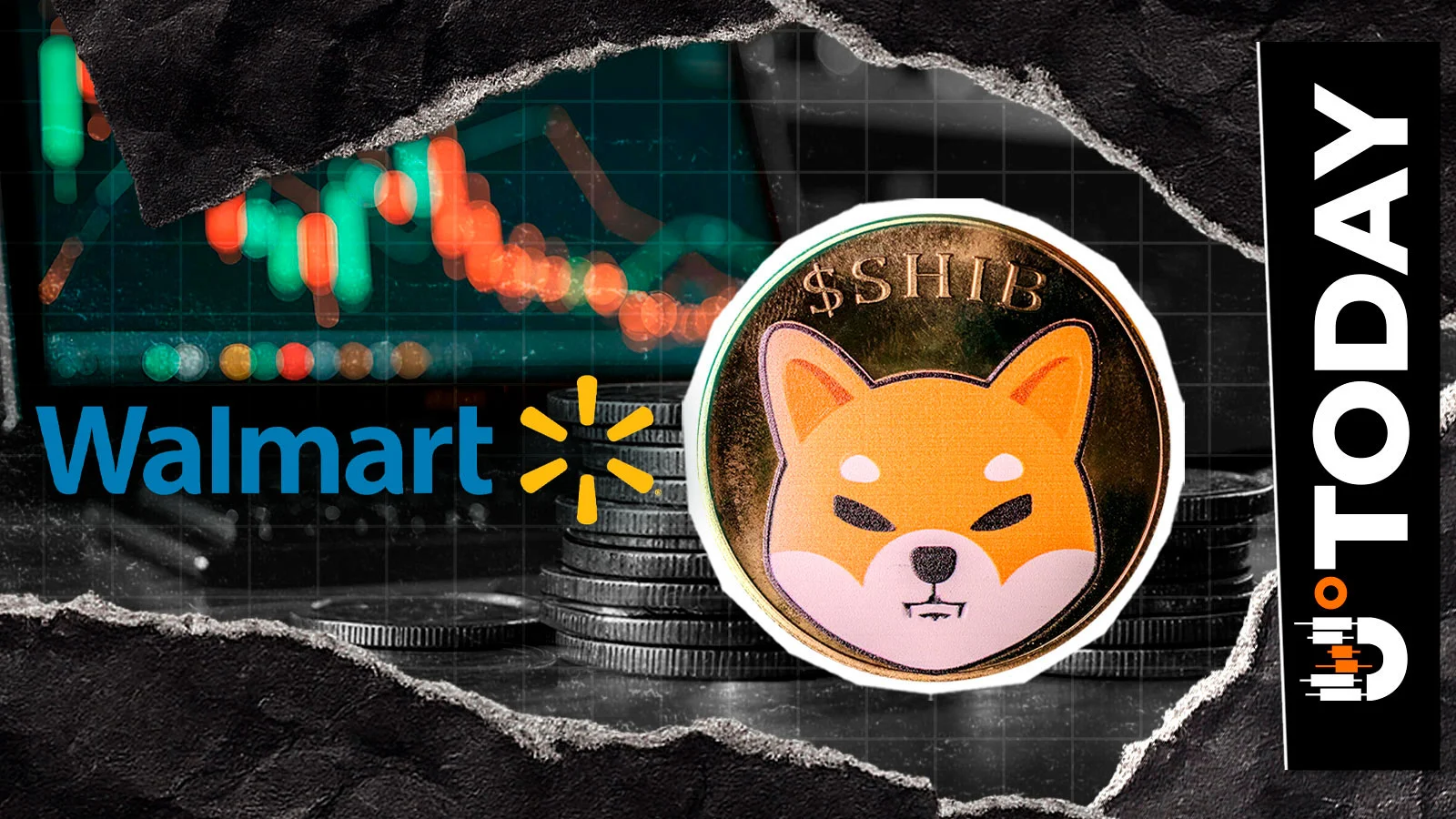
Shiba Inu (SHIB) has been listed on OnePay, a U.S. consumer fintech platform majority-owned by Walmart. This development allows users to buy, sell, and hold SHIB directly within the OnePay app, which boasts over 3 million monthly active users and is valued at $4 billion.
The addition of Shiba Inu was announced on March 20 as part of OnePay's expansion of its crypto platform, which now supports 10 new digital assets. Alongside SHIB, other newly added cryptocurrencies include XRP, Solana (SOL), Dogecoin (DOGE), Cardano (ADA), Bitcoin Cash (BCH), Chainlink (LINK), PAX Gold (PAXG), Polkadot (DOT), and Uniswap (UNI). These join Bitcoin (BTC) and Ethereum (ETH), which were already available on the platform.
The integration means that cryptocurrencies, including Shiba Inu, can potentially be utilized by customers at Walmart stores. OnePay also offers features like 'OnePay Later,' enabling users to make purchases at Walmart through smaller, fixed monthly payments.
In parallel, Shiba Inu has seen a significant development regarding regulatory clarity in the U.S. The Securities and Exchange Commission (SEC) recently released guidance that classifies most mature cryptocurrencies, including Shiba Inu, as non-securities. This clarification, following over a decade of uncertainty, is seen as a positive step for the crypto industry, although it may come with increased regulatory burdens.
Despite the positive listing news, SHIB experienced a price decline. At the time of reporting, SHIB was down 3.63% in the last 24 hours, trading at $0.00000577, and down 1.52% weekly. The price had extended a sell-off from its March 16 high of $0.00000644. Trading volumes also saw a decrease, with Shiba Inu's spot trading volume down 26.25% in the last 24 hours to $104.52 million, indicating reduced trading activity.
Source, catalyst, and sector overlap from the latest feed.
Despite Cardano's average active wallet experiencing a 43% loss, the classification of ADA as a digital commodity by the SEC presents a potential long-term positive for regulatory clarity, though immediate market reaction remains muted. The high ratio of short positions on Binance suggests significant bearish sentiment among retail traders, potentially creating a short squeeze opportunity if market sentiment shifts. Cardano's DeFi ecosystem shows resilience with a 35.7% TVL growth in six months, indicating underlying network adoption despite current price underperformance.
Ripple CTO David Schwartz argues that Bitcoin's Proof-of-Work mechanism is a centralizing force, challenging the narrative that PoW inherently ensures decentralization. The debate over PoW's centralizing tendencies and potential downward price pressure on Bitcoin highlights ongoing governance challenges and the difficulty of altering Bitcoin's core protocol. The recent two-block reorg event involving Foundry USA amplifies concerns about mining pool concentration, potentially impacting market sentiment towards Bitcoin's long-term security model.
XRP's violation of its ascending trendline signals a shift to bearish continuation, with the immediate risk of retesting range lows around $1.30-$1.35, indicating a lack of buyer conviction. Cardano's $0.25 support level is showing signs of deterioration, with shallow bounces and lower highs suggesting it may not be an unbreakable floor, increasing the risk of a move towards $0.20 if broken. Shiba Inu's repeated failed breakout attempts below the 50 EMA, coupled with declining volume, reinforce its bearish trend and suggest a lack of fresh capital or demand, making a recovery unlikely without significant structural changes. The analysis highlights a consistent bearish technical picture across XRP, Cardano, and Shiba Inu, characterized by broken support levels, downward-sloping moving averages, and insufficient volume to support bullish narratives.
XRP reserve reduction on Binance suggests holders are moving assets to private wallets, indicating increased buying pressure and potential for price appreciation. Shiba Inu experienced a brief short liquidation event, but the price has since returned below a key moving average, suggesting a lack of sustained upward momentum despite the short-term volatility. Dogecoin exhibits a strong bullish long-short ratio on major exchanges, signaling high trader confidence in a potential reversal, though this crowded positioning carries a risk of sharp downside if momentum falters.
Ripple's aggressive RLUSD burn of 45 million tokens against 10 million minted in the past week indicates significant institutional redemptions or strategic treasury rebalancing, suggesting potential shifts in stablecoin demand dynamics. The substantial RLUSD supply contraction, driven by burns, is presented as a standard operational procedure for fully-backed stablecoins, reinforcing the link between on-chain supply and fiat reserves rather than signaling distress. While the market often associates stablecoin minting with liquidity, Ripple's current burn activity highlights a focus on supply management and reserve backing, which could be interpreted as a sign of operational maturity as RLUSD competes with established players.
The resignation of the SEC's top enforcement official, reportedly due to disagreements over handling cases involving Justin Sun and Elon Musk, signals potential shifts in regulatory enforcement priorities and could impact market sentiment towards these specific assets and the broader crypto regulatory landscape. Disagreements within the SEC regarding the handling of high-profile cases like Justin Sun's settlement and Elon Musk's disclosure failures suggest internal friction that may influence future enforcement actions and the perceived stability of regulatory oversight. The reported clashes over cases involving Justin Sun (settled for $10M) and Elon Musk (in settlement talks) highlight the complex interplay between political appointees, enforcement strategy, and the evolving nature of crypto regulations, potentially creating uncertainty for market participants.
The consideration by Hostplus, a major Australian pension fund, to offer Bitcoin to its members signifies growing institutional acceptance and potential for significant capital inflow into the digital asset space. If approved, the potential July 2026 rollout could indicate a broader trend of traditional financial institutions integrating crypto, driven by demand from younger investors and the need for diversified investment options. The requirement for regulatory approval and robust consumer safeguards highlights the ongoing challenges and evolving landscape for crypto adoption within regulated financial products.
Major Australian pension fund Hostplus is considering offering crypto, signaling growing institutional interest driven by member demand. The potential inclusion of Bitcoin and other digital assets in retirement portfolios could unlock significant new capital flows into the crypto market. While still in the design phase and requiring regulatory approval, this move by a large super fund highlights a shift towards crypto adoption within traditional finance. The development suggests a potential increase in demand for crypto assets from a retail investor base seeking diversification within their retirement savings.
The geopolitical event's impact on crypto markets, evidenced by BTC's rapid surge and short liquidations, highlights the asset class's sensitivity to macro news, suggesting potential for swift repricing based on external catalysts. While SOL and BNB show recovery, the article emphasizes that true early-stage alpha is found in presales like Pepeto, which aims for significant gains before potential exchange listings, contrasting with the slower, larger-cap recovery. Pepeto's presale is positioned as a high-potential opportunity due to its early entry pricing and upcoming Binance listing, aiming to deliver returns that significantly outperform the recovery seen in established assets like SOL and BNB.
Rising U.S. Treasury yields and swap spreads, particularly the 10-year yield approaching 4.5%-4.6%, could pressure the Trump administration to moderate its stance on the Iran conflict due to increased funding costs and potential economic strain. A sustained move in the 10-year Treasury yield above 5% is flagged as a critical point that could trigger a mini-financial crisis, potentially leading to Fed liquidity injections that could benefit risk assets like Bitcoin. Bitcoin traders should closely monitor Treasury market movements, as shifts in yields and swap spreads are identified as direct influencers of risk appetite and potential policy decisions impacting crypto markets.
U.S. Bitcoin spot ETFs experienced a positive shift with $167 million in net inflows on March 23, breaking a three-day outflow trend and indicating renewed investor interest. BlackRock's iShares Bitcoin Trust was the primary driver of inflows, suggesting strong institutional demand for its product, while Grayscale's outflows continue to moderate. The contrasting performance of Bitcoin ETFs (inflows) versus Ethereum ETFs (outflows) highlights a divergence in institutional sentiment towards the two largest cryptocurrencies.
Live Feed
Loading the broader stream in the same flow as the homepage feed.

The arrest of a suspect in the kidnapping and mutilation of a Ledger co-founder signals increased law enforcement focus on crypto-related violent crime, potentially impacting security perceptions for industry executives. While the arrest is a positive development for justice, it highlights ongoing risks within the crypto ecosystem, particularly for founders and executives, suggesting a need for enhanced personal security measures. The news, coupled with France's report of an uptick in crypto-linked violence, indicates a growing trend of targeted criminal activity against individuals in the digital asset space, which could lead to increased regulatory scrutiny or industry-wide security initiatives.

Bitcoin's recent 3% rise above $70K, driven by geopolitical relief, is overshadowed by analyst predictions of a potential drop to $40K by October 2026. Historical four-year cycles suggest Bitcoin may be entering a 'final discount' phase, with a potential buy zone identified between $41,500 and $45,000 before a new bull run. Declining retail transaction volume indicates smaller investors are exiting the market, a pattern historically seen during late-stage corrections and accumulation phases. The current market presents mixed signals: short-term recovery due to geopolitical easing, but weak retail participation suggests a potential near-term downside before a significant rally.

Balancer Labs is shutting down its corporate entity due to legal liabilities stemming from a $110 million exploit, signaling a significant restructuring for the once-prominent DeFi protocol. The proposed DAO-led restructuring, including zero BAL emissions and fee capture by the treasury, aims to provide a fair exit for BAL holders and refocus on core product offerings, potentially stabilizing the protocol's future. The decline in Balancer's Total Value Locked (TVL) from $3.5 billion to $157 million and the current low market cap of BAL indicate a substantial loss of market confidence and utility, making a recovery challenging despite restructuring efforts.

Aptos' recent price surge of over 12% is met with declining on-chain metrics like transaction throughput and daily active addresses, suggesting the rally may be a short-term relief bounce rather than a sustainable trend reversal. The divergence between Aptos' price action and network activity indicates potential speculative trading or momentum-driven buying, which could be vulnerable to a reversal if underlying usage does not improve. Traders should monitor the $1.08 resistance level; a failure to break and hold above it could signal a return to the broader downtrend, targeting support at $0.95 or $0.79. While the price shows short-term bullish momentum, the underlying fragility due to decreasing network activity warrants caution, making it a decision zone for traders rather than a clear buy signal.

Bitlayer's sharp 78% price decline, driven by profit-taking and liquidations, signals significant short-term volatility and potential for further downside. Despite allegations of a rug pull, the project's backing by major investors like Franklin Templeton suggests the crash is market-driven rather than an outright scam, warranting caution for new, volatile assets. While short-term forecasts indicate continued weakness, medium- to long-term projections for Bitlayer suggest a potential recovery contingent on broader market stability and adoption of Bitcoin Layer 2 solutions. The surge in trading volume alongside the price crash indicates high trader interest and reaction to the event, highlighting the speculative nature of early-stage Layer 2 tokens.
Kanye West's net worth is subject to significant valuation discrepancies, with Forbes estimating $400 million while he claims over $2.5 billion, highlighting the speculative nature of celebrity asset valuations. Despite past controversies leading to brand severances (e.g., Adidas), Kanye West is exploring new ventures including a potential meme coin and NFT collection, indicating continued interest in the digital asset space. The upcoming album 'Bully' and planned global tour signal a potential resurgence in Kanye West's core music business, which could positively impact his overall financial standing and market presence.

Loopring (LRC) faces significant near-term headwinds due to upcoming delistings from major exchanges like Binance and Upbit, which will likely reduce liquidity and increase price volatility. The project's strategic pivot towards Layer-3 infrastructure development is a critical factor for its long-term survival and potential recovery, aiming to become a specialized technology provider rather than a direct Layer-2 competitor. Investor sentiment is divided, with short-term bearish pressures from delistings contrasted by a speculative long-term bullish outlook contingent on successful Layer-3 adoption and integration across multiple L2 ecosystems. Despite current challenges, the potential for LRC to establish itself as key infrastructure in a modular blockchain future could drive demand, but this hinges on developer adoption and sustained protocol activity.

Circle is advocating for lower market capitalization thresholds in the EU's proposed Market Integration Package, aiming to facilitate broader institutional participation and enhance liquidity for euro-denominated stablecoins like EURC. The stablecoin issuer argues that current thresholds act as a structural barrier, hindering the growth of e-money tokens and creating a "chicken-and-egg scenario" that limits their utility in settlement. Circle's feedback suggests that more adaptive thresholds based on market uptake and liquidity, alongside expanded access to the DLT Pilot Regime for crypto-asset service providers, are crucial for modernizing the EU's financial system.

TRON DAO's significant expansion of its AI fund to $1 billion signals a strong commitment to capturing the emerging agentic economy, potentially driving demand for its network's high-throughput and low-cost transaction capabilities. The fund's focus on stablecoin rails, agent identity, tokenized RWAs, and developer tooling positions TRON to benefit from the anticipated growth in AI-driven commerce and machine-to-machine payments. By emphasizing its existing strengths in transaction volume and USDt circulation, TRON aims to differentiate itself from other blockchains like Ethereum in the race to become a primary infrastructure for AI agents.

Bitcoin and major altcoins are showing resilience by recovering and holding key price levels despite escalating geopolitical tensions and a sharp downturn in traditional markets, suggesting a potential decoupling or a flight to perceived digital safe havens. The unusual decline in gold prices during a widening conflict, contrasted with Bitcoin's stability above $70,000, challenges historical safe-haven narratives and may indicate a shift in investor perception or forced liquidations impacting traditional assets. The involvement of Saudi Arabia and UAE in the conflict significantly alters the geopolitical risk landscape, potentially impacting oil supply and pricing, which could indirectly influence Bitcoin's price action as a macro-sensitive asset. While crypto assets are currently outperforming traditional markets, their near-term direction remains uncertain, hinging on the evolution of geopolitical events and their subsequent impact on oil prices and broader market sentiment.

Analyst Tom Lee's declaration of the end of a 'mini crypto winter' is reinforced by Bitmine's significant $140 million ETH accumulation, signaling potential smart money accumulation at perceived market bottoms. While large-cap assets like ETH and BTC are presented as recovery plays with moderate upside targets, the article emphasizes presale opportunities like Pepeto for potentially higher, compressed returns. The narrative suggests a divergence in market strategy, with institutional players like Bitmine accumulating established assets while retail is directed towards early-stage presale projects for exponential growth.
Delaware's proposed stablecoin legislation, mirroring federal models, aims to establish a clear licensing framework and guardrails for issuers, potentially attracting businesses seeking regulatory clarity. The introduction of the Delaware Payment Stablecoin Act signals a proactive state-level approach to regulating digital assets, which could influence other jurisdictions and provide a more stable environment for stablecoin operations. Alongside federal efforts by US lawmakers to clarify crypto tax rules and regulatory oversight, Delaware's move indicates a growing trend towards structured regulation within the US crypto landscape. While the bills aim to modernize Delaware's financial sector and attract businesses, their progression through the Senate Banking Committee and subsequent debate will be crucial for determining their actual market impact.
Signal context only. Validate with price action, liquidity, and risk limits before taking a position.
