
Navigating Crypto News

CoinFeather
Navigating Crypto News

Quick market read from this story
Proposed legislation to ban prediction market contracts tied to war and death directly challenges the CFTC's more permissive stance, potentially impacting platforms like Polymarket and Kalshi.
The DEATH BETS Act aims to codify explicit prohibitions, removing regulatory discretion and creating a direct legislative conflict with the CFTC's deregulatory agenda.
This legislative push could signal increased scrutiny on event contracts, potentially leading to a more restrictive environment for prediction markets if passed.
The broad language of the bill, prohibiting contracts correlating to a person's death, could have wide-ranging implications for the types of event contracts allowed in the future.
Deep Dive
Senator Adam Schiff (D-CA) has introduced proposed legislation, the DEATH BETS Act, aiming to explicitly ban prediction market contracts related to terrorism, war, assassination, and death. This move directly challenges the Commodity Futures Trading Commission (CFTC) and its chair, Mike Selig, who have been shifting towards a more permissive regulatory approach for event contracts.
The DEATH BETS Act seeks to remove the CFTC's discretion in permitting such contracts and instead write explicit prohibitions into federal law. Schiff, a member of the Senate Agriculture Committee overseeing the CFTC, is strategically positioned to advance this legislative agenda as the agency's new rulemaking process unfolds. The bill would prohibit any CFTC-registered exchange from listing contracts that involve, relate to, or reference terrorism, assassination, war, or an individual's death, including those that could be "construed as correlating closely" to a person's death.
"Betting on war and death creates an environment in which insiders can profit off of classified information, our national security is jeopardized, and violence is encouraged," stated Schiff. "There is no justification for gambling on lives, or public benefit to be derived by such a market."
Companion legislation is expected to be introduced in the U.S. House of Representatives by Rep. Mike Levin (D-CA).
This legislative push comes as the CFTC, under Chair Mike Selig, is re-evaluating its regulatory framework for prediction markets. In February, the agency withdrew a 2024 proposal that would have broadly banned political prediction markets, with Selig characterizing the earlier effort as regulatory overreach.
Source, catalyst, and sector overlap from the latest feed.
The agentic payments protocol x402, backed by Coinbase, aims to revolutionize micropayments for AI agents but faces significant challenges with low genuine demand and high levels of artificial transaction activity. Despite ambitious projections for agentic commerce, onchain data from Artemis indicates that current x402 transaction volume is largely composed of 'gamed' activities like self-dealing and wash trading, suggesting the underlying economy is still nascent. While the vision of AI agents paying each other via stablecoins is compelling, the current reality shows a substantial gap between the protocol's ecosystem valuation and its actual daily payment volume, highlighting the need for real-world merchant adoption. The development of agentic payments via protocols like x402 represents a potential long-term structural shift in internet commerce, but near-term adoption hurdles and the early stage of the supporting economy suggest a prolonged development cycle.
Upcoming central bank rate decisions, particularly from the Federal Reserve, will be a key market driver next week, with potential for volatility in Bitcoin and risk assets based on inflation outlook. Rising oil prices due to geopolitical events introduce an inflationary risk that could force central banks to adopt a more hawkish stance, potentially pressuring Bitcoin. The market is reassessing interest rate expectations, creating a bifurcated scenario where hawkish signals could lead to downside volatility, while neutral or dovish signals could support risk assets like Bitcoin. Policymakers' past missteps with inflation may lead to a quicker response to rising price pressures, making central bank commentary on inflation crucial for near-term market direction.
Ripple's planned acquisition of an Australian Financial Services License via BC Payments Australia signifies a strategic expansion into a key APAC market, aiming to offer its full payments suite. The move is supported by a near doubling of Ripple's APAC payments volume in 2025, indicating strong regional demand and potential for further growth in cross-border transactions. While the acquisition is pending, it positions Ripple to enhance its regulated footprint globally, with over 75 licenses worldwide, and participate in Australia's digital asset infrastructure initiatives like Project Acacia. The mention of XRP trading at $1.38, up 0.3%, suggests a minor market reaction to the news, but the primary focus remains on Ripple's operational and regulatory expansion rather than direct XRP price catalysts.
Bitcoin's resilience above $70,000 is being tested, with buyers needing to consolidate gains to avoid a return to previous consolidation patterns. Easing energy price fears due to the IEA's proposed oil reserve release could marginally strengthen the case for Fed rate cuts, positively influencing risk assets like Bitcoin. While Bitcoin shows signs of buyer confidence, holding above $70,000 and breaking the $73,000 resistance level are crucial for sustained upward momentum. The correlation between Bitcoin and the S&P 500 remains high, indicating that crypto markets will likely follow any signals from the upcoming Fed meeting.
Despite a significant increase in XRP Ledger transactions to 2.7 million daily, XRP's price remains rangebound between $1.34 and $1.44, indicating that on-chain activity is not currently translating into upward price momentum. The growing value of tokenized real-world assets on the XRP Ledger, approaching $461 million, suggests underlying ecosystem development, but traders are prioritizing technical levels due to thin liquidity and lack of clear directional catalysts. XRP's consolidation pattern between $1.34 and $1.44, with declining volume, suggests a potential breakout is building, but traders are awaiting confirmation of a break above resistance or support to signal the next significant price move. The current market environment for XRP is characterized by low trading volume and a lack of specific token catalysts, leading to a neutral sentiment as participants await a decisive break of key technical levels.
The UK government's new fraud strategy highlights the increasing use of cryptocurrencies in criminal activities, signaling a heightened regulatory focus on the sector. The strategy's emphasis on international cooperation and a whole-system response suggests that efforts to combat crypto fraud will become more coordinated globally. While the report focuses on crime, the increased attention from governments worldwide on crypto regulation could lead to more clarity, potentially impacting market sentiment and adoption.
Ripple's pursuit of an Australian Financial Services License (AFSL) through the acquisition of BC Payments Australia Pty Ltd signals a strategic expansion into the APAC region, aiming to bolster its regulated cross-border payment infrastructure. Securing the AFSL will enable Ripple to offer end-to-end payment services in Australia, enhancing its ability to bridge traditional finance with blockchain technology and potentially increasing demand for its payment solutions. This regulatory milestone, following similar progress in the UK, reinforces Ripple's commitment to compliance and positions it to capitalize on the growing demand for faster, more efficient cross-border transactions in the Asia-Pacific market.
The UAE's transition from blockchain experimentation to revenue-generating banking products signifies a maturing market, with regulatory clarity and operational CBDC projects like mBridge setting a precedent for other financial hubs. The implementation of Federal Decree Law No. 6 of 2025, imposing significant fines for non-compliance, establishes a strong regulatory deterrent, encouraging institutional commitment to virtual asset operations. The operationalization of Project mBridge and the upcoming Digital Dirham CBDC, alongside private stablecoin initiatives like Tether's Dirham-backed stablecoin, indicate a strategic push towards efficient cross-border settlements and remittances. The UAE's proactive regulatory stance and early adoption of blockchain in banking are positioning it as a benchmark for global financial innovation, with significant growth projected for its digital banking sector.
Ghana's SEC has launched a 12-month regulatory sandbox for 11 crypto firms, signaling a move towards formalizing digital asset trading and investor protection. The sandbox program, operating under the new Virtual Asset Service Providers Act, aims to foster innovation in tokenization, custody, and payments within a supervised environment. Successful participants in the sandbox may be eligible for full licenses, indicating a potential pathway for regulated crypto operations in Ghana and influencing regional regulatory trends.
South Korea's liquidation of 320 BTC, recovered after a hack and subsequent return, generated approximately $21.5 million for the national treasury. The incident highlights significant security vulnerabilities within South Korean government agencies managing digital assets, including a separate loss of 22 BTC and a leaked recovery phrase. While the recovery and liquidation are positive for treasury funds, the repeated security failures raise concerns about the broader operational security of digital asset management by state entities.
Bitcoin's consolidation around $70,000 indicates a critical juncture, with a sustained hold potentially paving the way for a retest of the high $70,000s to low $80,000s by April. Rising Bitcoin open interest suggests an increase in leveraged positions, signaling a heightened probability of significant price volatility and potential liquidations in the coming weeks. The market is currently pricing in geopolitical instability, creating a cautious environment where traders are awaiting a clear breakout or breakdown from the current rangebound price action.
HYPE crypto experienced a significant price surge driven by substantial spot inflows and increased futures open interest, indicating strong bullish sentiment among traders. The platform's native token, HYPE, saw its price climb due to increased trading volume on its CL-USDC perpetual contract, which tracks oil prices, suggesting a potential use case for macro hedging. Despite some shorting activity on specific exchanges like OKX, the overall market structure and on-chain data for Hyperliquid point towards continued bullish momentum, with analysts eyeing higher Fibonacci extension targets. The deflationary mechanism of burning 97% of fees for HYPE crypto contributes to supply tightness, potentially supporting further price appreciation if adoption trends persist.
Upbit's listing of ICP introduces new trading liquidity and accessibility for the Internet Computer Protocol, potentially attracting increased retail and institutional interest. The listing on South Korea's largest exchange signifies a positive step for ICP's market presence and adoption, especially within a key Asian market. Increased trading volume and potential price appreciation are likely near-term effects as traders react to the enhanced market access provided by Upbit.
Live Feed
Loading the broader stream in the same flow as the homepage feed.
Bitcoin's return above $70,000 has triggered a 'FOMO' sentiment, indicating elevated crowd optimism driven by recent market events and easing oil prices. Despite short-term bullish sentiment, historical analysis of the 200-week EMA suggests that previous market bottoms occurred after significantly deeper corrections, implying potential for further downside risk. The sharp rise in bullish sentiment as BTC reclaims $70K may signal increasing speculative behavior rather than a confirmed stable uptrend, warranting caution for traders.
Solana is testing a critical support zone between $77-$87, with indicators like the weekly RSI at 2022 lows suggesting potential oversold conditions that could precede a rebound. Despite recent price declines, early momentum signals such as a bullish MACD cross and flattening EMAs indicate that bearish pressure may be easing, creating a potential setup for a range reclaim. Analysts are closely monitoring Solana's ability to hold the $77-$87 support level, as a successful reclaim could signal a return to a stronger price structure and potentially target higher resistance levels.
Ripple's strategic integration of AI into its financial software, particularly for forecasting and liquidity management, signals a proactive approach to leveraging emerging technologies for enterprise solutions. The company's continued emphasis on XRP as the core of its liquidity network, supported by XRPL enhancements like auto-bridging and lending tools, positions it for increased utility in tokenized finance. Expansion into stablecoin services with RLUSD and its reported strong demand highlights Ripple's diversification beyond cross-border payments and its adaptation to market needs for digital money. CEO Brad Garlinghouse's projection of 2026 as a breakout year, coupled with recent acquisitions and global expansion, suggests a strategic build-up aimed at significant market penetration and product adoption.

Shiba Inu's failure to break above the 26 EMA indicates the continuation of its bearish structure, suggesting further downside pressure is likely. The recent fakeout at a key technical resistance level erodes buyer confidence and increases the probability of further negative price action. Traders should interpret the inability to overcome the 26 EMA as a signal of persistent weakness, reinforcing a bearish outlook for SHIB in the short term.
XRP ETFs have demonstrated significant institutional adoption, accumulating $1.4 billion in inflows, indicating sustained demand for regulated digital asset exposure despite short-term price volatility. The substantial inflows into XRP ETFs, with major institutions like Goldman Sachs showing significant holdings, signal a growing acceptance of XRP as a core investment asset within traditional finance frameworks. The strong performance of XRP ETFs highlights their role as a crucial bridge between traditional finance and the crypto market, potentially driving further institutional capital into digital assets through regulated products.
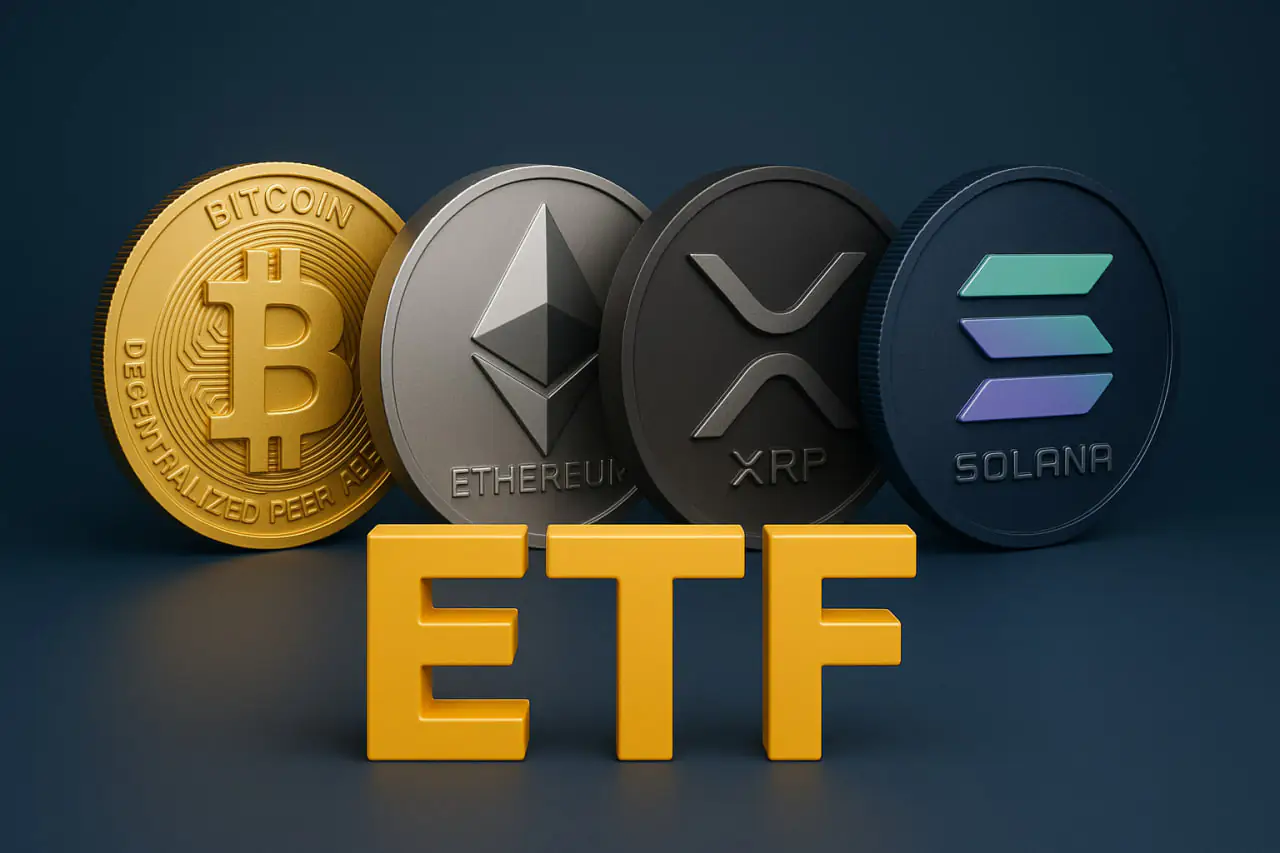
Renewed inflows into Bitcoin ETFs, totaling $246.9M on March 10, signal a potential shift in institutional sentiment as Bitcoin approaches $70K. Ethereum ETFs saw a modest $12.6M in net inflows, indicating selective institutional interest despite overall market recovery. Flat flows for Solana ETFs and continued outflows for XRP ETFs suggest investor caution towards altcoin-specific products, despite Bitcoin's strength. The positive ETF flows, coupled with Bitcoin's price recovery, suggest that institutional demand is sensitive to price action and could drive further upside if key resistance levels are breached.

Spot Bitcoin ETFs continue to attract significant inflows, adding $251 million on Tuesday and reinforcing a positive March trend with cumulative inflows reaching $1.56 billion. Despite Bitcoin's price dip below $70,000, sustained ETF inflows suggest ongoing institutional demand and a potential floor for price action in the short term. XRP ETF outflows have eased but persist, indicating continued selling pressure, though Goldman Sachs' substantial holdings highlight institutional interest despite retail-driven demand.

The tokenized real-world asset market has grown 66% to $23.6 billion in 2026, driven by demand for 24/7 trading and accessibility, signaling a maturing sector beyond conceptualization. Tokenized funds, gold, and equities are leading RWA growth, with investors seeking alternatives to traditional markets that close, indicating a potential shift in asset allocation strategies. The increasing value and accessibility of tokenized RWAs, particularly US Treasurys and equities, suggest growing institutional acceptance and a potential for broader adoption across public blockchains.

The UN's extensive use of over 40 blockchain pilots signifies a strategic shift towards leveraging DLT for humanitarian aid, aiming to bypass traditional banking inefficiencies and reduce costs. The World Food Programme's 'Building Blocks' platform demonstrates tangible success, having moved over $760 million to 6 million people and saved $3.5 million in fees, highlighting the potential for blockchain in efficient aid distribution. While pilots like USDC drops to Ukrainian refugees and retina-scan aid redemption show innovation, criticisms of 'blockchain in name only' and persistent connectivity issues highlight significant hurdles to widespread adoption. The UN's exploration of blockchain for aid delivery, including stablecoin use and digital identity verification, presents a potential paradigm shift in transparency and accountability for donor funds, though user accessibility remains a key challenge.
Speculation around a potential TikTok IPO continues, but the platform remains privately held by ByteDance, meaning no direct stock or ticker symbol is currently available to public investors. While direct investment in TikTok stock is not possible, indirect exposure can be gained through private market investments or by investing in companies that benefit from TikTok's ecosystem, though these avenues carry their own risks and accessibility limitations. The significant interest in TikTok stock stems from its massive user base, strong advertising revenue growth, and advanced AI algorithms, positioning ByteDance as a highly valued private tech company with potential for a major future IPO.

Bhutan's strategic sale of approximately 58% of its Bitcoin holdings, routed through OTC markets, indicates a disciplined treasury management approach rather than panic selling. The proceeds from Bitcoin sales are being allocated to tangible national development projects, including salary increases, healthcare expansion, and the Gelephu Mindfulness City, demonstrating a direct link between crypto assets and real-world economic impact. Despite significant liquidation, Bhutan remains a top nation-state holder of Bitcoin, highlighting a sustainable 'yield' model of mining with low-cost energy and selling into strength, contrasting with El Salvador's 'reserve' model. Bhutan's successful execution of its Bitcoin strategy could serve as a model for other nations with underutilized energy resources looking to leverage digital assets for national development.

Arthur Hayes advises waiting to buy Bitcoin, suggesting current geopolitical tensions and potential central bank liquidity injections are key indicators to monitor. Hayes views Bitcoin as a 'liquidity alarm,' implying its price is highly sensitive to monetary policy, and anticipates a buying opportunity when central banks increase money supply. Despite a cautious short-term outlook, Hayes maintains a long-term bullish stance on Bitcoin, projecting a potential $100,000 price target contingent on significant global fiat liquidity expansion. The analyst warns against market timing, emphasizing patience and macro awareness as crucial for navigating the crypto cycle, especially given potential risk-off scenarios that could push BTC below $60K.

The Ethereum Foundation's deployment of 72,000 ETH using DVT-lite signals a significant step towards simplifying institutional validator infrastructure, potentially lowering barriers to entry and increasing decentralization. Despite weak ETH price action, the persistent 55-day staking queue indicates strong underlying demand for ETH staking, suggesting a maturing market focused on infrastructure reliability over short-term yield. The DVT-lite experiment, by reducing technical complexity for running validator nodes, could encourage greater institutional participation in direct node operation, thereby enhancing network security and diversity. The upcoming activation of these DVT-lite validators around March 19th will serve as a crucial real-world test of the simplified institutional staking infrastructure, providing early operational data.

CHILLGUY's price trajectory is heavily reliant on social media trends and community engagement, indicating a high-volatility profile typical of memecoins. Technical analysis suggests a potential breakout from a tightening triangle pattern, with a target of $0.045 if bullish momentum is sustained. Despite a recent 63% price drop, long-term predictions up to $2.64 by 2030 hinge on the project evolving into a recognized internet brand beyond its meme origins. The Solana blockchain's low fees and fast transactions provide a favorable environment for CHILLGUY's speculative trading activity, but do not guarantee fundamental growth.
Signal context only. Validate with price action, liquidity, and risk limits before taking a position.
