
Navigating Crypto News

CoinFeather
Navigating Crypto News
Quick market read from this story
Speculation around a potential TikTok IPO continues, but the platform remains privately held by ByteDance, meaning no direct stock or ticker symbol is currently available to public investors.
While direct investment in TikTok stock is not possible, indirect exposure can be gained through private market investments or by investing in companies that benefit from TikTok's ecosystem, though these avenues carry their own risks and accessibility limitations.
The significant interest in TikTok stock stems from its massive user base, strong advertising revenue growth, and advanced AI algorithms, positioning ByteDance as a highly valued private tech company with potential for a major future IPO.
Deep Dive
Despite its immense global popularity and billions of downloads, TikTok is not currently publicly traded. The social media giant is owned by the privately held Chinese technology company ByteDance, meaning there is no official TikTok stock price or ticker symbol available to the public. This has led to significant investor interest and surging searches for information regarding a potential TikTok IPO.
ByteDance, TikTok's parent company, remains a private entity, preventing investors from directly purchasing TikTok shares on major stock exchanges like the NYSE or Nasdaq. The company has faced various challenges, including regulatory scrutiny and data security concerns in several countries, which have complicated any potential timeline for a public listing.
While there is no official stock price, shares of ByteDance are sometimes traded on secondary marketplaces for accredited investors. These private transactions have indicated share prices around $200, offering a glimpse into the company's valuation. Speculation about a future IPO has persisted for years, with potential scenarios including listing ByteDance as a whole, spinning off TikTok into a separate public entity, or creating a regional entity like TikTok Global. Any of these moves would introduce a TikTok stock symbol and a publicly traded price.
The interest in a potential TikTok IPO stems from the company's remarkable growth and influence. TikTok boasts a massive global user base, has become a formidable competitor in the digital advertising market, and is recognized for its highly effective AI-powered recommendation algorithms. These factors have positioned ByteDance as one of the world's most valuable private technology companies.
Currently, direct investment in TikTok stock is not possible. However, investors can gain indirect exposure by investing in companies with ownership stakes or business partnerships with ByteDance, participating in private markets (primarily for accredited and institutional investors), or investing in companies that benefit from TikTok's ecosystem. Investors should also be aware of potential risks associated with a future IPO, including ongoing regulatory challenges, geopolitical tensions between the US and China, and intense competitive pressure from platforms like Instagram, YouTube, and Snapchat.
While anticipation for a TikTok IPO continues, the company remains privately held by ByteDance. The absence of an official stock price or ticker symbol underscores its private status. Should ByteDance proceed with a public offering, it is widely expected to be one of the most significant tech IPOs in history.
Source, catalyst, and sector overlap from the latest feed.
The Indian government's extension of the Jal Jeevan Mission to 2028, coupled with increased funding, signals sustained demand for rural water infrastructure, directly benefiting pump manufacturers like Shakti Pumps. Shakti Pumps' share price surge of over 19% reflects immediate market reaction to the JJM 2.0 announcement, indicating positive investor sentiment towards companies poised to gain from government infrastructure projects. The shift in JJM 2.0's focus towards service delivery and sustainability suggests a long-term commitment to the program, potentially creating ongoing opportunities for related industries beyond initial infrastructure build-out.
The denial of Kalshi's injunction in Ohio signifies that state regulators can proceed with enforcing gambling laws against prediction market contracts, potentially impacting similar platforms operating under federal commodities law claims. This ruling highlights the ongoing legal battle between prediction market platforms and state gambling authorities, suggesting a continued regulatory uncertainty that could affect the classification and operation of these markets. The court's reasoning that Kalshi's contracts might stretch the definition of derivatives to include wagers on sports outcomes indicates a potential hurdle for platforms seeking to operate under CFTC oversight rather than state-specific gambling regulations.
Bitcoin's return above $70,000 has triggered a 'FOMO' sentiment, indicating elevated crowd optimism driven by recent market events and easing oil prices. Despite short-term bullish sentiment, historical analysis of the 200-week EMA suggests that previous market bottoms occurred after significantly deeper corrections, implying potential for further downside risk. The sharp rise in bullish sentiment as BTC reclaims $70K may signal increasing speculative behavior rather than a confirmed stable uptrend, warranting caution for traders.
Solana is testing a critical support zone between $77-$87, with indicators like the weekly RSI at 2022 lows suggesting potential oversold conditions that could precede a rebound. Despite recent price declines, early momentum signals such as a bullish MACD cross and flattening EMAs indicate that bearish pressure may be easing, creating a potential setup for a range reclaim. Analysts are closely monitoring Solana's ability to hold the $77-$87 support level, as a successful reclaim could signal a return to a stronger price structure and potentially target higher resistance levels.
Ripple's strategic integration of AI into its financial software, particularly for forecasting and liquidity management, signals a proactive approach to leveraging emerging technologies for enterprise solutions. The company's continued emphasis on XRP as the core of its liquidity network, supported by XRPL enhancements like auto-bridging and lending tools, positions it for increased utility in tokenized finance. Expansion into stablecoin services with RLUSD and its reported strong demand highlights Ripple's diversification beyond cross-border payments and its adaptation to market needs for digital money. CEO Brad Garlinghouse's projection of 2026 as a breakout year, coupled with recent acquisitions and global expansion, suggests a strategic build-up aimed at significant market penetration and product adoption.
Live Feed
Loading the broader stream in the same flow as the homepage feed.

Despite a general policy thaw towards crypto, the US government maintains a hardline stance on privacy tools linked to national security risks, indicating that projects in this niche face continued legal scrutiny and potential repricing. Prosecutors are pushing to retry Tornado Cash founder Roman Storm on money laundering and sanctions violation charges, signaling that the market may be underpricing the specific legal risks associated with privacy-enhancing infrastructure, even as other crypto sectors see regulatory easing. The Treasury's acknowledgment of lawful mixer use is juxtaposed with its call for stronger tools to freeze suspicious assets, highlighting a bifurcated regulatory approach where privacy is permissible unless tied to illicit activities like North Korean-linked laundering, creating sector-specific legal uncertainty. Investors should differentiate between broad 'pro-crypto' policy shifts and sector-specific regulatory outcomes, as assets linked to privacy protocols or those with potential ties to illicit flows may continue to carry a legal risk premium not reflected in current market valuations.

Ripple Labs executed its largest RLUSD stablecoin burn to date, removing 10,000,000 coins from circulation, signaling a commitment to managing stablecoin liquidity. The substantial RLUSD burn follows recent minting activity, indicating Ripple's active management of its stablecoin supply to maintain balance and potentially support its value. This event, coupled with Ripple securing a new Australian Financial Services License, highlights the company's ongoing expansion and regulatory efforts in key markets. Traders should monitor RLUSD's market dynamics and Ripple's broader strategy as these actions suggest a proactive approach to stablecoin operations and regulatory compliance.

Shiba Inu's failure to break above the 26 EMA indicates the continuation of its bearish structure, suggesting further downside pressure is likely. The recent fakeout at a key technical resistance level erodes buyer confidence and increases the probability of further negative price action. Traders should interpret the inability to overcome the 26 EMA as a signal of persistent weakness, reinforcing a bearish outlook for SHIB in the short term.

The UK government's new fraud strategy highlights the increasing use of cryptocurrencies in criminal activities, signaling a heightened regulatory focus on the sector. The strategy's emphasis on international cooperation and a whole-system response suggests that efforts to combat crypto fraud will become more coordinated globally. While the report focuses on crime, the increased attention from governments worldwide on crypto regulation could lead to more clarity, potentially impacting market sentiment and adoption.
XRP ETFs have demonstrated significant institutional adoption, accumulating $1.4 billion in inflows, indicating sustained demand for regulated digital asset exposure despite short-term price volatility. The substantial inflows into XRP ETFs, with major institutions like Goldman Sachs showing significant holdings, signal a growing acceptance of XRP as a core investment asset within traditional finance frameworks. The strong performance of XRP ETFs highlights their role as a crucial bridge between traditional finance and the crypto market, potentially driving further institutional capital into digital assets through regulated products.
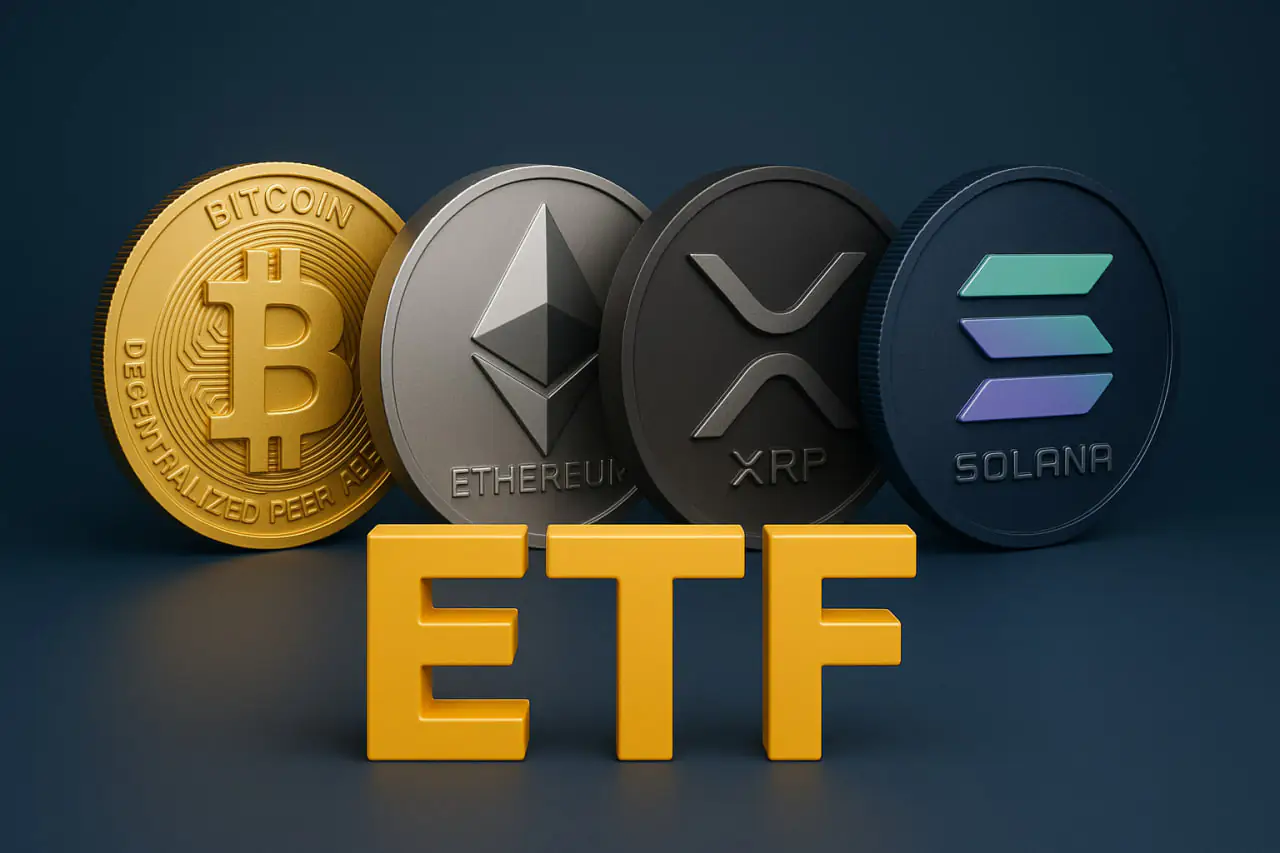
Renewed inflows into Bitcoin ETFs, totaling $246.9M on March 10, signal a potential shift in institutional sentiment as Bitcoin approaches $70K. Ethereum ETFs saw a modest $12.6M in net inflows, indicating selective institutional interest despite overall market recovery. Flat flows for Solana ETFs and continued outflows for XRP ETFs suggest investor caution towards altcoin-specific products, despite Bitcoin's strength. The positive ETF flows, coupled with Bitcoin's price recovery, suggest that institutional demand is sensitive to price action and could drive further upside if key resistance levels are breached.

Spot Bitcoin ETFs continue to attract significant inflows, adding $251 million on Tuesday and reinforcing a positive March trend with cumulative inflows reaching $1.56 billion. Despite Bitcoin's price dip below $70,000, sustained ETF inflows suggest ongoing institutional demand and a potential floor for price action in the short term. XRP ETF outflows have eased but persist, indicating continued selling pressure, though Goldman Sachs' substantial holdings highlight institutional interest despite retail-driven demand.

The tokenized real-world asset market has grown 66% to $23.6 billion in 2026, driven by demand for 24/7 trading and accessibility, signaling a maturing sector beyond conceptualization. Tokenized funds, gold, and equities are leading RWA growth, with investors seeking alternatives to traditional markets that close, indicating a potential shift in asset allocation strategies. The increasing value and accessibility of tokenized RWAs, particularly US Treasurys and equities, suggest growing institutional acceptance and a potential for broader adoption across public blockchains.

The UN's extensive use of over 40 blockchain pilots signifies a strategic shift towards leveraging DLT for humanitarian aid, aiming to bypass traditional banking inefficiencies and reduce costs. The World Food Programme's 'Building Blocks' platform demonstrates tangible success, having moved over $760 million to 6 million people and saved $3.5 million in fees, highlighting the potential for blockchain in efficient aid distribution. While pilots like USDC drops to Ukrainian refugees and retina-scan aid redemption show innovation, criticisms of 'blockchain in name only' and persistent connectivity issues highlight significant hurdles to widespread adoption. The UN's exploration of blockchain for aid delivery, including stablecoin use and digital identity verification, presents a potential paradigm shift in transparency and accountability for donor funds, though user accessibility remains a key challenge.

Bitcoin's consolidation around $70,000 indicates a critical juncture, with a sustained hold potentially paving the way for a retest of the high $70,000s to low $80,000s by April. Rising Bitcoin open interest suggests an increase in leveraged positions, signaling a heightened probability of significant price volatility and potential liquidations in the coming weeks. The market is currently pricing in geopolitical instability, creating a cautious environment where traders are awaiting a clear breakout or breakdown from the current rangebound price action.

HYPE crypto experienced a significant price surge driven by substantial spot inflows and increased futures open interest, indicating strong bullish sentiment among traders. The platform's native token, HYPE, saw its price climb due to increased trading volume on its CL-USDC perpetual contract, which tracks oil prices, suggesting a potential use case for macro hedging. Despite some shorting activity on specific exchanges like OKX, the overall market structure and on-chain data for Hyperliquid point towards continued bullish momentum, with analysts eyeing higher Fibonacci extension targets. The deflationary mechanism of burning 97% of fees for HYPE crypto contributes to supply tightness, potentially supporting further price appreciation if adoption trends persist.

The agentic payments protocol x402, backed by Coinbase, aims to revolutionize micropayments for AI agents but faces significant challenges with low genuine demand and high levels of artificial transaction activity. Despite ambitious projections for agentic commerce, onchain data from Artemis indicates that current x402 transaction volume is largely composed of 'gamed' activities like self-dealing and wash trading, suggesting the underlying economy is still nascent. While the vision of AI agents paying each other via stablecoins is compelling, the current reality shows a substantial gap between the protocol's ecosystem valuation and its actual daily payment volume, highlighting the need for real-world merchant adoption. The development of agentic payments via protocols like x402 represents a potential long-term structural shift in internet commerce, but near-term adoption hurdles and the early stage of the supporting economy suggest a prolonged development cycle.

Bhutan's strategic sale of approximately 58% of its Bitcoin holdings, routed through OTC markets, indicates a disciplined treasury management approach rather than panic selling. The proceeds from Bitcoin sales are being allocated to tangible national development projects, including salary increases, healthcare expansion, and the Gelephu Mindfulness City, demonstrating a direct link between crypto assets and real-world economic impact. Despite significant liquidation, Bhutan remains a top nation-state holder of Bitcoin, highlighting a sustainable 'yield' model of mining with low-cost energy and selling into strength, contrasting with El Salvador's 'reserve' model. Bhutan's successful execution of its Bitcoin strategy could serve as a model for other nations with underutilized energy resources looking to leverage digital assets for national development.

Arthur Hayes advises waiting to buy Bitcoin, suggesting current geopolitical tensions and potential central bank liquidity injections are key indicators to monitor. Hayes views Bitcoin as a 'liquidity alarm,' implying its price is highly sensitive to monetary policy, and anticipates a buying opportunity when central banks increase money supply. Despite a cautious short-term outlook, Hayes maintains a long-term bullish stance on Bitcoin, projecting a potential $100,000 price target contingent on significant global fiat liquidity expansion. The analyst warns against market timing, emphasizing patience and macro awareness as crucial for navigating the crypto cycle, especially given potential risk-off scenarios that could push BTC below $60K.
Signal context only. Validate with price action, liquidity, and risk limits before taking a position.
