
Navigating Crypto News

CoinFeather
Navigating Crypto News

Quick market read from this story
The public dispute between Craig Wright and David Schwartz highlights differing philosophical views on decentralization and protocol governance, potentially influencing market perception of Bitcoin's immutability versus XRP's controlled evolution.
Wright's accusation that Schwartz projects XRP-style control onto Bitcoin suggests a narrative clash that could impact investor confidence in the fundamental design principles of different blockchain ecosystems.
This debate, while philosophical, touches upon core tenets of blockchain design, implying that ongoing discussions about control and governance could be a subtle factor for traders evaluating the long-term value proposition of Layer 1 protocols.
Source, catalyst, and sector overlap from the latest feed.
XRP's resurgence to the top 4 by market cap, challenging BNB, signals a potential shift in market positioning, though the overall trend remains downward. The asset is establishing a local base with improving short-term structure, indicating reduced selling pressure, but faces significant resistance at the $1.37-$1.40 range. Investors should view this period as transitional; a break above resistance could lead to further gains, while failure may result in a decline back to the $1.25 level.
Live Feed
Loading the broader stream in the same flow as the homepage feed.

Whale accumulation of TRUMP tokens suggests a short-term bullish sentiment among large holders anticipating a Mar-a-Lago event, despite the token trading near record lows. The TRUMP token faces significant headwinds from ongoing political scrutiny and regulatory investigations into its association with Donald Trump, introducing substantial risk despite potential event-driven interest. The intersection of a political event with a memecoin's price action, coupled with regulatory pressure, creates a volatile and uncertain trading environment for the TRUMP token.

North Korea's reliance on crypto theft as a primary funding source, driven by international sanctions, highlights a structural difference from other state actors who use crypto more as a payment rail. The regime's sophisticated, long-term infiltration tactics targeting exchanges and protocols, combined with crypto's finality of transactions, present a significant and evolving security challenge for the industry. Unlike Russia or Iran, North Korea's direct need for liquid revenue from crypto exploits, rather than for sanctions evasion or proxy financing, positions them as a unique and persistent threat to the crypto ecosystem.
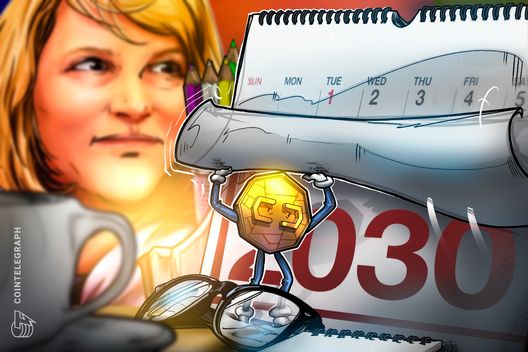
Senator Lummis warns of a critical window to pass the CLARITY Act before 2030, highlighting potential delays until the next decade if not enacted soon. The CLARITY Act's passage is framed as essential for US financial future and fostering innovation, with industry leaders anticipating positive impacts on consumers and entrepreneurs. Progress on the CLARITY Act is contingent on resolving stablecoin yield disagreements, indicating a key hurdle that could stall broader legislative momentum. The urgency surrounding the CLARITY Act suggests a potential shift in regulatory clarity, which could de-risk the crypto market and encourage greater institutional and retail participation.

Polymarket's brief appearance in Google News search results, attributed to an error, highlights the ongoing integration challenges and visibility issues for decentralized prediction markets within mainstream information ecosystems. Despite the error, Polymarket's prior partnerships with Google Finance, X, and MetaMask indicate a strategic push for broader adoption and integration, suggesting continued efforts to bridge prediction markets with traditional platforms. The article's discussion on the low profitability of most Polymarket traders underscores the speculative nature of prediction markets and suggests that while adoption may grow, consistent financial success remains a significant hurdle for the average participant.

Peter Schiff's commentary on Bitcoin's price dip highlights a recurring narrative from skeptics, but the market context shows a significant liquidation event impacting over-leveraged traders. The recent price drop, while framed by Schiff as a sign of overvaluation, triggered substantial liquidations, indicating potential short-term volatility and pressure on leveraged positions. Despite Schiff's bearish pronouncements, the article notes Bitcoin's substantial long-term gains, suggesting that short-term price fluctuations are often amplified by market sentiment and leverage.

The debate surrounding Satoshi Nakamoto's identity, fueled by Ripple CTO David Schwartz questioning investigative journalist John Carreyrou's logic, highlights ongoing narrative uncertainty within the Bitcoin ecosystem. Schwartz's argument that participation in a New York Times photoshoot offers no definitive proof of identity or non-identity suggests that external validation methods for Satoshi's persona are unreliable, impacting speculative narratives. The discussion around potential economic incentives for individuals to be perceived as Satoshi, even if not the actual creator, underscores the speculative nature of identity-based narratives and their limited direct market impact.

Bitcoin's price action shows a breakdown below the 50 SMA, indicating a potential shift in short-term momentum following the failure of US-Iran talks. The lack of a deal on the Strait of Hormuz prolongs geopolitical uncertainty, which is likely to continue pressuring Bitcoin by delaying expected oil price relief and rate cut expectations. With the RSI at its lowest visible reading and the 50 SMA now acting as resistance, traders should monitor the $71,000-$71,200 support level for signs of further downside if momentum continues to deteriorate.

XRP experienced a sharp, high-volume breakdown below key support at $1.35, indicating strong selling pressure and a potential continuation of the downtrend. The weak recovery following the selloff, characterized by fading volume and a lower high, reinforces bearish technicals and suggests sellers remain in control. Despite compressed volatility, the immediate price action points to downside risk, with failure to reclaim $1.35 likely leading to further declines towards $1.31-$1.32.
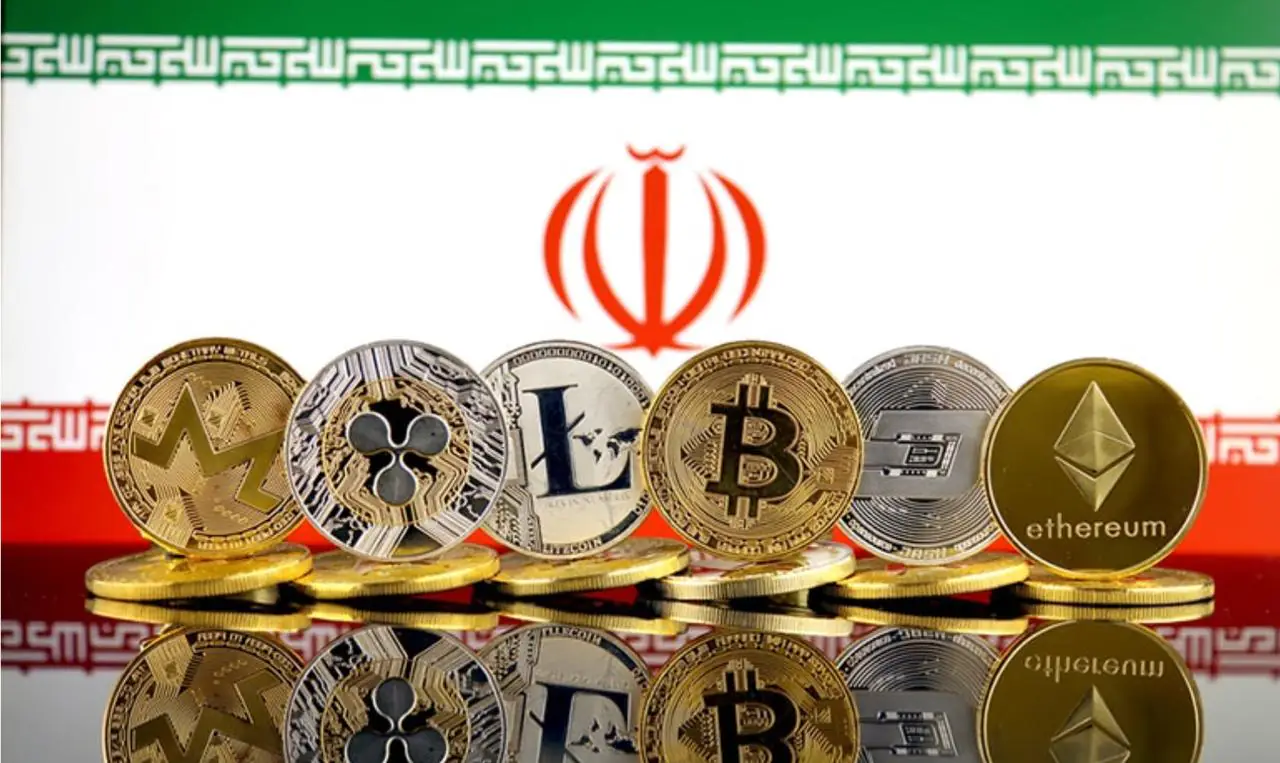
Iran's formalization of a crypto-denominated transit fee for the Strait of Hormuz, despite claims of untraceability, presents a clear sanctions violation risk for shipping companies, as blockchain analytics can trace these transactions. The IRGC's increasing reliance on stablecoins for illicit financial flows, evidenced by billions processed in 2025, highlights the critical role of stablecoin issuers as potential intervention points for regulators like OFAC. This development sets a precedent for other sanctioned regimes controlling strategic chokepoints, potentially creating a new revenue extraction model that leverages crypto's perceived anonymity, though blockchain transparency ultimately undermines this. Shipping companies engaging with this toll face significant legal and commercial repercussions, including potential asset freezes and exclusion from the dollar-based financial system, regardless of the cryptocurrency used for payment.
Macro analyst Jordi Visser suggests that Bitcoin surpassing $76,000 and Ether exceeding $2,400 could signal a sustainable upward trend for the year, challenging bearish market sentiment. The analyst's outlook is predicated on the belief that a recession is unlikely, which would drive investors to seek assets like Bitcoin and Ether for returns in a stagnant traditional market. This perspective contrasts with a growing segment of the crypto industry anticipating further downside, highlighting a divergence in market outlooks that traders should monitor.
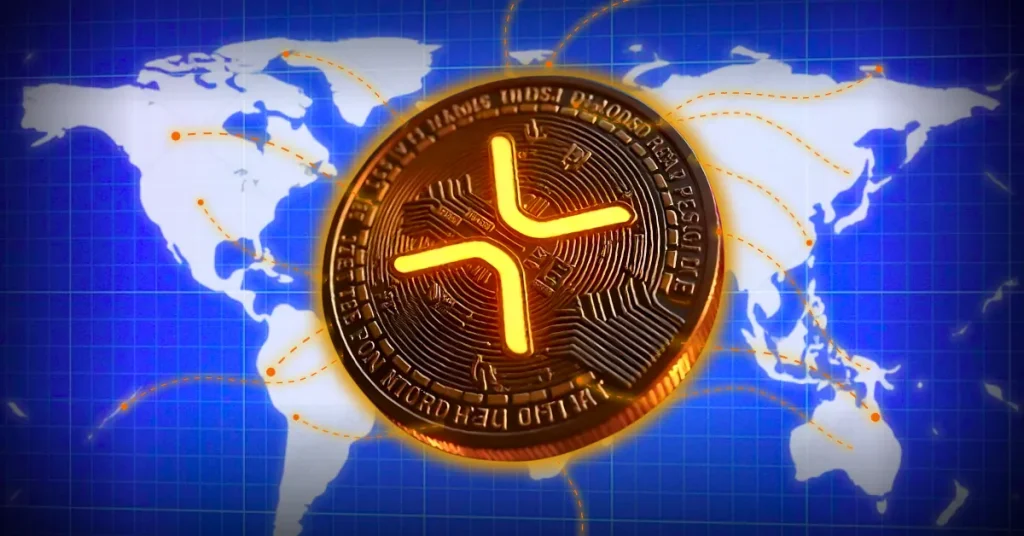
Geopolitical events in the Strait of Hormuz are being interpreted as a catalyst for countries to explore alternatives to the US dollar for trade settlement, potentially increasing demand for digital assets like XRP. Analyst Mickle posits that the current global economic climate signals a 'flight from currency itself,' positioning digital assets as neutral liquidity sources that can bypass traditional fiat systems. XRP is highlighted for its potential role in global settlements due to its deep liquidity, international settlement capabilities, speed, and neutrality, contrasting it with the limitations of gold for real-time transactions. The long-term trend of dedollarization is accelerating with the introduction of enabling technologies, suggesting that current geopolitical stresses are early indicators of a significant shift in global finance.
Signal context only. Validate with price action, liquidity, and risk limits before taking a position.
No explicit catalyst tagged.
Shiba Inu's technical breakdown below its ascending trendline support invalidates the short-term uptrend, signaling a potential reversion to its larger downtrend. The lack of buyer follow-through and absence of bullish divergence on momentum indicators suggest continued price declines are likely without significant technical opposition. Investors should exercise caution with any short-term bounces, as failed technical structures often lead to sharper moves in the opposite direction.
