
Navigating Crypto News

CoinFeather
Navigating Crypto News

Quick market read from this story
The termination of Ether Machine's SPAC merger highlights a cautious market sentiment towards new public listings of crypto-focused firms, potentially impacting future institutional fundraising efforts.
Deteriorating market conditions cited as the reason for the deal's collapse suggest broader macroeconomic headwinds are influencing the crypto industry's traditional finance integration plans.
The failure of this $1.5 billion ETH fund plan, coupled with other Ethereum treasury exits, indicates a potential shift away from large-scale ETH accumulation strategies among institutional players.
Source, catalyst, and sector overlap from the latest feed.
UK Liberal Democrats are calling for an FCA investigation into Nigel Farage's promotion of Stack BTC, citing potential market abuse and conflicts of interest. The probe request highlights growing concerns over the intersection of crypto and UK politics, particularly regarding political donations and potential self-enrichment by public figures. This regulatory scrutiny, coupled with the UK's move towards banning crypto political donations, could signal increased oversight for crypto-related political involvement.
The US Department of Justice is initiating a compensation process for victims of the OneCoin Ponzi scheme, utilizing over $40 million in forfeited assets. This development signifies a move towards asset recovery for victims of a major historical crypto fraud, highlighting ongoing legal repercussions for scheme architects. While the OneCoin scheme collapsed years ago, this action underscores the long-term legal and financial consequences for fraudulent projects and their founders.
Live Feed
Loading the broader stream in the same flow as the homepage feed.

The nominee for Bank of Korea governor favors a CBDC and bank-issued deposit tokens over stablecoins, signaling a potentially restrictive regulatory environment for private stablecoin issuers in South Korea. Shin Hyun-song's emphasis on AML and compliance controls for stablecoins suggests that any future issuance will likely be confined to regulated financial institutions, limiting broader adoption and innovation in the short term. The nominee's skepticism towards blockchain's FX efficiency and his view that cryptocurrencies lack fundamental monetary roles indicate a cautious approach to digital assets, potentially dampening speculative interest.

The DOJ's initiation of a compensation process for OneCoin victims, offering over $40 million in forfeited assets, signals a move towards asset recovery for those defrauded by the $4 billion scam. Victims of the OneCoin fraud must file claims by June 30, 2026, to access funds derived from prosecutions and asset seizures, highlighting the ongoing legal ramifications of major crypto scams. The ongoing pursuit of OneCoin co-founder Ruja Ignatova, despite her absence, underscores the persistent efforts by international authorities to bring perpetrators of large-scale crypto fraud to justice.
Ripple CEO Brad Garlinghouse has tempered his optimism regarding the CLARITY Act, signaling a shift from strong conviction to a more pragmatic view that progress is imminent. Despite a less bullish stance, Garlinghouse's continued assertion that regulatory clarity is 'almost there' suggests underlying confidence in the CLARITY Act's eventual passage, potentially easing industry uncertainty. The CLARITY Act's potential passage is seen as a significant development that could provide XRP with a stronger regulatory footing, enhancing its institutional appeal and competitive positioning.
Solana is testing a critical support zone between $72 and $78, a level that technical analysts believe will determine its short-term price direction. Record $29 million in daily PreStocks trading volume on Solana, driven by tokenized assets like OpenAI, highlights growing demand for RWA on the network. The surge in tokenized asset trading volume, particularly for pre-IPO stocks, suggests a potential new use case and demand driver for the Solana ecosystem. While technical support is being tested, the strong on-chain activity in tokenized assets could provide a bullish counter-narrative if sustained.

Hyperliquid's HYPE token has seen a significant 10% price increase in two days, outperforming the broader altcoin market and regaining key support levels. The platform's growth is driven by its emergence as a major hub for DeFi derivatives and high-volatility trading, attracting significant trader attention and liquidity. While HYPE shows short-term extension, potential consolidation towards $40-$42 is expected, with medium-term prospects tied to continued platform activity concentration. The platform's structural advantage lies in generating actual trading volume and fees, further solidifying its position as a key trading venue.
Ethereum is consolidating above key support at $2,000, with a trader projecting a potential move to $2,900 if this level holds. Strong buy-side interest is evident in Ethereum's order book, suggesting potential for a breakout, though large holders await clearer market direction. The bullish outlook for ETH is contingent on maintaining the $2,000 support level, with a failure risking the projected upside targets. Broader market strength, supported by Bitcoin holding $68,000-$69,000, is seen as a crucial factor for Ethereum's continued upward momentum.

Bitcoin's price surge to four-week highs above $74,000 is being influenced by dealer hedging flows around the $75,000 level, which acts as a 'volatility release point' due to negative gamma exposure. The $75,000 level is critical as it aligns with the 100-day moving average, a historically significant resistance zone that could amplify volatility or trigger accelerated price movements based on dealer hedging behavior. Positive dealer gamma exposure is expected between $80,000-$80,600, potentially leading to range-bound trading and reduced directional pressure in that zone. With BTC trading below its 200-day moving average of $87,519, the current rally faces potential resistance at prior inflection points like $80,525, suggesting a cautious outlook for sustained upside.
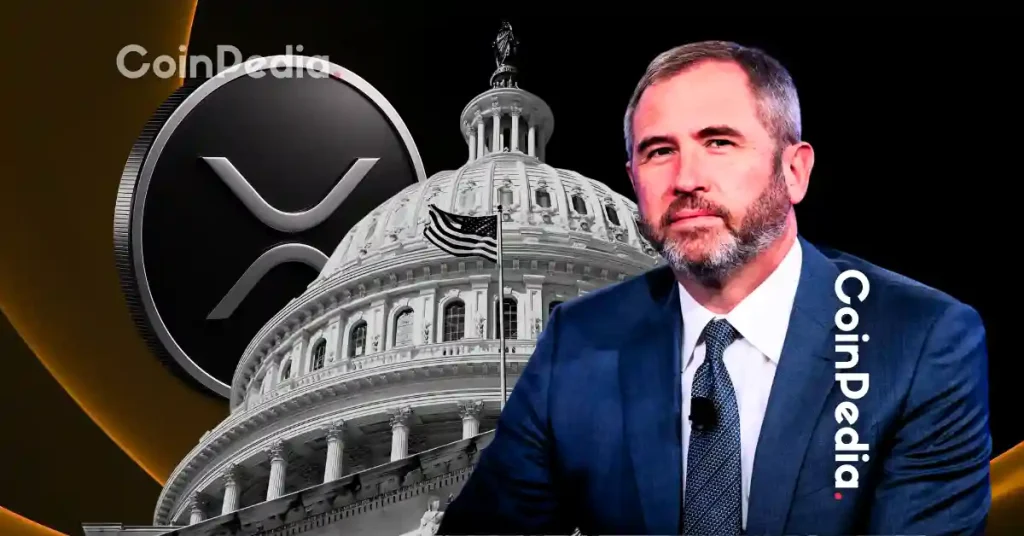
Ripple CEO Brad Garlinghouse suggests peak frustration in Washington may signal imminent compromise on the CLARITY Act, potentially leading to legislative permanence for crypto regulation. Despite recent SEC/CFTC joint statements classifying certain assets as commodities, Garlinghouse emphasizes the CLARITY Act's importance to prevent future regulatory reversals and ensure long-term industry stability. The growing political influence of the crypto industry, evidenced by significant PAC investments, suggests that anti-crypto stances may become less viable for lawmakers heading into the midterms. Garlinghouse's tempered optimism reflects a shift from earlier high-confidence predictions, indicating that legislative progress on the CLARITY Act faces ongoing political hurdles and a narrowing timeline.
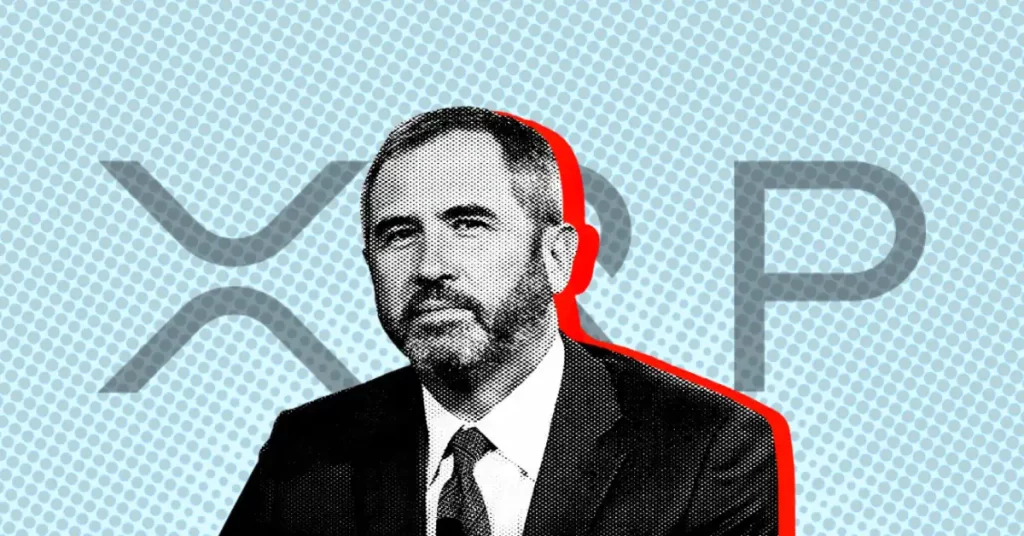
Ripple CEO Brad Garlinghouse positions XRP as a solution to modernize outdated global payment infrastructure, aiming to enable value transfer akin to information flow. The comparison of Ripple's goal to the early internet's evolution suggests a potential for significant disruption and increased interoperability in financial transactions. Garlinghouse's critique of SWIFT and traditional wire transfers highlights a market opportunity for faster, cheaper, and more efficient cross-border payments.
Aptos's tokenomics overhaul, including a 10x gas fee increase and reduced staking rewards, aims to tighten supply and enhance long-term value through increased token burns. The projected annual burn of over 32 million APT tokens post-DEX launch, coupled with a capped total supply and locked Foundation tokens, suggests a significant deflationary pressure on APT. Traders should monitor the impact of higher gas fees on network usage and the effectiveness of the burn mechanisms in driving deflationary dynamics for APT.
XRP is exhibiting a textbook bullish retest pattern, consolidating above a key breakout zone, which suggests a potential continuation of its uptrend towards the $1.42 macro target. Strong on-chain indicators, including a surging taker buy/sell ratio and consistent weekly inflows of $19.3 million, reinforce the bullish sentiment and indicate sustained accumulation by both retail and institutional investors. The $1.35–$1.355 support zone is critical; a hold here, coupled with continued buyer dominance, could accelerate XRP's move towards the $1.42 resistance level.
X's head of product has teased a new initiative aimed at "fixing" the struggling crypto market, signaling potential platform-level changes to address manipulation and phishing. The planned integration of cryptocurrency and stock trading functionalities into X Money, alongside efforts to combat bots and phishing, suggests a move towards broader financial services on the platform. While the exact nature of the "fix" is unannounced, X's focus on combating bots and implementing security measures could signal a shift towards more regulated or verified interactions within the crypto space on its platform.
The US Department of Justice's initiation of a $40 million payout to OneCoin victims marks a significant step in recovering funds from a major historical crypto fraud. While the payout is a positive development for victims, it does not directly impact current market dynamics as OneCoin is a defunct Ponzi scheme with no active trading or utility. The ongoing pursuit of Ruja Ignatova, a fugitive founder of OneCoin, highlights the persistent regulatory and law enforcement focus on past crypto-related illicit activities.

The Hyperbridge exploit, resulting in a $237,000 loss and the minting of 1 billion bridged DOT, highlights a critical vulnerability in cross-chain bridge security and proof verification logic. Polkadot's confirmation that only bridged DOT on Ethereum was affected, not native assets or parachains, mitigates systemic risk but still impacts bridged asset holders and trust in the specific bridge. The incident led to a 4.77% price drop in DOT, indicating market sensitivity to security breaches even when contained to specific bridge implementations. The root cause identified as a bug in Solidity-based Merkle Mountain Range proof verification logic underscores the need for rigorous auditing of smart contract implementations, especially for cross-chain communication.
Signal context only. Validate with price action, liquidity, and risk limits before taking a position.
No explicit catalyst tagged.
