
Navigating Crypto News

CoinFeather
Navigating Crypto News
Quick market read from this story
The partnership between SBI Ripple Asia and DSRV Labs to explore XRP Ledger for Japan-South Korea payments signals a significant potential for streamlining cross-border transactions in a key Asian corridor.
By leveraging the XRP Ledger's speed and low costs, this initiative aims to challenge traditional payment inefficiencies, potentially driving wider adoption of blockchain for financial services in the region.
The integration of RLUSD, Ripple's stablecoin, alongside the XRP Ledger infrastructure, could offer a fast, secure, and frictionless payment solution, serving as a model for other high-volume corridors.
This development highlights the XRP Ledger's capability to enhance financial inclusion by providing self-owned digital identities and seamless access to global financial services, aligning with Ripple's broader mission.
Deep Dive
SBI Ripple Asia and South Korea’s DSRV Labs have signed a Memorandum of Understanding (MOU) to investigate the integration of the XRP Ledger into the Japan–South Korea payment corridor. This initiative aims to streamline transactions within one of Asia’s busiest financial networks, potentially transforming cross-border digital settlements for businesses and individuals.
The XRP Ledger, recognized for its speed, scalability, and low costs, is being considered as the foundational infrastructure for this corridor. The project seeks to overcome traditional banking inefficiencies by leveraging blockchain technology to enhance transparency, reduce processing times, and streamline cross-border payments.
This move aligns with Ripple’s broader vision, as its president has highlighted the XRP Ledger's potential to empower billions through self-owned digital identities and accessible global financial services. The initiative promises greater financial inclusion for underserved regions, contributing to a more equitable financial system.
SBI VC Trade is preparing to launch Ripple’s RLUSD stablecoin in Japan, designed to facilitate instant settlements and streamline digital payments. When integrated with the XRP Ledger's infrastructure, this stablecoin could offer a fast, secure, and frictionless method for asset transfers.
This collaboration is expected to serve as a potential model for other high-volume payment corridors across Asia. Its success could drive wider adoption of blockchain-based ledgers, challenging the limitations of existing traditional systems.
The SBI Ripple Asia–DSRV Labs initiative underscores the XRP Ledger's capability to deliver efficient, secure, and inclusive cross-border payments in Asia. If successfully implemented, it could significantly transform payment flows between Japan and South Korea, establishing a blueprint for blockchain adoption throughout the region and paving the way for a more connected and efficient financial ecosystem.
Source, catalyst, and sector overlap from the latest feed.
Solana's short-term chart analysis indicates continued downside pressure with key resistance at $82.22-$85.94, suggesting a cautious outlook until a confirmed bullish shift occurs. Broader 14-day chart patterns reveal a descending channel and fading momentum, implying that while buyers are active, they are not in full control, and a break above the channel is needed for a trend reversal. Technical indicators on both short and long-term charts show weak momentum and incomplete market structures, reinforcing the bearish near-term outlook for SOL.
The successful launch of Artemis II and its initial smooth trajectory validates NASA's mission readiness, signaling progress in the space exploration sector. The mission's phased approach, including an extended Earth orbit check, prioritizes crew safety and system verification, a prudent strategy for complex deep-space endeavors. Artemis II's successful flyby of the Moon and planned return journey represent a critical step in validating technologies for future lunar landings and sustained presence.
Ethereum whale holdings are concentrating in larger wallets (10k-100k ETH), indicating a potential shift in market control and liquidity dynamics. Despite a short-term trendline break, ETH faces significant resistance between $2,153 and $2,281, suggesting the broader bearish structure remains intact. The divergence between accumulating whales and decreasing smaller whale cohorts suggests a top-heavy accumulation pattern rather than broad-based retail interest. Traders should monitor the $2,379 level as a key invalidation point for the current bearish outlook, with significant support zones identified below $1,972.
Ripple Treasury's direct SWIFT integration signifies a major step in bridging traditional finance with digital assets, potentially increasing XRP utility and adoption for corporate cross-border payments. The dual approach allowing corporates to choose between SWIFT and Ripple's blockchain solution offers flexibility, potentially driving demand for XRP and RLUSD by providing faster, cheaper settlement options. This development positions Ripple Treasury as a key player in modernizing corporate treasury management, offering real-time control and operational efficiency by unifying fiat and digital asset management.
Weak US spot demand, indicated by a persistently negative Coinbase Premium, suggests a lack of strong accumulation from US investors, potentially capping upside momentum. Bitcoin is positioned between significant liquidation zones, with a larger cluster above current prices suggesting potential volatility as leveraged positions are triggered. The mixed signals from US demand and liquidation levels indicate an unresolved market dynamic, warranting a cautious approach until clearer directional catalysts emerge. Traders should monitor the Coinbase Premium for signs of sustained US investor interest and the liquidation heatmap for potential price targets driven by forced liquidations.
China's expansion of the digital yuan network to 22 banks and its reclassification to M1 status signifies a strategic shift from experimentation to a more integrated financial tool, potentially increasing its utility and adoption. The e-CNY's new interest-bearing status, though minimal, aligns commercial banks' incentives with its promotion, moving past previous tensions where it competed with their deposit products. While domestic transaction volume is substantial, the e-CNY's small share of total cash circulation indicates a long road to challenging established payment systems like Alipay and WeChat Pay. The acceleration of cross-border use via mBridge, with 95% settled in e-CNY, highlights China's ambition to reduce dollar dependency in trade finance, though international adoption faces geopolitical and surveillance concerns.
Coinbase's contribution of the x402 protocol to the Linux Foundation establishes an open, community-governed standard for web payments, potentially increasing adoption and interoperability for AI agents and future online transactions. The formation of the x402 Foundation with major tech and payment players like Google, Stripe, Visa, and Mastercard signals a significant push towards integrating native payment rails into web interactions, impacting the broader payments infrastructure sector. While the x402 protocol itself is not a cryptocurrency, its adoption by entities like Solana Foundation and its use in agentic commerce could indirectly benefit ecosystems focused on efficient, low-friction transactions, particularly with stablecoins.
SoFi's expansion into institutional finance with integrated fiat and crypto services signals a growing trend of traditional financial institutions bridging the gap with digital assets. The launch of Big Business Banking, supporting 24/7 transactions in fiat or crypto and the issuance of its stablecoin SoFiUSD, directly targets institutional treasury management needs. Early participation from major crypto firms like Cumberland, BitGo, and Fireblocks suggests significant industry interest and potential for increased adoption of regulated crypto financial infrastructure. SoFi's move, alongside similar initiatives from Ripple and other fintechs seeking banking charters, indicates a maturing market where institutional-grade crypto services are becoming a competitive necessity.
Monero (XMR) is making a move towards Cardano's market cap ranking, currently trailing by $2.5 billion, indicating a potential shift in relative market dominance if current trends persist. Despite Monero's proximity, Cardano's market capitalization of $8.53 billion suggests a significant gap remains, making an immediate overtake unlikely without a substantial price surge for XMR or a significant drop for ADA. Both Cardano and Monero experienced price declines in the last 24 hours, mirroring a broader crypto market downturn, which tempers immediate bullish sentiment for either asset individually. Cardano's recent integration on the Dune network, alongside metrics like total value locked and transaction volume, provides fundamental data points that could influence its long-term valuation independent of its market cap ranking.
The $285 million exploit on Drift Protocol highlights systemic DeFi security vulnerabilities, particularly concerning centralized points like multisignature wallets and the reliance on human oversight rather than automated safeguards. The attack vector, involving a novel method to gain administrative powers and manipulate withdrawal limits, underscores the evolving sophistication of exploits and the potential for social engineering to bypass technical security. The incident prompts a re-evaluation of DeFi security practices, suggesting that features like time locks and circuit breakers are crucial for mitigating rapid fund siphoning and providing reaction windows for protocol teams. While suspected to be linked to North Korea, the exploit's precision also raises questions about insider knowledge, emphasizing that even robust smart contract audits cannot fully address risks stemming from compromised privileged access.
Circle's launch of a wrapped Bitcoin token (cirBTC) aims to bridge the significant untapped value of BTC into DeFi, addressing a trust gap in existing wrapped solutions. The introduction of cirBTC could unlock substantial yield-earning opportunities for Bitcoin holders within DeFi protocols, potentially increasing demand for BTC as collateral. This move by Circle, a major player in stablecoins (USDC, EURC), signals a strategic expansion into asset tokenization and DeFi integration, potentially attracting institutional interest.
Ether faces potential downside risk to new yearly lows around $1,736 if bulls cannot establish support above the $2,150-$2,400 resistance zone. Increased ETH futures selling pressure, driven by macroeconomic tensions and geopolitical events, suggests a heightened risk of liquidations and price depreciation. The absence of significant short buildup despite price weakness indicates passive positioning, suggesting that a decisive move above resistance is needed to trigger strong conviction buying.
A new framework for reserve assets is emerging, prioritizing accessibility and portability under geopolitical stress over traditional metrics like stability, potentially positioning Bitcoin as a 'sovereignty insurance' asset. The discussion around Bitcoin as a reserve asset is shifting from a pure hedge against monetary debasement to a strategic tool for maintaining access to funds during sanctions or conflict, a concept gaining traction with central banks diversifying away from USD. While Bitcoin's volatility and governance remain challenges, the 'access risk' argument, supported by real-world events like Russian fund freezes, suggests a potential for marginal adoption by politically exposed states, which could have outsized price impacts due to Bitcoin's market cap. The debate acknowledges Bitcoin's limitations, suggesting its most credible role may be as a small insurance sleeve alongside gold, rather than a primary reserve asset, as traditional assets like gold and diversified sovereign paper are still favored by many reserve managers.
Live Feed
Loading the broader stream in the same flow as the homepage feed.

X is implementing new security measures to auto-lock accounts posting about crypto for the first time, aiming to significantly reduce scam incentives on the platform. The move by X, driven by persistent crypto scams and phishing attempts, signals a growing effort by major social media platforms to curb illicit activities impacting users. While the effectiveness of the new measures remains to be seen, they represent a proactive step by X to protect its user base from crypto-related fraud, potentially improving platform trust.

Bitcoin's breach below $68,000 has activated a negative gamma zone in the options market, increasing the risk of a self-reinforcing sell-off that could accelerate declines. Market makers and dealers, holding short put positions below $68,000, may be forced to short BTC to hedge as prices fall, creating a feedback loop that intensifies downward momentum. The current market structure suggests that a sustained break below $68,000 could lead to a significant repricing, potentially revisiting lower levels like $60,000 or even $50,000 due to thin liquidity and amplified hedging flows. While geopolitical events initially triggered the price drop, the underlying options market structure is now a primary driver, indicating that technical and market-maker dynamics could dictate near-term price action.

Google's release of Gemma 4 under the Apache 2.0 license provides a significant boost to the U.S. open-source AI landscape, directly challenging the dominance of Chinese models and potentially driving developer adoption and innovation. The Gemma 4 family, with its four models optimized for various devices from edge to data centers, offers competitive performance, with the 31B model ranking third globally among open models, indicating strong potential for integration into diverse applications. The shift to an Apache 2.0 license removes commercial ambiguity for developers, a key improvement over previous Gemma versions, which could accelerate the development of new AI products and services built upon Google's research.
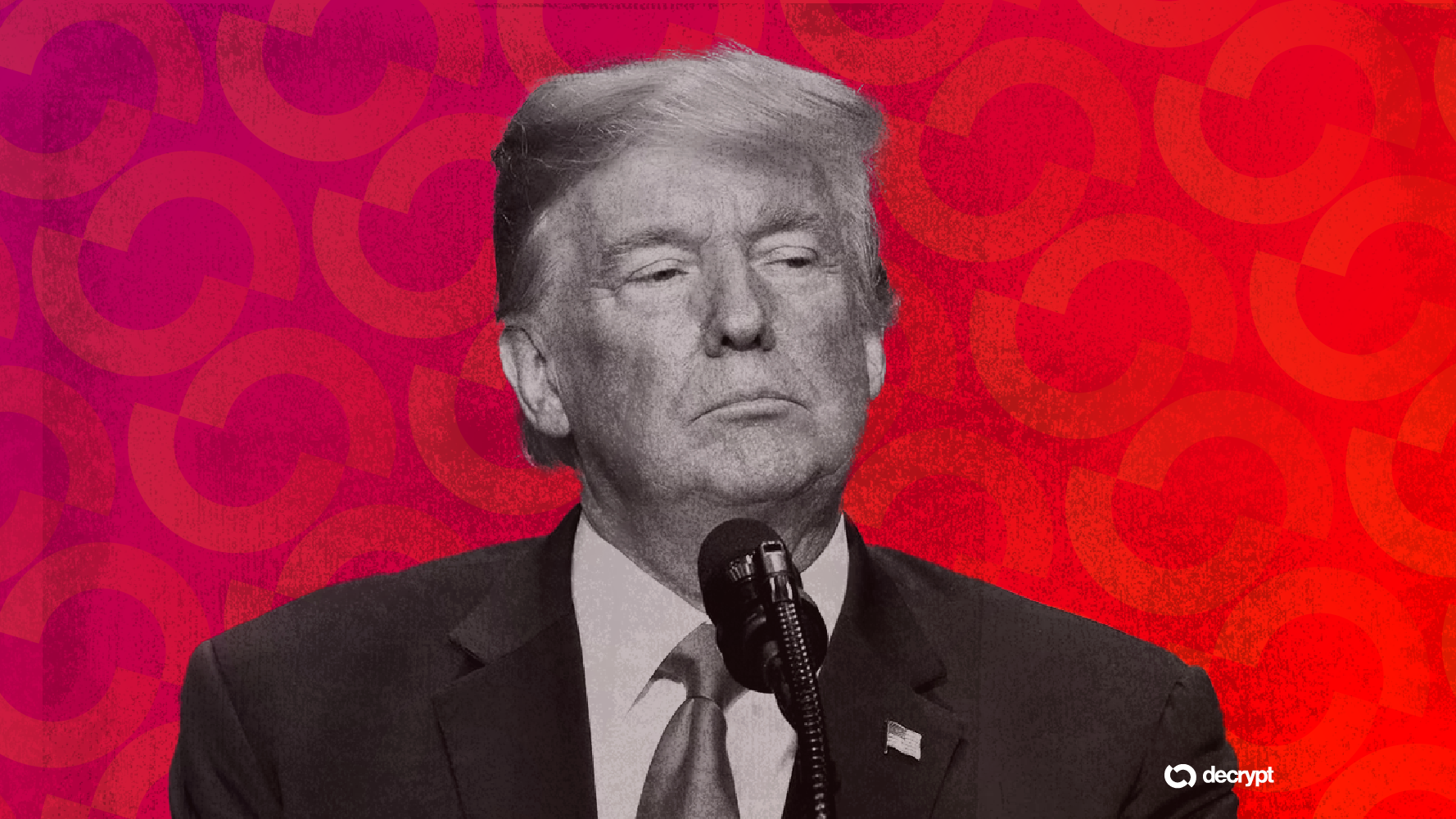
The Trump administration's intervention via DOJ and CFTC lawsuits against states signals a strong federal stance favoring prediction markets, potentially clarifying regulatory ambiguity. This legal action directly challenges state-level gambling regulations, aiming to establish exclusive federal jurisdiction for prediction markets under the CFTC. The development escalates a significant jurisdictional battle, with potential implications for the future regulatory framework of prediction markets and related digital assets. Market participants should monitor the outcomes of these lawsuits as they will determine the operational landscape for platforms like Kalshi and Polymarket.
Alabama's new law provides a legal framework for DAOs, establishing them as separate legal entities and offering limited liability to members, which could encourage more decentralized nonprofit organizations to operate within the state. The DUNA framework, effective October 2026, follows Wyoming's lead and aims to provide a clearer legal structure for DAOs, potentially reducing operational risks and increasing legitimacy for these entities. While this development offers a path for DAOs to engage more formally with traditional legal systems, its application is limited to nonprofit-oriented organizations with at least 100 members.
Ripple CTO David Schwartz argues XRP and stablecoins serve distinct market needs, suggesting XRP's potential upside and lack of issuer control offer advantages over stablecoins in specific use cases, which could support its long-term utility despite stablecoin growth. Ripple's expansion of its institutional product suite, including Digital Asset Accounts and Unified Treasury, alongside a BBB issuer rating for Ripple Prime, indicates a strategic push to integrate digital assets into traditional corporate finance workflows, potentially driving adoption. Despite the ongoing debate on utility, XRP's price action remains under technical pressure, with recent failures below key resistance levels suggesting short-term bearish sentiment that traders should monitor for potential further downside if support breaks.
Coinbase launches x402 under Linux Foundation, building a global, programmable payment layer supported by Google, AWS, Stripe, and Visa.

Researchers have developed a brain-inspired chip that could make AI tasks up to 2,000 times more energy efficient by processing data directly in hardware. This advancement in AI hardware efficiency could significantly reduce the energy consumption of AI applications, particularly those dealing with time-series data like weather forecasting or health monitoring. The development signals a potential shift in AI architecture, moving towards physical process-based computation rather than solely software-dependent methods, which could have broader implications for the AI sector's energy footprint.
Signal context only. Validate with price action, liquidity, and risk limits before taking a position.
