
Navigating Crypto News

CoinFeather
Navigating Crypto News
Quick market read from this story
Ripple's BBB issuer rating for its prime brokerage arm signals increased institutional confidence and potential access to a larger pool of traditional finance capital.
Shiba Inu's significant burn rate increase, despite low absolute value, indicates heightened network activity and a potential narrative driver for the token.
Cardano's potential integration into Mastercard's partner network via EMURGO could boost ADA's mainstream adoption and utility in payment ecosystems.
Source, catalyst, and sector overlap from the latest feed.
Shiba Inu is showing signs of a potential local uptrend with higher lows, but remains in a broader bearish structure, indicating a transitional phase where a breakout above $0.0000065-$0.0000067 is needed for further upside. XRP faces significant resistance at $1.38-$1.40 and requires a higher high above $1.50-$1.60 with increased volume to confirm a bullish reversal, otherwise, a continued downtrend or consolidation is likely. Midnight (NIGHT) is testing a critical support level around $0.044, which could lead to consolidation or a brief recovery if held, but the overall bearish trend and lack of accumulation suggest caution.
Live Feed
Loading the broader stream in the same flow as the homepage feed.

Gold and silver futures on Binance have rapidly gained traction, achieving fourth and fifth place in trading volume, indicating a significant shift in trader interest away from traditional crypto assets like Bitcoin. The surge in gold and silver futures volume, surpassing $130 billion by March 2026, suggests a growing demand for perceived safe-haven assets amidst geopolitical and economic uncertainties, potentially impacting crypto market liquidity. The increasing adoption of metal futures on Binance, leveraging features like 24/7 access and high leverage, highlights a convergence of traditional finance and crypto markets, potentially attracting new capital flows. Despite Bitcoin's recent underperformance relative to gold and silver, analysts suggest the long-term positive correlation between gold and Bitcoin remains intact due to their shared scarcity, implying a potential future convergence.

Charles Schwab's upcoming spot trading for Bitcoin and Ethereum signifies a major traditional finance institution embracing digital assets, potentially increasing accessibility and legitimacy for retail investors. The planned rollout, starting with a limited release before broader expansion, suggests a cautious approach by Schwab, indicating a focus on regulatory compliance and operational readiness. While the news is positive for broader crypto adoption, the direct market impact on BTC and ETH prices in the short term may be muted as the offering is still pending and likely to be phased in.
The post Circle’s $420M Compliance Crisis: ZachXBT Exposes Massive USDC Scandal appeared first on Coinpedia Fintech News On-chain investigator ZachXBT has published a detailed investigation alleging delays or failures in USDC stablecoin issuer Circle to freeze theft proceeds worth over $420 million since 2022. Dubbed the “Circle $USDC files,” the X thread highlights 15 cases in which the company took little to no action regarding illicit funds. USDC issuer Circle faulted for …

Charles Schwab's planned launch of spot Bitcoin and Ether trading in H1 2026 signifies a major traditional finance institution entering the retail crypto market, potentially driving significant new capital inflows and increasing mainstream adoption. The move by Schwab, managing nearly $12 trillion in assets, could pressure crypto-native exchanges by offering a familiar, integrated brokerage experience for retail investors, potentially leading to market share shifts. While the launch is slated for 2026, the announcement and waitlist opening serve as a positive signal for the long-term institutional embrace of digital assets, reinforcing the narrative of crypto as a legitimate asset class.

Macro investor James Lavish warns that markets may be underpricing the geopolitical risk associated with the Iran conflict, potentially leading to a renewed inflation shock and stagflation fears if the situation escalates. A prolonged conflict and subsequent inflation shock could place the Federal Reserve in a difficult position, balancing the need to control inflation with the risk of triggering a recession, impacting broader market liquidity and risk appetite. While Bitcoin has shown relative resilience, Lavish suggests it could face a significant drawdown, potentially revisiting the $50,000 or even $40,000 range, if global markets experience a severe 'correlation-to-one' panic event driven by geopolitical instability. Despite potential short-term downside, Lavish views a significant Bitcoin sell-off as a potential long-term opportunity, reinforcing the underlying investment thesis rather than invalidating it.

Circle faces scrutiny over its response to the $285 million Drift hack, with critics arguing faster action on freezing stolen USDC could have mitigated losses. The incident highlights the tension between Circle's ability to control USDC and the legal risks of acting without formal authorization, raising questions about its role as neutral infrastructure. The debate over Circle's inaction underscores the challenges stablecoin issuers face in balancing rapid response to illicit activity with regulatory compliance and user rights.

Traders are pricing in a significant escalation of the U.S.-Iran conflict, with a 90% chance of U.S. boots on the ground, suggesting heightened geopolitical risk impacting global markets. The market sentiment indicates a strong expectation for WTI crude oil futures to reach $120 per barrel, driven by the geopolitical tensions and potential supply disruptions in the Strait of Hormuz. Despite escalating conflict narratives, traders anticipate the Iranian regime will remain in place by October, suggesting a focus on immediate market impacts rather than long-term regime change expectations. The heightened geopolitical risk and potential supply disruptions are directly influencing commodity markets, with a high probability assigned to crude oil price surges.
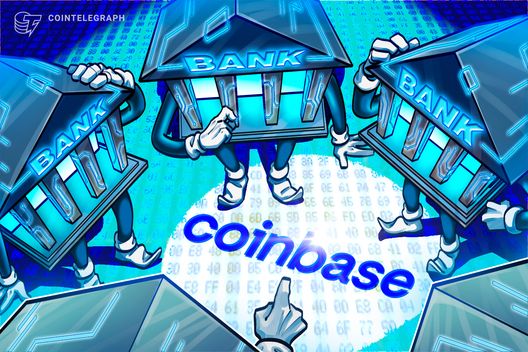
Community banks are actively opposing Coinbase's national trust charter, citing concerns over regulatory standards, risk controls, and potential systemic risks, which could signal increased friction between traditional finance and crypto entities seeking banking licenses. The opposition highlights a broader debate on whether crypto firms should receive bank charters without adhering to the full scope of traditional banking regulations, potentially impacting future regulatory frameworks for digital assets and their integration into the financial system. Disagreements over stablecoin yields and their potential to disrupt traditional banking deposits are delaying crucial crypto market structure legislation, indicating that regulatory clarity for digital assets remains a significant hurdle.

Coinbase's conditional OCC approval for a national trust bank charter signifies a major step towards integrating with traditional finance, potentially expanding institutional access and streamlining operations. This regulatory milestone could position Coinbase as a key bridge between crypto and TradFi, enhancing its credibility and access to banking infrastructure for payments and custody services. Despite the positive development, concerns remain regarding potential risks from crypto market volatility and oversight gaps, as highlighted by critics like Americans for Financial Reform Education Fund. The move implies a strategic shift for Coinbase, focusing on regulated financial services rather than traditional banking, aiming for broader U.S. operational consistency under OCC oversight.

Dmail Network's shutdown highlights significant challenges in sustaining decentralized communication infrastructure due to high operational costs and difficulties in monetization, signaling potential headwinds for similar Web3 projects. The failure of Dmail, attributed to unsustainable infrastructure expenses and unachieved product-market fit for its token, suggests that the current economic models for decentralized communication platforms may not be viable without substantial user adoption or alternative revenue streams. The sharp decline in the DMAIL token price following the shutdown announcement underscores the direct market impact of project failure, serving as a cautionary tale for investors in nascent Web3 infrastructure projects.
Signal context only. Validate with price action, liquidity, and risk limits before taking a position.
Jack Dorsey's revival of the Bitcoin faucet taps into early crypto nostalgia, signaling a potential marketing push for Block's initiatives. While the new faucet will not distribute significant BTC amounts, its return serves as a symbolic nod to Bitcoin's decentralized and experimental origins. The initiative highlights Block's engagement with Bitcoin's foundational history, potentially attracting attention from long-term holders and early adopters.
