
Navigating Crypto News

CoinFeather
Navigating Crypto News
Quick market read from this story
Mastercard's expanded collaboration with Ripple and other blockchain firms signals a growing institutional interest in integrating CBDCs into existing payment infrastructures.
The surge in Dogecoin's trading volume, despite its downtrend, indicates increased speculative interest in meme coins, though price action remains subdued.
XRP's Bollinger Bands squeeze suggests a period of consolidation, potentially leading to a significant price move, though broader market pressure persists.
Deep Dive
Global payment giant Mastercard is intensifying its involvement in central bank digital currencies (CBDCs) by expanding its blockchain partnerships, notably including Ripple. The company aims to facilitate the seamless use of CBDCs as everyday money, showcasing its commitment through a presentation that highlighted collaborations with firms like Ripple, Binance, Consensys, and PayPal.
Mastercard's initiative focuses on enabling central banks and financial institutions to experiment with digital currencies. The company's goal is to make CBDCs as easy to use as traditional forms of money, with practical testing and real-world deployments being key objectives. Key partners in this endeavor include Ripple, Consensys, Fluency, and Fireblocks.
Dogecoin has experienced a dramatic increase in trading volume, surging by over 100% in recent sessions. This heightened activity raises questions about renewed interest in meme coins amidst a stabilizing broader crypto market. Despite the surge in liquidity, Dogecoin's price remains largely controlled, trading around $0.092 with minimal movement.
XRP has seen a price dip from a daily high of $1.44 to $1.37, influenced by broader crypto market pressure. However, on-chain analyst Ali Martinez suggests XRP may be on the verge of a significant price breakout due to a Bollinger Bands squeeze. The bands are contracting around $1.38, indicating consolidation and a potential for increased volatility and a substantial price move.
Despite the recent price decline, XRP's trading volume has climbed by 14.22% to $2.89 billion, suggesting increased investor accumulation. The asset remains technically in a downtrend that began late last year, trading below key moving averages, with a consistent pattern of lower highs and lower lows.
Source, catalyst, and sector overlap from the latest feed.
A single trader's $50 million USDT to AAVE swap error highlights significant risks in DeFi trading interfaces, underscoring the need for enhanced user safeguards against extreme slippage and confirmation overrides. While the Aave CEO confirmed the incident and offered to refund fees, the event serves as a stark reminder of the 'do-it-yourself' nature of decentralized finance and the potential for catastrophic losses due to user error, even with warnings. The incident, involving a large USDT to AAVE swap resulting in a $50 million loss, points to potential vulnerabilities in AMM liquidity pool dynamics and user interface design, prompting Aave to investigate improved safety mechanisms.
The 119th Congress represents a once-in-a-decade opportunity to fix the legislative bottleneck preventing Bitcoin from becoming a mainstream payment tool.
The Winklevoss twins' aggressive expansion and IPO strategy for Gemini proved ill-timed, coinciding with a severe crypto bear market that has led to significant financial losses for the exchange and their personal net worth. Gemini's IPO valuation and subsequent operational scaling were based on a bull market assumption that failed to materialize, creating a severe liquidity and revenue squeeze due to plummeting trading volumes. The ~84% drop in Gemini Space Station's value from its IPO price highlights the direct financial impact on the Winklevoss twins, underscoring the risks of misjudging market cycles in the volatile crypto industry.
Vitalik Buterin redefines Ethereum as "global shared memory." Explore his three key pillars: data availability, spam protection and smart contracts.
Binance has delisted 21 cryptocurrencies from its Binance Alpha platform, citing failure to meet listing standards, which signals a tightening of quality control for emerging projects on the exchange. While the delisting removes these tokens from active trading on Binance Alpha, users retain the ability to sell them via supported interfaces, mitigating immediate liquidity concerns for existing holders. The mass delisting highlights the inherent risks associated with early-stage or experimental blockchain projects often listed on platforms like Binance Alpha, reinforcing the need for due diligence by investors.
Anchorage Digital's integration with Puffer Finance provides institutional clients with direct access to Ethereum liquid restaking, simplifying participation by allowing them to earn rewards without managing infrastructure. This partnership expands institutional access to on-chain services, leveraging Anchorage's custody to offer liquid restaking tokens like pufETH, which can be used across DeFi while earning yield. The move highlights the growing institutional interest in restaking strategies, a sector now valued at over $7 billion TVL, indicating a significant trend in yield generation for staked assets.
Metaplanet's launch of a dedicated venture arm and asset management unit signals a strategic pivot to diversify revenue beyond direct Bitcoin price appreciation, aiming to build ecosystem value and reduce reliance on BTC volatility. Despite significant unrealized losses on its Bitcoin holdings, Metaplanet is doubling down on its accumulation strategy, mirroring MicroStrategy's approach and indicating a long-term conviction in Bitcoin's future value. The investment in JPYC Inc., Japan's first FSA-registered yen stablecoin issuer, highlights Metaplanet's focus on building domestic Bitcoin financial infrastructure and supporting the digital currency side of institutional Bitcoin transactions. The establishment of Metaplanet Ventures, with its focus on Lightning Network, custody, lending, and compliance, alongside an incubator and grant program, aims to foster Japan's Bitcoin talent pool and infrastructure development.
Eightco's $125 million fundraise, with significant contributions from BitMine and Ark Invest, signals strong institutional confidence in its AI and blockchain strategy, potentially driving future growth and adoption. The strategic investments in OpenAI and MrBeast's Beast Industries, alongside existing holdings in Worldcoin and Ethereum, position Eightco at the nexus of AI, creator economy, and decentralized identity, creating synergistic opportunities. The appointment of Tom Lee to the board and Brett Winton as an advisor highlights a strategic alignment with key players in the crypto and venture capital space, enhancing Eightco's market influence and strategic direction.
Ripple's aggressive acquisition strategy, deploying over $4 billion since 2023, indicates a strong focus on building comprehensive financial infrastructure rather than relying on organic growth. The acquisitions of custody, brokerage, and treasury management platforms signal Ripple's intent to enhance institutional adoption and utility for XRP by providing a robust ecosystem for enterprise and bank-level services. With plans for further acquisitions like BC Payments Australia, Ripple is positioning itself for expanded cross-border payment capabilities and a stronger regulated presence in key growth markets like the Asia-Pacific region. The ongoing investment in infrastructure and regulatory compliance through acquisitions suggests a long-term strategy to solidify XRP's role in global payments, potentially driving sustained demand.
River price is testing a critical $18-$20 resistance zone, which represents the neckline of a significant inverted head and shoulders pattern, suggesting a potential trend reversal if confirmed above $20. Technical indicators like RSI and CMF show early bullish signals with room for upward movement, while increasing whale activity indicates accumulation ahead of a possible breakout. The recent price surge is supported by a fundamental narrative boost from a new partnership with DIA for oracle infrastructure integration, enhancing reliability for lending markets. On-chain activity, including transfer counts and wallet growth, shows a V-shaped recovery, signaling renewed user interaction and an expanding holder base crucial for sustaining a breakout.
Insiders continue to offload TRUMP memecoin tokens to Binance, exacerbating the token's all-time low price and signaling potential further downside pressure. The ongoing insider selling of TRUMP tokens, coupled with a significant price decline of 96% from its peak, suggests a lack of fundamental support and a high probability of continued retail losses. The TRUMP memecoin's price collapse and insider dumping occur amidst broader scrutiny of Binance by US regulators, potentially increasing compliance risks for the exchange and its associated politically-linked tokens.
The announcement of an exclusive event hosted by President Trump for top TRUMP meme coin holders has triggered a short-term price increase, indicating speculative interest tied to celebrity endorsement. While the event aims to reward token holders, the token's price remains significantly below its all-time high, suggesting limited sustained fundamental value beyond hype. Past events of this nature have drawn significant criticism and regulatory scrutiny, posing a potential risk for future developments and market perception.
The announcement of a 'gala luncheon' with Donald Trump for $TRUMP token holders, while a recurring event, has caused a brief price spike and increased trading volume, indicating continued speculative interest despite significant price depreciation from all-time highs. Past events of this nature have drawn regulatory scrutiny and protests, highlighting the ongoing tension between political figures and the crypto industry, which could influence future legislative developments. The $TRUMP token's price action shows a short-term speculative reaction to the event announcement, but the overall trend remains significantly down, suggesting limited fundamental support beyond event-driven hype.
The US Senate's vote to include a CBDC ban until 2030 in a housing bill signals a significant regulatory hurdle for potential US central bank digital currencies, potentially favoring decentralized alternatives or regulated stablecoins. This legislative action, driven by concerns over financial freedom and surveillance, indicates a strong political pushback against government-controlled digital currencies, impacting future monetary policy discussions. The explicit allowance for 'open, permissionless, and private' dollar-denominated digital currencies suggests a potential regulatory pathway for stablecoins, contrasting with the outright ban on CBDCs.
Live Feed
Loading the broader stream in the same flow as the homepage feed.

A trader's $50 million USDT to AAVE swap resulted in a near-total loss due to extreme slippage, highlighting the risks of large trades on DeFi platforms with insufficient liquidity. Aave founder's offer to refund $600K in fees and acknowledgment of the need for better safeguards suggests a potential protocol-level response to mitigate future user errors, though the core issue of liquidity remains. The incident underscores the operational risks inherent in DeFi, where user confirmation of high-risk warnings can lead to catastrophic financial outcomes, emphasizing the need for advanced execution strategies for large capital.

The EU's MiCA regulations are creating a more stringent operating environment, potentially leading to consolidation within the crypto industry as less resilient players may exit or reassess their European presence. SwissBorg's successful MiCA license acquisition and planned relocation to France positions it to capitalize on market consolidation and increased regulatory clarity, suggesting a strategic advantage for compliant entities. The evolving regulatory landscape for stablecoins and yield products under MiCA is expected to drive greater transparency and standardization, potentially paving the way for increased institutional participation in the long term.

Bitcoin is demonstrating unusual resilience to rising oil prices, diverging from historical macro correlations that would typically pressure crypto due to inflation fears. Reduced leverage ratios and stabilizing spot Bitcoin ETF flows indicate a cleaner market structure, positioning BTC to absorb demand and potentially rally despite geopolitical tensions. Technical indicators suggest potential for an upward move towards $80,000, driven by concentrated options gamma around the $75,000 strike, which could accelerate price action if breached.
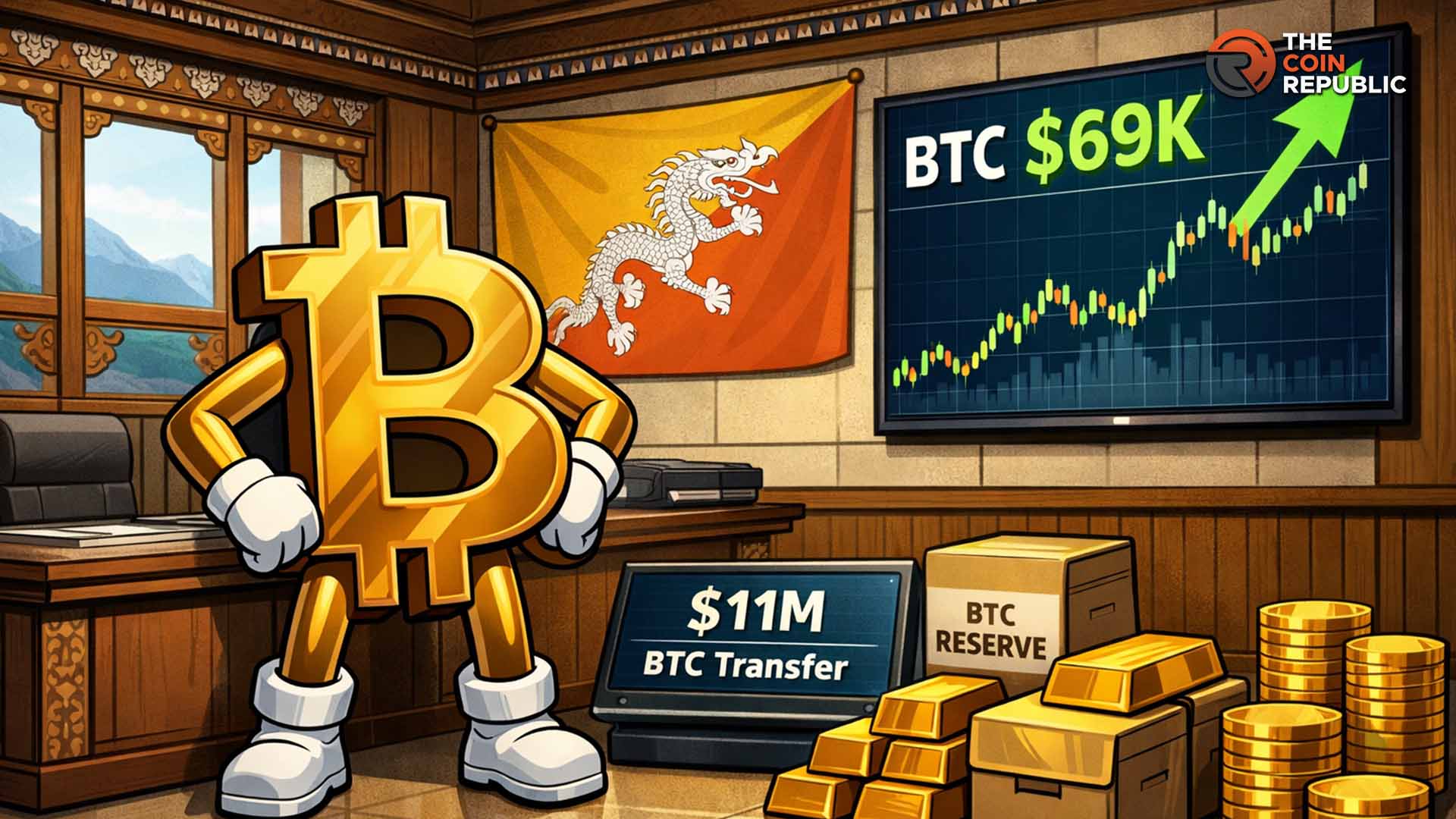
Bhutan's government has moved approximately $11.85 million in Bitcoin, sparking concerns of a potential sell-off, a pattern observed since last year. Despite the transfer, Bitcoin's price has shown resilience, reclaiming the $71,000 level, indicating strong market momentum that is currently outweighing the perceived selling pressure. The Bhutanese government's strategy of offloading Bitcoin in smaller, periodic tranches suggests portfolio management rather than an emergency liquidation, potentially mitigating significant market impact. Analysts note that large-scale buying initiatives, such as Michael Strategy's recent accumulation, can counteract selling pressure from institutional or governmental entities.

A significant $50 million loss due to extreme slippage on a large token swap highlights the inherent risks of executing substantial trades on DeFi platforms with thin liquidity pools. The incident underscores the critical importance of user diligence in acknowledging and understanding risk warnings, especially when interacting with complex DeFi interfaces on mobile devices. While the CoW Protocol functioned as intended, Aave's proactive approach to refunding transaction fees to the affected user demonstrates a commitment to mitigating user impact and maintaining platform reputation.

Google's innovative use of Gemini AI to mine news reports for flash flood data establishes a novel approach to disaster prediction, potentially influencing how AI is leveraged for real-world data acquisition. The Groundsource system's ability to predict urban flash floods up to 24 hours in advance, by overcoming historical data gaps, represents a significant advancement in AI-driven forecasting and crisis management. This development highlights the growing intersection of AI and practical applications, demonstrating how advanced AI models can transform unstructured data into actionable insights for public safety and potentially other sectors.

Senator John Thune reportedly said that the chamber would prioritize the SAVE America Act before addressing a vote on bipartisan bills like crypto market structure.
Solana's Bollinger Bands are contracting, indicating a period of low volatility that historically precedes a significant price move, suggesting traders should monitor for a breakout or breakdown. The $95 price level is identified as a critical resistance point; a sustained break above this level would signal a shift from a downtrend to a potential new upward phase for SOL. While technical indicators suggest an impending volatility expansion, the direction remains unconfirmed, positioning SOL in a watchlist scenario until a clear directional signal emerges.

The SEC's Investor Advisory Committee has recommended narrow exemptions for tokenized securities, signaling a potential regulatory pathway for blockchain-based stock trading that could streamline settlement and reduce intermediaries. This recommendation, backed by SEC Chairman Paul Atkins, suggests the agency is moving towards formal regulations for tokenization, which could unlock new market structures and efficiencies if implemented with appropriate safeguards. While the move aims to enhance settlement efficiency and reduce risk, the committee also highlighted potential risks such as new investor confusion and increased costs, indicating a cautious approach to implementation.

Derivative market data indicates professional traders assign less than a 17% probability for Bitcoin to breach $78,000 by March 27, suggesting a lack of conviction for a near-term breakout. Despite recent spot Bitcoin ETF inflows, net outflows from previous days have not been fully offset, indicating that institutional demand has not yet shifted overall market sentiment decisively upwards. Broader economic concerns, including geopolitical tensions and weaker-than-expected US jobs data, are contributing to cautious market sentiment, tempering bullish expectations for Bitcoin. While professional traders are hesitant about an immediate $78K surge, the continued institutional interest and potential for further ETF inflows suggest underlying support, implying a longer-term outlook for significant price appreciation.

SEC Commissioner Hester Peirce advocates for simplified disclosure rules, suggesting that overly complex regulations can distort capital markets and hinder investor clarity. The SEC is exploring an 'innovation exemption' for tokenized securities, indicating a potential pathway for experimentation with blockchain-based financial instruments under regulatory observation. Peirce's comments, coupled with the SEC's no-action letter to DTCC for tokenization services, signal a growing regulatory openness to tokenized assets, potentially impacting the RWA sector.
The Ark Invest report clarifies that while quantum computing poses a long-term risk to Bitcoin's cryptography, it is not an immediate threat, suggesting a gradual progression rather than a sudden 'Q-day' event. Approximately 35% of Bitcoin's supply, held in vulnerable or reused addresses, could be exposed to quantum attacks if elliptic curve cryptography is compromised, highlighting a significant but distant risk. The potential need for post-quantum cryptography upgrades to Bitcoin necessitates a consensus-driven process, which could take years to implement across the ecosystem, indicating a slow but deliberate adaptation strategy. While current quantum systems are far from capable of breaking Bitcoin's security, the ongoing research and development in this field warrant a 'watchlist' approach for the network's long-term security posture.

Prosecutors have formally rejected SBF's bid for a new trial, labeling his arguments as 'incoherent' and 'fanciful', reinforcing the finality of his conviction and sentence. The legal proceedings surrounding SBF and FTX continue to be a significant overhang for the broader crypto market, with this latest development offering little hope for a swift resolution or early release. While other FTX executives received leniency for cooperation, SBF's conviction on multiple fraud counts and substantial customer fund misappropriation makes his case distinct from pardoned figures like Ross Ulbricht or CZ. The FTX bankruptcy estate's recovery of over $16 billion and projected creditor payouts exceeding 100% of claims suggest a more orderly wind-down than initially feared, though the legal saga's conclusion remains distant.
Signal context only. Validate with price action, liquidity, and risk limits before taking a position.
