
Navigating Crypto News

CoinFeather
Navigating Crypto News
Source, catalyst, and sector overlap from the latest feed.
The announcement of an exclusive event hosted by President Trump for top TRUMP meme coin holders has triggered a short-term price increase, indicating speculative interest tied to celebrity endorsement. While the event aims to reward token holders, the token's price remains significantly below its all-time high, suggesting limited sustained fundamental value beyond hype. Past events of this nature have drawn significant criticism and regulatory scrutiny, posing a potential risk for future developments and market perception.
Live Feed
Loading the broader stream in the same flow as the homepage feed.

Insiders continue to offload TRUMP memecoin tokens to Binance, exacerbating the token's all-time low price and signaling potential further downside pressure. The ongoing insider selling of TRUMP tokens, coupled with a significant price decline of 96% from its peak, suggests a lack of fundamental support and a high probability of continued retail losses. The TRUMP memecoin's price collapse and insider dumping occur amidst broader scrutiny of Binance by US regulators, potentially increasing compliance risks for the exchange and its associated politically-linked tokens.

The announcement of a 'gala luncheon' with Donald Trump for $TRUMP token holders, while a recurring event, has caused a brief price spike and increased trading volume, indicating continued speculative interest despite significant price depreciation from all-time highs. Past events of this nature have drawn regulatory scrutiny and protests, highlighting the ongoing tension between political figures and the crypto industry, which could influence future legislative developments. The $TRUMP token's price action shows a short-term speculative reaction to the event announcement, but the overall trend remains significantly down, suggesting limited fundamental support beyond event-driven hype.

The US Senate's vote to include a CBDC ban until 2030 in a housing bill signals a significant regulatory hurdle for potential US central bank digital currencies, potentially favoring decentralized alternatives or regulated stablecoins. This legislative action, driven by concerns over financial freedom and surveillance, indicates a strong political pushback against government-controlled digital currencies, impacting future monetary policy discussions. The explicit allowance for 'open, permissionless, and private' dollar-denominated digital currencies suggests a potential regulatory pathway for stablecoins, contrasting with the outright ban on CBDCs.
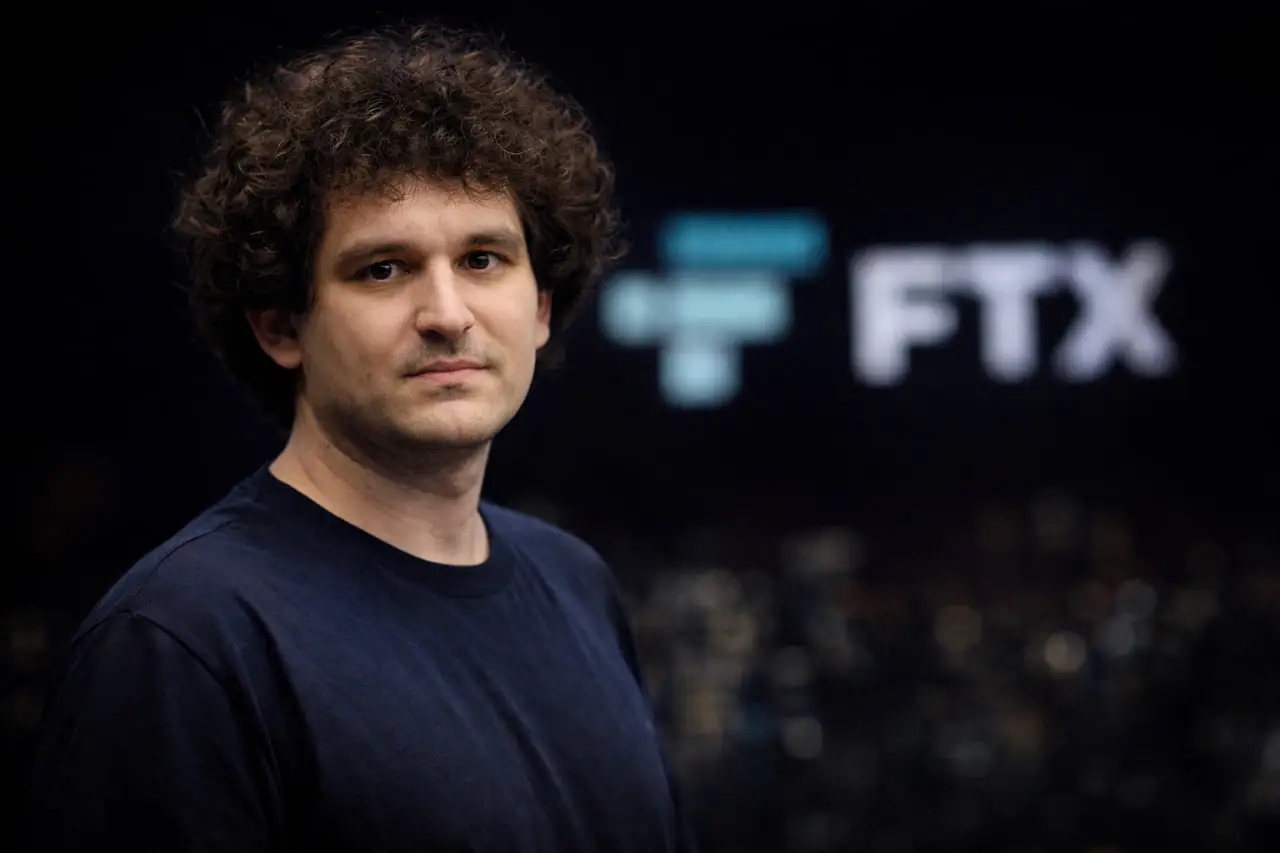
Prosecutors have formally rejected SBF's bid for a new trial, labeling his arguments as 'incoherent' and 'fanciful', reinforcing the finality of his conviction and sentence. The legal proceedings surrounding SBF and FTX continue to be a significant overhang for the broader crypto market, with this latest development offering little hope for a swift resolution or early release. While other FTX executives received leniency for cooperation, SBF's conviction on multiple fraud counts and substantial customer fund misappropriation makes his case distinct from pardoned figures like Ross Ulbricht or CZ. The FTX bankruptcy estate's recovery of over $16 billion and projected creditor payouts exceeding 100% of claims suggest a more orderly wind-down than initially feared, though the legal saga's conclusion remains distant.

Binance secured a significant legal win in Alabama, with a judge granting dismissal of key portions of a complaint alleging facilitation of terrorist financing. While the court ordered plaintiffs to file an amended complaint, Binance declared 'full and complete legal victory,' signaling a positive development for the exchange's legal standing. This ruling, following a similar dismissal in New York, reduces immediate legal pressure on Binance and its former CEO, potentially easing concerns about regulatory overhang.

Key Insights: Metaplanet, Asia’s largest Bitcoin treasury company, is further solidifying its presence in the crypto space. The firm has announced the launch of two new subsidiaries wholly focused on crypto. Bitcoin news also reveals that the company is backing Japanese stablecoin issuer JPYC through a strategic investment. Bitcoin News: Metaplanet Launches Subsidiaries to Expand […] The post Bitcoin News: Metaplanet Unveils Two Subsidiaries, Invests in JPYC appeared first on The Coin Republic.

While geopolitical tension and weak labor data are hurting market sentiment, institutional buying below $75,000 may soon exhaust sellers and spark a bull run.

US lawmakers are eyeing tax exemptions for US dollar stablecoins, which are pegged and do not change in value, but not other cryptocurrencies.
Despite a sharp XRP price pullback, Ripple-linked ETFs have already drawn $1.4B in inflows since launching four months ago.

The 119th Congress represents a once-in-a-decade opportunity to fix the legislative bottleneck preventing Bitcoin from becoming a mainstream payment tool.

Key Insights: As per the latest Bitcoin news, MicroStrategy (MSTR) is accelerating its Bitcoin accumulation. As of March 10, 2026, Strategy holds 738,731 BTC, compared with BlackRock’s iShares Bitcoin Trust (IBIT), which holds about 777,872 BTC. This week, MicroStrategy bought roughly 3,519 BTC (about $249 million at $71k) by selling STRC preferred shares. STRC’s trading […] The post MicroStrategy vs BlackRock: Who Hits 1 Million BTC First? appeared first on The Coin Republic.
XRP is exhibiting technical consolidation patterns, suggesting a potential bullish breakout towards $1.7 as selling pressure wanes and accumulation increases. Accelerating institutional adoption of digital assets by 77% of Hong Kong financial firms, supported by favorable regulatory signals from the HKMA, provides fundamental utility and demand drivers for XRP. The confluence of positive technical indicators and growing real-world adoption in a major financial hub like Hong Kong positions XRP for significant speculative and strategic interest in the near term.

The $45 million Series B funding round for Cryptio underscores a growing institutional demand for robust accounting and reconciliation tools as more traditional finance players engage with tokenized assets. Increased institutional adoption of tokenized finance and real-world assets necessitates sophisticated infrastructure, signaling a maturing market for crypto-native financial reporting solutions. The funding highlights the critical need for compliance and audit-ready blockchain transaction data, suggesting a positive outlook for companies providing such 'picks and shovels' services in the evolving digital asset landscape.
Signal context only. Validate with price action, liquidity, and risk limits before taking a position.
Quick market read from this story
The Ark Invest report clarifies that while quantum computing poses a long-term risk to Bitcoin's cryptography, it is not an immediate threat, suggesting a gradual progression rather than a sudden 'Q-day' event.
Approximately 35% of Bitcoin's supply, held in vulnerable or reused addresses, could be exposed to quantum attacks if elliptic curve cryptography is compromised, highlighting a significant but distant risk.
The potential need for post-quantum cryptography upgrades to Bitcoin necessitates a consensus-driven process, which could take years to implement across the ecosystem, indicating a slow but deliberate adaptation strategy.
While current quantum systems are far from capable of breaking Bitcoin's security, the ongoing research and development in this field warrant a 'watchlist' approach for the network's long-term security posture.
Deep Dive
A new report by Ark Invest and Unchained suggests that while quantum computing presents a long-term risk to Bitcoin's security, it is not an immediate threat. The analysis indicates that approximately 35% of the Bitcoin supply could be exposed to quantum attacks under specific future conditions, necessitating potential upgrades to post-quantum cryptography.
The report delves into the potential for quantum computers to break the elliptic curve cryptography that secures Bitcoin wallets using Shor's algorithm. However, researchers emphasize that current quantum systems are far from capable of compromising Bitcoin. They describe quantum development as a gradual progression rather than a sudden event, allowing time for adaptation.
Prominent figures in the crypto space, including Brian Armstrong, Vitalik Buterin, and Charles Hoskinson, have previously addressed this risk. The report distinguishes between eras where quantum computing cannot affect Bitcoin and eras where it could break its cryptography.
Bitcoin's security relies on hash functions for mining and block structure, and elliptic curve cryptography for wallet ownership. Future quantum computers could potentially reverse public keys to derive private keys, leading to concerns about
Nvidia's release of Nemotron 3 Super and its $26 billion investment in open-source AI signals a strategic pivot to counter China's growing influence in the AI sector, potentially impacting the competitive landscape for AI infrastructure and model development. The advanced architecture of Nemotron 3 Super, featuring a hybrid Mamba-Transformer MoE design and native 4-bit precision, offers significant performance gains and cost efficiencies for autonomous agents, suggesting a new benchmark for specialized AI workloads. Nvidia's commitment to open-source models aims to maintain its hardware dominance by fostering an ecosystem reliant on its chips, directly challenging the trend of Chinese open-source models gaining market share and potentially reducing reliance on proprietary systems.
