
Navigating Crypto News

CoinFeather
Navigating Crypto News

Quick market read from this story
AI-driven labor market shifts are primarily impacting entry-level tech roles and reallocating skills, rather than causing widespread unemployment, suggesting a repricing of labor rather than extinction.
Bitcoin's correlation with the Nasdaq indicates that AI-induced tech labor weakness will affect BTC through macro growth fears and interest rate expectations, not as a direct hedge.
While AI is cited in a growing number of tech layoffs, companies are simultaneously increasing demand for AI-specific roles, creating a complex labor market dynamic that investors should monitor.
The primary transmission channel for AI's impact on Bitcoin remains its sensitivity to financial conditions, with potential upside if productivity gains lead to easier monetary policy.
Deep Dive
The narrative around Artificial Intelligence (AI) causing widespread tech layoffs is evolving, with companies increasingly using AI and efficiency language to justify selective cuts and a shift in hiring towards AI-focused and infrastructure roles. While anecdotal evidence suggests significant white-collar job displacement, official data indicates a more nuanced reality of changing role mixes and entry-level hiring challenges rather than a full-blown labor market collapse.
Several major tech companies have confirmed workforce adjustments linked to AI and productivity. Amazon, Block, Pinterest, and Atlassian have all announced layoffs, with some explicitly citing AI productivity as a factor. Oracle plans to raise significant capital to expand its cloud infrastructure, amidst reports of substantial restructuring. While overall U.S. nonfarm payrolls showed softness in February 2026, and information-sector employment declined, the tech sector has seen elevated cuts, with AI cited as a reason in a growing number of cases. Employers announced 48,307 cuts in February, with the technology sector leading year-to-date with 33,330 cuts.
Research suggests that the primary impact of AI on the labor market is not mass unemployment but rather a compression of entry-level hiring and a reallocation of roles. Studies indicate that while overall unemployment for highly exposed workers has not systematically increased, younger workers entering AI-exposed occupations face weaker hiring conditions. For instance, a 10-point increase in AI exposure is estimated to reduce projected job growth by 0.6 percentage points, with a notable drop in job-finding rates for young workers. This dynamic leads to narrower promotion funnels and increased output expectations from fewer employees.
Demand for AI-specific skills is rising, with CompTIA research showing a 111% year-over-year increase in active job postings citing AI skill requirements, reaching 94,067. However, many companies use AI as a justification for staffing decisions while redeploying or adding staff elsewhere, indicating a complex mix shift rather than outright job elimination.
Despite layoff trends, hiring has not frozen across the tech sector, particularly for roles tied to AI, systems, and infrastructure. Postings for software developers and engineers remain strong, with AI engineer roles showing significant growth. Long-term projections from the Bureau of Labor Statistics (BLS) and the World Economic Forum anticipate continued growth in computer and information technology occupations, albeit with a significant transformation of required skills. Goldman Sachs estimates AI could displace 6% to 7% of the U.S. workforce over time, but with potential absorption into other roles. This suggests a repricing of labor, emphasizing skills in building, governing, securing, and integrating AI, rather than an extinction of tech jobs.
For Bitcoin, the impact of AI-driven labor market shifts is primarily a second-order macroeconomic dynamic, influencing its correlation with tech stocks like the Nasdaq 100. Bitcoin has maintained a positive correlation with the Nasdaq, meaning tech labor weakness can affect market perceptions of growth and earnings, thereby impacting Bitcoin. If layoffs signal weaker demand and earnings, risk assets, including Bitcoin, may decline. Conversely, if labor softens while productivity holds, it could lead to expectations of easier monetary policy, potentially benefiting Bitcoin as part of a broader liquidity trade.
However, Bitcoin does not consistently act as a direct hedge against job cuts, as evidenced by its performance during tariff volatility when gold rose. It continues to behave largely as a high-beta macro asset, sensitive to financial conditions and growth fears. The involvement of companies like Block, which has significant Bitcoin-related businesses, in AI-linked layoffs adds a crypto-specific layer to this dynamic.
The prevailing view is one of selective compression rather than a labor market collapse. The future trajectory depends on whether AI-driven productivity gains offset potential growth scares stemming from information-sector employment softness and entry-level hiring challenges. The key question for Bitcoin is whether broader economic softness spreads before productivity gains become significant enough to support risk assets. The adjustment in the labor market is characterized by changes in hiring and firing patterns and the specific skills in demand, with Bitcoin's performance tied to its sensitivity to macro factors like correlation, liquidity, and interest rate expectations.
Source, catalyst, and sector overlap from the latest feed.
Insiders continue to offload TRUMP memecoin tokens to Binance, exacerbating the token's all-time low price and signaling potential further downside pressure. The ongoing insider selling of TRUMP tokens, coupled with a significant price decline of 96% from its peak, suggests a lack of fundamental support and a high probability of continued retail losses. The TRUMP memecoin's price collapse and insider dumping occur amidst broader scrutiny of Binance by US regulators, potentially increasing compliance risks for the exchange and its associated politically-linked tokens.
The US war spending of $11.3 billion in six days, equivalent to nearly half of the government's Bitcoin holdings, highlights the potential for large-scale fiscal events to drive demand for alternative assets like Bitcoin. Arthur Hayes's thesis suggests that escalating geopolitical conflicts and associated government borrowing could increase inflation fears, potentially driving investors towards Bitcoin as a hedge against traditional financial system instability. Despite the significant war expenditure, the US government's Bitcoin reserve is legally restricted from being sold, indicating that this specific holding is not a source of wartime financing and remains a separate strategic asset.
The SEC and CFTC have formalized an operating framework for crypto, aiming to reduce regulatory overlap and streamline processes for firms interacting with both agencies. This agreement is expected to impact market structure by potentially lowering operational costs and risks for exchanges, brokers, and crypto operators, influencing product design and capital deployment. While not a direct price catalyst, the MOU signals a move towards greater regulatory clarity in the US, which could make the jurisdiction more attractive for building crypto-related market products over the medium term. The effectiveness of the MOU will be determined by concrete examples of faster product decisions, coordinated exams, or streamlined reporting, with the next quarter serving as a key period for observable outcomes.
The announcement of a new US oil refinery, while politically framed for immediate consumer relief, has a groundbreaking timeline in Q2 2026, indicating no near-term impact on current inflationary pressures. Persistent energy inflation driven by geopolitical factors can lead to tighter liquidity conditions, potentially pressuring risk assets like Bitcoin as central banks remain cautious on rate cuts. While short-term inflation may pressure Bitcoin, sustained commodity shocks and monetary instability could reinforce the long-term narrative for scarce digital assets as an inflation hedge. The political framing of the refinery project as a solution to immediate gasoline price hikes is mismatched with its multi-year production timeline, suggesting the primary impact is symbolic rather than material for current market conditions.
South Korea's regulatory action against Bithumb, the second-largest exchange, threatens to reroute retail flows and degrade the 'kimchi premium' pricing signal, impacting market structure and transparency. The enforcement action highlights a broader trend of tightening AML/KYC rules in South Korea, potentially distorting regional price discovery as exchanges face compliance pressures. While the direct impact on Bithumb may be a partial suspension, the systemic effect on venue concentration and the reliability of Korean pricing as a retail sentiment gauge is a key concern for traders. The development suggests a potential shift of South Korean crypto capital offshore if local access becomes too restrictive, further complicating market analysis.
The Ark Invest report clarifies that while quantum computing poses a long-term risk to Bitcoin's cryptography, it is not an immediate threat, suggesting a gradual progression rather than a sudden 'Q-day' event. Approximately 35% of Bitcoin's supply, held in vulnerable or reused addresses, could be exposed to quantum attacks if elliptic curve cryptography is compromised, highlighting a significant but distant risk. The potential need for post-quantum cryptography upgrades to Bitcoin necessitates a consensus-driven process, which could take years to implement across the ecosystem, indicating a slow but deliberate adaptation strategy. While current quantum systems are far from capable of breaking Bitcoin's security, the ongoing research and development in this field warrant a 'watchlist' approach for the network's long-term security posture.
VeryAI's $10M seed funding, backed by Polychain Capital and angel investor Anatoly Yakovenko, signals growing institutional interest in blockchain-based identity solutions to combat AI-driven fraud. The development of palm-scan identity verification on Solana addresses a critical market need for distinguishing real users from bots, potentially enhancing security and trust for crypto platforms and their users. This initiative highlights a broader trend of leveraging decentralized identity and zero-knowledge proofs to solve internet-wide trust issues, with potential implications for user onboarding and platform integrity across the crypto ecosystem.
Metaplanet's launch of a dedicated venture arm and asset management unit signals a strategic pivot to diversify revenue beyond direct Bitcoin price appreciation, aiming to build ecosystem value and reduce reliance on BTC volatility. Despite significant unrealized losses on its Bitcoin holdings, Metaplanet is doubling down on its accumulation strategy, mirroring MicroStrategy's approach and indicating a long-term conviction in Bitcoin's future value. The investment in JPYC Inc., Japan's first FSA-registered yen stablecoin issuer, highlights Metaplanet's focus on building domestic Bitcoin financial infrastructure and supporting the digital currency side of institutional Bitcoin transactions. The establishment of Metaplanet Ventures, with its focus on Lightning Network, custody, lending, and compliance, alongside an incubator and grant program, aims to foster Japan's Bitcoin talent pool and infrastructure development.
Nvidia's release of Nemotron 3 Super and its $26 billion investment in open-source AI signals a strategic pivot to counter China's growing influence in the AI sector, potentially impacting the competitive landscape for AI infrastructure and model development. The advanced architecture of Nemotron 3 Super, featuring a hybrid Mamba-Transformer MoE design and native 4-bit precision, offers significant performance gains and cost efficiencies for autonomous agents, suggesting a new benchmark for specialized AI workloads. Nvidia's commitment to open-source models aims to maintain its hardware dominance by fostering an ecosystem reliant on its chips, directly challenging the trend of Chinese open-source models gaining market share and potentially reducing reliance on proprietary systems.
The $45 million Series B funding round for Cryptio underscores a growing institutional demand for robust accounting and reconciliation tools as more traditional finance players engage with tokenized assets. Increased institutional adoption of tokenized finance and real-world assets necessitates sophisticated infrastructure, signaling a maturing market for crypto-native financial reporting solutions. The funding highlights the critical need for compliance and audit-ready blockchain transaction data, suggesting a positive outlook for companies providing such 'picks and shovels' services in the evolving digital asset landscape.
Live Feed
Loading the broader stream in the same flow as the homepage feed.
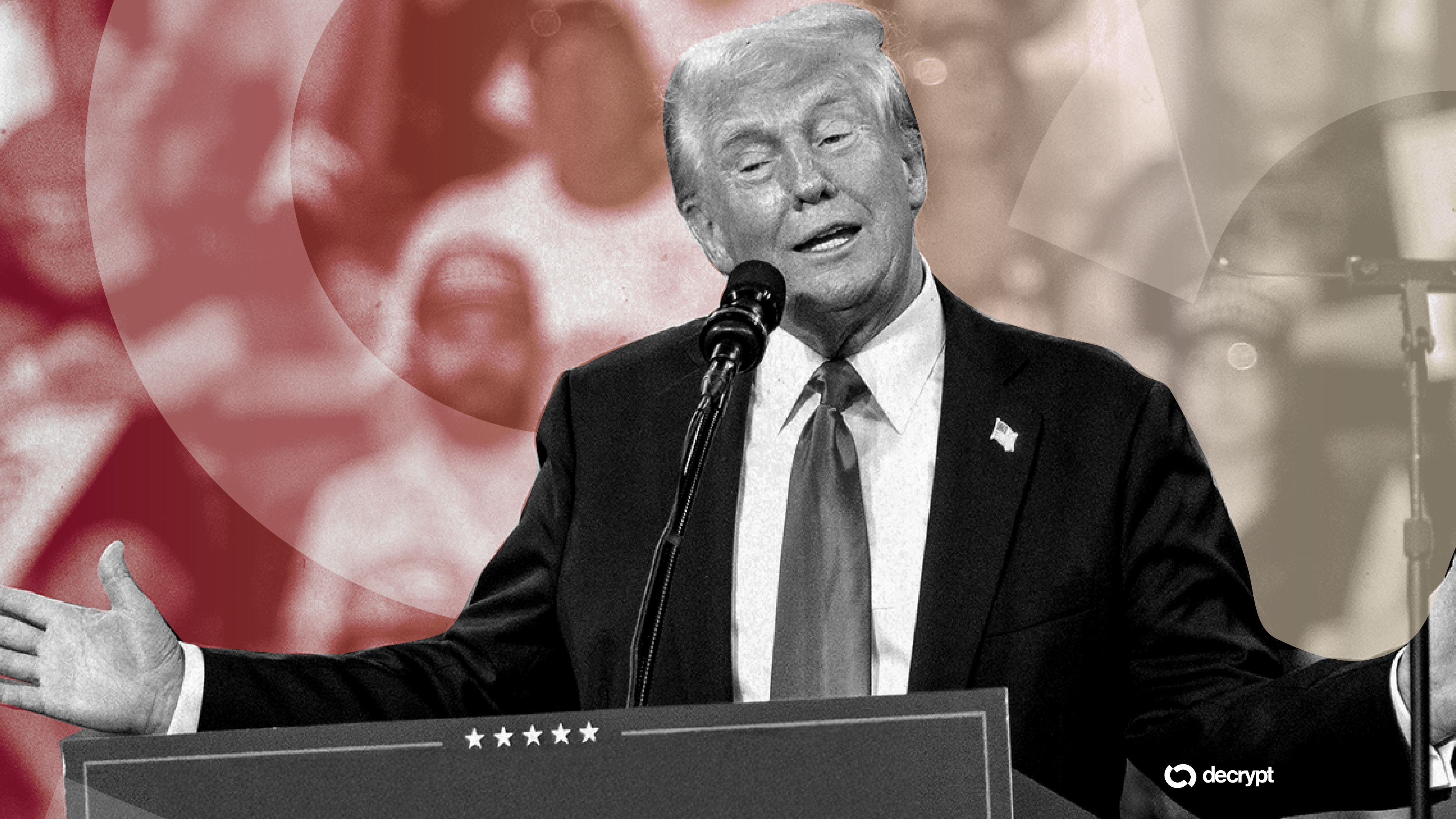
The announcement of an exclusive event hosted by President Trump for top TRUMP meme coin holders has triggered a short-term price increase, indicating speculative interest tied to celebrity endorsement. While the event aims to reward token holders, the token's price remains significantly below its all-time high, suggesting limited sustained fundamental value beyond hype. Past events of this nature have drawn significant criticism and regulatory scrutiny, posing a potential risk for future developments and market perception.

The announcement of a 'gala luncheon' with Donald Trump for $TRUMP token holders, while a recurring event, has caused a brief price spike and increased trading volume, indicating continued speculative interest despite significant price depreciation from all-time highs. Past events of this nature have drawn regulatory scrutiny and protests, highlighting the ongoing tension between political figures and the crypto industry, which could influence future legislative developments. The $TRUMP token's price action shows a short-term speculative reaction to the event announcement, but the overall trend remains significantly down, suggesting limited fundamental support beyond event-driven hype.

The US Senate's vote to include a CBDC ban until 2030 in a housing bill signals a significant regulatory hurdle for potential US central bank digital currencies, potentially favoring decentralized alternatives or regulated stablecoins. This legislative action, driven by concerns over financial freedom and surveillance, indicates a strong political pushback against government-controlled digital currencies, impacting future monetary policy discussions. The explicit allowance for 'open, permissionless, and private' dollar-denominated digital currencies suggests a potential regulatory pathway for stablecoins, contrasting with the outright ban on CBDCs.

Prosecutors have formally rejected SBF's bid for a new trial, labeling his arguments as 'incoherent' and 'fanciful', reinforcing the finality of his conviction and sentence. The legal proceedings surrounding SBF and FTX continue to be a significant overhang for the broader crypto market, with this latest development offering little hope for a swift resolution or early release. While other FTX executives received leniency for cooperation, SBF's conviction on multiple fraud counts and substantial customer fund misappropriation makes his case distinct from pardoned figures like Ross Ulbricht or CZ. The FTX bankruptcy estate's recovery of over $16 billion and projected creditor payouts exceeding 100% of claims suggest a more orderly wind-down than initially feared, though the legal saga's conclusion remains distant.

Binance secured a significant legal win in Alabama, with a judge granting dismissal of key portions of a complaint alleging facilitation of terrorist financing. While the court ordered plaintiffs to file an amended complaint, Binance declared 'full and complete legal victory,' signaling a positive development for the exchange's legal standing. This ruling, following a similar dismissal in New York, reduces immediate legal pressure on Binance and its former CEO, potentially easing concerns about regulatory overhang.

Key Insights: Metaplanet, Asia’s largest Bitcoin treasury company, is further solidifying its presence in the crypto space. The firm has announced the launch of two new subsidiaries wholly focused on crypto. Bitcoin news also reveals that the company is backing Japanese stablecoin issuer JPYC through a strategic investment. Bitcoin News: Metaplanet Launches Subsidiaries to Expand […] The post Bitcoin News: Metaplanet Unveils Two Subsidiaries, Invests in JPYC appeared first on The Coin Republic.

While geopolitical tension and weak labor data are hurting market sentiment, institutional buying below $75,000 may soon exhaust sellers and spark a bull run.

US lawmakers are eyeing tax exemptions for US dollar stablecoins, which are pegged and do not change in value, but not other cryptocurrencies.
Despite a sharp XRP price pullback, Ripple-linked ETFs have already drawn $1.4B in inflows since launching four months ago.

The 119th Congress represents a once-in-a-decade opportunity to fix the legislative bottleneck preventing Bitcoin from becoming a mainstream payment tool.

Key Insights: As per the latest Bitcoin news, MicroStrategy (MSTR) is accelerating its Bitcoin accumulation. As of March 10, 2026, Strategy holds 738,731 BTC, compared with BlackRock’s iShares Bitcoin Trust (IBIT), which holds about 777,872 BTC. This week, MicroStrategy bought roughly 3,519 BTC (about $249 million at $71k) by selling STRC preferred shares. STRC’s trading […] The post MicroStrategy vs BlackRock: Who Hits 1 Million BTC First? appeared first on The Coin Republic.
XRP is exhibiting technical consolidation patterns, suggesting a potential bullish breakout towards $1.7 as selling pressure wanes and accumulation increases. Accelerating institutional adoption of digital assets by 77% of Hong Kong financial firms, supported by favorable regulatory signals from the HKMA, provides fundamental utility and demand drivers for XRP. The confluence of positive technical indicators and growing real-world adoption in a major financial hub like Hong Kong positions XRP for significant speculative and strategic interest in the near term.

OP Labs' decision to lay off 20 employees signals a strategic pivot towards efficiency and focused development, potentially impacting its ability to support its ecosystem's growth. The layoffs coincide with Vitalik Buterin's critique of the current L2 scaling narrative, suggesting a potential shift in Ethereum's long-term architectural direction that could affect L2 project roadmaps. Base's migration away from Optimism's technology stack represents a loss of sequencer revenue for OP Labs and highlights increasing competition and fragmentation within the L2 ecosystem. The news has led to a near-term price dip for the OP token, reflecting market sentiment towards internal restructuring and external competitive pressures.
Signal context only. Validate with price action, liquidity, and risk limits before taking a position.
