
Navigating Crypto News

CoinFeather
Navigating Crypto News

Quick market read from this story
Ripple's achievement of $100 billion in processed volume validates blockchain-based payment infrastructure for institutional use, signaling growing adoption beyond remittance.
The milestone, coupled with the rapid growth of its stablecoin RLUSD to $1 billion market cap, suggests increasing institutional trust and utility for Ripple's integrated financial solutions.
With over 75 regulatory licenses and strategic acquisitions enhancing custody and payment capabilities, Ripple is positioning itself as a comprehensive enterprise-grade financial infrastructure provider, potentially impacting traditional payment systems.
Deep Dive
Ripple has officially surpassed $100 billion in payment volume, a significant achievement that marks its evolution from a cross-border remittance service to a robust enterprise-grade financial infrastructure provider.
Reece Merrick of Ripple stated that the company is now
Source, catalyst, and sector overlap from the latest feed.
Veteran trader Peter Brandt's "banana split" technical analysis suggests Bitcoin is poised for a significant upward move, as the current consolidation forms a rounded bottom on a decade-long macro support line. The confluence of a short-term rounded bottom ('little banana') forming directly on Bitcoin's long-term upward-curving channel support ('big banana') historically precedes major parabolic rallies. Despite recent price action testing resistance above $70,000, Brandt's analysis implies that accumulated momentum within the consolidation bowl could fuel a substantial breakout, making this a critical juncture for BTC.
Live Feed
Loading the broader stream in the same flow as the homepage feed.
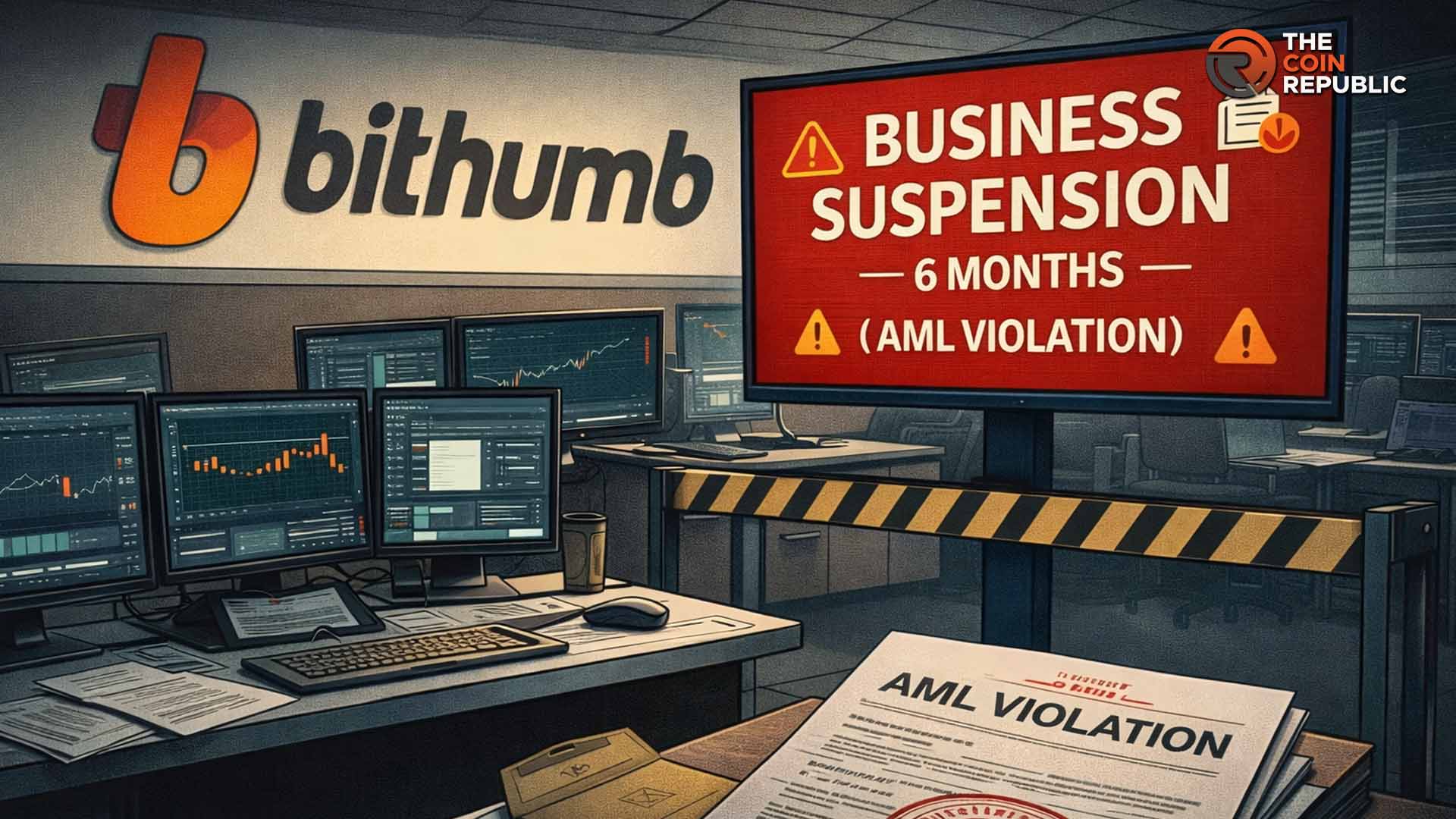
South Korean regulators are intensifying AML and KYC enforcement, signaling a stricter operating environment for domestic crypto exchanges. Bithumb's potential six-month partial business suspension, primarily affecting new user withdrawals, highlights the direct impact of regulatory compliance failures on exchange operations. The ongoing scrutiny of Bithumb, Coinone, and GOPAX indicates a broader trend of regulatory review across major South Korean crypto platforms, potentially impacting market liquidity and user confidence.

Hyperliquid's permissionless market has achieved a record $1.2 billion in open interest, driven by tokenized futures on commodities and equities, indicating growing adoption of decentralized platforms for traditional asset trading. The platform's success highlights its utility for price discovery during traditional market closures, particularly for assets like oil, gold, and silver, suggesting a potential shift in how these markets are accessed. With a majority of top markets being non-crypto pairs, Hyperliquid is demonstrating significant traction in the tokenized Real World Assets (RWA) space, validating its platform for meaningful RWA trading volumes. The significant open interest in tokenized equity and oil futures on Hyperliquid suggests a growing demand for decentralized derivatives on traditional assets, potentially impacting traditional financial market participants.

Bitcoin ETFs experienced significant net inflows of $167.1 million, indicating renewed institutional interest and supporting BTC's push above $70,000. Despite a general market uptrend, Ethereum and Solana ETFs saw substantial outflows totaling $51.3 million and $2.5 million respectively, suggesting a divergence in institutional sentiment towards these altcoins. XRP ETFs recorded the largest outflows at $18.11 million, highlighting potential investor caution or profit-taking in XRP despite its price increase. The mixed ETF flows, with strong BTC inflows contrasting with altcoin outflows, suggest a flight to perceived safety within the crypto market, favoring Bitcoin over other major digital assets.

Bitmine, the largest public ETH holder, transferred $19.5 million in ETH to Coinbase Prime, a move often associated with institutional custody and not necessarily indicative of selling pressure. Despite recent large ETH acquisitions, Bitmine's holdings have significantly decreased in value from their peak, suggesting unrealized losses rather than active liquidation. The transfer to Coinbase Prime, a platform used for institutional trading and custody, could signal internal rebalancing, staking preparations, or potential over-the-counter (OTC) trading activity, maintaining a neutral short-term outlook for ETH price action. While the article notes Bitmine's chairman believes crypto is in the 'late stages of a mini-crypto winter,' the specific ETH transfers to Coinbase Prime do not provide a direct catalyst for immediate price movement.

Bitcoin's current price action at $68K is creating a divergence in market sentiment, with some analysts predicting a repeat of the 2021 crash while others, citing models like Stock-to-Flow, anticipate significant upside. The return of institutional ETF inflows in early March is a key factor to monitor, as its sustainability will indicate whether this is a temporary blip or a sustained demand shift, potentially impacting Bitcoin's price trajectory. The critical support level at $60,000 is a key technical indicator for traders; failure to hold this level could trigger a significant liquidity hunt towards the $50,000-$55,000 range, mirroring bearish scenarios from 2021. Despite bullish long-term projections from models like S2F, renewed criticism regarding their accuracy and the influence of macro factors like Fed policy and geopolitical risks suggest a cautious approach is warranted.

Flow's price predictions for 2026-2030 range significantly, with optimistic targets up to $17 by 2030, contingent on successful ecosystem growth and adoption of its EVM expansion for consumer apps and gaming. The recent burning of 50.3 million FLOW tokens aims to reduce inflation and strengthen the token economy, a positive development for long-term holders if it supports price stability. Technical analysis suggests FLOW is at a critical support level, with a potential recovery towards $1.36 by end-2026 if key resistance levels are broken, but a failure to hold support could prolong the downtrend. Flow's strategic focus on large consumer apps, Web3 gaming, and digital identity, supported by its EVM expansion, positions it for potential recovery, though sustained developer and user activity are crucial.

The crypto market rally, driven by a significant drop in oil prices and positive geopolitical commentary, suggests a potential shift in investor sentiment towards risk-on assets. The coordinated release of oil reserves by G7 nations and the IEA, coupled with Trump's comments on the Iran conflict, are creating a more favorable macro environment for cryptocurrencies. While the overall market is up, the significant liquidations in derivatives markets indicate underlying volatility that traders should monitor closely.

Bitcoin's reclaim of the $70,000 level, driven by easing macro conditions and falling oil prices, signals a potential shift in risk appetite favoring crypto assets. The correlation between oil prices and Bitcoin's price action highlights the increasing influence of macroeconomic factors on digital asset markets, suggesting traders should monitor commodity trends closely. With Bitcoin testing resistance around $72,000-$74,000, a sustained break above this zone could trigger further upside, while holding above $68,000 is crucial for maintaining the near-term bullish structure. The stabilization of altcoins alongside Bitcoin suggests improving market sentiment, potentially leading to broader crypto market gains if the macro tailwinds persist.

Despite geopolitical turmoil and an oil surge impacting traditional markets, Bitcoin demonstrated resilience due to significant demand from OTC traders and institutional flows, indicating a potential return of confidence in risk assets. MicroStrategy's continued accumulation of Bitcoin, alongside substantial inflows into US-listed Bitcoin ETFs, signals strong institutional conviction and provides a fundamental support layer against broader market volatility. The convergence of large wallet accumulation, consistent OTC demand, and ETF inflows suggests that Bitcoin's price stability during the oil shock was driven by strategic buying rather than a lack of market interest, potentially setting a bullish tone for near-term price action. The carry trade strategy involving shorting MSTR stock against Bitcoin ETFs highlights sophisticated market participants hedging risk while positioning for potential upside in BTC, reinforcing its role as a distinct asset class.

Bhutan's government continues its pattern of regular Bitcoin sales, moving approximately $11 million in BTC, reinforcing a structured approach to managing its holdings. These consistent, albeit moderate, sales by a sovereign entity suggest a potential ongoing source of sell pressure on Bitcoin, though the amounts are unlikely to disrupt the broader market significantly. The government's continued holding of a substantial portion of its Bitcoin indicates a long-term strategy rather than a complete divestment, implying a balanced approach to its crypto assets.

Bhutan's periodic sale of Bitcoin, estimated at $11.85 million in this instance, suggests a consistent strategy to monetize its holdings, potentially impacting short-term market supply. The nation's Bitcoin sales, previously linked to QCP Capital, indicate ongoing engagement with institutional market makers, signaling a mature approach to managing its digital asset reserves. Bhutan's utilization of Bitcoin proceeds for healthcare, environmental initiatives, and public servant salaries highlights a real-world application of crypto assets for national development, reinforcing adoption narratives. With approximately 5,400 BTC remaining, Bhutan continues to be a significant holder, and its trading activity warrants monitoring for potential market influence, especially given the context of reduced mining profitability post-halving.
Arbitrum's price is currently consolidating near a key demand zone, with potential for a short-term recovery towards $0.12-$0.13 if support holds. Long-term price predictions for ARB suggest a potential rise to $1.20 by the end of 2026 and $6 by 2030, contingent on sustained recovery and market growth. The article presents a price prediction analysis for Arbitrum (ARB) across multiple years, highlighting its role as an Ethereum Layer-2 scaling solution and its recent price volatility.
Signal context only. Validate with price action, liquidity, and risk limits before taking a position.
Bitcoin's breach of the $70,000 level signals a potential shift in short-term market structure, with buyers showing increased demand and higher lows forming, suggesting a possible end to the recent downtrend. Solana exhibits signs of stabilization with higher lows and a gradual upward trend, indicating a potential move towards the $95 target, which aligns with the 50-day EMA and represents a key test for its recovery. XRP's technical outlook remains bearish, characterized by persistent lower highs and lows, and significant resistance from major moving averages, suggesting continued pressure and a lack of immediate upside potential. The market is observing a divergence, with Bitcoin and Solana showing signs of recovery while XRP remains stagnant, highlighting selective strength within the broader crypto landscape.
