
Navigating Crypto News

CoinFeather
Navigating Crypto News
Source, catalyst, and sector overlap from the latest feed.
The XRP Ledger is set to introduce enhanced privacy features via amendment XLS-372, enabling Confidential MPTs which could significantly boost institutional adoption by balancing privacy with selective disclosure. A recent US Treasury shift recognizing privacy tools as a user right provides a favorable regulatory backdrop for XRPL's privacy enhancements, potentially positioning it as a compliant haven for private transactions. The integration of mixer-like functionality through Confidential MPTs on XRPL, supported by regulatory tailwinds, signals a move towards greater transactional privacy for XRP, potentially altering its market perception.
Live Feed
Loading the broader stream in the same flow as the homepage feed.

Despite Jack Dorsey's personal preference for Bitcoin, Block's Cash App is integrating stablecoin support, indicating a pragmatic business decision driven by customer demand. The integration of stablecoins into Cash App's core payment flow, alongside AI advancements, suggests Block is expanding its financial services beyond its strict Bitcoin focus. Dorsey's comments highlight a tension between ideological purity in crypto and the practical needs of a large user base, a dynamic relevant to broader market adoption strategies. Block's strategic shift towards supporting stablecoins, while simultaneously streamlining operations through AI-driven layoffs, signals a focus on efficiency and broader market appeal.
Aon's pilot utilizing USDC and PYUSD for insurance premium payments signals growing institutional adoption of stablecoins for traditional financial settlements, potentially accelerating transaction times. The integration of stablecoins into insurance premium payments by a major broker like Aon highlights a tangible use case beyond speculation, indicating a maturing market for digital dollar infrastructure. This development, supported by a more favorable regulatory environment post-GENIUS Act, suggests a broader trend of TradFi entities exploring blockchain for efficiency gains, impacting the payments and stablecoin sectors.

Circle's stock surge is attributed to a confluence of factors including Middle East tensions driving oil prices higher and a significant short squeeze, indicating market positioning played a larger role than fundamental growth in the recent price action. The escalation in Iran has indirectly benefited Circle by increasing oil prices, which can lead to inflationary pressures and potentially delay Federal Reserve rate cuts, a scenario that may favor stablecoin issuers like Circle. A crowded short trade ahead of Circle's earnings report created a high-probability short squeeze, suggesting the recent stock performance is more a technical event driven by trader positioning than a reflection of underlying business strength.
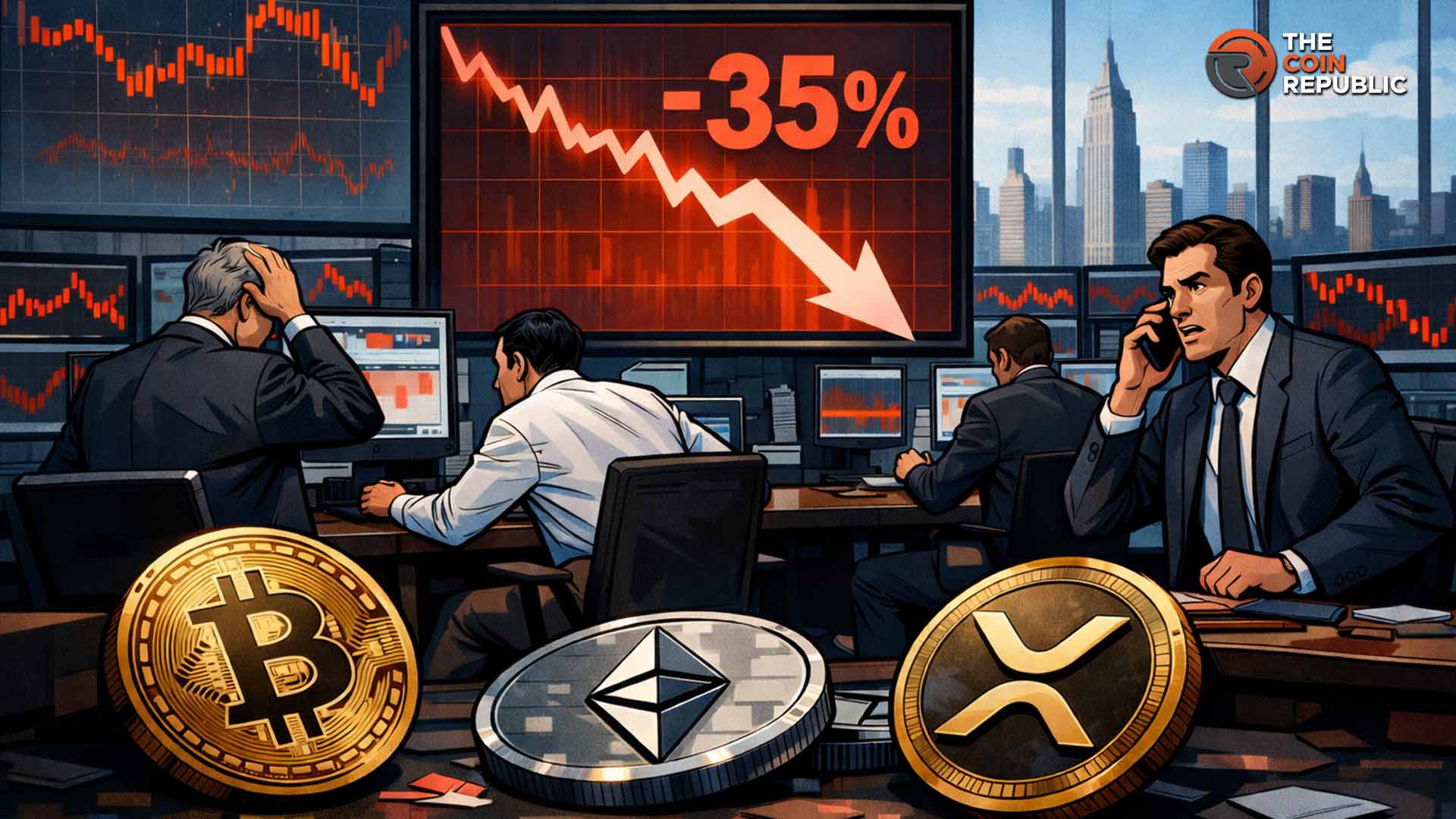
Geopolitical tensions and rising oil prices are increasing macro risk, leading Wall Street strategist Ed Yardeni to raise the probability of a market crash to 35%, directly impacting crypto stocks as high-beta assets. The surge in oil prices above $100 per barrel exacerbates inflation fears and tightens financial conditions, pressuring speculative assets like crypto-linked equities and forcing companies like Core Scientific to diversify away from mining. Increased geopolitical uncertainty and potential shifts in Federal Reserve policy expectations are causing institutional investors to reassess their exposure to crypto stocks, favoring a rotation away from volatile technology and mining companies. The market is pricing in a potential delay in Fed rate cuts to September due to inflation risks, which, combined with broader market volatility, suggests continued downside pressure for crypto-related equities in the near term.

The increasing prevalence of AI agents in crypto transactions, predicted to soon outnumber humans, signals a significant shift towards automated financial activity on-chain. The integration of EIP-3009 with stablecoins like U suggests a growing focus on enabling seamless, gasless transactions for AI agents, potentially driving adoption of specific stablecoins and Layer 2 solutions. While AI agents offer efficiency, the mention of rogue AI agents like ROME highlights emerging risks and the critical need for robust regulatory frameworks like the EU's MiCA to govern their on-chain behavior.
BlockDAG's initial trading performance on Coinstore, surging 260% to $0.18, demonstrates significant early investor demand and positions it as a top performer among new crypto projects. The staggered exchange listings, starting with Coinstore and moving to LBank, are a deliberate strategy to sustain price momentum and avoid sharp sell-offs, suggesting a controlled growth approach. With the $0.20 price target now within close proximity and LBank trading commencing, there is a high probability of continued upward price action driven by new market entrants. Early investors who entered at $0.001 have already seen a 180x return, highlighting the substantial gains possible in high-growth, early-stage crypto assets.

KAST's substantial $80M Series A funding at a $600M valuation signals strong investor confidence in the stablecoin payments sector, indicating a potential growth phase for companies bridging traditional finance and digital assets. The company's rapid user growth to over 1 million and significant transaction volume ($5B annualized) suggest increasing adoption of stablecoin-based payment solutions, potentially impacting traditional payment processors and neobanks. KAST's strategic expansion into North America, Latin America, and the Middle East, coupled with a new enterprise product and focus on regulatory licensing, positions it to capture a larger share of the growing global stablecoin payment market.
The Jito Foundation's acquisition of SolanaFloor signals a commitment to rebuilding ecosystem infrastructure and journalism following a significant hack at Step Finance. This move aims to restore a key data and news source for the Solana ecosystem, potentially improving information flow and market transparency for participants. While the acquisition is positive for Solana's ecosystem narrative, the underlying cause (a $40M hack) highlights ongoing security risks that could continue to impact sentiment.
The prediction that AI agents could drive the next crypto boom suggests a fundamental shift from human-centric to machine-to-machine commerce, potentially creating significant demand for blockchain infrastructure. If AI agents transact autonomously, cryptocurrencies could become the native financial layer for a new machine economy, bypassing traditional banking systems and increasing the utility of blockchain-based assets. Ripple's $5 million commitment to AI-driven DeFi highlights institutional recognition of this emerging trend, signaling potential for future development and investment in this niche.
Ripple CEO Brad Garlinghouse projects a positive outlook for XRP investors over a five-year horizon, emphasizing long-term adoption and institutional demand over short-term price fluctuations. The narrative suggests XRP's utility in future payment systems and blockchain settlement, supported by increasing institutional interest in tokenization and stablecoins, could drive significant value. Analysts observe XRP potentially in a capitulation or consolidation phase, a pattern historically preceding significant upward price movements, with specific Fibonacci extensions noted as potential targets. Despite past resistance and market doubt, Ripple's continued focus on building payment infrastructure and expanding services like Ripple Payments, which has processed over $100 billion, underpins a strategy centered on gradual, utility-driven growth.
Sharplink reported a significant $734 million full-year loss, primarily driven by a decline in its substantial Ethereum holdings, highlighting the direct impact of crypto asset volatility on corporate treasuries. Despite the overall loss, the company saw a 50% quarter-over-quarter increase in staking revenue, demonstrating the resilience and potential profitability of staking operations even amidst broader market downturns. Sharplink's CEO emphasizes a strategy designed to withstand market cycles, suggesting a long-term view on its Ethereum holdings and staking operations, which could signal confidence in the underlying asset's future performance.
Pi Network's price is experiencing a speculative rally driven by anticipation of Pi Day on March 14, with potential price targets of $0.50 to $0.75 contingent on announcements and exchange listings. The current price action is highly event-driven, creating a 'buy-the-rumor, sell-the-news' scenario where a disappointing Pi Day announcement could trigger a sharp reversal. Traders should monitor the $0.20 support level; a break below could signal a return to lower prices, while holding above it maintains the bullish short-term outlook. Upcoming network upgrades and new DeFi tools scheduled for completion by March 12 add to the event-driven sentiment, potentially influencing short-term price action if successfully launched.
Signal context only. Validate with price action, liquidity, and risk limits before taking a position.
Quick market read from this story
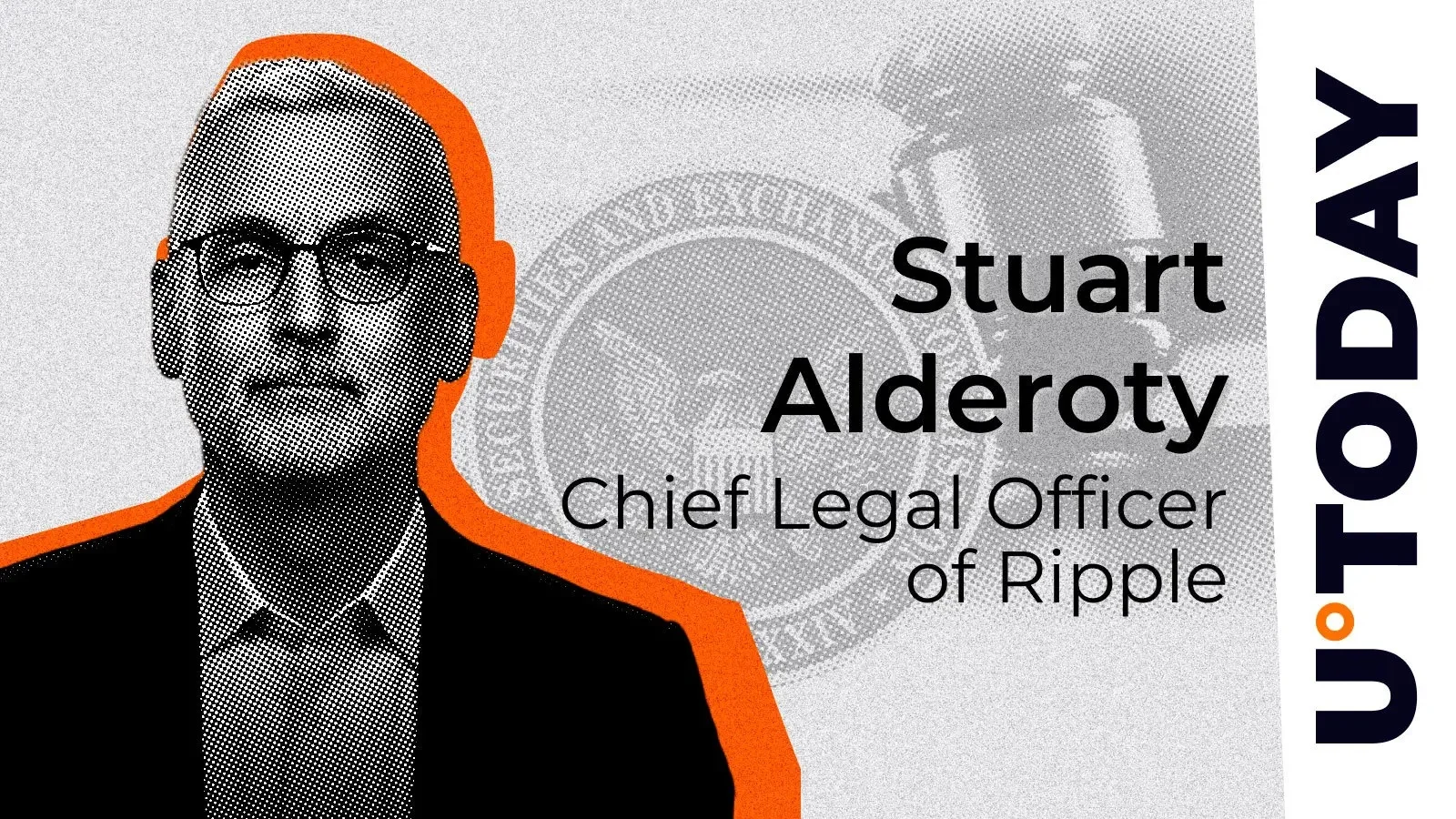
Ripple's CLO meeting with a key Democratic Senator signals potential bipartisan progress on U.S. crypto regulation, which could reduce regulatory uncertainty for the industry.
The discussion focused on market structure, indicating that legislative efforts are progressing towards defining asset classifications and agency jurisdiction, a critical development for projects like Ripple and the broader crypto market.
This engagement highlights a positive development in the ongoing dialogue between the crypto industry and U.S. lawmakers, potentially paving the way for clearer rules and reducing the reliance on enforcement-driven regulation.
Deep Dive
Ripple's Chief Legal Officer, Stuart Alderoty, met with Senator Kirsten Gillibrand (D-NY) over the weekend to discuss digital asset regulation. Alderoty shared a photo of the meeting on X (formerly Twitter), stating that the discussion took place over lunch in Florida.
Alderoty publicly praised Senator Gillibrand's leadership on market structure, expressing optimism for bipartisan progress on cryptocurrency legislation. He noted that Gillibrand's efforts should encourage confidence that a resolution can be achieved on a bipartisan basis.
Senator Gillibrand has been a leading voice in the Senate concerning cryptocurrency. She has collaborated with Senator Cynthia Lummis (R-WY) on comprehensive, bipartisan legislation designed to clarify the regulatory roles of agencies such as the SEC and CFTC.
The discussion on "market structure" pertains to congressional efforts to define digital asset classifications, such as securities or commodities, and to determine agency jurisdiction over their trading. Ripple has been actively involved in a significant legal dispute with the SEC concerning the classification of its XRP token.
As a result, Ripple executives have strongly advocated for Congress to establish clear statutory rules, rather than relying on regulatory enforcement actions.
Veteran trader Peter Brandt disputes the validity of the 'cup and handle' pattern for Bitcoin, directly challenging the $500,000 price prediction based on this technical analysis. Brandt's rejection of the pattern, drawing parallels to gold's successful rally, suggests that market participants relying on this specific technical setup for Bitcoin may be misinterpreting chart structures. The commentary highlights the importance of rigorous technical analysis and warns against applying patterns across different asset classes without proper validation, potentially tempering speculative optimism.
