
Navigating Crypto News

CoinFeather
Navigating Crypto News

Quick market read from this story
Galaxy Digital's analysis suggests that while quantum computing poses a real threat to crypto, most wallets are not currently vulnerable, mitigating immediate systemic risk.
The core development is the ongoing work by Bitcoin Core developers and the broader ecosystem on quantum-resistant solutions, indicating proactive mitigation rather than an imminent crisis.
Despite the technical challenges of implementing post-quantum cryptography due to Bitcoin's decentralized governance, aligned incentives among network participants are expected to facilitate a solution.
Deep Dive
Galaxy Digital research analyst Will Owens stated that the quantum computing threat to Bitcoin investors is real, but not all wallets are vulnerable, and the necessary solutions are actively being developed. In theory, a quantum computer could derive private keys from public keys, enabling an attacker to steal coins by impersonating owners and forging signatures. However, Owens emphasized that most wallets are not currently vulnerable, as funds are only at risk when public keys are exposed on-chain.
Wallets are exposed to quantum threats in two primary ways: those with publicly visible keys on the blockchain and those whose public keys are revealed when a transaction is made. The potential impact of quantum computing on cryptocurrency security has been a long-standing debate within the community, with concerns that advanced computers could break encryption, expose sensitive data, and lead to the theft of user funds.
Contrary to some criticisms that Bitcoin Core developers are neglecting quantum-related proposals, Owens's research indicates a significant acceleration in development since late 2025. He noted that substantial work is underway to address quantum vulnerabilities and mitigations, with a maturing set of proposals actively being developed, reviewed, and debated by experienced contributors. These proposals are not theoretical but are concrete steps being taken within the Bitcoin ecosystem.
The community has seen various solutions proposed, including crypto personality Willy Woo's suggestion to hold Bitcoin in a SegWit wallet for approximately seven years as a temporary measure against the quantum threat. While the technology to break current encryption is still considered decades away by some, and traditional targets like banking giants may be compromised first, the ongoing development suggests proactive measures are being taken.
Owens acknowledged that implementing a post-quantum solution will likely face governance challenges due to Bitcoin's decentralized nature, lacking a central authority to mandate software updates. However, he highlighted that the external, technical, and universal nature of the quantum threat aligns incentives across all network participants—miners, holders, and exchanges—who have a direct financial interest in maintaining the network's security. This shared interest is expected to facilitate the adoption of necessary upgrades.
“For investors, the key takeaway is straightforward: the risk is real but recognized, and the people best positioned to address it are working on it.”
Source, catalyst, and sector overlap from the latest feed.
The arrest of a Super Micro co-founder for alleged AI chip smuggling to China introduces regulatory risk and potential supply chain disruptions for AI hardware, impacting companies reliant on such infrastructure. Super Micro's stock decline of over 13% post-announcement signals immediate market concern regarding the legal and operational implications for the company and its partners. This development highlights increased scrutiny on the export of advanced AI technology, potentially affecting the availability and cost of critical components for AI development and deployment.
Gemini faces a class-action lawsuit alleging misleading statements during its IPO, directly impacting investor confidence and potentially leading to further legal scrutiny. The alleged pivot to a prediction-market-centric model, coupled with workforce reductions and market exits, has contributed to a significant decline in Gemini's stock price post-IPO. Despite legal challenges, Gemini reported Q4 revenue growth, indicating potential resilience in its core business operations separate from the stock performance concerns.
A federal appeals court has allowed Nevada authorities to enforce a temporary restraining order against Kalshi, effectively blocking its sports event contracts in the state. This ruling signifies a potential setback for prediction markets like Kalshi, as state regulators increasingly scrutinize their operations for potential unlicensed sports betting. The legal conflict highlights the ongoing tension between federal commodity regulations and state gambling laws, creating uncertainty for platforms operating in this space. With trading volumes in prediction markets surging, this regulatory action could signal a broader trend of increased oversight and potential restrictions on similar platforms.
The World Gold Council's 'Gold as a Service' initiative aims to standardize tokenized gold products, potentially increasing institutional adoption and interoperability with traditional finance. This development signals a significant push towards integrating real-world assets like gold into digital financial systems, leveraging blockchain technology for efficiency and accessibility. The framework could enhance liquidity and reduce operational complexity for tokenized gold, impacting existing products like XAUT and PAXG by setting new industry standards.
Gemini's Q4 revenue beat expectations, driven by credit card adoption and fee structure adjustments, indicating a potential turnaround despite a widening net loss. The company's strategic shift to focus on the US market and leverage AI for efficiency, alongside workforce reductions, signals a move towards operational streamlining. The development of Gemini's prediction market and future plans for perpetual futures contracts suggest a strategic expansion into new financial products within the US regulatory landscape.
The XRP Ledger's integration of Agent Commerce, enabling AI agents to transact autonomously, signals a significant shift towards programmable economies and machine-to-machine payments. Ripple's $5 million investment in t54 underscores a strategic bet on AI-driven DeFi and the infrastructure required for autonomous transactions, potentially positioning XRPL as a key platform for future digital commerce. This development aligns with broader industry trends, as highlighted by Coinbase's CEO, suggesting that autonomous agents, rather than human traders, may drive the next wave of crypto adoption and transaction volume. By embedding trust layers like escrow and instant settlement, XRPL is building a foundation for a self-operating marketplace, reducing reliance on intermediaries and paving the way for trillions in on-chain payments.
Bitcoin's current price action mirrors a previous pattern that preceded a significant drop to $60,000, suggesting a potential for further downside if key support levels fail. The observed 'counter-trend recovery' indicates weak conviction among buyers, signaling potential bullish exhaustion and a risk of a bearish trend re-establishing itself. A break below the current channel's lower trendline around $65,800 would confirm a bearish outlook, potentially triggering a sharp sell-off and impacting market sentiment.
US regulators have classified XRP as a digital commodity, shifting oversight to the CFTC and providing significant regulatory clarity that could reduce barriers for institutional adoption. Despite the positive regulatory development, XRP's price has not yet recovered to previous highs, indicating that market sentiment is still influenced by broader macro factors and Bitcoin correlation. The joint interpretive guidance from the SEC and CFTC establishes a more structured regulatory framework for crypto assets, potentially impacting how other major non-stablecoin cryptocurrencies are classified. While regulatory clarity is a positive step, the market awaits further legislative developments and consistent execution to fully unlock institutional engagement and broader adoption for XRP.
Bitcoin experienced a notable price increase to $70,800, driven by geopolitical stabilization efforts in the Middle East that led to a retreat in oil prices. The correlation between oil price swings and crypto assets like Bitcoin suggests that macroeconomic and geopolitical events are currently a primary driver of crypto market sentiment and price action. While Bitcoin showed strength, Ether and XRP lagged, indicating a potential divergence in performance within the broader crypto market, possibly due to specific project-related factors or differing investor sentiment. The bearish momentum observed in the S&P 500, breaking below its 200-day SMA, poses a risk of contagion to crypto markets, suggesting that broader risk-off sentiment could pressure digital asset prices.
Morgan Stanley's filing for a spot Bitcoin ETF with ticker MSBT and a $1 million seed capital signals continued institutional adoption and a maturing market for regulated crypto investment products. The inclusion of BNY Mellon as administrator and Coinbase as prime broker and custodian for the proposed ETF highlights the integration of traditional finance infrastructure with digital asset services. This development, alongside other spot Bitcoin ETFs, reinforces Bitcoin's position as a key asset class for institutional investors seeking regulated exposure, potentially driving further inflows.
Live Feed
Loading the broader stream in the same flow as the homepage feed.

Visa's new CLI tool enables AI agents to execute payments directly, bypassing traditional APIs and enhancing machine-to-machine transactions. Stripe-backed Tempo's blockchain launch focuses on high-throughput stablecoin payments for automated agents, signaling a push for specialized infrastructure. The simultaneous launches of Visa's CLI and Tempo's blockchain highlight a competitive race to establish standards for AI-driven payment systems. These developments indicate a significant shift towards programmable payments and autonomous financial agents, potentially impacting future transaction infrastructure.

Despite a hawkish Fed and Bitcoin's dip below $70,000, significant capital is flowing into the Pepeto presale, mirroring historical patterns of smart money accumulation during market fear. The Pepeto presale, led by a co-founder of the original Pepe coin, is attracting conviction capital with over $8 million raised, positioning it as a potential high-return opportunity compared to established assets like BTC and ETH. The current market sentiment, characterized by extreme fear and retail panic selling, presents a contrarian opportunity for traders to accumulate assets with strong development narratives, such as Pepeto, before potential future listings.
Gemini's significant 30% workforce reduction and executive departures signal severe financial distress, driven by a substantial $585 million net loss and a failed IPO strategy that misjudged market timing. The exchange's pivot to new ventures like prediction markets, despite ongoing controversy and lawsuits, indicates a desperate attempt to find a new business model amidst operational challenges. These drastic cost-cutting measures and strategic shifts suggest Gemini is in a critical restructuring phase, with its future viability dependent on the success of these new, unproven ventures.
FTX's upcoming $2.2 billion creditor distribution, starting March 31, brings total payouts towards $10 billion, offering full recovery for some creditor classes based on 2022 crypto prices. While some creditors achieve 100% recovery, the valuation is based on 2022 prices, meaning they have missed significant market gains, potentially impacting their net realized value. The legal proceedings surrounding Sam Bankman-Fried continue, with prosecutors refuting his bid for a new trial, reinforcing the conviction and indicating no immediate clemency is expected. The distribution process requires creditors to have completed KYC and tax forms by a specific record date, with payouts managed through approved providers like BitGo and Kraken, offering flexibility in payout currency.

Bittensor's price rally to $300 is supported by increased trading volume and a growing AI-crypto narrative, suggesting potential for sustained growth beyond speculative interest. The current price action is testing a critical resistance zone between $300-$310, making a confirmed breakout or rejection pivotal for determining the medium-term trend. While momentum indicators suggest overbought conditions, rising OBV and consistent volume expansion indicate strong buyer participation, presenting a classic breakout or bull trap scenario. A sustained close above $310 could target $340-$360, whereas a failure to hold above $300 may lead to a pullback towards $260-$280, highlighting key levels for traders to monitor.

BORA's price prediction hinges on actual adoption within gaming and entertainment ecosystems, particularly through successful game launches and deeper integration into the Kaia network, rather than speculative trading. The project's dual-chain architecture and focus on South Korean market dynamics, including potential regulatory shifts, are key factors influencing its long-term growth potential beyond 2026. While ambitious long-term price targets exist, BORA's near-term price action is constrained by its current trading range, indicating a need for a catalyst to break significant resistance levels.
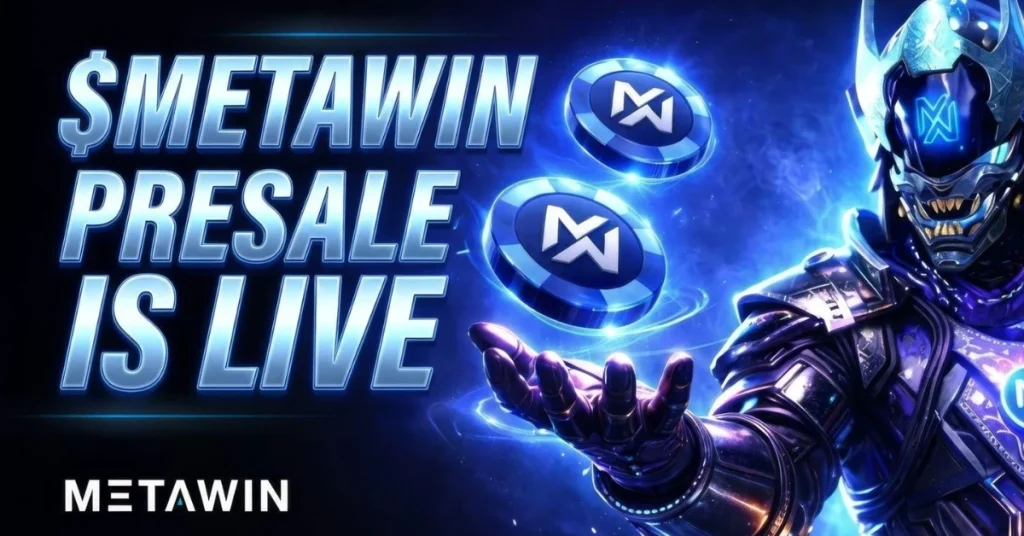
The launch of the $METAWIN token presale, with 20% of supply available and no private rounds, signals a community-focused token distribution strategy aiming for broad public participation. The MetaWinners community highlights a track record of delivering value, including over $6.5 million in prizes, which may attract participants seeking established ecosystems rather than purely roadmap-based projects. Despite the presale's launch, the disclaimer that $METAWIN carries no direct on-chain utility, governance, or revenue entitlement, and that ecosystem benefits are voluntary from MetaWin.com, suggests a speculative asset with limited fundamental backing.

Kentucky's HB 380 includes a provision requiring hardware wallet providers to facilitate user credential resets, which industry experts deem technologically impossible for non-custodial wallets and a threat to self-custody. The proposed legislation misunderstands core self-custody principles, potentially forcing hardware wallet providers to exit the Kentucky market or redesign products, thereby reducing consumer choice and privacy. This regulatory development highlights a broader challenge in crypto policy where lawmakers struggle with self-custody concepts, potentially leading to unintended consequences for users seeking secure asset storage.

Gemini's significant workforce reduction of 30% signals a strategic pivot towards AI and operational efficiency amidst substantial financial losses, indicating a challenging market environment for centralized exchanges. The exchange's decision to exit UK, EU, and Australian markets to focus on the US and Singapore, coupled with growth in credit card services and forecast platforms, suggests a targeted approach to resource allocation and diversification. Despite a substantial net loss of $582.81 million in 2025 and a market share below 1%, Gemini's restructuring and focus on specific growth areas may position it for survival and potential recovery in a consolidating industry.
Nvidia's expanded deal with AWS to supply 1 million GPUs through 2027 signifies a deepening reliance on its AI infrastructure stack by major cloud providers, driven by a significant shift towards inference workloads which now represent two-thirds of AI compute. The substantial commitment from AWS highlights the growing demand for AI processing power and suggests that despite developing its own chips, AWS will continue to integrate Nvidia's full stack, creating high switching costs and solidifying Nvidia's foundational role in AI infrastructure. This development underscores the rapid evolution of AI infrastructure, with Nvidia increasingly acting as the underlying layer for cloud providers, impacting competition and the economics of running AI models at scale.
Signal context only. Validate with price action, liquidity, and risk limits before taking a position.
