
Navigating Crypto News

CoinFeather
Navigating Crypto News
Quick market read from this story
Public companies collectively increased their Bitcoin holdings by approximately 25,000 BTC in March, indicating continued institutional accumulation despite some firms reducing their positions.
MicroStrategy (MSTR) and Strategy (STRC) were significant drivers of this accumulation, with Strategy alone adding 44,400 BTC, highlighting their aggressive Bitcoin acquisition strategies.
The net inflow of 25,000 BTC suggests sustained demand from corporate treasuries, which could provide a foundational support level for Bitcoin's price if this trend persists.
Deep Dive
In March 2026, public companies collectively added approximately 25,000 BTC to their balance sheets. This net increase was achieved after selling around 22,000 BTC, with Strategy being a significant contributor, acquiring 44,400 BTC through large weekly purchases funded by STRC and MSTR ATM sales.
Beyond Strategy, approximately 15 other companies added about 3,000 BTC. Notable changes include American Bitcoin increasing its holdings by 960 BTC. Conversely, major sellers like MARA Holdings reduced their holdings by 15,100 BTC. GameStop also pledged 4,700 BTC, leaving them with just one BTC in their reserves.
Source, catalyst, and sector overlap from the latest feed.
SBI's B2C2 selecting Solana for institutional stablecoin settlements highlights Solana's growing appeal for high-throughput, low-cost transactions, potentially increasing demand for SOL. The integration of major stablecoins like USDC, USDT, and PYUSD on Solana by B2C2 signals increased institutional adoption and utility for the network beyond speculative trading. This development positions Solana as a key infrastructure provider for institutional digital asset settlement, potentially drawing more market makers and financial institutions to its ecosystem.
Live Feed
Loading the broader stream in the same flow as the homepage feed.

Ripple's launch of Digital Asset Accounts and Unified Treasury integrates digital assets into enterprise treasury workflows, potentially increasing adoption of XRP and RLUSD by corporate treasurers. The new platform addresses a key barrier to corporate digital asset adoption by offering a single interface for managing both fiat and digital assets, reducing operational complexity. This development leverages Ripple's acquisition of GTreasury, embedding crypto capabilities into established enterprise infrastructure and signaling a strategic push into institutional treasury solutions.

Franklin Templeton's launch of a dedicated crypto division, "Franklin Crypto," signals a significant institutional move beyond passive ETF exposure towards active digital asset strategies. The acquisition of 250 Digital and integration of its liquid strategies, led by former CoinFund executives, indicates a strategic build-out of in-house expertise to meet growing institutional demand for structured crypto investments. The experimental use of BENJI tokens for transaction consideration in the acquisition suggests early adoption of tokenized assets for M&A, potentially streamlining future deals on blockchain rails.

The CoinDesk 20 Index is showing broad-based strength with 18 out of 20 assets trading higher, indicating positive market sentiment across major cryptocurrencies. Avalanche (AVAX) and Hedera (HBAR) are leading the performance of the CoinDesk 20, with gains of 4.0% and 3.6% respectively, suggesting potential short-term upward momentum for these specific assets. The overall market sentiment appears neutral to slightly bullish given the CoinDesk 20's 1.0% increase and the majority of its constituents trading in the green, reflecting a general market uplift.
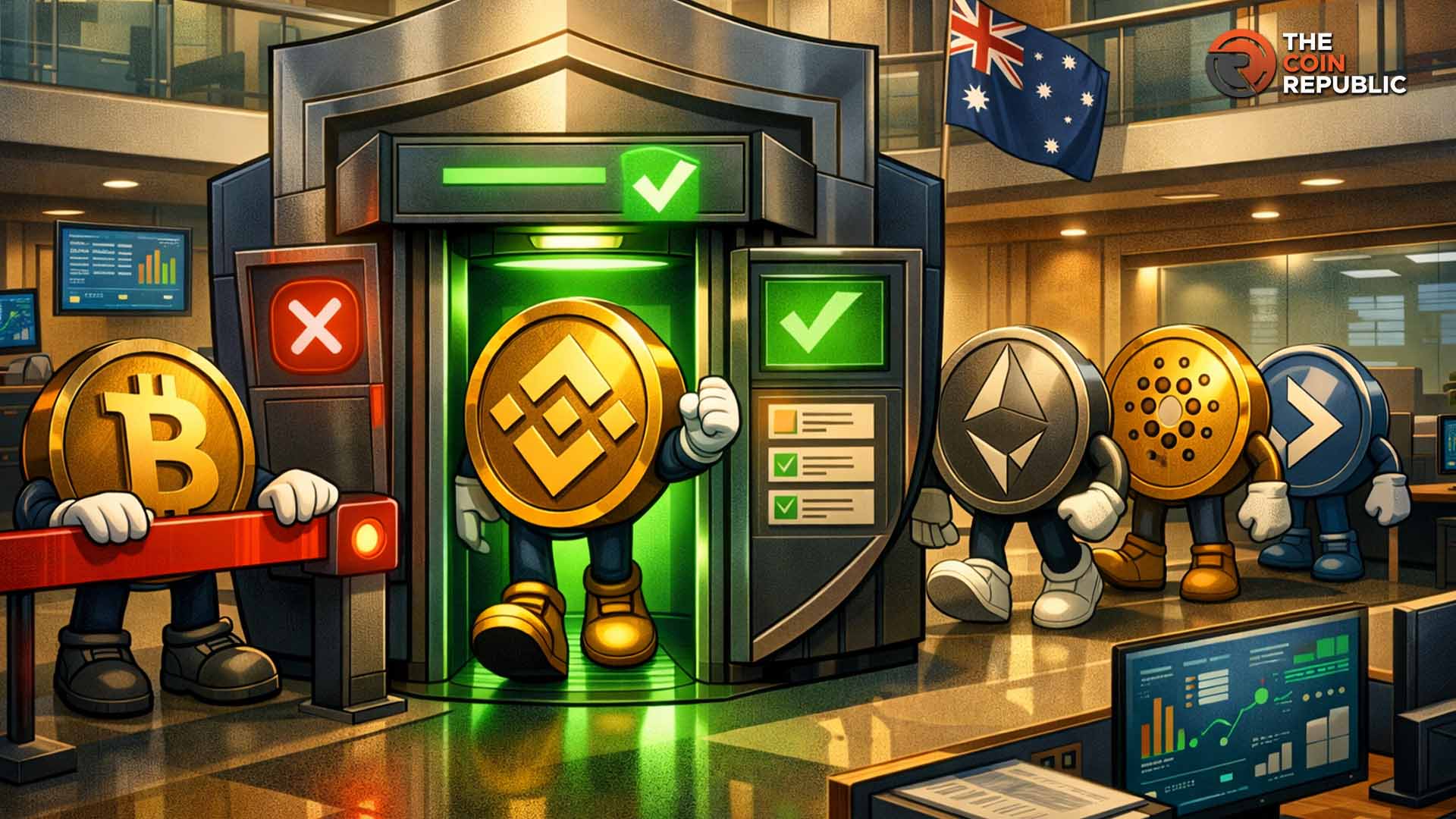
Australia's new crypto legislation mandates licensing for exchanges and custodians, establishing the country's first comprehensive regulatory framework for digital asset platforms. The regulation prioritizes consumer protection and the secure handling of user funds by aligning crypto businesses with traditional financial services standards. Industry leaders have welcomed the clarity provided by the new law, anticipating increased institutional investment and long-term growth in the Australian crypto market. The legislation focuses on regulating the companies managing digital assets rather than the assets themselves, aiming to prevent issues like fund mismanagement and bankruptcy.

Hong Kong's delay in issuing stablecoin licenses suggests regulatory caution, potentially impacting the timeline for new market entrants and the broader adoption of regulated stablecoins in the region. The missed March target for stablecoin licenses indicates potential hurdles in the approval process, which could temper near-term expectations for institutional adoption of stablecoins within Hong Kong's financial ecosystem. Despite the delay, Hong Kong's commitment to establishing a regulated stablecoin framework remains a strategic objective, implying ongoing efforts to balance innovation with robust risk management.

Bitcoin's drawdowns are compressing to approximately 50%, a shift analysts attribute to market maturation and increased institutional participation, suggesting a move from speculative asset to a portfolio efficiency enhancer. While some analysts see reduced volatility as a sign of maturity, others like Mike McGlone maintain a bearish outlook, predicting a potential reversion to $10,000 amidst broader market declines. The evolving narrative around Bitcoin suggests that as drawdowns lessen and institutional adoption grows via ETFs and other avenues, the asset may increasingly function as a macro allocation rather than a venture-style bet, implying a normalization of returns.
Brent crude falls to $98 as Trump hints at ending Iran war, but attacks and rising inventories keep uncertainty high.

Kevin Warsh's nomination to lead the Federal Reserve, coupled with his stated desire for lower interest rates and a positive view on Bitcoin as a store of value, could signal a more favorable environment for risk-on assets like cryptocurrencies. Despite Warsh's potential influence, his ability to enact significant policy changes, such as rate cuts, is constrained by the FOMC's collective decision-making process and potential economic headwinds like rising oil prices. Market participants should monitor Warsh's confirmation hearing and the subsequent FOMC meetings for concrete policy shifts, as his actual impact on interest rates and broader economic policy remains uncertain due to internal Fed dynamics and external economic pressures. Warsh's nuanced view on Bitcoin, acknowledging its store of value properties while questioning its utility as money, suggests a cautious but potentially open-minded regulatory stance towards digital assets if confirmed.
Dogecoin is facing significant resistance at the $0.0930 level, which is acting as a key barrier to further upside potential. A decisive break above the $0.0930 resistance could propel DOGE towards the $0.10 psychological level, presenting a near-term bullish target. Failure to overcome the $0.0930 resistance may lead to a retest of lower support levels, with $0.0900 and $0.0885 being critical thresholds to watch. While short-term indicators show a slight bullish edge, the lack of strong momentum suggests caution is warranted for traders anticipating a significant rally.
Ripple's standard 1 billion XRP escrow release, while large in nominal terms, is managed to re-lock a significant portion, mitigating immediate sell pressure and supporting ecosystem development. XRP's resilience and price rebound to $1.35 post-unlock, coupled with technical indicators suggesting a market bottom, indicate potential for near-term upward momentum. The potential regulatory clarity from the CLARITY Act, classifying XRP as a commodity, could significantly boost institutional interest and adoption, creating a favorable environment for growth. The convergence of disciplined tokenomics, technical recovery, and positive regulatory sentiment positions XRP for a consolidation and potential expansion phase, warranting a watchlist approach.
Ethereum is currently underperforming Bitcoin, evidenced by a persistent ETH/BTC downtrend and declining ETH dominance, indicating a capital rotation favoring BTC. Despite ETH/USD price stability, the relative weakness suggests that Ethereum is not yet in a confirmed bullish trend, requiring multiple bullish confirmations before a directional bias can be established. Traders should view any near-term upside in ETH as limited and reactive until ETH/BTC breaks its downtrend and ETH dominance shows sustained upward momentum, signaling a potential capital rotation back into Ethereum.
Signal context only. Validate with price action, liquidity, and risk limits before taking a position.
No explicit catalyst tagged.
Franklin Templeton's acquisition of a CoinFund spinoff signals increased institutional adoption and a strategic push into digital assets by traditional finance players. The move by a $1.7 trillion asset manager to offer specialized crypto investment solutions indicates growing demand from institutional clients like pensions and sovereign funds, potentially driving further capital inflows. This development suggests a maturing crypto market where established financial institutions are actively seeking to integrate digital assets into their offerings, potentially impacting market structure and product development.
