
Navigating Crypto News

CoinFeather
Navigating Crypto News

Quick market read from this story
International law enforcement agencies are coordinating 'Operation Atlantic' to combat crypto fraud, specifically targeting 'approval phishing' and 'pig butchering' scams.
The initiative highlights the increasing sophistication of crypto-related scams and the growing need for cross-border collaboration to protect investors.
With over $17 billion lost to crypto crimes last year, this operation signals a heightened focus on enforcement which could deter illicit activities but also increase scrutiny on the sector.
Deep Dive
Law enforcement agencies from the United States, United Kingdom, and Canada are collaborating on a new initiative called "Operation Atlantic" to combat sophisticated cryptocurrency fraud schemes, specifically targeting "approval phishing" or "pig butchering" scams.
This joint international effort aims to identify and disrupt these scams in near real-time, preventing criminals from profiting. The U.S. Secret Service will work alongside the U.K. National Crime Agency and various Canadian authorities, including the Ontario Provincial Police and the Ontario Securities Commission. This collaboration also involves public and private sector services.
Deputy Assistant Director of the U.S. Secret Service, Brent Daniels, stated that these scams cost victims millions annually. He emphasized that Operation Atlantic will deny criminals the ability to profit from their crimes. Deputy Director of Cyber at the UK’s National Crime Agency, Paul Foster, highlighted the increasing sophistication of approval phishing scams and the importance of international cooperation, noting that criminals operate across borders, necessitating a similar response.
Operation Atlantic builds upon previous successful collaborations, such as "Operation Atlas," initiated by Canadian authorities in 2024. Detective Superintendent Jennifer Spurrell of the Ontario Provincial Police noted that Project Atlas demonstrated the effectiveness of coordinated disruption and expressed pride in extending this approach internationally.
Pig butchering scams have seen a significant rise since 2020. According to analytics firm Chainalysis, an estimated $17 billion was stolen in crypto crimes in 2025 alone. This new task force is part of ongoing efforts to curb these substantial losses. Previously, in November, the U.S. Department of Justice launched an interagency Scam Center Strike Force to dismantle international pig butchering crypto scams linked to Chinese crime networks.
Source, catalyst, and sector overlap from the latest feed.
World Liberty Financial is introducing a tiered access system for investors who lock up significant amounts of WLFI tokens, potentially creating demand for the token to gain 'guaranteed access' to the team. The new governance framework requires a minimum 180-day token lock-up for participation, which could reduce the circulating supply of WLFI and influence its price dynamics. The development occurs amidst regulatory scrutiny of the Trump family's crypto ventures, suggesting a strategic move to solidify investor engagement despite external pressures. The introduction of 'super nodes' requiring $5.3 million in staked WLFI tokens aims to filter and prioritize long-term ecosystem participants, potentially impacting the project's decentralization narrative.
Crypto wealth manager Abra is going public at a $750 million valuation—but regulators have repeatedly taken issue with how it does business.
Sustained institutional inflows exceeding $1 billion for three consecutive weeks, driven by U.S. investors, signal a structural shift towards digital assets as a hedge against geopolitical uncertainty. Bitcoin continues to dominate inflows, capturing 75% of the $1.06 billion, reinforcing its position as a macro hedge, while Ethereum's strong demand is boosted by new U.S. staking ETF listings. The U.S. ETF market's dominance in driving institutional demand highlights its critical role as the primary gateway for capital allocation into digital assets, suggesting continued influence on market trends. Despite overall positive inflows, XRP experienced outflows, indicating divergent investor sentiment within specific altcoins and highlighting the importance of monitoring individual asset performance.
Publicly traded Ethereum treasury firm BitMine Immersion Technologies added more ETH amid its climb to $2,300 for the first time in six weeks.
Strategy executed its largest Bitcoin purchase of the year, acquiring 22,337 BTC for $1.57 billion, signaling continued conviction in the asset despite recent price volatility. The firm simultaneously raised nearly $1.2 billion through its STRC preferred share offering, demonstrating strong investor demand for its yield-bearing product as a funding mechanism. While Strategy's Bitcoin holdings have experienced significant paper losses, the recent price appreciation brings them closer to the firm's average purchase price, potentially reducing unrealized losses. STRC's market capitalization has surged 30% in the past month, highlighting its growing importance as a funding source for Strategy's ongoing Bitcoin accumulation strategy.
The CLARITY Act faces a critical political deadline in late April/early May, with its potential passage directly impacting how stablecoins function, specifically regarding yield generation, which could divert significant capital from traditional banking deposits. Banks are lobbying aggressively to prevent stablecoin issuers from offering interest-like rewards, fearing deposit migration that could total $500 billion by 2028, while crypto firms argue such features are necessary for competition and broader adoption. Failure of the CLARITY Act to pass could lead to increased reliance on regulatory rulemaking (e.g., by the OCC) and a more uncertain future for crypto market structure, potentially delaying broader adoption and making the sector more vulnerable to political shifts. The debate over stablecoin yield is a central point of contention, highlighting a fundamental disagreement on whether these digital assets should primarily serve as payment instruments or evolve into more competitive financial products, with significant implications for both TradFi and crypto.
A recent poll indicates that crypto users prioritize privacy features over stablecoin yield incentives within the CLARITY Act, suggesting a potential divergence in market participant values versus legislative focus. The ongoing debate over stablecoin yield rules, particularly the potential for the Treasury to freeze transactions without court orders, is stalling the CLARITY Act, highlighting regulatory friction points for the crypto industry. Despite the stall, the CLARITY Act's provisions regarding transaction freezing and DeFi platform classification could significantly impact self-custody rights and financial autonomy, warranting close observation by market participants. The conflict between banking groups advocating for a ban on stablecoin rewards and crypto leaders defending their necessity for innovation underscores a fundamental disagreement shaping the future regulatory landscape.
BlockFills' Chapter 11 bankruptcy filing, with liabilities up to $500M, signals significant financial distress within the crypto trading and lending sector. The platform's suspension of withdrawals and a lawsuit involving 70.6 BTC highlight operational failures and potential mismanagement, impacting client trust and asset security. This event underscores ongoing challenges for digital asset lenders, following a pattern of bankruptcies driven by market instability and regulatory pressures.
South Korean regulators have fined Bithumb $24 million and ordered a six-month partial business suspension due to significant AML and KYC compliance failures. The regulatory action, stemming from millions of unverified customer accounts, highlights increasing oversight on crypto exchanges in South Korea and could impact Bithumb's operational capacity for new users. This development signals a heightened risk environment for exchanges operating in jurisdictions with stringent regulatory frameworks, potentially affecting investor confidence and operational strategies.
Increased trading volume on prediction markets, particularly for Iran-related contracts, highlights a surge in speculative activity driven by geopolitical events. Regulatory scrutiny is intensifying with the CFTC classifying event contracts as financial assets and lawmakers proposing bans on war-related bets, signaling potential future restrictions on prediction market operations. The proposed "DEATH BETS Act" and recent insider trading allegations on Polymarket underscore the growing concerns around the ethical and regulatory implications of prediction markets, potentially impacting their future accessibility and scope. While current volume is high, the regulatory headwinds and potential for outright bans suggest a cautious outlook for prediction market platforms, especially those focused on sensitive geopolitical or conflict-related events.
Live Feed
Loading the broader stream in the same flow as the homepage feed.

The Sei Development Foundation joined in the round to support expansion of an SEC-regulated alternative trading system and settlement platform for blockchain-based securities.
Veteran trader Peter Brandt's analysis suggests Ethereum is forming a local bottom near historical support, indicating a potential for a near-term recovery rally if key resistance levels are breached. The ETH price is currently testing resistance around $2,300, with a decisive move above this level potentially signaling a continuation towards $2,400 and $2,600, while failure could lead to a retest of lower support zones. Increased open interest in Ethereum futures, up 19.15% to $33.37 billion, alongside corporate accumulation of ETH by entities like BitMine, suggests growing market interest and potential underlying demand. Despite short-term bullish signals, Ethereum's long-term monthly chart indicates it remains within a broad consolidation phase, suggesting that a confirmed macro breakout is still pending.

BitMine's substantial ETH acquisition, totaling 4.6 million ETH and representing 3.81% of circulating supply, signals strong institutional conviction in Ethereum as a macro hedge asset. The company's strategy of staking 66% of its ETH holdings to generate yield transforms its treasury into an active income-generating operation, potentially influencing market dynamics through consistent demand. Chairman Tom Lee's framing of crypto accumulation as a hedge against global instability, particularly geopolitical risks and rising energy prices, suggests a narrative driving institutional capital into digital assets like ETH. The direct purchase of 5,000 ETH from the Ethereum Foundation indicates a strategic relationship and a mechanism for channeling institutional funds towards ecosystem development without immediate exchange sell pressure.
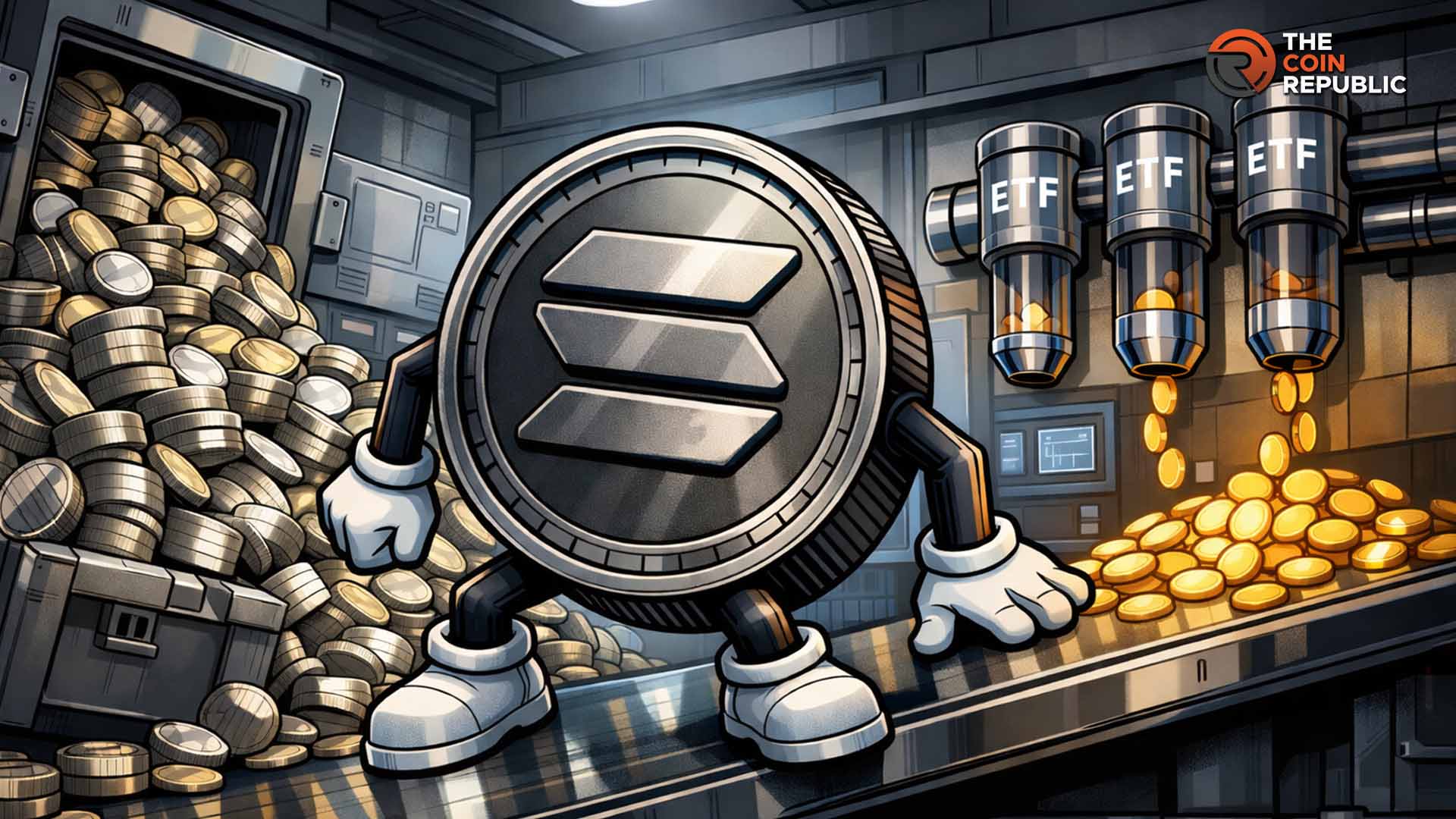
Solana's price is showing a hidden bearish divergence on the RSI, suggesting that recent upward momentum may be fading despite price gains. Rising exchange balances and a decrease in long-term holder positions indicate increasing selling pressure, potentially overriding positive ETF inflows. The technical and on-chain data collectively point to a potential 15% price drop for SOL to $77 if key support levels fail.
XRP's surge past $1.50 and $90 billion market cap signals a significant return of buying momentum after a consolidation period, potentially indicating a shift towards further gains. The renewed investor confidence and increased trading volumes suggest that recent price dips presented an attractive entry point, highlighting market resilience and potential for a medium-term recovery. While the price action is positive, traders should maintain disciplined risk management due to inherent cryptocurrency market volatility and the need to monitor liquidity and macroeconomic trends.
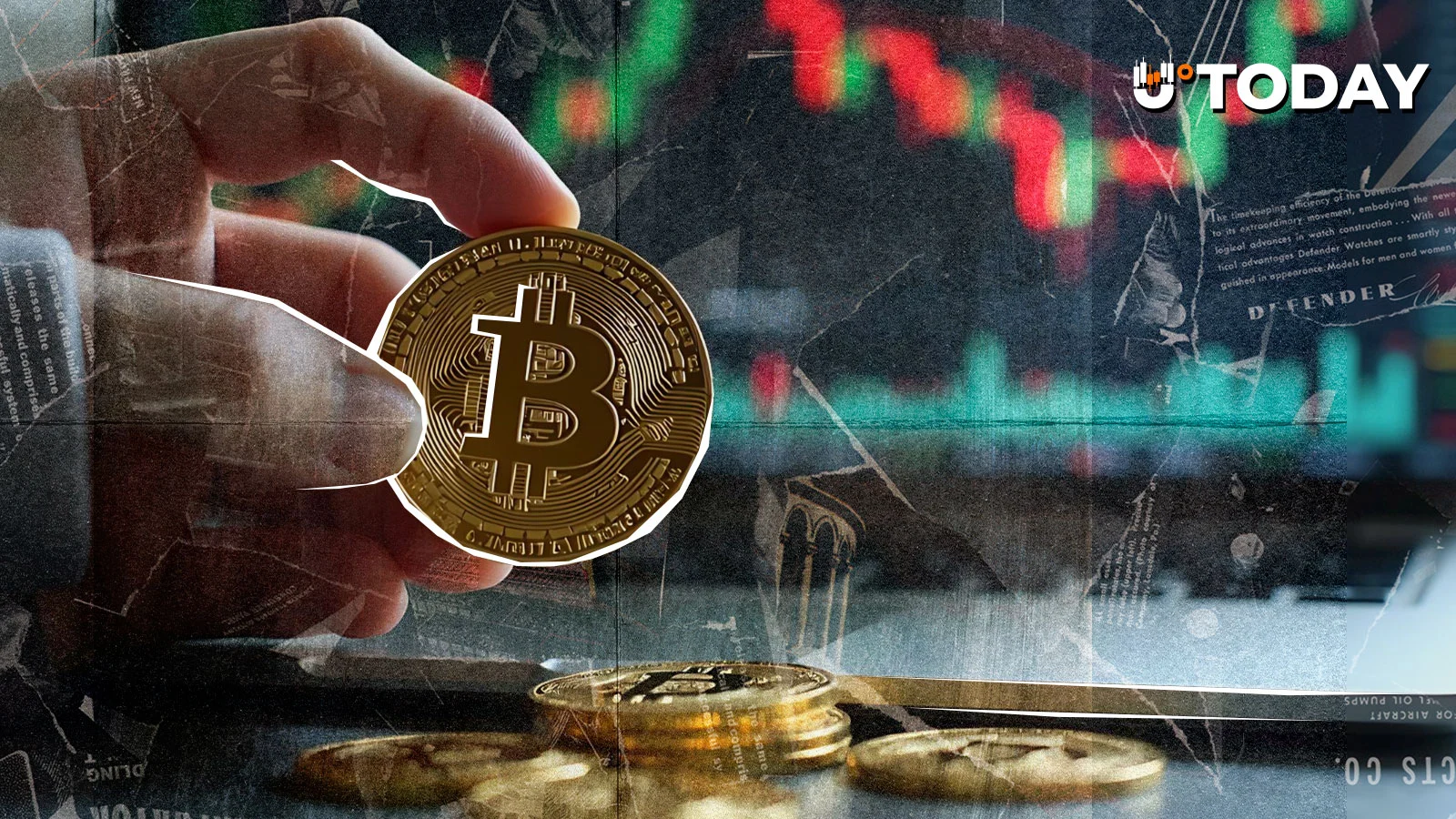
Bitcoin has executed a significant technical breakout above the $74,000 level, surpassing the 50-day EMA and confirming bullish momentum. An analyst has projected a $90,000 price target for Bitcoin, derived from a measured move calculation of the prior consolidation range, suggesting potential for further upside. The breakout from a prolonged horizontal channel indicates a potential shift in market sentiment and could attract renewed investor interest, supporting a near-term upward price trend.
Bitcoin's recent surge above $74,000 demonstrates resilience, but its correlation with tech stocks suggests continued volatility is likely. Increased institutional interest, evidenced by Metaplanet's capital raise and MicroStrategy's BTC purchases, provides a bullish undertone, though broader market risks persist. While the price action is positive, the article emphasizes caution due to macroeconomic pressures and the need to monitor both on-chain metrics and traditional market trends.
Rising spot demand combined with aggressive futures positioning suggests strong underlying accumulation, supporting Bitcoin's current upward trajectory. A bull flag breakout on the four-hour chart, coupled with a break of prior resistance, indicates a continuation pattern that could drive further price appreciation. Traders are likely to target the CME futures gap as a potential upside objective, especially if current bullish momentum persists following the technical breakout.
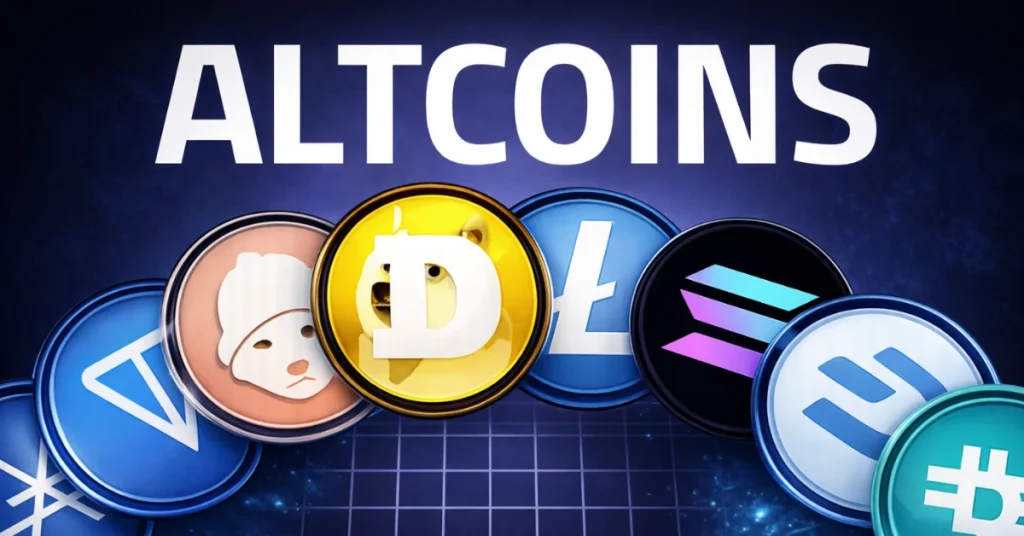
South Korean traders are driving significant volume spikes across 14 altcoins, indicating a strong retail interest that could precede broader market attention. The surge in volume for specific altcoins like XRP, TRUMP, and DKA on South Korean exchanges suggests potential short-term trading opportunities driven by localized demand. While the article highlights volume spikes, the lack of fundamental catalysts for many listed altcoins suggests a speculative driver, warranting caution for longer-term investment theses. The significant crypto adoption in South Korea, with 32% of the population owning digital assets, positions the region as a key influencer for altcoin market dynamics.

XRP's breakout above $1.45 resistance, coupled with a 140% surge in trading volume, signals increasing retail and derivatives trader interest, potentially driving price towards $1.65 if momentum sustains. Despite strong price action, institutional outflows from XRP investment products suggest the current rally may lack broad institutional backing, warranting caution on sustained upside. XRP is testing resistance at the descending channel trendline around $1.50, with the daily RSI approaching 60, indicating strengthening buying pressure but requiring confirmation for a decisive breakout.

Abra's planned Nasdaq listing via SPAC merger at a $750M valuation signals renewed institutional interest in crypto companies accessing public markets. The move by Abra, which offers wealth management, custody, and trading services, indicates a strategic pivot towards traditional finance infrastructure for digital asset firms. While SPACs offer rapid liquidity, the associated risks like volatility and regulatory uncertainty warrant a cautious approach to this listing method.

The Ethereum Foundation's new mandate clarifies its role as a neutral steward, sparking debate on whether this hands-off approach aligns with increasing institutional interest in blockchain. Critics argue the mandate's focus on core principles over practical business development may hinder Ethereum's adoption by institutions seeking clear product-market fit. Supporters view the mandate as a reaffirmation of Ethereum's decentralized ethos, emphasizing its role as a platform for permissionless innovation rather than a product builder. The debate highlights a fundamental tension in Ethereum's growth: balancing its decentralized identity with the demands of institutional capital and broader market adoption.
Shiba Inu's recent price action shows a potential shift in momentum, with seven green daily candles in the last eight days suggesting strengthening upward trend potential. Analysts are closely watching the $0.00000590 level as a critical support threshold; holding above this point is seen as a positive indicator for continued recovery. A sustained move above the $0.00000725 resistance level would be required to confirm a break in bearish structure and signal a more significant upward trend. Despite recent gains, the meme coin's history of failed rallies and lower highs suggests caution is warranted until key resistance levels are decisively broken.

Circle's stock surge of over 100% in a month highlights growing investor confidence driven by increasing USDC demand and the expansion of tokenized assets. The current higher interest rate environment directly benefits Circle's revenue model, which relies on interest earned from USDC reserves, suggesting continued earnings potential. Emerging use cases in AI-driven payments and the broader tokenization of financial products, including Treasuries, are positioning USDC as a critical settlement layer, driving demand beyond speculative trading. Potential advancements in U.S. crypto legislation, following support for the CLARITY Act, could further institutionalize digital assets and bolster demand for stablecoins like USDC.
Metaplanet secured up to $531 million in funding, signaling strong institutional confidence in its long-term Bitcoin accumulation strategy despite current unrealized losses. The capital raise will accelerate Metaplanet's ambitious targets of holding 100,000 BTC by end-2026 and 210,000 BTC by 2027, potentially impacting Bitcoin's circulating supply. The firm's strategy hinges on a potential regulatory shift in Japan recognizing Bitcoin as a financial asset, which could unlock further institutional adoption. Despite significant paper losses on its current holdings, Metaplanet is doubling down on Bitcoin as a store of value, reflecting a broader trend of corporate treasury diversification.
Signal context only. Validate with price action, liquidity, and risk limits before taking a position.
