
Navigating Crypto News

CoinFeather
Navigating Crypto News

Quick market read from this story
Sustained institutional inflows exceeding $1 billion for three consecutive weeks, driven by U.S. investors, signal a structural shift towards digital assets as a hedge against geopolitical uncertainty.
Bitcoin continues to dominate inflows, capturing 75% of the $1.06 billion, reinforcing its position as a macro hedge, while Ethereum's strong demand is boosted by new U.S. staking ETF listings.
The U.S. ETF market's dominance in driving institutional demand highlights its critical role as the primary gateway for capital allocation into digital assets, suggesting continued influence on market trends.
Despite overall positive inflows, XRP experienced outflows, indicating divergent investor sentiment within specific altcoins and highlighting the importance of monitoring individual asset performance.
Deep Dive
Digital asset investment products experienced a significant surge last week, attracting $1.06 billion in inflows. This marks the third consecutive week of positive investor allocation, driven by increasing demand for cryptocurrencies as a hedge against geopolitical uncertainty. Bitcoin accounted for approximately 75% of these inflows, while Ethereum saw substantial interest following the launch of new U.S. staking-focused ETF products.
The sustained inflows suggest institutional investors are increasingly viewing digital assets, particularly Bitcoin, as a relative safe haven and a portfolio diversifier during periods of global stress. Asset manager CoinShares reported that total assets under management in digital asset exchange-traded products (ETPs) have climbed 9.4% to $140 billion since the start of the Iran crisis. Bitcoin alone attracted $793 million, contributing to a three-week total of $2.2 billion in inflows.
The United States overwhelmingly led these flows, accounting for 96% of global inflows, underscoring the dominance of the American ETF market. Canada and Switzerland also saw inflows of $19.4 million and $10.4 million, respectively. Hong Kong recorded its largest weekly total since August 2025 with $23.1 million in inflows, while Germany experienced its first weekly outflows of the year, totaling $17.1 million.
Ethereum attracted $315 million in inflows, bringing its year-to-date performance close to neutral. This surge is attributed to the recent launch of staking-focused ETFs in the U.S. In contrast, XRP experienced its second consecutive week of outflows, amounting to $76 million. Short-Bitcoin products also saw inflows of $8.1 million, indicating a divided investor sentiment regarding Bitcoin's near-term trajectory.
Experts suggest that the strong inflows into digital asset products amid rising geopolitical tensions point to a structural shift rather than a cyclical trend. Investors are reportedly seeking assets outside traditional financial systems, viewing them as a hedge against global uncertainty. The U.S. spot ETF market continues to be the primary gateway for institutional exposure. While Bitcoin is trading around $73,900, up 3.3% on the day, it remains down nearly 42% from its all-time high. Ethereum rose 9.5% to $2,292, approximately 54% below its August 2025 peak.
Source, catalyst, and sector overlap from the latest feed.
International law enforcement agencies are coordinating 'Operation Atlantic' to combat crypto fraud, specifically targeting 'approval phishing' and 'pig butchering' scams. The initiative highlights the increasing sophistication of crypto-related scams and the growing need for cross-border collaboration to protect investors. With over $17 billion lost to crypto crimes last year, this operation signals a heightened focus on enforcement which could deter illicit activities but also increase scrutiny on the sector.
Crypto wealth manager Abra is going public at a $750 million valuation—but regulators have repeatedly taken issue with how it does business.
Publicly traded Ethereum treasury firm BitMine Immersion Technologies added more ETH amid its climb to $2,300 for the first time in six weeks.
Strategy executed its largest Bitcoin purchase of the year, acquiring 22,337 BTC for $1.57 billion, signaling continued conviction in the asset despite recent price volatility. The firm simultaneously raised nearly $1.2 billion through its STRC preferred share offering, demonstrating strong investor demand for its yield-bearing product as a funding mechanism. While Strategy's Bitcoin holdings have experienced significant paper losses, the recent price appreciation brings them closer to the firm's average purchase price, potentially reducing unrealized losses. STRC's market capitalization has surged 30% in the past month, highlighting its growing importance as a funding source for Strategy's ongoing Bitcoin accumulation strategy.
Steven Spielberg's stance against AI replacing creative roles signals a potential friction point for AI adoption in content creation, which could impact demand for AI-related infrastructure if widely adopted by creators. The entertainment industry's ongoing debate and experimentation with AI, as highlighted by Netflix's acquisition and AMC's rejection of AI content, indicates a developing market for AI tools but also potential regulatory hurdles and user resistance. While Spielberg's comments are focused on creative industries, the broader discussion around AI's role in content creation and copyright could indirectly influence investor sentiment towards AI-focused blockchain projects and infrastructure.
Solana's sixth anniversary highlights significant network growth with 496 billion transactions and $3.3 trillion in trading volume, indicating robust on-chain activity and developer persistence despite past skepticism. The strong on-chain metrics, including $17.4 billion in stablecoins and $1.7 billion in tokenized RWAs, underscore Solana's expanding utility beyond basic transactions and its potential as a platform for diverse financial applications. Investor interest in Solana ETFs, driven by industry-native capital, suggests a growing institutional appetite for SOL exposure, potentially signaling a positive near-term outlook for the asset as demand solidifies.
Despite significant XRP ETF outflows totaling $76.1 million, the asset's price has risen over 11% in two weeks, indicating strong retail or private investor demand potentially overriding institutional sentiment. The divergence between institutional outflows and price appreciation suggests a potential disconnect, with retail investors driving the current rally, possibly anticipating future adoption or regulatory clarity. While Bitcoin attracts the majority of new ETF inflows, XRP's resilience in the face of outflows highlights its unique market dynamics, though its perception as a riskier asset amid geopolitical shifts is a key factor.
Bitcoin's resilience near $70,000 despite geopolitical tensions and macro sell-offs highlights the sustained impact of consistent Bitcoin ETF inflows, which are absorbing market weakness. The correlation between Bitcoin and the S&P 500 ETF indicates that BTC is currently trading as a risk-on asset, making its price action highly sensitive to broader market sentiment and traditional financial market movements. While $69,659 serves as immediate support, the $73,000-$74,000 resistance zone remains a critical barrier that needs to be decisively broken for further upside momentum, with the upcoming Federal Reserve meeting potentially influencing the next directional move. Despite significant liquidations driven by leverage, the ongoing demand from Bitcoin ETFs and corporate accumulation, such as Strive's recent purchase, provides a foundational support level for BTC price.
Bitcoin's resilience during geopolitical turmoil, driven by institutional accumulation via ETFs and corporate treasuries like Strategy, signals a maturing asset class increasingly viewed as a hedge. The significant accumulation by Strategy and growing ETF holdings, now representing 6.1% of supply, indicate a structural shift in ownership favoring long-term holding and potentially reducing near-term sell pressure. While retail investors have been net sellers, the dominance of long-term holders and Bitcoin's outperformance against traditional assets suggest a growing narrative of 'digital gold' and a potential for sustained demand. For equity investors, MicroStrategy (MSTR) offers a high-beta exposure to Bitcoin's price action, currently trading at a discount to its NAV, presenting a potential arbitrage opportunity.
Crypto majors are demonstrating significant strength, outperforming traditional markets despite escalating geopolitical tensions and a volatile macro environment. The sustained inflow streak into Bitcoin ETFs, coupled with positive ETH ETF performance, signals growing institutional demand and confidence in major digital assets. Tom Lee's substantial over-the-counter purchase of ETH from the Ethereum Foundation indicates strong conviction from a prominent figure, potentially influencing market sentiment. Stanley Druckenmiller's forward-looking view on stablecoins reshaping global payments highlights a potential long-term growth narrative for the stablecoin sector.
Rising spot demand combined with aggressive futures positioning suggests strong underlying accumulation, supporting Bitcoin's current upward trajectory. A bull flag breakout on the four-hour chart, coupled with a break of prior resistance, indicates a continuation pattern that could drive further price appreciation. Traders are likely to target the CME futures gap as a potential upside objective, especially if current bullish momentum persists following the technical breakout.
South Korean traders are driving significant volume spikes across 14 altcoins, indicating a strong retail interest that could precede broader market attention. The surge in volume for specific altcoins like XRP, TRUMP, and DKA on South Korean exchanges suggests potential short-term trading opportunities driven by localized demand. While the article highlights volume spikes, the lack of fundamental catalysts for many listed altcoins suggests a speculative driver, warranting caution for longer-term investment theses. The significant crypto adoption in South Korea, with 32% of the population owning digital assets, positions the region as a key influencer for altcoin market dynamics.
XRP's breakout above $1.45 resistance, coupled with a 140% surge in trading volume, signals increasing retail and derivatives trader interest, potentially driving price towards $1.65 if momentum sustains. Despite strong price action, institutional outflows from XRP investment products suggest the current rally may lack broad institutional backing, warranting caution on sustained upside. XRP is testing resistance at the descending channel trendline around $1.50, with the daily RSI approaching 60, indicating strengthening buying pressure but requiring confirmation for a decisive breakout.
Abra's planned Nasdaq listing via SPAC merger at a $750M valuation signals renewed institutional interest in crypto companies accessing public markets. The move by Abra, which offers wealth management, custody, and trading services, indicates a strategic pivot towards traditional finance infrastructure for digital asset firms. While SPACs offer rapid liquidity, the associated risks like volatility and regulatory uncertainty warrant a cautious approach to this listing method.
The Ethereum Foundation's new mandate clarifies its role as a neutral steward, sparking debate on whether this hands-off approach aligns with increasing institutional interest in blockchain. Critics argue the mandate's focus on core principles over practical business development may hinder Ethereum's adoption by institutions seeking clear product-market fit. Supporters view the mandate as a reaffirmation of Ethereum's decentralized ethos, emphasizing its role as a platform for permissionless innovation rather than a product builder. The debate highlights a fundamental tension in Ethereum's growth: balancing its decentralized identity with the demands of institutional capital and broader market adoption.
Live Feed
Loading the broader stream in the same flow as the homepage feed.
Shiba Inu's recent price action shows a potential shift in momentum, with seven green daily candles in the last eight days suggesting strengthening upward trend potential. Analysts are closely watching the $0.00000590 level as a critical support threshold; holding above this point is seen as a positive indicator for continued recovery. A sustained move above the $0.00000725 resistance level would be required to confirm a break in bearish structure and signal a more significant upward trend. Despite recent gains, the meme coin's history of failed rallies and lower highs suggests caution is warranted until key resistance levels are decisively broken.

Circle's stock surge of over 100% in a month highlights growing investor confidence driven by increasing USDC demand and the expansion of tokenized assets. The current higher interest rate environment directly benefits Circle's revenue model, which relies on interest earned from USDC reserves, suggesting continued earnings potential. Emerging use cases in AI-driven payments and the broader tokenization of financial products, including Treasuries, are positioning USDC as a critical settlement layer, driving demand beyond speculative trading. Potential advancements in U.S. crypto legislation, following support for the CLARITY Act, could further institutionalize digital assets and bolster demand for stablecoins like USDC.
Metaplanet secured up to $531 million in funding, signaling strong institutional confidence in its long-term Bitcoin accumulation strategy despite current unrealized losses. The capital raise will accelerate Metaplanet's ambitious targets of holding 100,000 BTC by end-2026 and 210,000 BTC by 2027, potentially impacting Bitcoin's circulating supply. The firm's strategy hinges on a potential regulatory shift in Japan recognizing Bitcoin as a financial asset, which could unlock further institutional adoption. Despite significant paper losses on its current holdings, Metaplanet is doubling down on Bitcoin as a store of value, reflecting a broader trend of corporate treasury diversification.
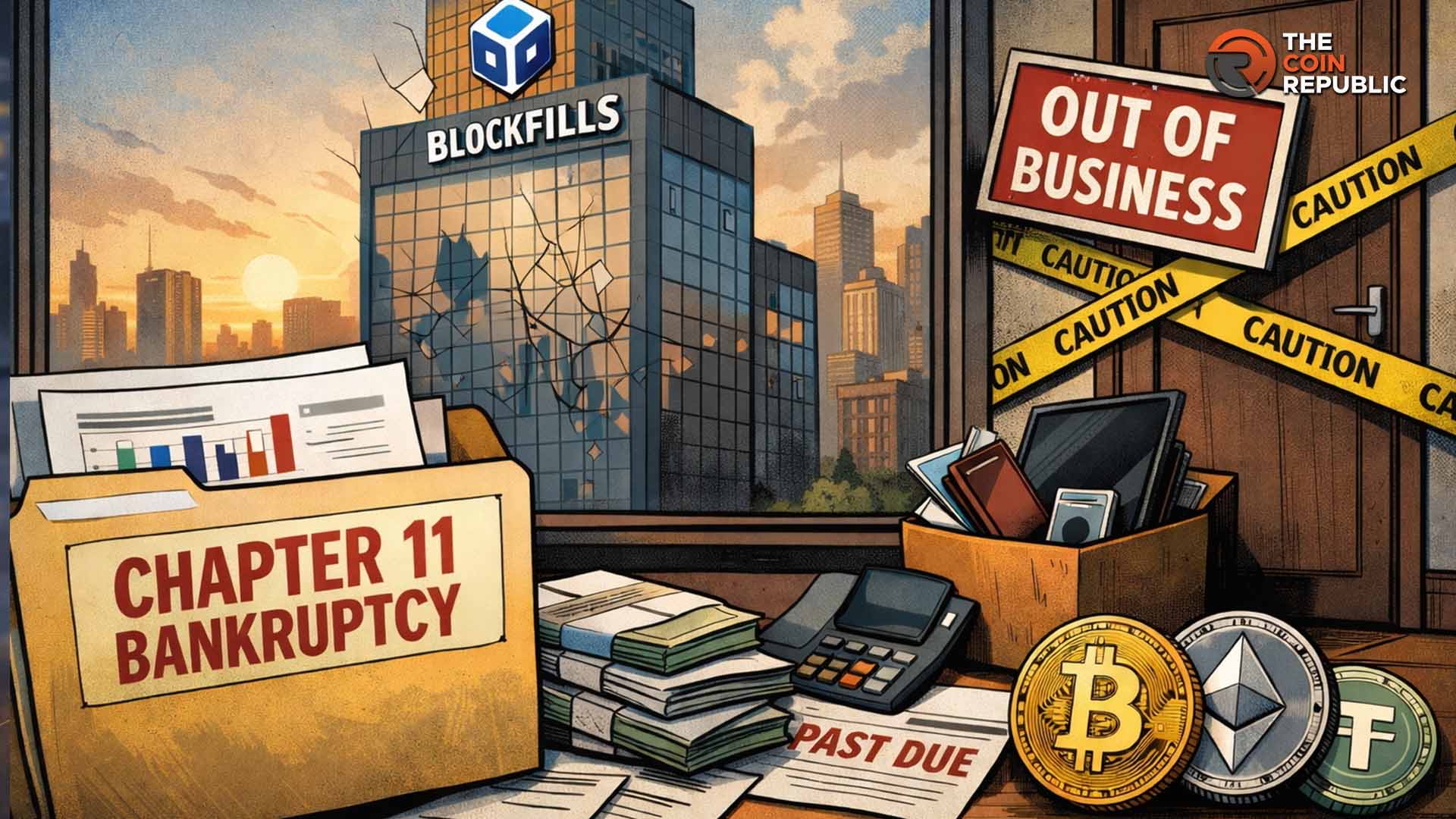
BlockFills' Chapter 11 bankruptcy filing, with liabilities up to $500M, signals significant financial distress within the crypto trading and lending sector. The platform's suspension of withdrawals and a lawsuit involving 70.6 BTC highlight operational failures and potential mismanagement, impacting client trust and asset security. This event underscores ongoing challenges for digital asset lenders, following a pattern of bankruptcies driven by market instability and regulatory pressures.
South Korean regulators have fined Bithumb $24 million and ordered a six-month partial business suspension due to significant AML and KYC compliance failures. The regulatory action, stemming from millions of unverified customer accounts, highlights increasing oversight on crypto exchanges in South Korea and could impact Bithumb's operational capacity for new users. This development signals a heightened risk environment for exchanges operating in jurisdictions with stringent regulatory frameworks, potentially affecting investor confidence and operational strategies.

Dubbed “Operation Atlantic,“ the effort involves law enforcement agencies from the three countries and is aimed at preventing phishing attacks involving cryptocurrencies.
XRP's price action is approaching a critical $1.80 resistance level, indicated by weekly Bollinger Bands suggesting a potential 20% upward swing. A sustained move above the $1.47 daily upper Bollinger Band is a key short-term indicator for XRP's trajectory, with the $1.80 level representing a significant bullish zone. While testing the $1.80 middle weekly Bollinger Band would be a healthy sign for the current rally, it does not confirm the end of the downtrend but signals potential for a reversal.

Significant liquidity constraints are emerging in major Wall Street private-credit funds, with over $172B affected, indicating a potential shift in traditional finance liquidity that could indirectly influence risk asset appetite. The contrast between the gated liquidity of private credit and the continuous tradability of Bitcoin is highlighted, suggesting a narrative advantage for BTC as a more accessible asset during periods of traditional market stress. JPMorgan's reduced lending and markdowns on private-credit portfolios signal increasing caution from financing institutions, potentially tightening conditions and increasing the cost of capital for this asset class. While direct price impact on Bitcoin is not immediate, the structural differences in liquidity access between private credit and crypto assets could bolster Bitcoin's long-term appeal as a transparently volatile yet continuously tradable asset.
Cardano's return to the Top 10 by market cap, driven by an 8% price increase and a 19% surge in Open Interest, signals renewed investor interest and potential for further upside. The significant increase in ADA futures Open Interest, outpacing Bitcoin's growth, suggests strong bullish sentiment and leverage plays building in the Cardano ecosystem. Preparation for the Van Rossem hard fork with the upcoming Cardano Node 10.7.0 release indicates ongoing protocol development and potential for ecosystem upgrades, supporting long-term value.
The debate surrounding Ripple's share buybacks versus potential XRP token buybacks highlights a fundamental difference in how corporate actions translate to decentralized assets, suggesting that traditional financial analogies may not directly apply to XRP's market dynamics. Attorney Bill Morgan's explanation that XRP's decentralized nature prevents direct token buybacks from having the same economic impact as stock buybacks implies that Ripple's strategy for supporting XRP liquidity may need to focus on ecosystem improvements rather than direct market intervention. The differing views from legal and community figures on Ripple's strategy underscore the ongoing tension between centralized corporate actions and decentralized token economics, with regulatory concerns from the SEC case significantly influencing Ripple's cautious approach. The proposed Evernorth strategy of using yield generation from XRP to buy back more tokens presents a novel, albeit indirect, method for increasing XRP demand, potentially offering a regulated avenue for institutional exposure.

Playnance has launched a GCOIN staking program on its PlayW3 platform, encouraging long-term user engagement and locking over 250 million tokens shortly after release. The staking program offers rewards tied to platform activity rather than fixed emissions, aligning token holder incentives with ecosystem growth and sustainability. With varying lock-up periods and reward weighting, the initiative aims to bolster the GCOIN economy ahead of its Token Generation Event on March 18.
Signal context only. Validate with price action, liquidity, and risk limits before taking a position.
