
Navigating Crypto News

CoinFeather
Navigating Crypto News

Quick market read from this story
A federal judge's ruling blocking the Pentagon from labeling Anthropic a supply chain risk establishes a precedent that AI companies can set usage limits with government contracts without immediate punitive action.
The court's decision, based on First Amendment and due process violations, suggests that government attempts to label companies as risks due to policy disagreements may be legally challenged.
This development could influence how AI firms negotiate terms with government entities, potentially formalizing ethical guardrails and usage restrictions in future deals.
The ruling temporarily restores Anthropic's standing as a federal contractor, mitigating immediate negative market sentiment stemming from the "supply chain risk" designation.
Deep Dive
A federal judge has halted the Pentagon's designation of AI company Anthropic as a supply chain risk, ruling that the action violated the company's First Amendment and due process rights. The decision by U.S. District Judge Rita Lin issued a preliminary injunction, temporarily restoring Anthropic's standing with federal contractors and potentially influencing how AI firms establish usage limitations in government agreements.
The core of the dispute involved a $200 million Defense Department contract awarded to Anthropic in July 2025 for its AI model, Claude, to be deployed on the GenAI.Mil platform. Negotiations faltered when Anthropic insisted on restrictions, specifically prohibiting the use of Claude for mass surveillance of Americans or for lethal autonomous warfare, citing safety concerns. Secretary of War Pete Hegseth reportedly warned Anthropic that failure to remove these restrictions by February 27 would result in the supply chain risk designation.
Anthropic refused to comply with the Pentagon's demands. Subsequently, President Trump posted a directive on Truth Social ordering federal agencies to cease using Anthropic's technology, labeling the company as "radical left, woke." Following this, Secretary Hegseth publicly criticized Anthropic's stance and ordered military contractors to halt commercial dealings with the firm. The formal supply chain risk designation was issued shortly thereafter via a letter on March 3. Anthropic responded by suing the government on March 9, alleging violations of the First Amendment, due process, and the Administrative Procedure Act.
Judge Lin's ruling emphasized that the government's actions appeared to be retaliation for Anthropic's stance on AI safety. The judge noted that the internal government record suggested the designation was triggered by "press conduct, not a security analysis," and described the government's approach as an "Orwellian notion." The preliminary injunction, effective for seven days, blocks the government's actions and requires a compliance report by April 6, aiming to restore the situation prior to the February 27 ultimatum.
The designation of a domestic company as a "supply chain risk" was unprecedented, as it had historically been reserved for foreign intelligence threats. Experts suggest that this ruling may encourage AI companies to formalize ethical guidelines when engaging with government entities and to set clear usage limits without fearing punitive regulatory action. However, the underlying tension remains, with the ruling primarily limiting the government's ability to escalate disagreements into retaliatory exclusions or labeling. Legal analysts argue that using the supply chain risk statute in this manner constitutes a "weaponization" of the law, potentially setting a dangerous precedent for blacklisting AI firms based on policy disagreements without due process.
Source, catalyst, and sector overlap from the latest feed.
Rising US 10-year Treasury yields to 4.42% are tightening financial conditions, signaling a potential shift in investor preference towards safer assets over riskier ones like Bitcoin and equities. Despite macro headwinds, Bitcoin has shown relative resilience, trading in a tight range near $68,000 and outperforming equities in recent weeks, suggesting underlying accumulation during dips. Options market data indicates caution with downside protection being bought, but not panic, implying that while investors are hedging, a severe selloff is not yet priced in. The market's focus is shifting to macroeconomic forces, with continued yield increases potentially pressuring Bitcoin to trade more on macro signals than crypto-specific developments.
David Sacks' departure from his White House crypto role signifies the end of a specific policy push, leaving key market structure and stablecoin legislation unresolved. The unfinished legislative agenda suggests continued uncertainty in U.S. crypto regulation, potentially impacting investor confidence and market development. Sacks' continued advisory role on broader technology policy indicates a shift in focus but may not directly influence the immediate trajectory of crypto legislation.
The Trump DOJ's inconsistent stance on prosecuting crypto privacy developers creates legal uncertainty, making it harder for developers to obtain binding legal clarity on their activities. Despite stated intentions not to prosecute, federal prosecutors have continued to pursue cases against developers of privacy tools, leading to convictions and ongoing trials. A recent Texas judge's ruling dismissed a developer's lawsuit due to the DOJ's stated policy, highlighting a legal loophole that allows for continued prosecution without clear standing for developers to challenge it. The lack of clear legal precedent and the DOJ's shifting approach to privacy software development pose a significant risk to innovation in the privacy-focused crypto sector.
OpenAI's decision to cancel its erotic chatbot mode, following the shelving of Sora, signals a strategic pivot towards a unified AI platform, potentially impacting investor sentiment towards specialized AI tools. The cancellation of the erotic chatbot mode, despite earlier plans, highlights the evolving ethical considerations and regulatory scrutiny surrounding AI development, which could influence future product roadmaps and market perception. While this development is primarily within the AI sector, the broader implications of AI companies navigating societal impact and user dependency could indirectly affect market confidence in AI-driven crypto projects.
Geopolitical uncertainty stemming from Middle East conflict is driving defensive capital flows into stablecoins and liquid staking tokens, indicating a market preference for yield and capital preservation over speculative assets. Bitcoin and Ethereum experienced declines mirroring traditional markets, suggesting a correlation with broader macroeconomic sentiment and risk-off behavior among investors. Conflicting statements regarding Iran's willingness to negotiate have created volatility, with crypto markets reacting to shifts in geopolitical risk perception. Traders are positioning for potential downside in Bitcoin, with prediction markets showing a higher probability of a price drop to $55,000 than a significant rally.
A US federal judge has temporarily blocked the Pentagon's ban on Anthropic, a significant development for the AI firm's government contracts and market position. The ruling suggests the Pentagon's actions against Anthropic may have been arbitrary and an abuse of discretion, potentially impacting future government dealings with AI companies. This temporary injunction provides Anthropic with crucial breathing room, allowing it to continue operations and potentially renegotiate terms with the Pentagon.
US lawmakers are introducing new legislation to curb insider trading on prediction markets, signaling increased regulatory scrutiny on platforms like Kalshi and Polymarket. The proposed bill imposes penalties of up to double the profit made from insider trading, indicating a serious intent to deter illicit activities and protect market integrity. This regulatory push could impact the perceived legitimacy and operational freedom of prediction markets, potentially affecting user participation and platform development.
David Sacks' tenure as crypto and AI czar has concluded, but his continued advisory role on the President’s Council of Advisors on Science and Technology (PCAST) suggests ongoing influence on tech policy, including potential regulatory frameworks for digital assets. The formation of PCAST, featuring prominent tech leaders, indicates a coordinated effort to shape AI and potentially crypto policy, with a focus on unified regulation to aid innovation. Sacks' past involvement in crypto reports and legislation like the GENIUS Act and CLARITY Act, coupled with his new broader advisory role, signals continued attention to crypto market structure and regulation from a high level within the administration.
Coinbase's advocacy group, Stand With Crypto, is actively mobilizing voters to support pro-crypto candidates in upcoming midterm elections, signaling a significant push for regulatory influence. The substantial financial backing from crypto PACs, exceeding $271 million for the 2026 midterms, indicates a coordinated effort to shape U.S. policy and potentially impact market-moving legislation. This grassroots lobbying approach by crypto entities aims to make political opposition to digital assets a liability, potentially leading to a more favorable regulatory environment for the industry.
US Representative Maxine Waters is questioning the Federal Reserve's approval of Kraken's master account, raising concerns about transparency and regulatory oversight. The inquiry highlights ongoing regulatory scrutiny of crypto firms seeking access to traditional financial infrastructure, potentially impacting future approvals. While Kraken's master account is a significant milestone, regulatory pushback could create headwinds for other crypto entities pursuing similar access.
ARK Invest's adoption of Kalshi's prediction market data signals a growing institutional interest in alternative data sources for investment decision-making and risk management. The integration of prediction market insights into ARK's workflow suggests a potential shift towards more dynamic and forward-looking investment strategies, leveraging real-time sentiment and expectations. The increasing use of prediction markets by entities like the Federal Reserve and academic institutions highlights their evolving role as valuable tools for gauging economic and market sentiment beyond traditional metrics.
David Sacks' transition from White House AI and Crypto Czar to the President's Council of Advisors on Science and Technology signifies a shift in focus towards broader tech policy, potentially reducing direct crypto regulatory influence from this specific role. The move addresses concerns about Sacks exceeding his term limit as a special government employee, providing a more stable advisory position while potentially limiting his day-to-day crypto policy impact. With Sacks moving to a role focused on AI, quantum computing, and nuclear power, the direct oversight and advocacy for crypto policy within the White House may see a diffusion of influence.
Live Feed
Loading the broader stream in the same flow as the homepage feed.
Monacoin's upcoming halving in late 2026, reducing block rewards from 6.25 to 3.125 MONA, is a predictable supply-side event that historically correlates with price cycles due to increased scarcity. The halving mechanism is designed to reduce inflation and could potentially increase the long-term valuation of MONA, though broader market conditions will also significantly influence price action. Miners will face reduced profitability post-halving, potentially leading to consolidation in mining operations and a greater reliance on transaction fees for revenue.

The post Pi Network News: Referral Rewards Are Finally Moving to Mainnet, But There Is One Condition appeared first on Coinpedia Fintech News Pi Network has officially started rolling out its Second Migration Phase after Pi Day 2026, allowing users to transfer additional balances to the mainnet. This follows the initial migration stage and opens the door for deeper participation in the ecosystem. So far, more than 119,000 users have finished this phase, showing steady progress as access …

XRP's sharp late-session sell-off below $1.36, accompanied by a spike in volume, indicates forced liquidations rather than profit-taking, suggesting weak underlying support. Rising leverage in XRP, with traders adding positions despite falling prices, creates a fragile setup where compressed volatility could precede a larger directional move. The immediate trading focus for XRP is on holding $1.35 as support; a break below this level could trigger further downside towards $1.30, while reclaiming $1.40 is necessary for structural stabilization.

Despite short-term price declines driven by geopolitical uncertainty, sustained ETF inflows and exchange outflows indicate underlying institutional accumulation and a potential shift towards self-custody. The market is at a critical juncture, needing to decide between breaking through the established uptrend or confirming the 50-day moving average as support, suggesting a near-term directional move is imminent. BlackRock's observation of investor concentration in Bitcoin and Ether, while shunning altcoins, highlights a potential bifurcation in market sentiment and capital allocation within the crypto space.

Tether's engagement of KPMG for a full audit and PwC for system preparation signals a significant move towards enhanced transparency, potentially alleviating past concerns about USDT reserves and bolstering confidence among institutional investors and regulators. The audit initiative, coupled with preparations for U.S. expansion and potential fundraising, suggests Tether is proactively addressing regulatory scrutiny and market demands for greater accountability, which could pave the way for broader adoption and integration into traditional finance. By undergoing a comprehensive audit, Tether aims to move beyond monthly attestations to a full financial statement audit, a critical step that could redefine market expectations for stablecoin issuers and influence the competitive landscape for dollar-pegged assets.

Retail investors are showing continued interest in Bitcoin exposure via Strategy's 'Stretch' shares, indicating a demand for less volatile entry points into the asset. Michael Saylor's strategy to use 'Stretch' shares as an on-ramp for retail investors highlights a growing trend of product innovation aimed at broadening Bitcoin adoption. The substantial retail ownership of STRC suggests a market segment willing to accept lower yields for reduced volatility, potentially influencing future product development in the crypto-adjacent space. Strategy's aggressive fundraising plans, including significant capital allocation from 'Stretch' shares, signal strong conviction in Bitcoin's long-term appreciation despite short-term price fluctuations.

Ether faces significant headwinds to rally above $2,400, with sustained outflows from spot ETFs and declining DEX volumes indicating a lack of institutional and retail demand. The weak ETH futures premium suggests diminished bullish leverage and investor conviction, implying that current price levels are unlikely to hold without a reversal in these key on-chain and derivatives metrics. Regulatory uncertainty and broader geopolitical risks are contributing to a risk-off environment, pressuring ETH and highlighting the need for improved on-chain activity and investor sentiment to drive a sustainable price increase.
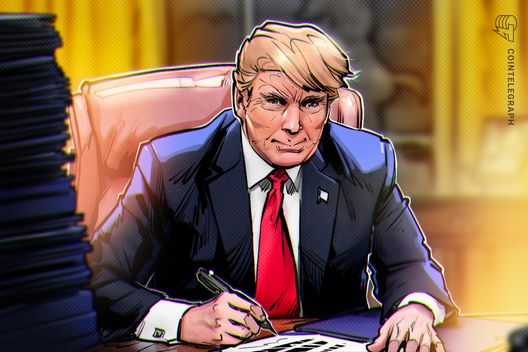
The US Treasury's decision to place President Trump's signature on currency marks a significant departure from historical precedent, potentially influencing perceptions of fiat currency's stability and government backing. While the direct impact on cryptocurrency markets is likely minimal, the move could indirectly affect investor sentiment by highlighting political influence on traditional financial instruments. The introduction of Trump's signature on US dollars, alongside potential $1 coins featuring his likeness, could be interpreted as a broader trend of political figures associating themselves with monetary assets, potentially impacting the narrative around sovereign currencies.

Bitcoin's recent breach of the $70,000 support level, influenced by geopolitical tensions and options expirations, suggests near-term volatility and potential for further downside. Despite price pullbacks, on-chain data indicates continued whale and retail accumulation, hinting at underlying bullish conviction that could fuel a future rally. Analysts are monitoring key price levels like $48,387 and $36,657 as potential dip-buying opportunities, historically preceding significant bull runs. Broader economic pressures including rising unemployment, inflation, and geopolitical conflicts are creating a cautious market environment, potentially leading to a recessionary outlook that could impact crypto prices.

GameStop's disclosure that its Bitcoin holdings were pledged as collateral for covered calls, rather than sold, resolves market speculation and clarifies its treasury strategy. The company's use of Bitcoin for covered call options indicates a strategy to generate yield on its crypto assets, a move that could be adopted by other corporate treasuries seeking income. While GameStop's economic exposure to Bitcoin remains, the pledge to Coinbase means the assets are no longer directly held, impacting how its treasury is accounted for and potentially its perceived direct holdings.
Bitcoin's failure to hold the $70,000 level confirms a bearish structure, suggesting further downside risk unless immediate resistance is reclaimed. Chainlink shows signs of stabilization but remains in a bearish trend, with a potential move to $10 contingent on breaking key moving averages. XRP's declining trend is exacerbated by decreasing network activity, indicating a lack of fundamental demand and increasing the risk of a breakdown below $1.20.
Signal context only. Validate with price action, liquidity, and risk limits before taking a position.
