
Navigating Crypto News

CoinFeather
Navigating Crypto News
Quick market read from this story
Significant whale accumulation of HYPE, with a new wallet depositing $5 million and purchasing $2.39 million in HYPE, signals strong conviction for a price continuation.
HYPE's technical recovery above key moving averages (50, 100-day) combined with consolidation below resistance suggests absorption of supply and potential for an upward breakout.
The RSI is at a healthy level, indicating bullish momentum is not yet exhausted, providing room for further price appreciation alongside on-chain whale activity.
Despite risks of returning to lower support, the influx of new capital and improved technical structure suggest HYPE is poised for another upward move, diminishing the likelihood of a sharp near-term decline.
Source, catalyst, and sector overlap from the latest feed.
Samson Mow's commentary suggests that ongoing development of quantum-resistant solutions for Bitcoin, such as QSB and zk-STARK proofs, is outpacing the theoretical threat posed by future quantum computers, aiming to mitigate FUD. While experts remain divided on the timeline for quantum computing threats, the proactive development of quantum-safe cryptography for Bitcoin implies a focus on long-term network security and resilience. The discussion highlights the crypto community's preparedness for potential future technological disruptions, signaling a commitment to innovation in cryptographic security for established assets like Bitcoin.
Live Feed
Loading the broader stream in the same flow as the homepage feed.
XRP has consolidated for 63 days with RSI oversold on multiple timeframes, indicating potential for a significant price move as downside momentum wanes. Declining volume and on-chain profitability suggest weaker holders are being squeezed out, potentially setting the stage for a volatility expansion and price surge. The prolonged downtrend combined with tight compression and exhausted momentum suggests that XRP is building pressure for a breakout, making it a watchlist candidate.
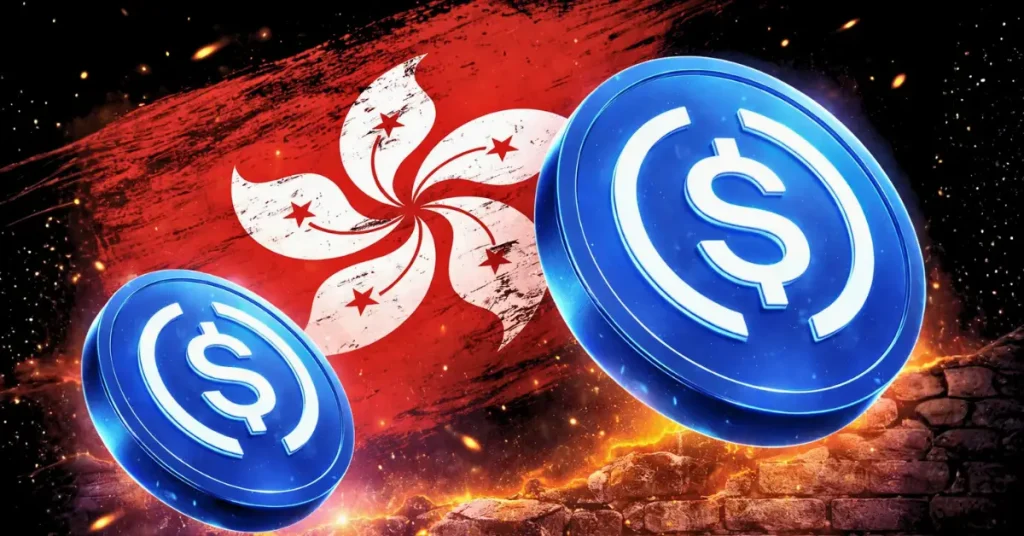
Hong Kong's issuance of the first stablecoin licenses to established banks like HSBC and Standard Chartered signals a significant regulatory step towards integrating traditional finance with digital assets. The move positions Hong Kong as a potential hub for regulated stablecoin issuance in Asia, aiming to capture a share of the rapidly growing global stablecoin market, projected to reach trillions. While licenses are granted, the actual launch of HKD-pegged stablecoins by HSBC and Standard Chartered is expected in the coming months, indicating a phased integration rather than immediate market impact. This regulatory clarity and the involvement of major banking institutions could foster greater institutional adoption and trust in stablecoins for trade settlement and other financial activities.
US Treasury launched a real time cyber threat intelligence program for digital asset firms to strengthen crypto cybersecurity defenses.
Japan's reclassification of crypto as financial instruments, coupled with insider trading bans and disclosure requirements, signals a move towards traditional finance oversight, potentially increasing institutional confidence and market integrity. The ongoing debate in the US regarding the Digital Asset Market Clarity Act highlights regulatory fragmentation, with disagreements over stablecoin yields potentially delaying crucial clarity for the digital asset market. Japan's exploration of crypto ETFs by 2028 and potential tax reductions indicate a strategic effort to become a more competitive global hub for digital asset investment, attracting both innovation and capital. While Japan enhances its regulatory framework, the US faces challenges in passing comprehensive legislation, creating a divergence in regulatory approaches that could influence global market development.
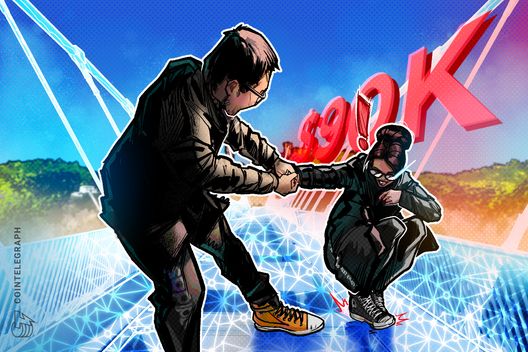
Aethir has contained a bridge exploit, limiting losses to under $90,000, which suggests a swift and effective response to a security incident. Despite the exploit, Aethir's main ATH supply on Ethereum remains unaffected, indicating that the core asset value is likely preserved. The platform's commitment to a compensation plan and detailed post-mortem report signals transparency and an effort to rebuild trust with its user base. The incident, while unfortunate, highlights ongoing security risks in DeFi bridges and the importance of rapid incident response for affected projects.
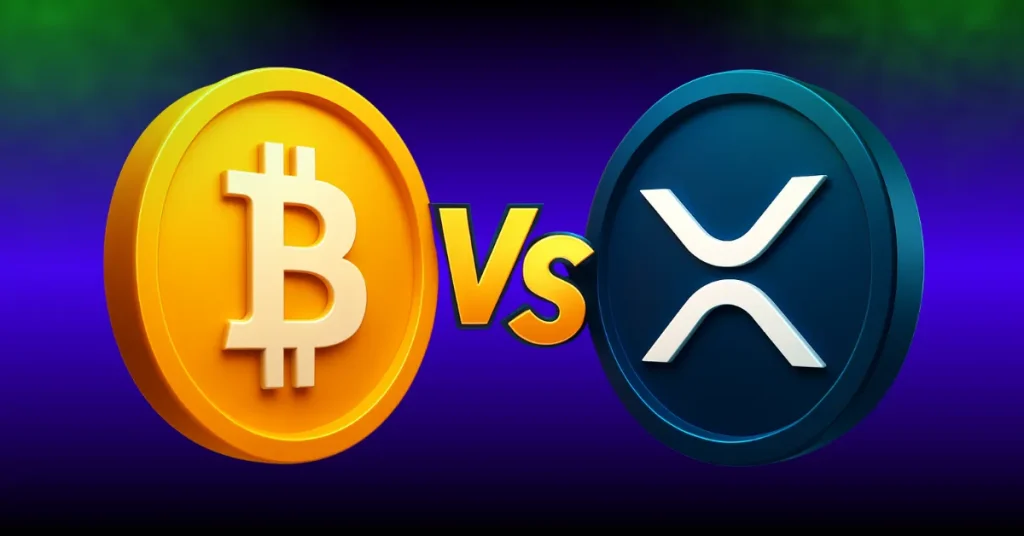
XRP Ledger's architecture offers a key rotation feature, making it significantly less vulnerable to quantum computing threats compared to Bitcoin, which lacks this capability. While quantum computing threats are currently theoretical, the structural difference in quantum resistance between XRP and Bitcoin could influence long-term investor sentiment and adoption considerations. The analysis highlights that only a small fraction of XRP supply (0.03%) is exposed due to dormant accounts, contrasting sharply with Bitcoin's estimated 35% vulnerability, suggesting a potential divergence in future security narratives. Experts suggest that current quantum threats are not immediate, and the industry is likely to develop countermeasures before quantum computers pose a significant risk to public blockchains.
The successful splashdown of Artemis II, following a high-stakes re-entry through extreme temperatures and speeds, validates critical advancements in spacecraft technology and mission execution. This mission's completion is a foundational step for future lunar exploration and potential Mars missions, signaling progress in NASA's long-term space objectives. The precise execution of the re-entry and splashdown, including adjustments made after Artemis I, demonstrates NASA's capacity to manage complex, high-risk operations, which could inspire confidence in related technological sectors.
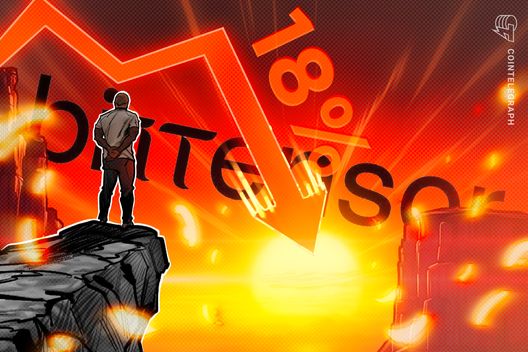
Covenant AI said it was leaving Bittensor due to its overreaching control on subnets and their large-scale TAO token sales, but Bittensor’s founder denied all allegations.
Shiba Inu is consolidating in a defined accumulation zone, with critical support at $0.00000550 and resistance near $0.0000060, suggesting potential for a breakout if key levels are breached. Increased exchange outflows of 321 billion SHIB tokens indicate a shift towards self-custody and long-term holding, supporting the accumulation thesis and potentially reducing selling pressure. A significant surge in the SHIB burn rate, removing over 4.1 million tokens, coupled with ongoing Shibarium upgrades, strengthens bullish expectations for a potential price expansion. Technical indicators remain neutral, with the RSI at 50.28 and a flattened MACD, implying that while momentum is building, a decisive breakout above $0.0000060 is required to confirm upward price action.

Pi Network's significant token unlocks present a supply overhang, creating selling pressure that contrasts sharply with presale projects like Pepeto that aim for rapid appreciation post-listing. Pepeto's presale success, bolstered by a former Binance executive and a planned Binance listing, suggests strong speculative interest and potential for a rapid price increase from its current presale valuation. Monero's price action shows modest gains driven by privacy narratives, but its large market cap limits the potential for exponential growth compared to early-stage presale tokens. The article highlights a divergence in market dynamics, with established coins like Pi Network facing supply challenges while new projects like Pepeto leverage presale momentum and exchange listings for potential high returns.
The altcoin market cap (TOTAL3) has experienced a 40% drawdown from its peak, currently consolidating at a critical $710 billion support level, indicating potential for either accumulation or a further decline. The declining Altcoin Season Index (currently 35) suggests Bitcoin is outperforming most altcoins, and the current stablecoin inflows are likely in the Bitcoin accumulation phase, not yet signaling a rotation into altcoins. Despite modest stablecoin inflows, the lack of a capitulation wick and the declining index suggest the altcoin market is still finding its floor rather than preparing for a significant recovery, making the current situation a potential trap for unwary investors. The current market structure, characterized by price compression at support and moderate volume, combined with a declining Altcoin Season Index, points to a bearish near-term outlook for altcoins, with a lack of clear bullish signals for immediate upside.
Reports suggest Iran may demand Bitcoin for oil transit fees, positioning BTC as a neutral financial layer in geopolitical conflict resolution, which could significantly increase its adoption as a global settlement asset. The narrative of Bitcoin being used in international trade, coupled with Morgan Stanley's low-fee Bitcoin ETF launch, highlights a dual trend of institutional adoption and potential geopolitical utility, suggesting a broadening market perception of Bitcoin beyond a speculative asset. While skepticism exists regarding unconfirmed on-chain transactions, the viral nature of the claim and its discussion in high-stakes scenarios indicate a growing narrative that could influence market sentiment and potentially drive demand for Bitcoin as a censorship-resistant payment rail.

Key Insights: New Bitcoin news is drawing attention across the crypto industry as concerns around quantum computing threats continue to grow. In response, a Bitcoin researcher has put forward a new proposal that aims to make Bitcoin resistant to potential quantum attacks without requiring any changes to its core protocol. Reportedly, the idea was introduced […] The post Bitcoin News: New Proposal Aims to Make BTC Quantum-Safe Without Fork appeared first on The Coin Republic.
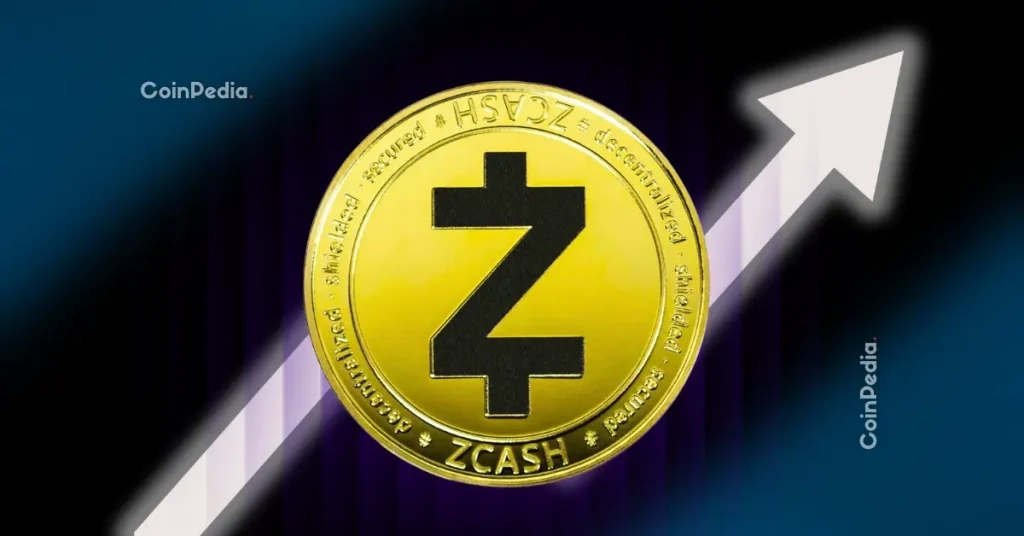
Zcash price has surged over 20% to $283, breaking key resistance levels and entering a critical supply zone around $370-$400, indicating a potential trend continuation or sharp pullback. Derivatives data shows rising Open Interest supporting the uptrend, but deeply negative funding rates suggest aggressive long positioning, increasing the risk of a long squeeze if resistance holds. Momentum indicators like RSI and OBV are bullish, but the approaching major supply zone presents a significant hurdle; a sustained breakout above $400 is needed to confirm further upside toward $450-$480. The next few days are crucial for ZEC, as a failure to break the $400 resistance could lead to a pullback towards $350 or $300, while a decisive close above $390 could signal a new expansion phase.
XRP's Binance volume Z-score has fallen to near-zero, historically preceding significant price movements, suggesting a potential breakout is building. Despite low trading volume, XRP's profitability has hit a 21-month low, indicating a test of holder conviction and potential capitulation before a reversal. The current low volatility and subdued market attention for XRP create a 'coiled spring' scenario, where pressure is building for a sharp move in either direction, contingent on broader market trends and renewed participation. While a strong April rally is a narrative, the current data on XRP's volume and profitability suggests a holding pattern, with a breakout requiring a clear return of trading activity.
Signal context only. Validate with price action, liquidity, and risk limits before taking a position.
Telegram CEO Pavel Durov alleges WhatsApp's end-to-end encryption is a "consumer fraud," claiming Meta employees and third parties can access user messages, which could erode trust in centralized communication platforms. The allegations against WhatsApp's privacy protocols, if substantiated, could drive users towards more privacy-focused alternatives like Telegram, potentially impacting user acquisition for both platforms. While the core news focuses on messaging app privacy, Durov's concurrent announcement of a significant performance upgrade to The Open Network (TON) blockchain suggests a strategic effort to highlight Telegram's ecosystem strengths.
