
Navigating Crypto News

CoinFeather
Navigating Crypto News
Source, catalyst, and sector overlap from the latest feed.
Dogecoin price stalls as it trades within the Ichimoku Kumo. Bulls and bears await a decisive close to confirm the next directional trend.
XRP has consolidated for 63 days with RSI oversold on multiple timeframes, indicating potential for a significant price move as downside momentum wanes. Declining volume and on-chain profitability suggest weaker holders are being squeezed out, potentially setting the stage for a volatility expansion and price surge. The prolonged downtrend combined with tight compression and exhausted momentum suggests that XRP is building pressure for a breakout, making it a watchlist candidate.
Live Feed
Loading the broader stream in the same flow as the homepage feed.
XRP Ledger demonstrated significant scalability by sustaining over 140 TPS with high transaction volumes on its DEX, indicating robust financial infrastructure capable of handling demand surges with negligible fees and consistent settlement times. The recent surge in XRP Ledger transactions, primarily driven by the XRP/RLUSD pair and bot activity on the DEX, highlights the network's capacity for high throughput, though the 'Ghost Wall' phenomenon suggests potential for market manipulation or arbitrage strategies. Ripple's $550,000 audit contest for upcoming XRPL features signifies a proactive approach to security and protocol hardening, aiming to identify and mitigate bugs before deployment, which is a positive signal for network stability and developer confidence.
Binance's relocation of UAE staff due to regional conflict signals heightened geopolitical risk impacting operational stability for major crypto exchanges. The move suggests a potential shift in Binance's operational focus and talent distribution, possibly influencing its strategic priorities in Asia. Increased safety concerns and operational disruptions in the UAE may lead to broader industry reassessment of regional risk exposure.
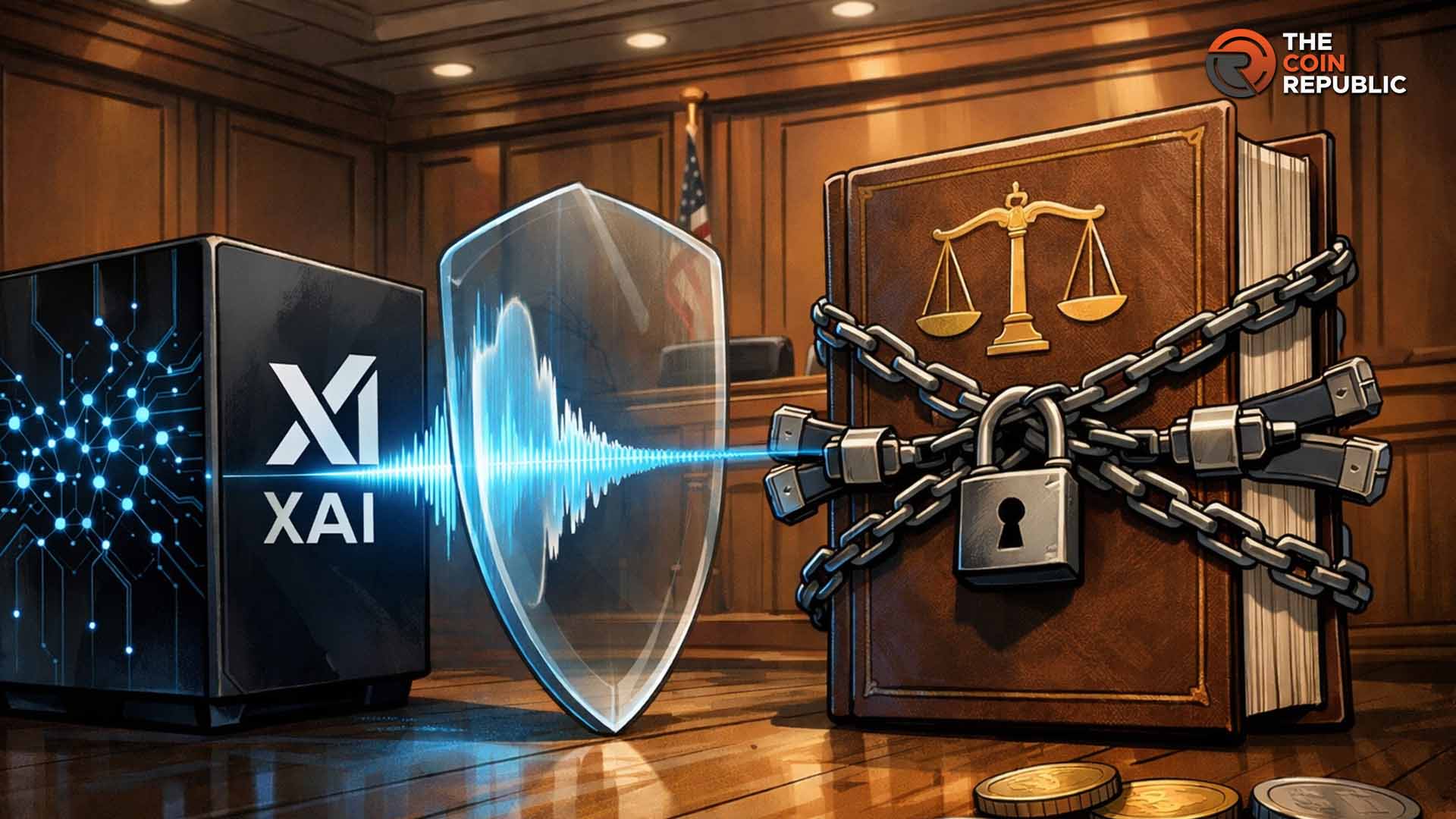
xAI's lawsuit against Colorado's AI regulation law highlights a growing conflict between AI developers and state-level regulatory efforts, potentially impacting the broader AI sector's development and deployment. The legal challenge by Elon Musk's xAI over free expression for its Grok chatbot suggests a potential precedent for how AI companies will navigate and contest future AI-specific legislation. The debate over state-specific AI laws versus a unified federal approach, as advocated by figures like David Sacks, indicates market uncertainty and potential compliance challenges for AI firms operating across different jurisdictions. While the lawsuit focuses on AI regulation, the mention of X's recent move into paid crypto promotions could signal a broader strategy by Elon Musk's entities to integrate AI and crypto, though this specific article does not directly link the lawsuit to crypto price action.

Ripple CTO Emeritus David Schwartz suggests Satoshi Nakamoto's keys are likely lost, removing the theoretical market risk of dormant Bitcoin holdings impacting price. The long-standing debate over Satoshi's identity is overshadowed by the practical reality of inaccessible Bitcoin, implying that the ~1 million BTC will not be moved. Schwartz's analysis focuses on the improbability of anyone ignoring such a vast fortune, framing the lost keys as a de facto permanent supply reduction for Bitcoin.

Bitget’s IPO Prime will debut with preSPAX, a Republic-issued token tied to SpaceX’s post-IPO performance rather than direct ownership of the company’s shares.

The coordinated push by the Trump administration, Treasury, SEC, and CFTC to pass the CLARITY Act signals a significant regulatory shift, aiming to provide clear market structure and potentially unlock substantial market growth. The White House has actively countered traditional banking lobby arguments against stablecoin yields with data, suggesting a reduced risk to bank lending and increased consumer welfare, which could accelerate Senate approval. Regulators like the SEC and CFTC have publicly stated their readiness to implement the CLARITY Act, indicating a proactive stance to manage the transition of digital assets between securities and commodities, thereby reducing implementation uncertainty. The simultaneous introduction of stricter stablecoin AML/KYC rules under the GENIUS Act demonstrates the administration's commitment to national security while pressuring Congress to finalize the CLARITY Act for a complete regulatory framework.

Long-term holders realizing sustained losses, a pattern historically preceding bear market bottoms, suggests a potential accumulation phase is near. A decade-low in Bitcoin addresses sending coins to exchanges indicates significant supply drying up, which could amplify price movements when demand returns. The confluence of stressed long-term holders and reduced exchange inflows mirrors late-stage bear market patterns of 2018 and 2022, historically leading to sharp recoveries. Despite current pain for long-term holders, the combination of declining selling intent and potential returning ETF demand creates a setup for a significant upward price move.
The report indicates a significant trend of altcoin price depreciation post-listing, with a substantial majority failing to maintain profitability beyond 30-60 days, suggesting short-term hype drives most initial rallies. Investor sentiment towards newly listed altcoins should be cautious, as the data reveals a low probability of sustained price appreciation, implying a higher risk for speculative entries immediately after listing. Exchange performance varies, with Upbit showing stronger initial retention but still succumbing to the long-term trend, while Coinbase exhibits a unique 'second wind' pattern, highlighting the importance of exchange-specific listing dynamics. The dominance of stablecoin trading pairs suggests that capital flow into new altcoins may be constrained, reinforcing the difficulty for new tokens to establish and maintain positive price action.
Polymarket data indicates a significant bearish sentiment for Bitcoin in 2026, with a high probability (67%) of BTC trading below $55,000, suggesting traders are pricing in potential downside risks. The projected price ranges for potential cycle bottoms between $60,000 and $38,000 highlight a divergence in market expectations, signaling increased uncertainty and a debate on whether Bitcoin is entering a prolonged correction phase. Traders are factoring in macro uncertainty, historical cycle patterns, and recent volatility, implying that current market sentiment is driven by a confluence of external and internal factors rather than a single catalyst.

Institutional investors are exhibiting a dual strategy in Bitcoin, simultaneously placing bullish bets via call options targeting $80,000 while also purchasing put options for downside protection, indicating a lack of full conviction despite upside potential. Upcoming U.S. inflation data (CPI) and geopolitical developments, specifically U.S.-Iran truce talks, are identified as key binary risks that will likely dictate Bitcoin's near-term price direction, creating potential for volatility. The options market data, including negative skew and sustained open interest in downside protection, suggests that while some participants are positioning for gains, a significant portion remains risk-averse, awaiting clearer macro signals. The stability of the MOVE index, which has recently calmed after a spike, provides a positive signal for crypto bulls, suggesting that reduced volatility in the U.S. bond market could translate to a more favorable environment for risk assets like Bitcoin.

SUI's on-chain metrics, including a rising TVL above $570 million and stablecoin liquidity, indicate growing demand and ecosystem activity, suggesting a potential breakout rather than a breakdown. The SUI price is consolidating within a tightening structure, with support at $0.9000 and resistance at $1.00, indicating a critical inflection point that could lead to a significant upward move if resistance is decisively broken. Historical price patterns suggest that SUI may be poised for a multi-fold rally similar to past cycles, especially if it reclaims key support levels and breaks above resistance, potentially targeting a $10-$20 range.

Hong Kong's issuance of the first stablecoin licenses to major financial institutions like HSBC and a consortium backed by Standard Chartered signals a significant step towards institutional adoption and regulatory clarity in the region's digital asset space. The move by the Hong Kong Monetary Authority to license stablecoin issuers under the new ordinance is expected to foster a more secure and institutionally driven ecosystem, potentially attracting further capital and development. The upcoming launch of Hong Kong dollar-backed stablecoins by licensed entities indicates a near-term catalyst for increased utility and integration within the local financial infrastructure.

World Liberty Financial is proposing a phased unlock for WLFI tokens, moving away from an immediate full release in response to early holder backlash and potential legal action. The decision to implement a structured vesting plan signals a shift in tokenomics management, potentially impacting liquidity and holder sentiment for WLFI. With approximately 75% of WLFI tokens still locked, the upcoming governance vote on a phased unlock schedule is a critical event for early investors seeking access to their holdings.

The DOGEBALL presale has successfully raised over $180,000, indicating early investor interest in its Ethereum Layer 2 gaming ecosystem. The partnership with Falcon Interactive Gaming suggests a strategic move to integrate DOGEBALL into existing gaming platforms, potentially driving adoption and utility. The project's focus on a low-fee, high-speed Ethereum Layer 2 solution addresses a key market demand for scalable blockchain gaming infrastructure.

Hong Kong's issuance of the first stablecoin licenses to established banks like HSBC and Standard Chartered signals a significant regulatory step towards integrating traditional finance with digital assets. The move positions Hong Kong as a potential hub for regulated stablecoin issuance in Asia, aiming to capture a share of the rapidly growing global stablecoin market, projected to reach trillions. While licenses are granted, the actual launch of HKD-pegged stablecoins by HSBC and Standard Chartered is expected in the coming months, indicating a phased integration rather than immediate market impact. This regulatory clarity and the involvement of major banking institutions could foster greater institutional adoption and trust in stablecoins for trade settlement and other financial activities.

Aethir has contained a bridge exploit, limiting losses to under $90,000, which suggests a swift and effective response to a security incident. Despite the exploit, Aethir's main ATH supply on Ethereum remains unaffected, indicating that the core asset value is likely preserved. The platform's commitment to a compensation plan and detailed post-mortem report signals transparency and an effort to rebuild trust with its user base. The incident, while unfortunate, highlights ongoing security risks in DeFi bridges and the importance of rapid incident response for affected projects.
Signal context only. Validate with price action, liquidity, and risk limits before taking a position.
