
200+ crypto news providers in one place.

CoinFeather
200+ crypto news providers in one place.
Quick market read from this story
Governments including US, China, UK, and Ukraine are accumulating Bitcoin on their balance sheets
This strategic accumulation positions BTC as a hedge against inflation and currency devaluation
Bitcoin's inclusion in state portfolios validates it as a credible financial asset
Nations are diversifying reserves beyond gold and bonds with Bitcoin.
Deep Dive
Governments worldwide are increasingly adding Bitcoin to their balance sheets, marking a significant shift towards digital hard money. Bitcoin is emerging as a trusted store of value, with nations like the United States, China, the United Kingdom, and Ukraine identified as major holders. Smaller countries, including El Salvador and Bhutan, are also accumulating BTC, indicating its growing role in national financial planning.
This trend represents strategic accumulation, with governments utilizing Bitcoin as a hedge against inflation, currency devaluation, and traditional financial uncertainties. Its fixed supply and decentralized nature position BTC as a form of "hard money" resistant to fiat inflation, allowing nations to diversify reserves beyond gold and bonds and protect public wealth.
Bitcoin recently rebounded above $70,000, with its market capitalization reaching $1.39 trillion and derivatives volume surging, coinciding with predictions of a major rally.
The continuous accumulation of Bitcoin by governments signifies a historic shift, validating it as a credible financial asset and signaling growing global acceptance of decentralized digital currencies. This trend fuels surges in Bitcoin and altcoins, even amidst geopolitical tensions.
Government adoption of Bitcoin is reshaping its global role by stabilizing market perception, attracting institutional interest, and accelerating worldwide adoption. As nations accumulate BTC, its value as a hedge against geopolitical and macroeconomic risks increases, transforming it from a private investment into a strategic component of national financial planning.
The increasing adoption of Bitcoin by governments is blurring the lines between traditional finance and digital assets. Bitcoin is evolving into a strategic tool for national wealth protection, moving beyond private portfolios to become a core element of global financial strategy and influencing the economic future of nations.
Source, catalyst, and sector overlap from the latest feed.
38% of altcoins are trading near all-time lows, a decline deeper than the FTX-era collapse. Cardano (ADA) is down 90.7%, Dogecoin (DOGE) -86.9%, Chainlink (LINK) -82.8%, and Solana (SOL) -70.0% from their ATHs. Bitcoin (BTC) is down 46.4% and Ethereum (ETH) is down 59.2% from their ATHs. Potential regulatory clarity from the CLARITY Act could reshape investor confidence.
1.3 billion XRP tokens moved by whales in 48 hours. XRP's 30-day realized volatility reached its highest point since March 2025. Historical data suggests high volatility and whale accumulation precede significant price movements. Market analysts suggest XRP is entering a critical phase with potential for sharp gains or corrections.
472 million XRP, valued at $652 million, moved to Binance, marking record February inflows. XRP is exhibiting resilience with higher highs and higher lows despite macro headwinds. Analysts suggest XRP is at a liquidity crossroads, facing potential volatility due to exchange inflows and macro risks. XRP transactions are confirmed immutable by Ripple CTO.
Ripple Payments expanded to over 60 markets with new stablecoin and fiat collection, custody, and liquidity tools. The platform now supports unified collections and advanced liquidity features, aiming to reduce vendor complexity for businesses. Over $100 billion in volume has been processed, with more than 75 licenses globally, targeting financial institutions and fintechs. XRP price action remains volatile, with analysts suggesting a potential fractal pattern indicating a move higher later in March.
Shiba Inu open interest increased by 15.74% to $61.62 million in 24 hours. Futures volume surged 36% to $179 million, indicating heightened trader activity. Spot volume rose 73.94% to $36.89 million, with a slight sell-side imbalance. SHIB price is trading sideways at $0.00000550, down 2.66% in the last 24 hours.
Altcoins vs Bitcoin ratio shows historical patterns preceding major altcoin rallies. Social sentiment for altcoins is at extremely low levels, often indicating accumulation phases. A large percentage of altcoins are trading near historical lows, suggesting potential for recovery. Market conditions suggest a potential altseason is forming, with capital rotation from Bitcoin into altcoins possible.
ProCap Financial added 450 BTC to its treasury, increasing total holdings to 5,457 BTC. The company also repurchased 782,408 shares, citing a shrinking discount to Net Asset Value (NAV). The buyback strategy is employed due to daily repurchase limits on Bitcoin acquisitions. Bitcoin price shows support around $65,000, with a potential for a significant bounce similar to patterns seen in 2018-2019.
BlackRock withdrew 4,376 BTC ($298 million) and deposited 567 BTC ($38 million) to Coinbase Prime in 12 hours. Net inflow of approximately $260 million (3,810 BTC) observed in BlackRock's Bitcoin ETF wallets. Transactions likely represent operational adjustments or ETF share creation, not outright selling. Bitcoin price shows stabilization around $68,000, with potential for a breakout towards $70,000.
Bitcoin price surpassed $71,000, marking a 6% increase in 24 hours. Bitcoin demonstrated resilience to Middle East conflict, outperforming gold. Major cryptocurrencies including ETH, XRP, and SOL followed BTC's upward trend. The CoinDesk 20 Index rose over 5%, indicating broad market strength.
Live Feed
Loading the broader stream in the same flow as the homepage feed.

OKX launches USDT-settled perpetual futures for select US equities on March 4, 2026. Contracts will offer leverage from 0.01x to 5x, allowing speculation without direct share ownership. Initial listings include major tech stocks like NVDA, GOOGL, MSFT, AAPL, META, and index trackers QQQ, SPY.

Binance plans to secure five new crypto licenses in Asia during 2026. This expansion will bring Binance's total licensed jurisdictions globally to over 20. The move signifies Binance's continued shift towards a regulation-first strategy. Increased licensing is expected to attract institutional capital and enhance market credibility.

Regulated futures listings on CFTC-designated contract markets are now a prerequisite for new altcoin ETF approvals. SEC's generic listing standards, approved in September 2025, expedite ETF approvals to approximately 75 days after a six-month futures history. XRP serves as a blueprint, demonstrating that ETF eligibility can be achieved through infrastructure maturation and regulated futures, even with ongoing regulatory complexities. Altcoin ETF eligibility windows are projected for Q4 2026, with Aptos, Tezos, Cardano, Chainlink, and Stellar potentially seeing approvals based on recent futures launches.

River price shows a 31% surge, attempting to break key resistance at $20. Pippin price has crashed 38% and faces potential further 50% decline towards $0.12. Liquidity is rotating from large-cap assets to smaller tokens, with rapid rotation within the low-cap segment. River needs to hold above $20 to target $25, while Pippin's bearish technicals suggest further downside.
Bitcoin spot ETFs saw $1.5 billion in inflows over the past five trading days, reversing a record $8.9 billion drawdown. BlackRock's IBIT led the recovery with $882 million in weekly inflows, followed by Fidelity's FBTC and Grayscale's GBTC. Monthly outflows from Bitcoin ETFs have decreased by 94% over four months, signaling a potential trend reversal. Despite recent inflows, the average realized price for ETF holders is $79,000, with Bitcoin trading below $70,000, indicating many institutional buyers are underwater.

Bitcoin price surpassed $71,000, extending a weekly rally. Total crypto market capitalization approached $2.36 trillion. Ethereum, Solana, and BNB showed significant daily gains. Investor sentiment remains in 'extreme fear' despite price increases.
Bitcoin ETFs saw $225.2M net inflows on March 3, led by BlackRock's IBIT with $322.4M. Ethereum ETFs experienced $10.8M net outflows, with Fidelity and Grayscale products seeing withdrawals. Solana ETFs had minimal activity with $0.7M net inflows, while XRP ETFs attracted $7.53M. Overall institutional demand for regulated crypto investment vehicles persists despite cautious sentiment.

X suspends creators from revenue sharing for 90 days if AI war videos are not disclosed Policy targets authenticity of content during wartime events Repeated violations may lead to permanent removal from revenue sharing program

RippleX is integrating AI into the XRP Ledger development cycle for enhanced security. AI tools will be used for code review and automated invariant detection. The integration aims to prevent future vulnerabilities and improve ledger security. This follows a critical bug in the Batch amendment that risked ledger destabilization.

US spot Bitcoin ETFs recorded $225.2 million in net inflows on Tuesday. BlackRock's IBIT saw $322.4 million in inflows, offsetting outflows from FBTC and GBTC. Ether ETFs experienced $10.8 million in outflows, while XRP and SOL funds saw inflows. Market sentiment remains cautious with the Crypto Fear & Greed Index at 10.
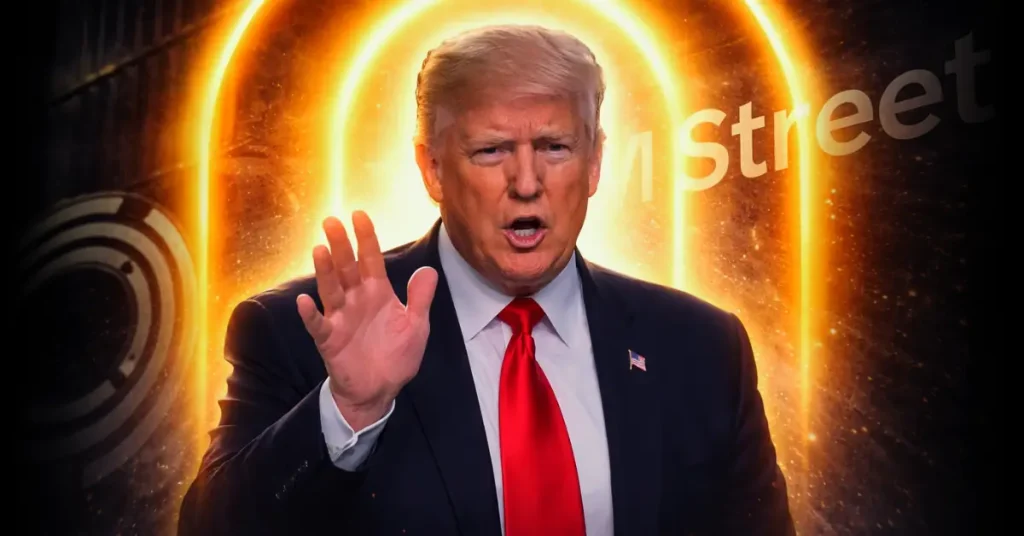
Donald Trump met with Coinbase CEO Brian Armstrong. Trump criticized big banks for blocking crypto market structure legislation. He urged lawmakers to pass the GENIUS Act and CLARITY Act ASAP.

Ark Invest purchased approximately $4.1 million in Coinbase shares and $12 million in Robinhood shares. The purchases occurred as broader markets declined due to geopolitical tensions related to the US-Iran conflict. Coinbase shares fell 1.55% and Robinhood shares fell 3.44% during the trading session. Ark Invest has recently shown a pattern of buying and selling Coinbase shares, with significant purchases last month.
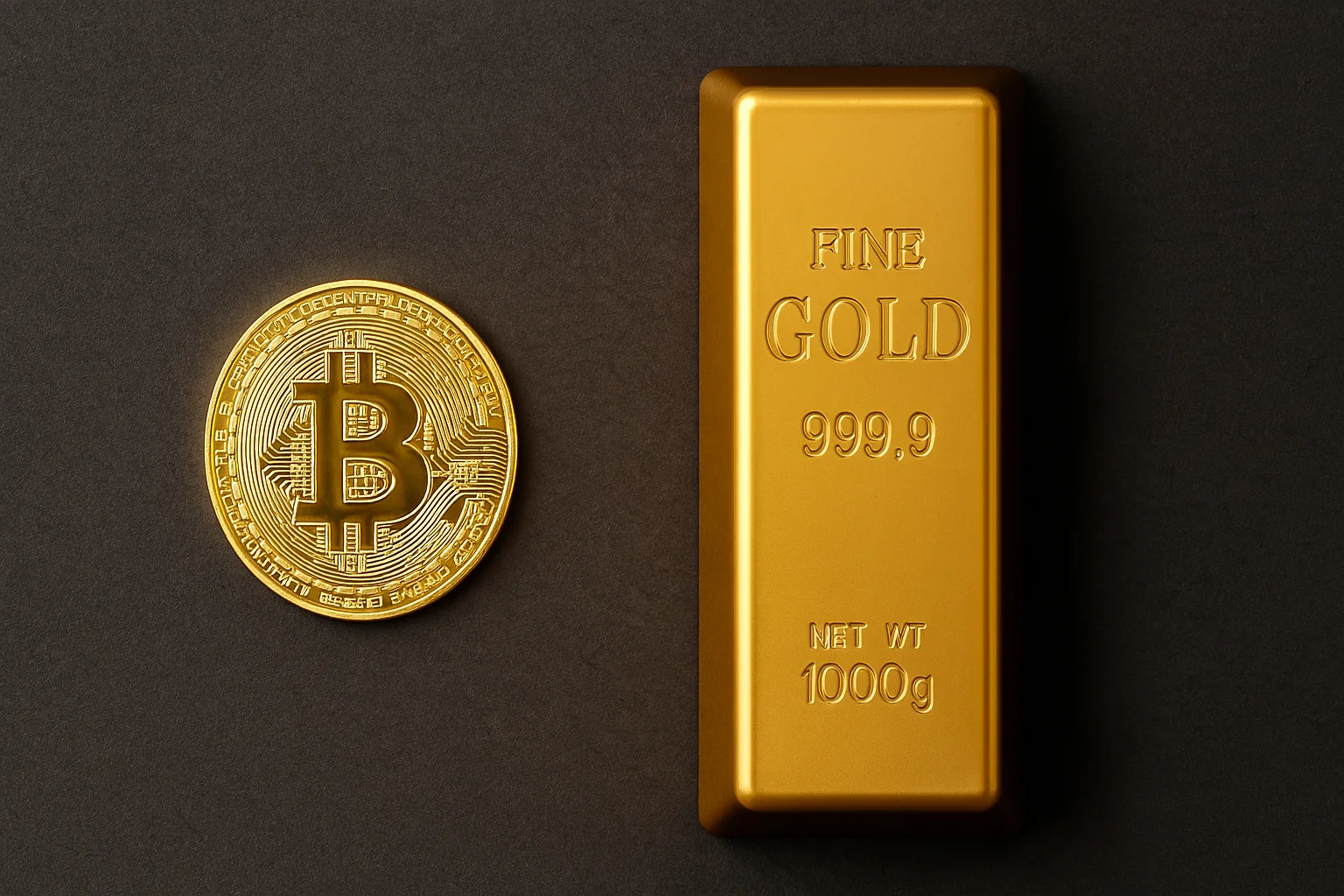
Ray Dalio states Bitcoin cannot be compared to gold due to privacy and quantum computing risks. Dalio holds ~1% of his portfolio in Bitcoin for diversification, not conviction. Central banks hold significantly more gold than Bitcoin's representation in reserves. Bitcoin's correlation with high-beta tech stocks disqualifies it as a reserve asset for Dalio.
Signal context only. Validate with price action, liquidity, and risk limits before taking a position.
