
Navigating Crypto News

CoinFeather
Navigating Crypto News

Quick market read from this story
Former OKX legal and product executives have launched Shredpay, a DeFi connectivity platform aiming to simplify access for U.S. retail and institutional users.
Shredpay introduces a risk-rating index for DeFi protocols, addressing information asymmetry and making mainstream adoption more feasible by providing standardized risk assessments.
The platform's focus on clear risk ratings and ease of use could expand the addressable market for DeFi protocols by attracting users who are currently deterred by complexity and perceived risk.
Deep Dive
Three former OKX executives have launched Shredpay, a new decentralized finance (DeFi) connectivity platform designed for both retail and institutional users in the U.S. The platform aims to simplify access to DeFi by addressing the current market's segmentation and lack of transparent risk information, which hinders mainstream adoption.
Shredpay was founded by CEO Mauricio Beugelmans (former OKX chief legal officer), president Melissa Muehlfeld (former OKX global general counsel), and CTO Peter Chang (ex-VP of product at OKX). They identified that the complexity and opacity of existing DeFi offerings prevent many users from engaging with the space. Beugelmans stated that the core issue is
Source, catalyst, and sector overlap from the latest feed.
The FDIC's clarification that stablecoins will not receive deposit insurance under the GENIUS Act, even through pass-through mechanisms, removes a potential layer of perceived safety for stablecoin users. This regulatory stance by the FDIC aims to differentiate stablecoins from traditional bank deposits, potentially impacting investor perception and demand for stablecoins seeking parity with insured assets. The FDIC's consideration of tokenized deposits as eligible for insurance suggests a path for integrating traditional banking with blockchain technology while maintaining regulatory oversight. The explicit exclusion of stablecoins from FDIC insurance, despite mandates for full reserves, highlights a structural difference that could influence their adoption and competitive positioning against bank deposits.
Live Feed
Loading the broader stream in the same flow as the homepage feed.

The integration of VanEck's crypto ETFs into US 401(k) plans via Basic Capital signifies a growing acceptance of digital assets within traditional retirement vehicles, potentially increasing demand from a new investor demographic. This development is underpinned by a recent US Department of Labor policy shift that no longer discourages crypto investments in 401(k)s, creating a more favorable regulatory environment for crypto adoption in retirement savings. The availability of Bitcoin and Ether ETFs, alongside broader digital asset-focused funds like VanEck's 'Onchain Economy' ETF, suggests a maturing crypto investment landscape catering to institutional and retail retirement savers.
Shiba Inu price steadies as Shytoshi Kusama’s X silence and “UI bug fixes” bio update spark speculation amid crypto liquidations and market shifts.

Thailand's implementation of the 'Speed Bump' system introduces a 24-hour delay on transactions over 50,000 THB, aiming to curb crypto-related money laundering by providing more time for suspicious activity detection. The crackdown involves freezing over 10,000 mule accounts and integrating databases with regulatory bodies, increasing compliance costs for digital asset firms but enhancing overall financial crime prevention. This regulatory action signals a proactive stance by Thai authorities against illicit financial flows within the crypto ecosystem, potentially impacting transaction speeds and user verification processes for Thai crypto users.
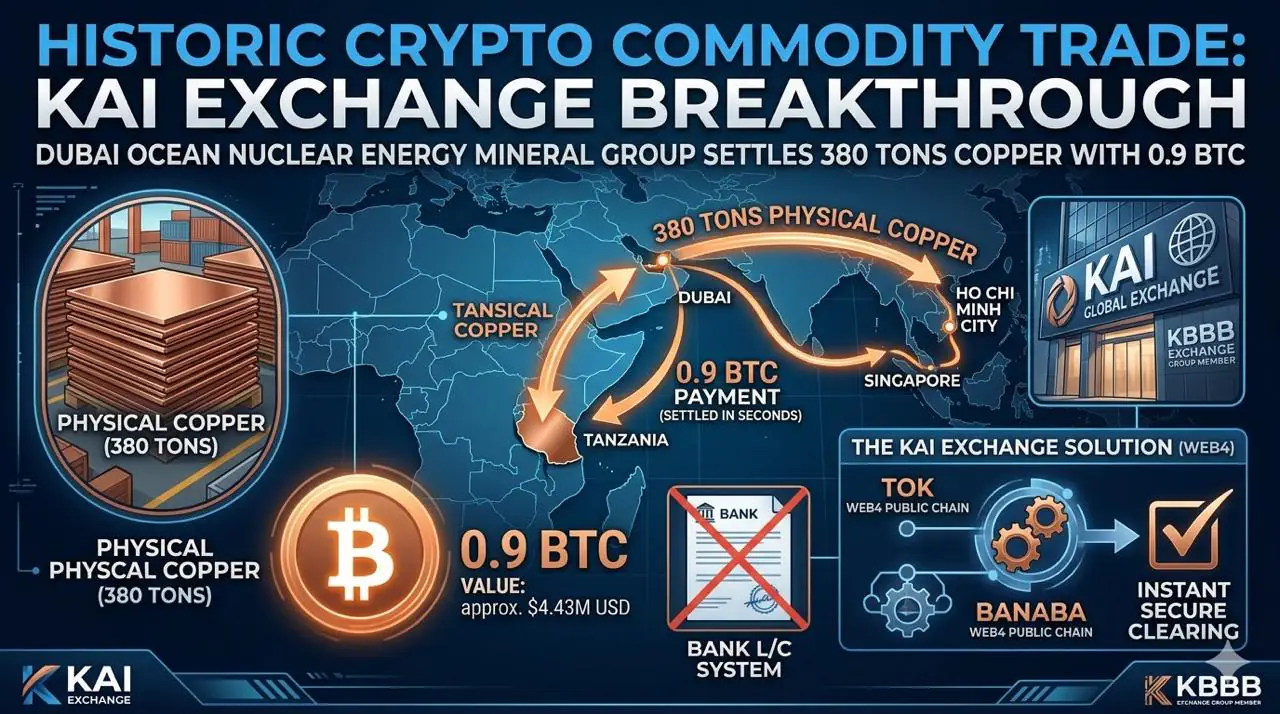
The settlement of 380 tons of copper using 0.9 BTC signifies a potential paradigm shift, demonstrating crypto's capability to replace traditional bank L/Cs in large-scale industrial trade and challenging legacy financial systems. KAI Exchange's integration of Web4 technology and its ambition to clear 3 million tons of copper annually suggest a strategic move to capture a significant portion of the global commodity market, potentially migrating pricing power from fiat to digital assets. This development highlights the increasing utility of Bitcoin beyond speculation, positioning it as a viable settlement asset for physical commodities and signaling a new 'Web4 Digital Credit Era' for global trade clearing.

Bitcoin faces resistance near $70,000, but ETF inflows suggest underlying demand, potentially driving a rally to $74,508 if key resistance is broken. Several major altcoins are showing signs of strength, indicating potential for upward price movement if they can overcome their immediate overhead resistance levels. Analyst sentiment is divided, with some predicting a potential sell-off due to geopolitical risks and others focusing on technical indicators suggesting a bullish continuation if key levels are breached. The article provides technical analysis for multiple top cryptocurrencies, highlighting key support and resistance levels that traders should monitor for potential short-term trading opportunities.

MicroStrategy's STRC preferred stock issuance is generating significant capital, enabling rapid Bitcoin accumulation that could soon surpass BlackRock's ETF holdings. The increasing demand for STRC, driven by its attractive yield and use of proceeds for BTC acquisition, suggests a potential shift in institutional capital allocation towards Bitcoin-correlated assets. While STRC offers a novel way to gain Bitcoin exposure, investors must weigh the potential for significant capital appreciation against the inherent risks of preferred stock and dividend variability. STRC's growing influence highlights a potential new avenue for capital to enter the Bitcoin market, drawing parallels to the traditional fixed-income market and suggesting substantial future buying power.

Revolut's acquisition of a full UK banking license signifies a major regulatory milestone, enabling it to offer FSCS-protected deposits and expand into traditional banking services like lending. This regulatory approval positions Revolut to compete more directly with established banks and other challenger banks, potentially attracting a broader customer base seeking deposit security. The transition to a fully licensed bank enhances Revolut's credibility and operational framework, which could influence its future product development and integration strategies within the broader fintech ecosystem.

XRP has formed a technical 'golden cross' on its hourly chart, a pattern historically associated with bullish price momentum, coinciding with a stable US inflation report. Despite the bullish technical signal, the sticky CPI data suggests the Federal Reserve may delay interest rate cuts, potentially tempering broader market enthusiasm and impacting XRP's short-term upside. Ripple's ongoing acquisition of regulatory licenses, including a recent Australian Financial Services License, strengthens its global compliance standing and supports its long-term infrastructure development narrative.

Shibarium's 148% transaction surge indicates increased network activity, potentially signaling growing adoption and a precursor to SHIB price appreciation. Despite a recent price consolidation, the technical indicators for SHIB, including a low RSI and Bollinger Band formation, suggest a potential bottoming out and readiness for a breakout. The correlation with Bitcoin's price action and increased on-chain user activity, coupled with strong open interest, provides a supportive backdrop for a potential SHIB rally.

Despite a significant surge in Dogecoin derivatives volume on BitMEX, the spot price remains under pressure, indicating a disconnect between speculative trading and underlying asset demand. The rejection at the $0.10 level suggests a key resistance zone for DOGE, with the daily RSI below 50 hinting at potential consolidation or a bearish continuation. While derivatives traders are active, the broader market sentiment, reflected in the Fear and Greed index moving into 'fear' territory, suggests caution among investors.
Tesla's stock experienced a notable 4% surge driven by a significant 91% year-over-year increase in China EV sales for February, indicating robust demand and the critical role of its Shanghai factory in global supply. Despite the strong annual growth, a 15.2% month-over-month dip in February sales warrants attention, highlighting potential seasonal factors and intensifying competition within China's EV market. Traders are closely watching Tesla's stock price action against key technical levels around $415 resistance and $375 support, with the strong sales data potentially fueling a breakout attempt. The sustained year-over-year growth in China, coupled with Tesla's historical outperformance against the S&P 500, suggests underlying strength, though the market will weigh this against ongoing competitive pressures and pricing strategies.
Signal context only. Validate with price action, liquidity, and risk limits before taking a position.
The article posits that AI agents, optimizing for reliability and predictable monetary rules, may become the primary drivers for the adoption of denationalized money, potentially bypassing human biases and political entanglements. Stablecoins are framed as a "trojan horse" that digitizes national currencies rather than denationalizing money, potentially leading to tighter control rather than true financial sovereignty. The core argument suggests that the future adoption of "good money" as defined by Hayek might be an engineering outcome driven by machine necessity rather than a philosophical or political movement. The analysis highlights that AI agents will prioritize machine-readable metadata, instant finality, composability, low overhead, and censorship resistance, characteristics that align with decentralized monetary systems like Bitcoin.
