
Navigating Crypto News

CoinFeather
Navigating Crypto News

Quick market read from this story
The offer of a bounty to recover $42 million in stolen assets highlights the ongoing challenges and evolving tools in post-hack investigations, suggesting a potential for asset recovery even years after an exploit.
Advances in AI-driven data analysis and on-chain forensics are improving the ability to trace illicit funds, potentially increasing the success rate of recovery efforts in future security incidents.
While the recovery of the $42 million remains uncertain, the active pursuit and partial freezing of assets indicate a renewed focus on resolving past security breaches, which could indirectly boost confidence in the ecosystem's resilience.
Deep Dive
Bo Shen, co-founder of Fenbushi Capital, has announced a bounty of 10%-20% for the recovery of approximately $42 million in digital assets stolen from his personal wallet in a 2022 hack. Onchain investigators ZachXBT and Taylor “Tayvano” Monahan have already assisted in freezing about $1.2 million of the compromised funds. Shen stated that rewards will be distributed upon successful recovery.
The case was initially disclosed in November 2022, when Shen reported that around $42 million in cryptocurrency had been drained from his personal wallet due to a compromised mnemonic seed phrase. At the time, he clarified that the stolen funds were personal and did not impact Fenbushi-related entities. Blockchain analytics firm SlowMist identified the cause as a breach of Shen’s seed phrase.
Shen's renewed push for recovery comes after investigators developed new leads and a more comprehensive understanding of how the stolen assets were moved. He explained that advancements in artificial intelligence-driven data analysis and onchain forensics have significantly improved the ability to trace asset flows and identify transaction patterns, which were limited when the hack occurred in 2022. These improved tracing tools and coordination methods are being tested in this long-running investigation, highlighting how technological progress can enhance responses to crypto-related incidents.
The stolen assets, according to SlowMist, included approximately $38.2 million in USDC, 1,607 Ether (ETH), nearly 720,000 USDt (USDT), and 4.13 Bitcoin (BTC). These funds were subsequently moved through various exchanges, including ChangeNow and SideShift.
Despite the improved tracing capabilities and new leads, the ultimate recovery of the stolen assets remains uncertain.
Source, catalyst, and sector overlap from the latest feed.
The UK government's move to ban political crypto donations signals increasing regulatory scrutiny on the asset class's integration into traditional financial and political systems. This regulatory action, driven by concerns over foreign interference and untraceable funds, could set a precedent for other jurisdictions considering similar measures. While the ban is temporary and requires legislative passage, it highlights a growing trend of governments seeking to control and legitimize crypto's role in public life.
Coinbase's opposition to stablecoin yield provisions in the Senate bill poses a significant hurdle, potentially delaying or derailing broader crypto market structure legislation. The conflict highlights the ongoing tension between crypto exchanges seeking to offer yield-generating products and traditional banking interests concerned about deposit flight. While some officials express optimism, Coinbase's lobbying power suggests continued debate and uncertainty around the bill's passage and its implications for stablecoin business models. The push to pass the bill before potential shifts in Congress underscores the urgency for the crypto industry to find common ground on regulatory frameworks.
US lawmakers are proposing the PREDICT Act to ban government officials and their families from trading on prediction markets, citing concerns over insider trading and the use of non-public information. This legislative push, alongside similar state-level actions and other proposed bills like BETS OFF, indicates a significant increase in regulatory scrutiny targeting prediction markets and their potential for market manipulation. The proposed penalties, including fines and profit disgorgement, signal a serious intent to curb perceived abuses, which could impact the operational landscape and user base of platforms like Kalshi and Polymarket.
Bitcoin developers face criticism for lagging on quantum-resistant cryptography, potentially creating a long-term advantage for Ethereum's development roadmap. The divergence in prioritization between Bitcoin and Ethereum regarding quantum threats could lead to shifts in market perception and potentially impact their relative valuations (ETHBTC). While the quantum threat is described as long-term, major tech firms like Google are setting aggressive migration deadlines, highlighting the increasing urgency for blockchain networks to address cryptographic vulnerabilities.
Swan Bitcoin's legal action against Cantor Fitzgerald and Howard Lutnick over a disputed mining venture and employee departure signals ongoing internal conflicts within the Bitcoin services sector. The subpoena application, involving Tether's investment banker Cantor Fitzgerald, highlights potential undisclosed dealings and information asymmetry related to Tether's mining operations and Swan's past business relationships. This dispute, involving allegations of stolen documents and the formation of a rival firm, could impact investor confidence in Swan Bitcoin and its associated partners if not resolved transparently.
The Resolv protocol has been halted following an exploit where 80 million unbacked USR tokens were minted, causing the stablecoin to depeg significantly and trade near $0.24. The exploit has reignited fears of stablecoin risk within the DeFi ecosystem, drawing parallels to the Terra (LUNA) collapse and potentially leading to increased scrutiny of stablecoin mechanisms. Resolv has offered the exploiter a white hat deal to return funds, indicating a potential resolution path but also highlighting the ongoing risks associated with unbacked stablecoin designs. The incident has triggered liquidations and outflows from other DeFi protocols, demonstrating the interconnectedness and potential contagion risk within the DeFi space when a stablecoin fails.
Balancer Labs is shutting down its corporate entity due to legal liabilities stemming from a $110 million exploit, signaling a significant restructuring for the once-prominent DeFi protocol. The proposed DAO-led restructuring, including zero BAL emissions and fee capture by the treasury, aims to provide a fair exit for BAL holders and refocus on core product offerings, potentially stabilizing the protocol's future. The decline in Balancer's Total Value Locked (TVL) from $3.5 billion to $157 million and the current low market cap of BAL indicate a substantial loss of market confidence and utility, making a recovery challenging despite restructuring efforts.
Balancer Labs is winding down operations six months after a significant $128 million exploit, citing legal exposure and lack of sustainable revenue as primary drivers. The shutdown highlights broader concerns about the sustainability of older DeFi models reliant on token incentives and emissions, which are increasingly facing pressure. While Balancer Labs is ceasing operations, the protocol is expected to continue under a DAO, foundation, and service-provider structure, with potential for key staff to move to a new entity. The event underscores the critical need for robust security and sustainable revenue models in DeFi, as exploits can lead to severe reputational and financial consequences.
Balancer Labs is shutting down due to financial pressure and a prior $116M exploit, signaling a challenging recovery environment for DeFi protocols post-hack. The protocol aims to continue under the Balancer Foundation and DAO with a restructured, leaner model, including zero BAL emissions and reduced operating costs, suggesting a focus on sustainability over growth. Despite the shutdown of its development team, Balancer continues to generate over $1 million in revenue over the past three months, indicating underlying protocol viability if tokenomics and cost structures are fixed. The decision to wind down Balancer Labs highlights the significant legal and financial liabilities that can arise from security incidents, impacting the sustainability of development teams.
A sophisticated scam network on X is exploiting geopolitical tensions and war panic to lure users into fraudulent crypto schemes, highlighting a new tactic in social engineering for illicit gains. The identified scam network has generated six-figure profits through pump-and-dump schemes and fake giveaways, demonstrating the significant financial incentives and effectiveness of these coordinated online operations. The use of engagement farming via emotionally charged content, followed by the promotion of crypto scams, and the subsequent changing of usernames by scammers, presents a challenge for user protection and platform moderation.
The CLARITY Act's potential passage in the Senate within six weeks presents a critical juncture for the U.S. crypto industry, aiming to establish clear regulatory distinctions between commodities like BTC and ETH and securities. A Senate vote by May is crucial for the CLARITY Act's advancement; failure to pass before the Memorial Day recess would likely delay its consideration until 2027, creating prolonged regulatory uncertainty. The bill's proposed framework, including the 'mature blockchain' concept and CFTC authority over digital commodities, represents a significant regulatory development that could reshape market dynamics if enacted. Uncertainty surrounding DeFi protocols and stablecoin yield rules, despite a House passage and White House backing, introduces a speculative element for market participants, with potential impacts on specific project valuations.
The traditional banking lobby's influence has successfully blocked stablecoin issuers from paying interest to users, a move that weakens a key adoption driver for stablecoins and potentially impacts demand for assets like USDC. Coinbase's rejection of the Senate's stablecoin compromise and Circle's stock decline highlight the market's sensitivity to regulatory outcomes that restrict yield generation, suggesting a bearish outlook for stablecoins reliant on such features. Despite negative market reactions and lobbying successes by traditional finance, White House officials express confidence in a resolution, indicating ongoing negotiation dynamics that could still influence future stablecoin regulations.
Coinbase's opposition to the CLARITY Act's ban on passive stablecoin yield directly impacts its high-margin revenue stream derived from USDC interest, suggesting a potential financial motive behind its regulatory stance. The contrasting congressional reception to stablecoin regulation versus tokenization highlights a bifurcated regulatory landscape, with tokenization receiving broader support while stablecoin yield provisions face significant industry pushback. The market's overreaction to Circle's stock drop indicates a potential disconnect between immediate price action and the nuanced impact of proposed regulations, suggesting an opportunity for traders to reassess based on fundamental business models.
Coinbase's rejection of the Clarity Act draft, specifically its proposed ban on stablecoin yields, introduces significant regulatory uncertainty for the stablecoin market and exchanges operating within it. The conflict highlights a critical juncture for stablecoin regulation, where proposed restrictions on yields could impact user incentives and competitive dynamics between crypto platforms and traditional banks. Coinbase's political influence, backed by its Super PAC network, suggests that its opposition could lead to further legislative delays or amendments, creating a volatile environment for stablecoin-related assets and exchange stocks.
Live Feed
Loading the broader stream in the same flow as the homepage feed.

Bitcoin's extended 50-day consolidation between $65,000 and $75,000 is interpreted as structural indecision rather than a bearish continuation pattern like a bear flag, suggesting a balanced market dynamic. The current market cycle's consolidation differs from 2022, with significant accumulation (over 600,000 BTC) during the recent drawdown indicating a stronger underlying foundation. While downside risks are acknowledged, the prolonged sideways action and substantial accumulation suggest that bears are not currently in control, reframing the market sentiment from bearish to indecisive.
The introduction of the PREDICT Act signals increased regulatory scrutiny on prediction markets, potentially impacting platforms that facilitate bets on political outcomes. Proposed bans on government officials and their families trading on prediction markets aim to prevent insider trading and unfair advantages, suggesting a move towards greater transparency in political finance. The legislative push, including the PREDICT Act and BETS OFF Act, alongside state-level actions, indicates a growing trend of regulatory pressure on prediction market platforms.

Despite a 5% price slip in DOGE, Dogecoin ETF investors recorded zero net inflows for the eighth consecutive day, suggesting a lack of immediate buying conviction despite potential price consolidation. The sustained zero inflow into Dogecoin ETFs, even during price dips, indicates that ETF investors are adopting a cautious stance, potentially awaiting clearer signals of long-term viability or a significant upward trend. While some on-exchange investors accumulated DOGE during a previous dip, the continued absence of ETF inflows highlights a divergence in sentiment and suggests that the meme coin's potential breakout faces significant hurdles.

Summ's expansion into advanced DeFi and NFT transaction categorization, alongside its "Least Tax First Out" accounting method, offers significant value for crypto investors seeking tax optimization. With over 3,500 integrations and support for 180+ countries, Summ positions itself as a comprehensive global solution for crypto tax compliance, reducing manual effort for users. The platform's tiered pricing structure, including a free plan and options up to $499/year for 100,000 transactions, caters to a broad spectrum of crypto users from beginners to active traders.

Bittensor's significant price appreciation is underpinned by a structural supply shock from its December 2025 halving, which reduced daily emissions by 50%, creating a foundation for sustained growth independent of narrative hype. Nvidia CEO Jensen Huang's endorsement of Bittensor's decentralized AI compute model provides high-level validation, positioning TAO as a credible player in AI infrastructure and potentially attracting institutional interest beyond typical crypto speculation. Despite a strong rally, sentiment data indicates a lack of retail euphoria, suggesting that the market has room for further upside before reaching a speculative top, supported by ongoing network upgrades and ecosystem expansion. The combination of reduced supply, high-profile validation, and active network development suggests a structurally sound rally for TAO, with potential for continued price appreciation towards its previous all-time high.
Bittensor's recent 130% rally is underpinned by a structural supply shock from its December 2025 halving, which reduced daily TAO emissions by half, combined with increasing demand. Nvidia CEO Jensen Huang's endorsement of Bittensor's decentralized AI compute model as a 'remarkable technical achievement' provides significant validation, potentially attracting institutional interest and shifting market perception from narrative to credible AI infrastructure. Despite significant price appreciation, on-chain data shows a mixed sentiment with a notable negative bias, which historically can signal further upside potential as it suggests a lack of retail euphoria and overleveraged traders. Ongoing protocol upgrades like the Lightning Protocol and the Dynamic TAO reward system, alongside increased network utilization and discussions to expand subnet capacity, indicate active development and growing demand for Bittensor's AI infrastructure capabilities.

Willy Woo's analysis suggests Bitcoin faces several more weeks of consolidation below the short-term holder price (STH price) of $84,000, indicating a potential continuation of bearish sentiment in the near term. The STH price acting as a key resistance level highlights market psychology where new entrants are losing money, suggesting a lack of strong buying conviction and potential for further downside pressure. With BTC trading around $70,100 and large players waiting for a bottom, the coming weeks are critical for determining the trend for the remainder of spring 2026, implying a period of heightened volatility and uncertainty. The analyst's view points to a 'mid-bear consolidation' phase, implying that current price action is not a recovery but a redistribution period where investors are exiting at break-even points.

Corporate Bitcoin treasury buying has become highly concentrated, with MicroStrategy accounting for nearly all recent purchases, indicating a significant shift from broader institutional adoption. The collapse in demand from other firms suggests a potential 'concentration risk' for Bitcoin's institutional investor base, as the market's reliance on a single buyer increases. While MicroStrategy continues aggressive accumulation, other treasury companies have significantly reduced or halted their Bitcoin purchases, signaling potential challenges in their business models or market conditions. The data implies that the narrative of treasury companies as a scalable new class of corporate Bitcoin buyers has narrowed to a single entity, potentially impacting future demand dynamics.
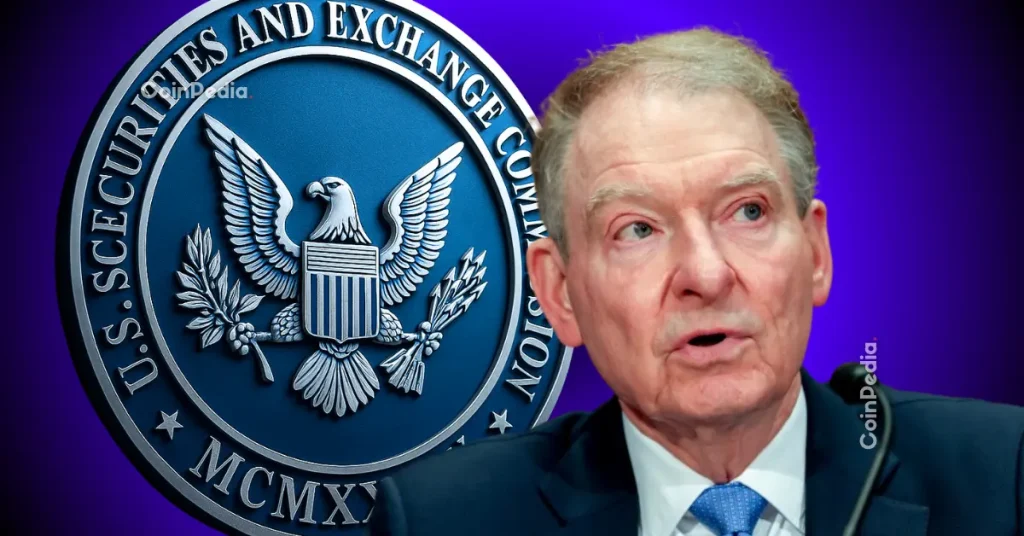
The SEC's tokenization exemption is reportedly weeks away from finalization, signaling a potential acceleration in the regulated adoption of tokenized securities. Despite the impending exemption, congressional concerns over a 'two-tiered market' and investor protection highlight ongoing regulatory friction that could impact the pace and scope of tokenization. Market infrastructure like NYSE and Nasdaq are already advancing tokenized securities platforms, indicating that the underlying technology is progressing faster than regulatory clarity, creating a potential arbitrage opportunity for early movers.

XRP's failure to break above the 50 EMA invalidates a short-term bullish pattern, signaling increased downside risk and a potential drop below the $1 psychological level. The inability to reclaim key moving averages and persistent rejection at resistance indicate a bearish regime, suggesting that rallies are being sold and the trend may continue downward. The immediate threat for XRP is a breakdown of its local support zone, which could lead to a swift return to lower levels if the ascending trendline fails, highlighting a weakening market sentiment.

Hyperliquid HIP 3 has achieved a new daily volume record of $5.4 billion, primarily driven by commodity trading rather than crypto, indicating a significant increase in derivatives activity on the platform. The surge in trading volume on Hyperliquid HIP 3 has directly correlated with an 8% price increase in the HYPE token, recovering from a recent downturn and liquidating over $1.3 million in short positions. While the increased volume and HYPE price recovery are positive, the reliance on leveraged commodity trading suggests potential volatility, and broader catalysts like a potential Grayscale spot ETF filing may be needed for sustained upside.

Mastercard's adoption of Solana for enterprise solutions, including stablecoin settlement and tokenized assets, signals a growing institutional interest in blockchain infrastructure beyond speculative assets. The article contrasts the fading meme sentiment around SHIB with the development of utility-focused platforms like Pepeto and the AI narrative around TAO, suggesting a market shift towards fundamental value and advanced technology. Pepeto's presale, highlighted as a potential 100x opportunity before a Binance listing, positions itself as a tool to bridge the gap between institutional adoption and retail traders, emphasizing risk control and data analysis. While SHIB's price prediction remains weak and speculative, the narrative around Pepeto suggests a potential near-term catalyst driven by its upcoming exchange listing and the platform's utility features.

Bitmine's launch of MAVAN positions it as a significant institutional player in Ethereum staking infrastructure, aiming to capture yield from its substantial ETH holdings. The platform's focus on compliance and scale targets institutional demand, differentiating it from retail-focused or decentralized staking solutions and potentially setting a new standard for treasury management. Bitmine's aggressive ETH accumulation strategy, aiming for 5% of total supply, combined with the MAVAN platform, signals a long-term commitment to Ethereum's staking ecosystem and infrastructure control. The shift towards institutional-grade staking infrastructure highlights a broader market trend of transforming digital assets into income-generating instruments, moving beyond simple accumulation.
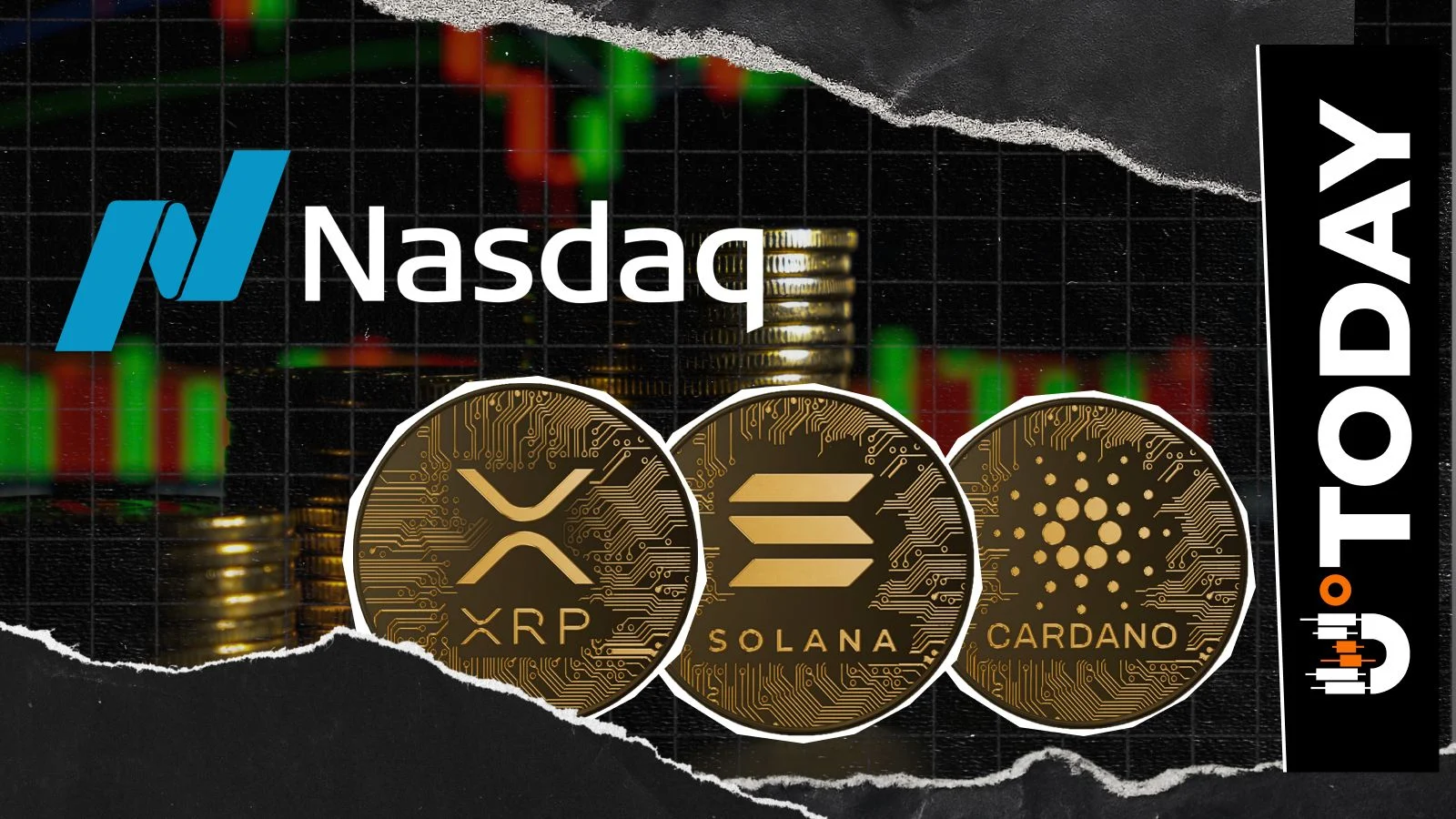
The Hashdex Nasdaq CME Crypto Index ETF (NCIQ) has expanded its holdings to include Cardano (ADA) and Chainlink (LINK), diversifying its exposure beyond Bitcoin and Ether. This expansion signals increased institutional acceptance and product development within the multi-asset crypto ETF space, following recent SEC approvals for similar products. The ETF's year-end filing reveals $121.3 million in total net assets and a NAV per share of $22.71, providing a baseline for future performance tracking.

Chainlink whales are accumulating LINK tokens to multi-year highs, indicating a potential long-term bullish conviction despite current price stagnation. Declining exchange reserves suggest a tightening LINK supply, which, combined with whale accumulation, sets the stage for a potential price surge if demand increases. The current price consolidation between $8 and $10, coupled with weak momentum indicators, suggests a holding pattern rather than an immediate breakout, warranting a watchlist approach. A decisive break above $10 could signal a near-term rally towards $11-$12, while a drop below $8 risks invalidating the accumulation thesis and leading to further downside.
CME Group's inclusion of XRP alongside Bitcoin and Ethereum in its SEC filing signifies a substantial institutional endorsement, elevating XRP's perceived legitimacy and potential for broader adoption within traditional finance. The rapid growth of XRP futures trading volume on CME, exceeding $1 billion in open interest within months, demonstrates strong institutional demand and liquidity, reinforcing its position as a key derivative asset. By integrating XRP into its core offerings, CME Group, which dominates the crypto futures market, is solidifying its market position and potentially influencing the future hierarchy of digital assets recognized by institutional investors.

The UK government's ban on cryptocurrency donations to political parties signals a cautious approach to crypto regulation, potentially impacting the perceived legitimacy and adoption trajectory of digital assets within the country. This regulatory move, driven by a desire for transparency and election integrity, suggests a broader trend of governments scrutinizing the financial flows associated with digital assets, which could influence other jurisdictions. While not directly impacting trading markets, the ban represents a step towards establishing a clearer regulatory framework, which could eventually foster more institutional confidence and participation in the UK crypto space.

The UK's immediate ban on cryptocurrency donations to political parties, driven by concerns over foreign interference, signals a growing regulatory focus on the transparency of digital asset flows in political finance. The concurrent US PREDICT Act targeting insider trading in political prediction markets highlights a broader trend of governments scrutinizing financial instruments linked to political processes to prevent undue influence. While the UK ban is a temporary moratorium pending regulatory framework development, it directly impacts parties like Reform UK, potentially altering their funding strategies and political messaging. These regulatory actions in major economies suggest an increased risk for crypto assets used in ways that circumvent traditional financial transparency, potentially impacting market sentiment for related use cases.
Proposed legislation targeting political prediction markets could signal increased regulatory scrutiny on novel financial platforms, potentially impacting platforms that facilitate such bets. The PREDICT Act aims to prevent conflicts of interest for government officials, suggesting a focus on ethical governance that could extend to other areas of financial participation. While the bill targets specific individuals, its passage could create a precedent for broader discussions on the regulation of prediction markets and their integration with political activities.

The dismissal of Michael Lewellen's lawsuit leaves crypto developers without definitive legal clarity, as the court relied on a non-binding DOJ memo instead of establishing legal precedent. Critics argue that relying on temporary policy memos, rather than codified law, leaves developers vulnerable to future enforcement actions, similar to past cases involving Tornado Cash and Samourai Wallet. This ruling represents a missed opportunity for the judiciary to define regulatory boundaries for blockchain software, potentially stifling innovation in decentralized finance due to ongoing uncertainty. The lack of clear legal protections disproportionately affects independent developers and startups, who may lack the resources to navigate potential regulatory challenges or enforcement actions.
Signal context only. Validate with price action, liquidity, and risk limits before taking a position.
