
Navigating Crypto News

CoinFeather
Navigating Crypto News
Source, catalyst, and sector overlap from the latest feed.
A federal appeals court has allowed Nevada authorities to enforce a temporary restraining order against Kalshi, effectively blocking its sports event contracts in the state. This ruling signifies a potential setback for prediction markets like Kalshi, as state regulators increasingly scrutinize their operations for potential unlicensed sports betting. The legal conflict highlights the ongoing tension between federal commodity regulations and state gambling laws, creating uncertainty for platforms operating in this space. With trading volumes in prediction markets surging, this regulatory action could signal a broader trend of increased oversight and potential restrictions on similar platforms.
Live Feed
Loading the broader stream in the same flow as the homepage feed.

Kentucky's HB 380 includes a provision requiring hardware wallet providers to facilitate user credential resets, which industry experts deem technologically impossible for non-custodial wallets and a threat to self-custody. The proposed legislation misunderstands core self-custody principles, potentially forcing hardware wallet providers to exit the Kentucky market or redesign products, thereby reducing consumer choice and privacy. This regulatory development highlights a broader challenge in crypto policy where lawmakers struggle with self-custody concepts, potentially leading to unintended consequences for users seeking secure asset storage.

Nvidia's expanded deal with AWS to supply 1 million GPUs through 2027 signifies a deepening reliance on its AI infrastructure stack by major cloud providers, driven by a significant shift towards inference workloads which now represent two-thirds of AI compute. The substantial commitment from AWS highlights the growing demand for AI processing power and suggests that despite developing its own chips, AWS will continue to integrate Nvidia's full stack, creating high switching costs and solidifying Nvidia's foundational role in AI infrastructure. This development underscores the rapid evolution of AI infrastructure, with Nvidia increasingly acting as the underlying layer for cloud providers, impacting competition and the economics of running AI models at scale.

Hyperliquid's open interest surge to $1.43 billion, driven by both crypto and tokenized assets, signals growing platform utility beyond traditional crypto markets. The SEC's classification of assets like Solana as commodities provides regulatory clarity, potentially reducing legal risks and encouraging broader adoption of these digital assets. Hyperliquid's diversification into non-crypto tokenized assets may decouple HYPE's price action from traditional crypto market movements, creating a unique trading dynamic. The dual developments of Hyperliquid's expanding market scope and the SEC's regulatory clarity suggest a maturing crypto landscape with increased institutional interest.

The lack of standardized transaction cost analysis (TCA) in crypto markets creates hidden costs for traders, eroding trust as the sector matures. Increased regulatory focus, exemplified by ESMA's 2025 standards, signals a move towards greater execution transparency in digital asset trading. Adoption of TCA tools could lead to more efficient markets by driving trading volume to venues with better execution quality and fostering exchange competition.

Evernorth's SEC filing for a Nasdaq listing via SPAC signals a move to tap traditional capital markets, potentially increasing XRP's integration with mainstream finance. The planned $1 billion in proceeds, with a significant portion allocated to an XRP treasury, indicates a strategic intent to bolster XRP holdings and potentially influence market dynamics. Despite recent paper losses on its XRP holdings due to price declines, Evernorth's continued accumulation and public listing ambition suggest a long-term bullish conviction in XRP's future value. The broader regulatory clarity from the SEC, distinguishing certain assets like XRP as commodities, provides a more stable environment for such traditional market integrations.
Amundi's launch of a tokenized SAFO fund on Ethereum and Stellar signifies institutional adoption of blockchain for regulated financial products, leveraging dual-chain infrastructure for efficiency and transparency. The fund's structure, utilizing swap-based exposure and collateral from systemically important banks, highlights a conservative approach to yield generation within a regulated framework, potentially setting a precedent for similar institutional offerings. Despite the significant institutional development, ETH and XLM prices are experiencing downward pressure, indicating that broader market sentiment and technical factors are currently outweighing the positive news of this specific product launch.

Bitcoin's recent dip below $70,000, driven by increased futures selling and fading US spot demand, suggests a potential shift in market sentiment despite a bullish fractal pattern. A recurring chart setup mirroring early March indicates a possible rebound for BTC if it reclaims the $70,000 level, with a key pivot at $72,000 that could trigger a short squeeze. While a bullish divergence on the RSI and support near $70,000 offer a potential recovery path, a breakdown below $68,300 could lead to significant downside towards $62,000, highlighting the time-sensitive nature of the current setup. The interplay between spot demand stalling and derivatives markets showing a long bias, evidenced by positive funding rates and CVD shifts, presents a mixed signal for near-term price action.
Solana's price action is exhibiting a bearish fractal pattern mirroring January's rejection, suggesting sellers are maintaining control at key resistance levels and increasing downside risk. The rejection from the upper boundary of a rising channel indicates a potential move towards lower support zones, with a failure to hold these levels pointing to further downside. Traders should exercise caution as the current technical setup favors downside pressure, with a break of lower support potentially leading to deeper liquidity pockets.
Ethereum has entered a historical MVRV buy zone, suggesting a potential long-term value area for accumulation, though short-term price action remains pressured by resistance. The $2,150 support level is critical for ETH's immediate direction; failure to hold could lead to further downside towards $1,770, while a bounce might target the $2,400 resistance. While the MVRV metric indicates a potential bottoming phase, the recent rejection at $2,400 and break below mid-range structure suggest caution for short-term traders.

The Crypto Clarity Act is nearing a Senate hearing, with lawmakers negotiating final compromises on stablecoin yield and DeFi treatment, indicating progress towards regulatory clarity. Potential legislative trades involving unrelated provisions suggest a strategic effort to secure broader support for the crypto bill, highlighting the complex political landscape. The White House's involvement and the Senate Banking Committee's review signal a significant push for the bill, with potential committee advancement by April, but final passage still faces hurdles. Discussions around preventing officials from profiting on crypto interests and CFTC appointments indicate key sticking points that could influence the bill's final form and timing.
Signal context only. Validate with price action, liquidity, and risk limits before taking a position.
Quick market read from this story
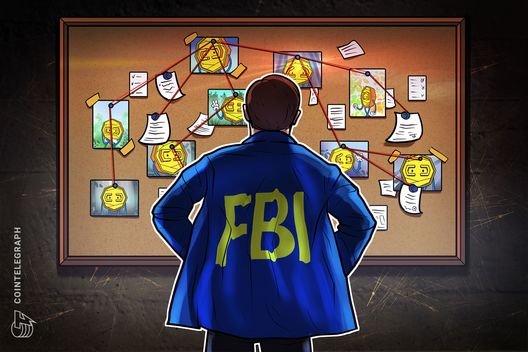
The FBI has issued a warning about a scam impersonating the agency on the Tron network, which could lead to increased user caution and potential negative sentiment towards the Tron ecosystem.
This incident highlights the ongoing prevalence of phishing and impersonation scams in the crypto space, underscoring the need for robust security measures and user education.
While not a direct market event, such scams can erode trust in blockchain platforms and impact user adoption if not effectively addressed by network operators.
Deep Dive
The U.S. Federal Bureau of Investigation (FBI) has issued a warning to Tron blockchain users about a scam that uses a token impersonating the agency to steal personal information. The fake token displays a message claiming the user's wallet is "under investigation" and requires a verification to prevent assets from being frozen.
The FBI's New York X account shared details of the scam, which involves an on-chain message sent to Tron users. This message prompts recipients to complete a fraudulent anti-money laundering verification online to avoid their assets being blocked. This tactic is similar to many crypto phishing scams that have led to significant financial losses.
In 2024 alone, the FBI reported receiving over 140,000 complaints related to crypto scams, resulting in approximately $9.3 billion in losses. This represents a 66% increase compared to the previous year.
The FBI advises Tron users to exercise caution if they encounter this fake token and to refrain from providing any identifying information to associated websites. Individuals who may have already submitted information are urged to file a report with the Internet Crime Complaint Center.
In a separate operation in 2024, the FBI created its own fake token, named NexFundAI, to target fraudsters involved in market manipulation, particularly pump-and-dump schemes. This sting operation led to charges against at least 18 individuals who were involved in manipulating the token's trading volume.
The World Gold Council's 'Gold as a Service' initiative aims to standardize tokenized gold products, potentially increasing institutional adoption and interoperability with traditional finance. This development signals a significant push towards integrating real-world assets like gold into digital financial systems, leveraging blockchain technology for efficiency and accessibility. The framework could enhance liquidity and reduce operational complexity for tokenized gold, impacting existing products like XAUT and PAXG by setting new industry standards.
