
Navigating Crypto News

CoinFeather
Navigating Crypto News

Quick market read from this story
The deployment of 'Lean Ethereum' on mainnet, confirmed by Vitalik Buterin, signals a significant protocol upgrade aimed at enhancing security and economic finality, potentially improving Ethereum's competitive positioning against other Layer-1s.
The introduction of the Fast Confirmation Rule (FCR) promises to reduce transaction confirmation times to approximately 12 seconds, a substantial improvement for usability and potentially increasing transaction throughput and user adoption.
While the article notes ETH price uptrend influenced by network upgrades and ETF inflows, the direct market impact of 'Lean Ethereum' and FCR is likely to be a medium-term catalyst, contingent on full implementation and market reception.
Deep Dive
Ethereum co-founder Vitalik Buterin has confirmed the deployment of the "Lean Ethereum" vision on the mainnet, a long-term roadmap aimed at simplifying the layer-1 base to enhance efficiency, optimize the consensus protocol, and improve security against quantum threats while maintaining decentralization. This development is expected to bring significant benefits to the Ethereum network, particularly in transaction confirmation speed and security guarantees.
Buterin highlighted that post-Lean Ethereum, the network will uniquely combine optimal security under synchrony with strong economic finality under asynchrony. This means Ethereum will achieve the best possible security, requiring only 51% of online validators to be honest. Unlike Proof-of-Work chains, Ethereum will maintain strong economic finality even during network disruptions, making block reversion prohibitively expensive due to slashing penalties. This combination of robust decentralization and economic finality is set to distinguish Ethereum among major blockchains.
Additionally, Buterin announced a new mechanism called the Fast Confirmation Rule (FCR), which significantly improves Ethereum's transaction confirmation speed. The FCR provides a strong guarantee that a block will not revert after just 12 seconds (one slot). This allows users to treat blocks as effectively irreversible under normal conditions, a substantial improvement over waiting for full finality, which is crucial for practical applications like payments.
The FCR relies on two security assumptions: supermajority honesty (more than 2/3 of validators being truthful) and global message propagation with round-trip delays of approximately 3 seconds. While this trades some worst-case robustness for usability, it is considered extremely reliable for most real-world scenarios.
Amidst these network upgrades, the ETH price has shown a slight uptrend, trading around $2,325 at press time, marking a 0.5% increase over the past day. Despite a dip in trading volume to $19.3 billion, ETH has surged over 15% in the last seven days. Investor confidence appears boosted by Buterin's announcements and ongoing institutional interest in spot ETH ETFs. Since March 10, ETH ETFs have recorded consistent inflows, totaling $138.2 million on March 17, with BlackRock's ETHA leading the gains.
Source, catalyst, and sector overlap from the latest feed.
Hyperliquid's open interest surge to $1.43 billion, driven by both crypto and tokenized assets, signals growing platform utility beyond traditional crypto markets. The SEC's classification of assets like Solana as commodities provides regulatory clarity, potentially reducing legal risks and encouraging broader adoption of these digital assets. Hyperliquid's diversification into non-crypto tokenized assets may decouple HYPE's price action from traditional crypto market movements, creating a unique trading dynamic. The dual developments of Hyperliquid's expanding market scope and the SEC's regulatory clarity suggest a maturing crypto landscape with increased institutional interest.
Evernorth's SEC filing for a Nasdaq listing via SPAC signals a move to tap traditional capital markets, potentially increasing XRP's integration with mainstream finance. The planned $1 billion in proceeds, with a significant portion allocated to an XRP treasury, indicates a strategic intent to bolster XRP holdings and potentially influence market dynamics. Despite recent paper losses on its XRP holdings due to price declines, Evernorth's continued accumulation and public listing ambition suggest a long-term bullish conviction in XRP's future value. The broader regulatory clarity from the SEC, distinguishing certain assets like XRP as commodities, provides a more stable environment for such traditional market integrations.
The SEC's new token taxonomy guidance provides much-needed clarity by classifying most cryptocurrencies, including NFTs and stablecoins, as commodities, thereby removing them from securities oversight. This regulatory shift, spearheaded by SEC Chair Paul Atkins, is expected to significantly reduce market uncertainty and encourage greater institutional participation by establishing clear boundaries for crypto assets. The distinction between commodities and securities is crucial, as it implies the SEC will no longer regulate assets classified as commodities, potentially boosting liquidity and market confidence. The guidance also clarifies that activities like crypto mining, airdrops, wrapping, and staking are not considered securities, further simplifying the regulatory landscape for various blockchain operations.
Key Insights: Dogecoin price was again in the headlines after climbing above $0.10, removing a zero from its price. This DOGE price surge today has sparked fresh optimism about the token’s potential rally, with analysts targeting an ambitious high of $2 and beyond. But is this a sign of a real breakout? Despite growing enthusiasm, […] The post Dogecoin Price Surges, Drops a Zero: Breakout or Fakeout? appeared first on The Coin Republic.
XRP price is consolidating within a tightening triangle pattern, suggesting a potential breakout is imminent, with analysts assigning a 65% probability to an upward move. Significant accumulation by Ripple whales, with 200 million XRP added to holdings, indicates large investors are positioning for future price appreciation despite subdued trading volume. While whale accumulation is bullish, sustained exchange outflows and low demand signal caution, suggesting that a breakout above key resistance levels like $2.60 will require stronger market support and potential institutional inflows. The current technical setup and whale activity present a mixed signal, warranting a watchlist approach as traders await confirmation of a sustained upward trend or a potential breakdown.
The emergence of Bitcoin Everlight as a professional scaling layer for Bitcoin suggests a potential shift in miner and staker interest away from Ethereum's post-Merge staking model towards solutions offering direct Bitcoin rewards. Bitcoin Everlight's simplified 4-step process for earning Bitcoin rewards aims to attract participants disillusioned with the complexity and diminishing returns of Ethereum staking. The project's emphasis on "Bank-Grade" security, including ISO certification and multiple smart contract audits, aims to build trust and attract capital to its Bitcoin scaling infrastructure. The limited 5-day window for Phase 1 pricing at $0.0008 per token presents a time-sensitive opportunity for early investors to acquire utility tokens before a scheduled price increase.
BTQ Technologies has deployed a working quantum-resistant Bitcoin implementation (BIP 360) on a testnet, addressing a theoretical vulnerability in Taproot that could be exploited by future quantum computers. The development highlights a significant gap between proactive industry solutions like BTQ's and the slow pace of core Bitcoin development, which historically takes years for upgrades to be adopted. With regulatory deadlines for quantum-resistance approaching in the US, EU, and Canada, the successful testnet deployment by BTQ creates urgency for the broader Bitcoin ecosystem to address this long-term security threat.
Pi Network's Mainnet upgrade to Protocol 20 lays the groundwork for smart contract functionality, signaling a move towards building decentralized applications and DeFi platforms. Despite short-term price fluctuations, the analyst suggests focusing on Pi Network's underlying infrastructure development, indicating that current market price may not reflect the project's long-term utility building. The broader market context highlights a shift towards blockchain integration with traditional finance and other technologies like AI, suggesting that projects with real-world utility and user adoption will drive long-term value.
OpNet's mainnet launch enables native DeFi on Bitcoin Layer 1, potentially unlocking significant yield opportunities for BTC holders without leaving the network. The protocol's approach of embedding smart contract data into standard Bitcoin transactions bypasses the need for wrapped BTC or bridges, mitigating counterparty risks and custody issues. By leveraging Bitcoin's inherent 'slowness' and higher fees during congestion, OpNet aims to foster stickier liquidity and more durable DeFi cycles, contrasting with faster, more volatile chains. The introduction of the OP-20 standard and upcoming stablecoin integration signal a move towards a more comprehensive Bitcoin-native DeFi ecosystem, potentially attracting new capital and use cases.
BTQ Technologies has launched a Bitcoin Quantum testnet implementing BIP 360, introducing quantum-resistant transaction structures and post-quantum signatures to a separate blockchain environment. The primary challenge for quantum readiness in Bitcoin is not technical but social, as adoption of BIP 360 would require consensus to migrate to a new chain or upgrade the existing network, a historically difficult process. While a practical quantum computer could eventually compromise Bitcoin's elliptic-curve cryptography, the current development on a testnet addresses future transaction security, not historical vulnerabilities. The launch of Bitcoin Quantum testnet, a separate chain from genesis block, bypasses Bitcoin's governance but faces significant hurdles in achieving user and miner adoption compared to network upgrades.
XRP faces persistent selling pressure above $1.50, indicating sellers remain in control and demand is lacking at higher price levels, suggesting continued downside risk. Shiba Inu's inability to reclaim key moving averages and break lower high patterns reinforces its bearish structure, making a near-term rally to $0.00001 improbable. Dogecoin's price action shows a clear consolidation within a downtrend, with $0.08 identified as a critical support level that may act as a reset point before any potential recovery.
Amundi's launch of a tokenized SAFO fund on Ethereum and Stellar signifies institutional adoption of blockchain for regulated financial products, leveraging dual-chain infrastructure for efficiency and transparency. The fund's structure, utilizing swap-based exposure and collateral from systemically important banks, highlights a conservative approach to yield generation within a regulated framework, potentially setting a precedent for similar institutional offerings. Despite the significant institutional development, ETH and XLM prices are experiencing downward pressure, indicating that broader market sentiment and technical factors are currently outweighing the positive news of this specific product launch.
Solana's price action is exhibiting a bearish fractal pattern mirroring January's rejection, suggesting sellers are maintaining control at key resistance levels and increasing downside risk. The rejection from the upper boundary of a rising channel indicates a potential move towards lower support zones, with a failure to hold these levels pointing to further downside. Traders should exercise caution as the current technical setup favors downside pressure, with a break of lower support potentially leading to deeper liquidity pockets.
Ethereum has entered a historical MVRV buy zone, suggesting a potential long-term value area for accumulation, though short-term price action remains pressured by resistance. The $2,150 support level is critical for ETH's immediate direction; failure to hold could lead to further downside towards $1,770, while a bounce might target the $2,400 resistance. While the MVRV metric indicates a potential bottoming phase, the recent rejection at $2,400 and break below mid-range structure suggest caution for short-term traders.
Institutional investors are re-entering Bitcoin via ETFs, signaling a shift from gold as a primary defensive asset for professional capital amid macro uncertainty. Retail investors continue to drive gold inflows, indicating a divergence in investor behavior where gold serves as a traditional store of value while Bitcoin is increasingly viewed as a higher-risk, higher-reward institutional asset. The split in investor focus between gold and Bitcoin suggests they are no longer direct competitors for the same defensive trade, but rather cater to different risk appetites and market roles.
Live Feed
Loading the broader stream in the same flow as the homepage feed.

The lack of standardized transaction cost analysis (TCA) in crypto markets creates hidden costs for traders, eroding trust as the sector matures. Increased regulatory focus, exemplified by ESMA's 2025 standards, signals a move towards greater execution transparency in digital asset trading. Adoption of TCA tools could lead to more efficient markets by driving trading volume to venues with better execution quality and fostering exchange competition.

Bitcoin's recent dip below $70,000, driven by increased futures selling and fading US spot demand, suggests a potential shift in market sentiment despite a bullish fractal pattern. A recurring chart setup mirroring early March indicates a possible rebound for BTC if it reclaims the $70,000 level, with a key pivot at $72,000 that could trigger a short squeeze. While a bullish divergence on the RSI and support near $70,000 offer a potential recovery path, a breakdown below $68,300 could lead to significant downside towards $62,000, highlighting the time-sensitive nature of the current setup. The interplay between spot demand stalling and derivatives markets showing a long bias, evidenced by positive funding rates and CVD shifts, presents a mixed signal for near-term price action.

The Crypto Clarity Act is nearing a Senate hearing, with lawmakers negotiating final compromises on stablecoin yield and DeFi treatment, indicating progress towards regulatory clarity. Potential legislative trades involving unrelated provisions suggest a strategic effort to secure broader support for the crypto bill, highlighting the complex political landscape. The White House's involvement and the Senate Banking Committee's review signal a significant push for the bill, with potential committee advancement by April, but final passage still faces hurdles. Discussions around preventing officials from profiting on crypto interests and CFTC appointments indicate key sticking points that could influence the bill's final form and timing.
Gemini's strategic pivot towards services and prediction markets, evidenced by services revenue surpassing trading revenue for the first time, signals a move towards more stable, non-crypto-cycle-dependent income streams. The company's successful acquisition of a U.S. regulatory license for prediction markets and early traction in this new vertical suggests a potential for diversified revenue growth, mitigating risks associated with volatile crypto trading volumes. Aggressive cost-cutting measures, including significant layoffs and exiting international markets, combined with the revenue diversification strategy, indicate a focused effort to accelerate the path to profitability, which may be viewed positively by investors.

The SEC's new interpretation suggests most cryptocurrencies, excluding tokenized traditional securities, will not be classified as securities, potentially reducing regulatory uncertainty for many digital assets. The SEC chair indicated a willingness to defer to a market structure bill from Congress, signaling a potential shift from 'regulation by enforcement' towards a more defined legislative framework for crypto. Progress on the market structure bill, particularly regarding stablecoin yield, is reportedly nearing completion, suggesting a potential legislative catalyst for the digital asset space in the near future. The clarification that digital commodities, tools, collectibles, and NFTs are generally not considered securities by the SEC provides clearer operational guidelines for projects in these areas.
The launch of a tokenized Bitcoin Yield Fund on Base by Coinbase and Apex Group signifies a major step in bridging traditional finance with blockchain technology, potentially increasing institutional adoption of on-chain assets. The use of the ERC-3643 standard to embed compliance directly into the token demonstrates a viable model for regulatory adherence in tokenized funds, which could accelerate similar product launches across the industry. Coinbase's intention to extend this tokenized fund model to other products, including its US Bitcoin Yield Fund, suggests a strategic expansion into on-chain investment products, positioning them as a key player in the evolving digital asset landscape.

Kentucky's proposed House Bill 380 mandates hardware wallet providers to implement 'backdoors' for seed phrase recovery, directly challenging the core principle of self-custody in Bitcoin. The Bitcoin Policy Institute argues this mandate is technologically infeasible for non-custodial wallets and could push users towards less secure centralized alternatives, undermining Bitcoin's value proposition. While the bill aims to regulate crypto, its provisions on hardware wallets conflict with established self-custody rights, as previously affirmed by SEC officials like Hester Peirce, creating regulatory uncertainty.

A proposed Kentucky bill mandating seed phrase recovery for hardware wallets represents a significant regulatory overreach, effectively banning self-custody and potentially forcing users towards less secure centralized solutions. This legislative development highlights a growing trend of regulatory bodies attempting to impose unfeasible technical requirements on crypto infrastructure, posing a direct threat to user autonomy and the core principles of decentralized asset ownership. The Bitcoin Policy Institute's advocacy against this 'technological impossibility' underscores the critical need for education among lawmakers regarding the fundamental security architecture of non-custodial wallets.
Forward Industries is leveraging its substantial Solana holdings as collateral for a crypto-backed loan, enabling a significant share buyback without liquidating its digital assets. This move highlights a growing trend of traditional finance integrating with crypto treasuries to optimize capital structure and potentially boost shareholder value amidst market volatility. The company's strategy of using crypto-backed debt for buybacks could set a precedent for other firms holding large digital asset treasuries, especially those facing pressure from declining asset values. Forward Industries' share repurchase program, funded by a loan against its SOL reserves, aims to counteract a significant decline in its stock price and reduce outstanding shares.

Microsoft's new MAI-Image-2 model demonstrates strong photorealism and text rendering capabilities, positioning it as a competitive player in the AI image generation space. Despite technical advancements, MAI-Image-2's current limitations in content flexibility, usage caps, and output resolution may hinder its immediate widespread adoption and utility for creative professionals. The development of an in-house AI image model by Microsoft signifies a strategic move to reduce reliance on third-party providers like OpenAI, potentially impacting future licensing agreements and internal AI development strategies. While MAI-Image-2 ranks highly on leaderboards, its practical application is currently constrained by conservative product decisions, suggesting a 'wait-and-see' approach for its full market impact.
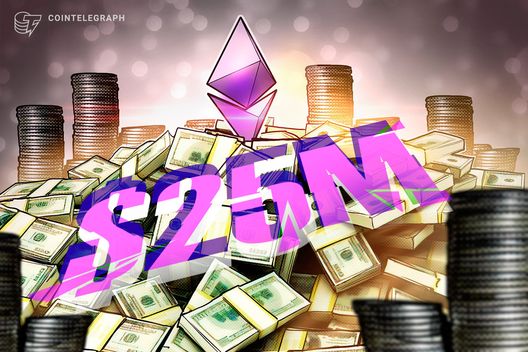
EtherFi's $25M allocation to Plume's RWA protocol signifies a strategic pivot towards diversifying yield generation beyond crypto-native sources, potentially attracting new capital flows into RWA products. The integration of Plume's Nest vaults into EtherFi's platform, which manages over $6 billion in user deposits, could significantly boost adoption and liquidity for tokenized real-world assets. The growing RWA market, now exceeding $27 billion, coupled with Plume's SEC registration, suggests increasing institutional interest and regulatory compliance in tokenized traditional assets, presenting a structural growth opportunity. EtherFi's move into RWA yield, leveraging Superstate's crypto carry fund, offers users exposure to sophisticated investment strategies previously inaccessible, potentially setting a precedent for other DeFi platforms.
Signal context only. Validate with price action, liquidity, and risk limits before taking a position.
