
Navigating Crypto News

CoinFeather
Navigating Crypto News
Quick market read from this story
Ethereum L2s require responsive pricing models to achieve mass adoption by mitigating fee volatility, a key hurdle for traditional finance users.
Arbitrum One's adoption of dynamic pricing represents a significant test for L2 scaling, balancing infrastructure protection with user-friendly transaction costs.
While responsive pricing improves fee accuracy, the underlying gas model's reliance on transaction fees may need replacement for L2s aiming for billions of users.
The debate over L2 fee models highlights a potential shift in Ethereum's scaling strategy, moving away from a purely L2-centric approach.
Deep Dive
Ethereum layer-2 (L2) networks require "responsive pricing" to effectively scale and accommodate billions of users, while also mitigating the fee volatility that currently plagues congestion periods. This was stated by Edward Felten, co-founder of Offchain Labs, during a keynote address at EthCC 2026.
Despite Ethereum's EIP-1559 upgrade, which aimed to reform the fee market by burning a portion of transaction fees, gas-price swings remain the primary mechanism for managing network demand. Felten highlighted that this system, while protecting networks from overload, results in fee volatility that deters mainstream users accustomed to predictable costs.
"With responsive pricing, you can see more traffic at lower gas prices without overrunning the infrastructure," Felten explained, emphasizing the potential for smoother traffic flow and reduced fee spikes.
Arbitrum One became the first L2 network to adopt dynamic pricing in January, describing it as a strategic move to enhance fee predictability under demand by aligning prices with actual network bottlenecks. Felten presented data indicating that Arbitrum's gas fees remained lower during peak network volumes compared to other L2s still utilizing the EIP-1559 model, such as Coinbase's Base network.
Arbitrum One currently leads L2 networks with a $15.2 billion total value locked (TVL), followed by Base Chain with $10.9 billion. The L2 sector collectively secures over $39.7 billion in TVL, showing a 4.6% increase over the past year.
The adoption of dynamic pricing has sparked a debate regarding the optimal approach for L2 networks. While responsive pricing offers potential for greater scalability and transparency in costs, it may sacrifice some predictability compared to EIP-1559. Julian Kors, founder of Pulsar Spaces, noted that the core of the debate lies in whether networks prioritize "predictability and mechanism design purity or for efficiency and real-time cost alignment." EIP-1559 excels at the former, while responsive pricing leans towards the latter.
Experts suggest that while responsive pricing represents an advancement, the underlying gas model itself may need to be replaced for L2s to truly scale to billions of users. Jerome de Tychey, president of Ethereum France and EthCC, and Cyprien Grau, project lead at Status Network, believe that future L2s will need models where users are unaware of gas fees, and network economics are not dependent on charging for transactions.
Grau stated, "L2s that scale to billions of users will be the ones where users never think about gas at all, and where networks' economics don't depend on charging them for it." This perspective aligns with a broader shift in the Ethereum ecosystem, as highlighted by Vitalik Buterin's recent arguments suggesting a pivot towards greater reliance on Ethereum's mainnet and native rollups for future scaling, rather than solely on L2-centric assumptions.
Source, catalyst, and sector overlap from the latest feed.
Bitcoin faces potential downside to $60,000 or even $52,500 if key support levels break, indicating a bearish short-term outlook despite some analysts suggesting undervaluation. Major altcoins like ETH, BNB, XRP, SOL, DOGE, ADA, BCH, and LINK are also showing signs of weakness, with several at critical support levels that, if breached, could lead to significant further declines. The article presents a mixed outlook with some analysts predicting potential bottoms and others forecasting sharp drops, highlighting significant uncertainty and potential for volatility across the top cryptocurrencies. Despite bearish technical signals for many assets, the article also outlines potential upside scenarios if key resistance levels are overcome, suggesting a market awaiting clear directional catalysts.
Binance led derivatives trading in Q1 2026 with about $4.9 trillion in volume, while Hyperliquid entered the top 10 as perp DEXs continued to gain traction.
A CKPool-connected solo miner just landed a $210,000 Bitcoin block reward, one of only 20 solo‑mined blocks in the past year, as listed miners sell BTC to stay afloat.
Dmail Network's shutdown highlights the unsustainable economics of infrastructure-heavy Web3 projects, even those with high user engagement, due to escalating operational costs and monetization challenges. The failure of Dmail Network underscores the critical need for robust token utility and viable business models to ensure long-term sustainability in the Web3 communication sector. The closure of Dmail, a project previously ranked highly among AI DApps, suggests that user activity metrics alone are insufficient to guarantee the survival of Web3 platforms facing financial and operational headwinds.
The debate over centralizing crypto supervision under ESMA versus national regulators highlights a fundamental tension in MiCA's implementation, potentially impacting regulatory arbitrage and market access for CASPs across the EU. Malta's pushback against direct ESMA supervision, citing premature structural changes and the need to assess MiCA's impact, suggests potential delays or challenges in harmonizing EU crypto regulations, which could create short-term uncertainty for affected firms. The core of the dispute lies in balancing EU-level control with national regulatory expertise, raising questions about whether a centralized model will foster greater market integration or stifle innovation by removing jurisdictional advantages and specialized knowledge. While the article frames the issue as a clash over regulatory authority, the underlying concern is the potential fragmentation of oversight for complex crypto firms, which could compromise investor protection and operational resilience if not managed effectively.
XRP has experienced its longest monthly losing streak since 2014, declining over 55% in six months, indicating significant bearish pressure and a potential loss of investor interest. Despite strong trading volume, XRP's price action remains weak, with significant liquidations impacting long traders, suggesting a lack of conviction for a near-term recovery. XRP's Q1 2026 performance, down 27.1%, marks its worst first quarter since 2018, raising concerns about its ability to attract capital compared to stronger performing assets. Technical analysis suggests a potential move towards the $1.05-$1.09 range, followed by a possible further dip to $0.87, indicating continued downside risk in the short to medium term.
The Ethereum Foundation's significant ETH staking activity, nearing its 70,000 ETH target, signals strong conviction in Ethereum's proof-of-stake security and long-term value appreciation. This substantial commitment to staking, representing a strategic treasury management decision, is likely to be interpreted by the market as a vote of confidence, potentially supporting ETH's price by reducing sell pressure and reinforcing network security. The projected annual staking rewards of $4-5 million highlight the economic sustainability of Ethereum's PoS model and the Foundation's strategy to generate yield from its holdings.
The introduction of Bitcoin Everlight offers a new model for earning Bitcoin through transaction routing and network utility, aiming to bypass traditional mining barriers for retail investors with a low $100 entry point. The tiered 'shard' system, ranging from Jade to Radiant, provides varying levels of participation and potential rewards, with APY incentives during presale transitioning to real BTC fee distribution upon mainnet launch. With over $2.4 million secured in funding and progressing through its presale phases, Bitcoin Everlight is positioning itself as a scalable infrastructure solution for global Bitcoin payments, aiming for a mainnet launch that shifts focus from mining to transaction processing. The project's emphasis on a user-friendly interface and a fixed token supply of 21 billion BTCL aims to attract a broader audience and ensure a non-inflationary economic model, contrasting with the increasing costs and complexity of Bitcoin mining.
Solana's price action is at a critical juncture, with analysts divided between bearish projections targeting $50 and bullish defense of the $80 support level. The prevailing market structure, characterized by lower highs and potential rising wedge formations, suggests continued downward pressure unless key resistance levels above $90 are decisively reclaimed. Despite bearish technicals, repeated defense of the $80 level indicates strong underlying demand, making the $75-$78 zone a crucial area to watch for potential trend continuation or breakdown.
Live Feed
Loading the broader stream in the same flow as the homepage feed.

A new strain of SparkCat malware bypasses app store security, targeting crypto wallet recovery phrases stored in smartphone camera rolls via OCR technology. This exploit highlights a significant security risk for crypto users who store sensitive recovery information digitally, potentially leading to widespread fund theft if not addressed. The discovery necessitates increased user vigilance regarding app permissions and secure storage of private keys, impacting the perceived security of mobile crypto access.
Grayscale's research suggests altcoins are near a three-year low, down 59% from highs, presenting a potentially compelling entry point for investors. The simultaneous filing for a Bittensor (TAO) trust indicates Grayscale is backing its research with institutional action, signaling confidence in specific altcoin market segments. Despite Grayscale's bullish outlook on altcoin valuations, the current macro environment with ongoing conflicts and high oil prices presents significant headwinds that could lead to further downside.

The post Quant Price Eyes Breakout as Institutional Deal Reshapes Narrative appeared first on Coinpedia Fintech News Quant price isn’t just reacting to another partnership headline, it’s reacting to something deeper that was announced on March 25th. Yes, it was a shift that matters for its ecosystem. The kind of shift that doesn’t scream on day one but quietly builds positions and rewires how institutions interact with crypto infrastructure. The move? A …

Washington has escalated its fight with states over prediction markets, launching lawsuits that could decide whether these platforms operate as national financial products or state-regulated gambling. The outcome will determine if sports contracts can scale or get forced back into local licensing regimes. On Apr. 2, the Commodity Futures Trading Commission (CFTC) sued Arizona, Connecticut, […] The post CFTC sues 3 states in bid to redefine crypto prediction markets as federal products appeared first on CryptoSlate.
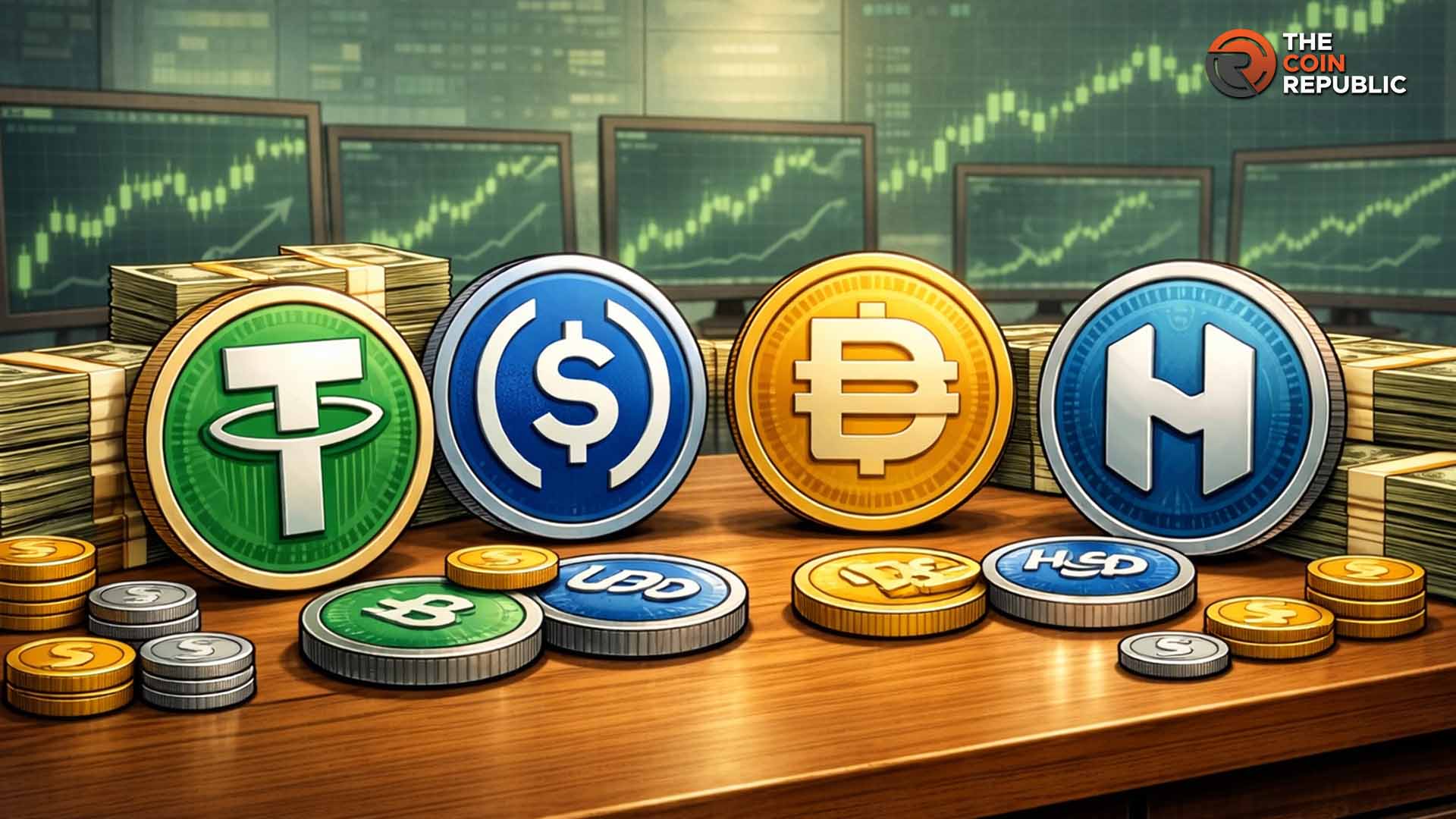
Stablecoins captured 75% of crypto trading volume in Q1, indicating a significant shift towards defensive assets amid market uncertainty. The dominance of automated trading flows (76%) suggests systematic strategies are driving market activity, potentially masking weakening organic retail demand. Divergent supply trends between USDC (growth) and USDT (decline) highlight a potential shift in market preference or underlying confidence among major stablecoin issuers. Regulatory discussions around yield-bearing stablecoins could introduce new risks and opportunities, influencing future product development and adoption.
Riot Platforms' significant sale of over $250 million in BTC during Q1 signals a strategic pivot towards AI infrastructure, potentially impacting its future operational focus and capital allocation away from pure mining. The company's continued BTC sales for consecutive quarters, coupled with a stated goal to utilize its power portfolio for data center development, suggests a fundamental shift in business strategy that could reduce its direct correlation with Bitcoin price movements. While Riot's stock has underperformed recently, the AI pivot narrative, supported by activist investor interest, presents a potential valuation catalyst that traders will monitor, especially in light of similar strategic shifts by other major Bitcoin miners.
The confirmed Binance listing for Pepeto, coupled with its origin from a Pepe co-founder and a SolidProof audited exchange, is presented as a rare setup with analysts projecting up to 150x returns from its presale price. Despite a prolonged period of extreme fear in the market, indicated by the Fear and Greed Index, significant capital is flowing into Pepeto's presale, suggesting a belief in its potential for substantial gains post-listing. The article draws a parallel between Pepeto and the original Pepe token, highlighting that Pepeto's integrated exchange tools and confirmed Binance listing offer a fundamental advantage that Pepe lacked, potentially justifying higher valuations. The current market environment of extreme fear, combined with Bitcoin ending a five-month losing streak, is framed as an opportune entry point for presale investments like Pepeto, mirroring historical patterns of early cycle believers.
Despite a recent price uptick and growing wallet adoption for Shiba Inu, weak derivatives data showing a sharp drop in futures netflow signals cautious sentiment among traders, suggesting limited conviction for sustained upward momentum. The Shiba Inu price is trading within a narrow range, indicating a demand imbalance where existing holders are not being significantly outweighed by new buyers, which caps upside potential. While SHIB's adoption metrics like wallet count are positive, the decline in derivatives activity and long liquidations suggest a defensive positioning by market participants, making short-term price direction contingent on stronger demand signals. The meme coin sector is experiencing increased competition, with Shiba Inu's market cap ranking close to other emerging tokens, highlighting potential shifts in dominance if current trends persist.
Shiba Inu's netflow surge of 76.9% suggests potential whale accumulation, indicating increased holder conviction and reduced selling pressure. The formation of new support around $0.00000580-$0.00000590, coupled with a potential bounce above $0.000006, signals a stabilization of the SHIB price. While ecosystem upgrades and a recent surge in burn rate (2,332%) could support future price appreciation, the immediate focus remains on holding key support levels against potential resistance at $0.00000650.
Ripple's integration with SWIFT messaging and banking tools via the GTreasury acquisition signifies a strategic move to bridge traditional finance infrastructure with digital assets, potentially increasing XRP and RLUSD utility within corporate treasury operations. The launch of Digital Asset Accounts and Unified Treasury within Ripple Treasury allows finance teams to manage both fiat and digital assets in a single platform, indicating a push for broader institutional adoption of digital assets in treasury management. By leveraging SWIFT's established network and tools, Ripple is enhancing its treasury platform's credibility and accessibility for traditional financial institutions, which could lead to increased demand for its digital asset services.
The post Chainlink Price Stalls as Whale Accumulation Quietly Builds Momentum appeared first on Coinpedia Fintech News Chainlink price is consolidating on daily chart and isn’t doing anything flashy right now and that’s exactly the point. While most traders are busy chasing volatility elsewhere, the smart money seems to be quietly stacking. Over the past year, wallets holding at least 1 million LINK have grown from 100 to 125. Not explosive. Not …

Elon Musk's X Money launch in April without Dogecoin integration signals a shift away from speculative hype towards confirmed utility and exchange listings for potential 'next Dogecoin' candidates. Pepeto's presale success, bolstered by an audited contract and a confirmed Binance listing, positions it as a speculative alternative to Dogecoin, capitalizing on investor fatigue with Musk-dependent narratives. The Solana ecosystem faces headwinds following a significant $285 million exploit on Drift, impacting SOL's price and highlighting the need for sustained institutional inflows for recovery. Investors seeking Dogecoin-like returns are rotating towards presale tokens like Pepeto, which offer a clear catalyst via exchange listings rather than relying on uncertain future integrations.
Signal context only. Validate with price action, liquidity, and risk limits before taking a position.
