
Navigating Crypto News

CoinFeather
Navigating Crypto News

Quick market read from this story
Grayscale's research suggests altcoins are near a three-year low, down 59% from highs, presenting a potentially compelling entry point for investors.
The simultaneous filing for a Bittensor (TAO) trust indicates Grayscale is backing its research with institutional action, signaling confidence in specific altcoin market segments.
Despite Grayscale's bullish outlook on altcoin valuations, the current macro environment with ongoing conflicts and high oil prices presents significant headwinds that could lead to further downside.
Source, catalyst, and sector overlap from the latest feed.
Ethereum's derivatives market has reset to 2023 bear market lows with Open Interest collapsing to $13.4B and funding rates turning negative, indicating a significant deleveraging event that could fuel a sharp rally on positive catalysts. ETH is currently testing a critical support level at $2,060, identified as the last meaningful floor before a potential 25% drop to $1,551 or further to $1,070, with the geopolitical situation in the Middle East acting as the primary deciding variable. The market has shifted from a persistently long-biased derivatives structure to neutral-to-short-biased, meaning any positive catalyst could trigger a disproportionate short squeeze, potentially driving ETH towards the $2,970 resistance level. While the derivatives market has largely absorbed leveraged positions, a continued escalation of the Iran conflict could lead to sustained spot selling pressure, driving ETH down through key support levels without the moderating effect of futures liquidations.
Live Feed
Loading the broader stream in the same flow as the homepage feed.

Drift Protocol's attempt to negotiate with hackers, potentially linked to North Korea, highlights the evolving strategies in post-exploit recovery within DeFi. The success of Drift's recovery efforts hinges on the identity of the attackers, with a low probability of fund return if state-sponsored actors are confirmed, according to industry experts. The $285 million exploit on Drift, a Solana-based DEX, underscores ongoing security risks in DeFi and the potential for significant capital loss. On-chain communication as a recovery tactic is being tested, but its effectiveness remains highly variable, especially against sophisticated, state-affiliated groups.

Recent research papers suggest quantum computers could break Bitcoin's cryptography sooner than anticipated, potentially by 2032, creating a long-term risk for older addresses with exposed public keys. The potential for quantum attacks necessitates proactive migration to post-quantum signature schemes, a complex process for Bitcoin due to its decentralized nature and the challenge of addressing abandoned or lost-key wallets. While current quantum computers are not a threat, the evolving capabilities and ongoing research highlight the need for the Bitcoin community to coordinate and implement upgrades, with various proposals like BIP-360 and QRAMP aiming to address the future risk.

XRP's price action is currently dictated by broader market trends rather than specific project catalysts, indicating a lack of independent momentum. Despite increased trading volume, XRP's inability to break its established resistance levels suggests positioning rather than strong conviction from traders. The current range-bound structure between $1.30 and $1.35 implies that XRP's near-term direction will be determined by a decisive break of either support or resistance, influenced by overall market sentiment.

Key Insight: Tokenization is emerging as a major trend in modern finance. By turning real-world assets into blockchain-based tokens, it aims to make transactions faster and more transparent. But not all are fully convinced by the hype surrounding it. The International Monetary Fund (IMF) warns that tokenization could also bring new risks to the financial […] The post IMF Warns Tokenization Could Pose New Risks to Financial Stability appeared first on The Coin Republic.
Shytoshi Kusama's return to communication after a five-week hiatus has coincided with a price uptick for SHIB, suggesting market participants are sensitive to developer activity. Kusama's clarification that his message was not tied to SHIB price movements but rather a 'global moment' indicates a focus on broader ecosystem developments rather than short-term speculation. Despite a recent price increase, SHIB faces technical resistance at the 50-day moving average, and the broader market structure remains bearish, suggesting caution is warranted.
A significant 171.6% surge in XRP's daily burn rate, reaching 1,031 XRP, indicates increased network activity and potential scarcity, which could support future price appreciation despite current weak price action. Despite a sharp increase in network usage and token burns, XRP's price remains subdued around $1.31, suggesting that current market conditions or selling pressure are outweighing the positive on-chain developments in the short term. The elevated burn rate, driven by network activity rather than market trends, signals a potential shift in investor sentiment and increased demand for XRP, creating a basis for a future price rebound.
Bitcoin experienced its worst quarterly performance since 2018, declining 22% in Q1 2026 due to macroeconomic pressures including war and hawkish Fed policy, indicating a macro-driven reset rather than a structural shift. Despite the downturn, Bitcoin outperformed equities and gold post-Iran war outbreak, suggesting resilience and potential diversification appeal, with institutional demand via ETFs showing signs of weathering the drawdown. The near-term trajectory of Bitcoin hinges on Federal Reserve policy and a resolution to the Middle East conflict, with a Fed pause or easing expected to boost risk appetite and stabilize prices, while continued hawkishness could increase selling pressure.
The XRP Ledger's native DEX is poised for a significant shift, with a validator suggesting that deep liquidity and high-quality asset integration could lead to market dominance. The upcoming XRP Lending Protocol, a DeFi primitive for uncollateralized loans, is identified as a key component for bootstrapping the XRPL DEX and enhancing its utility. Ongoing core development efforts on the XRP Ledger, focusing on telemetry, nomenclature, type safety, refactoring, logging, and documentation, aim to strengthen the protocol's foundational infrastructure. The potential success of the XRPL DEX, driven by new DeFi primitives and core development, could signal increased adoption and trading activity for XRP-issued assets.
A significant SHIB whale has deposited 240 billion tokens to Coinbase, signaling a potential sell-off following the project lead's shift in focus away from token price. The divergence between project leadership's philosophical messaging and investor focus on price action creates uncertainty for SHIB, potentially leading to further capital outflows. This whale's substantial token movement to an exchange, coupled with the leader's de-emphasis on price, suggests a bearish sentiment for SHIB in the short to medium term.

BNB price has broken below a key $600 support level, indicating a shift in momentum towards bearish pressure and raising concerns about further downside correction. While BNB is currently stabilizing near a critical demand zone of $560-$580, the broader market structure remains weak, suggesting that any rebound needs to reclaim higher resistance levels to invalidate downside risks. Momentum indicators like MACD and RSI show limited buying strength, pointing to a fragile price structure that could lead to a test of the $520-$500 support levels if bulls fail to defend the current base.
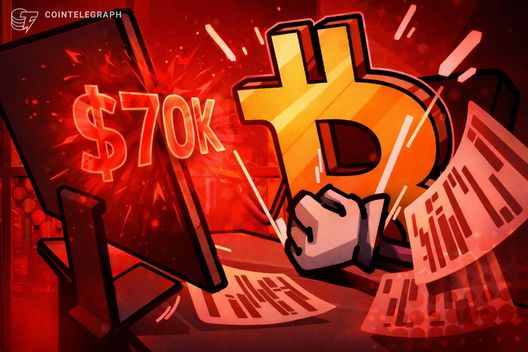
Nakamoto Holdings' sale of $20 million in BTC at a loss signals increasing pressure on corporate treasuries to manage balance sheets, potentially indicating a shift away from aggressive, debt-fueled accumulation strategies. Strategy's pause in Bitcoin accumulation, despite holding a significant treasury, suggests potential caution regarding current market conditions or capital availability, impacting institutional demand signals. The Ba2 rating for New Hampshire's proposed Bitcoin-backed municipal bond highlights the growing, albeit speculative, integration of digital assets into public finance, introducing new risk profiles for municipal debt. CoinShares' Nasdaq listing via SPAC merger at a $1.2 billion valuation demonstrates a continued, albeit challenging, pathway for crypto-native companies to access public markets and broader investor bases.

The post Quant Price Eyes Breakout as Institutional Deal Reshapes Narrative appeared first on Coinpedia Fintech News Quant price isn’t just reacting to another partnership headline, it’s reacting to something deeper that was announced on March 25th. Yes, it was a shift that matters for its ecosystem. The kind of shift that doesn’t scream on day one but quietly builds positions and rewires how institutions interact with crypto infrastructure. The move? A …
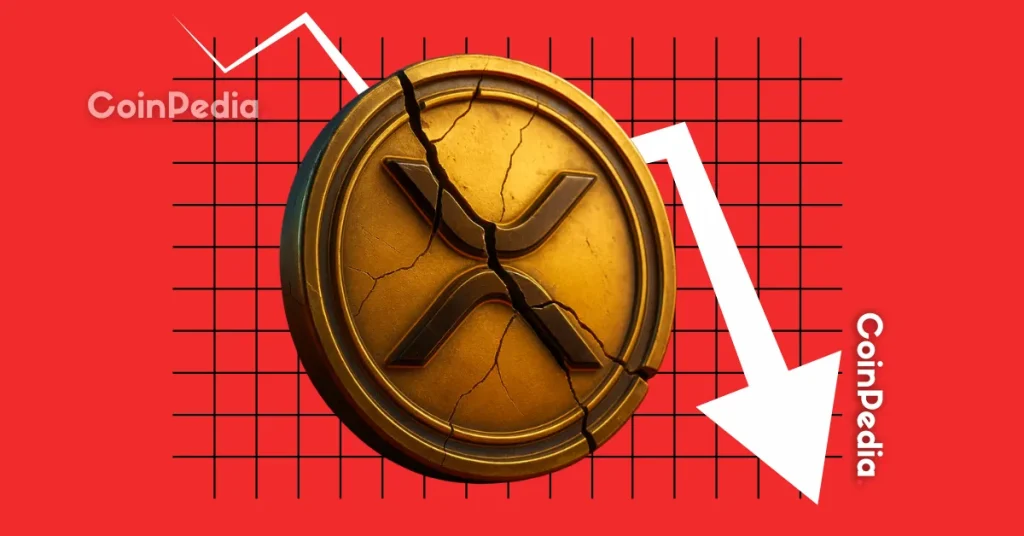
XRP has experienced its longest monthly losing streak since 2014, declining over 55% in six months, indicating significant bearish pressure and a potential loss of investor interest. Despite strong trading volume, XRP's price action remains weak, with significant liquidations impacting long traders, suggesting a lack of conviction for a near-term recovery. XRP's Q1 2026 performance, down 27.1%, marks its worst first quarter since 2018, raising concerns about its ability to attract capital compared to stronger performing assets. Technical analysis suggests a potential move towards the $1.05-$1.09 range, followed by a possible further dip to $0.87, indicating continued downside risk in the short to medium term.

Washington has escalated its fight with states over prediction markets, launching lawsuits that could decide whether these platforms operate as national financial products or state-regulated gambling. The outcome will determine if sports contracts can scale or get forced back into local licensing regimes. On Apr. 2, the Commodity Futures Trading Commission (CFTC) sued Arizona, Connecticut, […] The post CFTC sues 3 states in bid to redefine crypto prediction markets as federal products appeared first on CryptoSlate.

Stablecoins captured 75% of crypto trading volume in Q1, indicating a significant shift towards defensive assets amid market uncertainty. The dominance of automated trading flows (76%) suggests systematic strategies are driving market activity, potentially masking weakening organic retail demand. Divergent supply trends between USDC (growth) and USDT (decline) highlight a potential shift in market preference or underlying confidence among major stablecoin issuers. Regulatory discussions around yield-bearing stablecoins could introduce new risks and opportunities, influencing future product development and adoption.

The confirmed Binance listing for Pepeto, coupled with its origin from a Pepe co-founder and a SolidProof audited exchange, is presented as a rare setup with analysts projecting up to 150x returns from its presale price. Despite a prolonged period of extreme fear in the market, indicated by the Fear and Greed Index, significant capital is flowing into Pepeto's presale, suggesting a belief in its potential for substantial gains post-listing. The article draws a parallel between Pepeto and the original Pepe token, highlighting that Pepeto's integrated exchange tools and confirmed Binance listing offer a fundamental advantage that Pepe lacked, potentially justifying higher valuations. The current market environment of extreme fear, combined with Bitcoin ending a five-month losing streak, is framed as an opportune entry point for presale investments like Pepeto, mirroring historical patterns of early cycle believers.
Signal context only. Validate with price action, liquidity, and risk limits before taking a position.
Bitcoin's price rejection at the 50 SMA, coupled with on-chain data showing 'Supply in Profit' entering historical bottom discovery territory, suggests that while selling pressure may be exhausting, new capital has not yet entered the market to drive a sustained recovery. The current market dynamic indicates a divergence between exhausted short-term sellers and inactive long-term holders, creating a scenario where price could be susceptible to amplified downward volatility from the derivatives market if macro shocks occur, despite underlying supply-side strength. The decline in stablecoin supply on spot markets, contrasted with rising reserves in derivatives exchanges without increased Open Interest, signals a lack of new capital inflow and suggests existing participants are increasing leverage, posing a risk to the current price consolidation. While on-chain metrics historically point to a low probability of significant further downside from current levels, the absence of fresh spot demand and the risk from leveraged derivative positions mean a new catalyst is required to break Bitcoin's $67,000 consolidation.
