
Navigating Crypto News

CoinFeather
Navigating Crypto News

Quick market read from this story
Bitcoin faces potential downside to $60,000 or even $52,500 if key support levels break, indicating a bearish short-term outlook despite some analysts suggesting undervaluation.
Major altcoins like ETH, BNB, XRP, SOL, DOGE, ADA, BCH, and LINK are also showing signs of weakness, with several at critical support levels that, if breached, could lead to significant further declines.
The article presents a mixed outlook with some analysts predicting potential bottoms and others forecasting sharp drops, highlighting significant uncertainty and potential for volatility across the top cryptocurrencies.
Despite bearish technical signals for many assets, the article also outlines potential upside scenarios if key resistance levels are overcome, suggesting a market awaiting clear directional catalysts.
Deep Dive
The cryptocurrency market is experiencing a period of consolidation as buyers attempt to maintain Bitcoin (BTC) above the $66,500 level, facing significant resistance from sellers. Despite recovery efforts, analysts are divided on the short-term outlook, with some suggesting that $60,000 could be tested, while others point to metrics indicating potential undervaluation.
CryptoQuant analyst "Darkfost" noted that approximately 8.2 million BTC are currently in loss, a figure comparable to previous bear market lows, suggesting a potential bottom. However, Chartered Market Technician Aksel Kibar expressed a more bearish view, warning that BTC could drop to $52,500 if a developing bearish pattern breaks down. Contrasting these predictions, ARK Invest CEO Cathie Wood stated that Bitcoin is unlikely to experience the 85-95% collapses seen in the past.
Bitcoin has turned down from its moving averages, with bears aiming to push the price below the support line of a bullish ascending triangle pattern. A breakdown could lead to a slump towards the $62,500 to $60,000 support zone. Conversely, a close above the moving averages could signal a rally towards $72,000 and potentially $76,000, which would complete the ascending triangle and target $84,000.
Ether (ETH) is facing resistance at $2,200, with its price potentially oscillating between $2,200 and $1,916. A break above $2,200 could lead to $2,400 and $2,600, while a fall below $1,916 might target $1,750.
BNB has found support at $570. A break below this level could send it to $500, while a move above the moving averages might see it trade between $570 and $687.
XRP is testing the $1.27 support. A failure to hold this level could result in a drop to $1.11, with a further decline possible towards $1. A recovery would require breaking above the moving averages and targeting $1.61.
Solana (SOL) is positioned at the lower end of its support range between $76 and $95. Sellers are pressuring the $76 level, and a break below it could lead to further declines towards $67 and potentially $50. A move above the moving averages would suggest continued range-bound action.
Dogecoin (DOGE) is consolidating between the moving averages and the $0.09 support. A break below $0.09 could lead to $0.08 or even $0.06. A close above the moving averages would indicate bullish momentum towards $0.10 and $0.12.
Hyperliquid (HYPE) is attempting to bounce off the 50-day SMA around $34.16, but faces resistance at higher levels. A break below the 50-day SMA could lead to $29.42, while a move above the 20-day EMA might target $41.59 and $43.76.
Cardano (ADA) is trading below the $0.25 resistance but holding above $0.23. A break below $0.23 could lead to $0.22 and $0.18. A move above the moving averages would suggest reduced selling pressure.
Bitcoin Cash (BCH) is at a critical support level of $443. A sharp downturn from the moving averages could lead to a bearish head-and-shoulders pattern completion and a drop to $375. A close above $486 would indicate a bullish shift, targeting the $520 to $540 zone.
Chainlink (LINK) is trading within the $8 to $10 range. A move above the moving averages could target $10, with a break above potentially leading to $10.94 and $11.61. A fall below $8 could signal a bearish trend towards $7.15 and $6.
Source, catalyst, and sector overlap from the latest feed.
Robert Kiyosaki reiterates his long-term bullish stance on Bitcoin, gold, and silver as hedges against inflation and rising debt, framing current economic conditions as a continuation of trends initiated in 1974. Kiyosaki's advocacy for Bitcoin as 'real money' and a scarce asset suggests a potential for significant price appreciation during future economic downturns, aligning with his previous $750,000 BTC forecast. Despite Kiyosaki's bullish outlook on Bitcoin as a store of value, recent data indicates a spike in bearish sentiment among social media participants, which could present a contrarian buying opportunity if historical patterns hold.
Traders are observing potential downside risk for Bitcoin as Bollinger Bands indicate an impending volatile breakout, with analysts predicting a sweep of sub-$60,000 lows. Unusual selling activity from large holders ('whales') on Binance, characterized by significant volume distribution via TWAP bots, suggests strategic profit-taking or repositioning despite sideways price action. The current market structure, which has favored sweeping highs over lows, may be shifting, potentially leaving Bitcoin vulnerable to a capitulation event if support levels break.
A surge in token supply is diluting returns and breaking the link between fundamentals and price, raising concerns about crypto’s long-term model.
Anthropic's formation of a PAC signals increased engagement in political lobbying and policy shaping within the AI sector, potentially influencing future regulatory landscapes relevant to AI development and adoption. The ongoing dispute with the Pentagon over AI use in weapons, coupled with the PAC launch, highlights significant regulatory and ethical challenges for AI firms, which could impact investor sentiment and strategic partnerships. Google's substantial investment in a Texas data center for Anthropic underscores the growing demand for AI infrastructure and the strategic importance of companies like Anthropic in the AI ecosystem, suggesting potential growth for related infrastructure plays.
The sophisticated, six-month-long preparation for the Drift Protocol exploit, involving social engineering and malware, highlights advanced threat actor capabilities targeting DeFi protocols. The potential link between the Drift Protocol and Radiant Capital hacks suggests a coordinated effort by sophisticated actors, possibly state-sponsored, increasing the perceived risk for DeFi platforms. The exploit's estimated $280 million loss underscores the significant financial risks within DeFi and the need for enhanced security measures beyond standard smart contract audits.
Despite traditional bottom confirmation signals like STH-SOPR and Coinbase Premium showing weakness, significant whale accumulation on Binance, evidenced by high USDT inflows and the Binance Whale Concentration Indicator, suggests a divergence in market sentiment and potential underlying strength. The current positive Bitcoin z-score (+11) indicates the market is correcting from overvaluation rather than bottoming from undervaluation, contrasting with the whale accumulation activity, creating uncertainty about the immediate price direction. The article highlights that while short-term holders are selling at a loss and U.S. institutional demand is subdued, large players are accumulating Bitcoin at an unprecedented pace, indicating a potential disconnect between retail/institutional sentiment and whale conviction. The Realized Price of $54,100 remains a critical support level, and a failure of whale accumulation to be confirmed by broader institutional demand or ETF flows could see Bitcoin retest this level, despite current whale buying activity.
Solana's exchange balance has surged by 1.40 million SOL ($110 million) in 72 hours, indicating a potential increase in selling pressure or preparation for trading activities. SOL is currently testing a key Fibonacci support zone between $61.75 and $42.62, a historically significant area for potential accumulation and reversals. While the technical setup suggests a potential accumulation zone, a sustained price recovery and breakout above resistance levels are required to validate a bullish long-term outlook, making the $1,000 target speculative for now. The conflicting signals of increased exchange supply versus a strong technical support zone create a neutral short-term outlook, warranting a watchlist approach until clearer price action emerges.
Ethereum is consolidating near the $2,000 support level, with a critical resistance zone identified between $2,100 and $2,150, suggesting a potential breakout or breakdown is imminent. A break below $2,000 could trigger significant long liquidations, accelerating downside pressure towards lower support levels around $1,755 and $1,693. Despite short-term consolidation, Ethereum's long-term chart structure remains a rising channel, indicating a persistent uptrend supported by repeated historical rebounds. The market is at a decision point where a decisive move above $2,100-$2,150 would strengthen the bullish case, while failure to hold $2,000 could signal a near-term bearish trend.
Bitcoin's price action is exhibiting conflicting signals, with a short-term chart pattern suggesting a potential breakdown around mid-April, contrasting with a longer-term monthly indicator pointing towards a potential cycle bottom. The repetition of a 68-day sideways pattern, previously followed by a sharp decline, raises concerns for a mid-April downside risk if historical price action is mirrored. Despite short-term bearish signals, the monthly Alligator indicator suggests that Bitcoin may be approaching or is already within a broader cycle bottoming phase, based on historical comparisons. Traders should monitor the mid-April period for potential downside volatility based on chart pattern repetition, while simultaneously considering the longer-term bullish implications of the monthly Alligator signal for a potential cycle low.
Jack Dorsey's tease of a Bitcoin faucet revival, potentially via "Bitcoin Day | Earn Free Bitcoin," signals a renewed focus on user onboarding and accessibility for newcomers. While the announcement has generated curiosity, the lack of specific details regarding distribution amounts, limits, and Lightning Network integration leaves its immediate market impact uncertain. The initiative, if successful, could serve as a practical tool for introducing individuals to Bitcoin and the broader crypto ecosystem, aligning with Dorsey's vision of an open financial system. Despite the news, BTC price action and trading volume remain subdued, indicating that the market has not yet priced in any significant repricing from this development.
Live Feed
Loading the broader stream in the same flow as the homepage feed.

Circle's biggest selling point may be becoming its biggest liability. On-chain investigator ZachXBT's “Circle Files” allege that the USDC issuer has inconsistently applied its freeze powers. Circle was too slow in 15 cases involving more than $420 million in allegedly illicit funds since 2022, yet broad enough to sweep 16 operational business wallets in a […] The post Circle’s USDC freeze power faces fresh scrutiny after wallets were blocked while stolen funds moved appeared first on CryptoSlate.

Shibarium transactions have seen a significant 1,889% drop following a recent infrastructure update and backend reindexing, indicating a normalization phase post-upgrade. The reported transaction drop is largely attributed to system-level automated contract calls and incomplete explorer data syncing, rather than a true decline in user activity. Despite the temporary dip in reported transactions, the Shibarium network remains operational, with ongoing efforts to strengthen infrastructure for anticipated future growth. The current market consolidation and subdued trading volumes for SHIB, coupled with a lack of community optimism, suggest a neutral near-term outlook for the asset.

The attribution of the $270 million Drift Protocol exploit to a North Korean state-affiliated group highlights a sophisticated, long-term attack vector that bypasses traditional security measures. The attackers' six-month operation, including in-person meetings and depositing capital, demonstrates a new level of threat that challenges standard multisig security models and due diligence processes. This incident underscores the need for enhanced security protocols beyond code audits, focusing on operational security and the vetting of individuals and entities interacting with sensitive protocol functions.

Ant Group's blockchain arm, Ant Digital Technologies, has launched Anvita, a platform designed for AI agents to transact on crypto rails, signaling a significant push towards an agent-to-agent economy. Anvita integrates tokenization services (TaaS) and a coordination/settlement platform (Flow) utilizing stablecoins like USDC and the x402 protocol, enabling sub-cent transactions for autonomous agents. This development positions Ant Group as a key player in the emerging AI-driven commerce landscape, competing with initiatives from Visa, Coinbase, and Google, and highlights the growing institutional interest in blockchain for automated financial operations. While the potential market for AI agent commerce is projected to be trillions, current adoption of related protocols remains nascent, suggesting a longer-term development cycle for widespread practical application.

Despite extreme negative sentiment and a sustained 'extreme fear' reading on the Fear and Greed Index, Bitcoin has held steady around $67,100, indicating strong underlying institutional support that is preventing significant price declines. While retail sentiment is at multi-week lows, record March ETF inflows and new institutional product approvals like the Morgan Stanley Bitcoin ETF suggest a persistent institutional bid is acting as a price floor. Aggressive distribution by large holders and negative on-chain demand data indicate that broader market selling pressure is outpacing institutional buying, creating a ceiling for price appreciation despite positive historical April seasonality. The divergence between extreme bearish sentiment and price stability highlights a market battle between institutional accumulation and retail/whale distribution, suggesting potential for volatility if either side gains significant momentum.

Adam Back's stance against freezing lost Bitcoin due to quantum threats highlights a fundamental debate on protocol immutability versus user protection, potentially signaling a long-term market tolerance for risk related to legacy vulnerabilities. The discussion around 4 million lost BTC becoming vulnerable to quantum attacks presents a theoretical risk to Bitcoin's price, but Back's rejection of intervention suggests the market may prioritize decentralization over proactive, albeit controversial, security measures. While a quantum breakthrough is a distant threat, the debate itself underscores the ongoing need for quantum-resistant solutions in the crypto space, positioning infrastructure and development in this area as a potential long-term play.
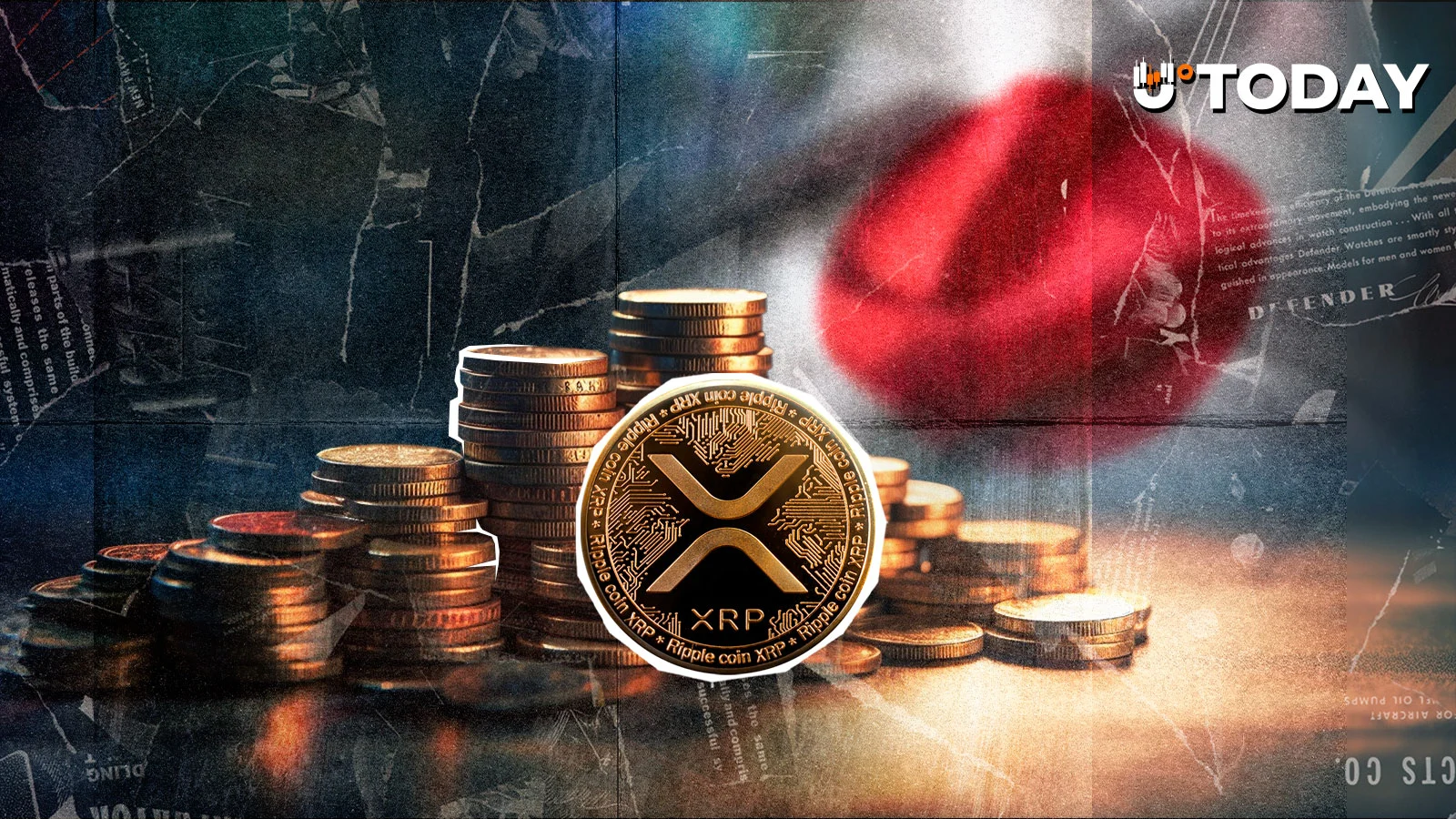
The upcoming XRP Tokyo 2026 conference, focusing on RWA tokenization and XRPL integration in Japan's banking sector, presents a near-term catalyst for XRP. Ripple's senior ecosystem development manager's arrival in Tokyo signals active engagement and preparation for the event, potentially driving community interest. Despite the anticipation for RWA updates and banking sector integration, XRP's price is currently exhibiting moderate volatility, suggesting the market is awaiting concrete developments rather than pricing in future events.

Michael Saylor asserts that Bitcoin's traditional four-year cycle driven by halvings is obsolete, shifting focus to capital flows and credit as primary price drivers. The narrative shift suggests that institutional adoption and integration with traditional finance, rather than supply shocks, will dictate Bitcoin's future growth trajectory. MicroStrategy's significant Bitcoin holdings are framed as creating an insurmountable 'moat', potentially limiting competitive corporate adoption and forcing market participants to build supporting infrastructure.

The $15 million RLUSD donation from Ripple has demonstrated significant real-world economic impact, generating over $100 million in economic activity and supporting over 2,600 jobs, indicating a successful application of stablecoin technology beyond speculative use cases. The initiative highlights the potential for stablecoins like RLUSD to act as catalysts for capital deployment, unlocking substantial funding for small businesses and contributing to job creation and retention through direct lending and support programs. This development showcases Ripple's broader philanthropic strategy and the utility of its stablecoin on the XRP Ledger for tangible economic development, suggesting a positive signal for the adoption and integration of stablecoins in traditional economic sectors.

Fidelity's data indicates a significant institutional rotation from Bitcoin to gold during recent geopolitical tensions, suggesting a flight to perceived safety. Historical analysis shows Bitcoin has historically outperformed gold and equities in the 60-day window following major shocks, implying a potential reversal of the recent BTC-to-gold flow. The observed reversal in capital flows from gold back to Bitcoin, coupled with Bitcoin's current outperformance in the ongoing crisis, suggests a potential near-term bullish trend for BTC as risk appetite returns.
Logarithmic regression models suggest a theoretical long-term Bitcoin price target of $400,000, but current market conditions do not support this projection in the near term. The model's upper band represents extreme overextension rather than a specific forecast, requiring significant market shifts and sustained institutional demand to approach. Bitcoin's current price action in the mid-$60,000 range shows a descending structure with lower highs and rejection from moving averages, indicating a lack of immediate bullish momentum. For Bitcoin to approach extreme model valuations, it must first reclaim key resistance levels around $70,000-$80,000 and benefit from supportive macro liquidity and renewed institutional inflows.

The crypto community observes the 51st birthday of Bitcoin's pseudonymous creator, Satoshi Nakamoto, on April 5th, a date potentially chosen for its symbolic connection to monetary freedom via Executive Order 6102. While Satoshi Nakamoto's identity and exact birth date remain a mystery, the annual observance highlights the enduring legacy and foundational importance of Bitcoin's creator to the entire cryptocurrency ecosystem. The narrative surrounding Satoshi Nakamoto's birthday, regardless of its factual basis, serves as a recurring cultural touchstone for the Bitcoin community, reinforcing the project's origins and decentralized ethos.

Charles Schwab's direct Bitcoin and Ethereum offering signifies a major step in mainstream brokerage adoption, potentially normalizing crypto ownership for millions of traditional investors and influencing product design across the industry. The launch is directly tied to recent regulatory shifts (SAB 121 rescission, OCC and Federal Reserve guidance changes), indicating a more favorable environment for large financial institutions to integrate digital assets. While Schwab's entry is a bullish signal for broader adoption, potential friction points like separate account structures and lack of SIPC/FDIC protection may limit immediate uptake compared to crypto-native platforms. The success of Schwab's rollout will be a key indicator for the future of retail crypto adoption within traditional finance, with potential for significant demand generation if the product gains traction beyond initial cohorts.
Signal context only. Validate with price action, liquidity, and risk limits before taking a position.
