
Navigating Crypto News

CoinFeather
Navigating Crypto News
Quick market read from this story
Crypto.com's decision to cut 12% of its workforce signals a strategic pivot towards AI integration, potentially impacting operational efficiency and future product development.
The layoffs indicate a broader trend within the crypto industry of cost-cutting and resource reallocation in response to market conditions and regulatory pressures.
By prioritizing AI adoption, Crypto.com aims to gain a competitive advantage, suggesting a potential shift in focus from traditional exchange services to AI-enhanced offerings.
Deep Dive
Crypto.com has announced a significant workforce reduction, laying off approximately 12% of its staff, which amounts to around 180 employees out of its total 1,500. This strategic move is driven by a pivot towards integrating Artificial Intelligence (AI) tools into its operations. CEO Kris Marszalek stated that companies embracing AI and leveraging top talent will experience accelerated growth, while those that do not may face survival challenges.
The layoffs occur amidst a challenging market environment for cryptocurrency firms, characterized by reduced trading volumes and increasingly stringent regulatory landscapes. These conditions are compelling companies across the sector to focus on cost-cutting measures and enhancing operational efficiency. Crypto.com's decision reflects a broader industry trend of adapting to market dynamics and technological advancements to maintain competitiveness.
Source, catalyst, and sector overlap from the latest feed.
The expiration of $2.1 billion in Bitcoin and Ethereum options today introduces potential short-term volatility as markets may gravitate towards 'max pain' levels of $70,000 for BTC and $2,150 for ETH. While options expiries can cause price swings, the current expiry value is slightly lower than the previous week's, potentially moderating the immediate impact on market dynamics. Recent outflows from spot Bitcoin ETFs add a layer of caution, suggesting some investor hesitancy that could influence price action around the options expiry event.
Live Feed
Loading the broader stream in the same flow as the homepage feed.

Bitcoin's open interest surge alongside a price drop and declining CVD indicates aggressive selling pressure, potentially driven by new short positions and long liquidations. The BTC price is testing a critical support zone between $69,000 and $70,000, with a breakdown potentially leading to a significant correction, while holding support could signal a renewed upward push. Recent outflows from spot Bitcoin ETFs, totaling $163.5 million on March 18, suggest a temporary cooling of institutional demand, coinciding with broader market risk-off sentiment.

The upcoming $1.7 billion Bitcoin options expiry near the $70,000 'max pain' level introduces significant short-term price uncertainty as market makers aim to minimize payouts. Ongoing selling pressure from short-term holders, with over 28,000 BTC sent to exchanges at a loss, suggests potential capitulation that could precede a market bottom, though confirmation is pending. Bitcoin's relative resilience against geopolitical pressures impacting gold and equities indicates a potential maturation of crypto as an asset class, though this remains to be seen. The approaching critical threshold on the Realized Cap Impulse indicator, particularly the long-term version nearing negative territory, historically signals the mid-phase of a bear market, warranting close observation.

The BTC/Gold ratio is exhibiting classic bottoming signals with oversold RSI recovery and an impending MACD bullish cross, historically preceding significant Bitcoin rallies against gold. Bitcoin's price action is at a critical juncture, needing to defend the $68,000-$70,000 support zone, which includes the 200-week EMA, to avoid a potential retest of lower range lows. Technical indicators suggest a potential macro bottom for Bitcoin relative to gold, mirroring patterns from previous cycles that led to substantial price appreciation.

Bitcoin Everlight introduces a novel infrastructure layer designed to generate passive BTC-denominated fees through transaction routing, offering an alternative to direct Bitcoin acquisition for retail investors. The project's dual-phase reward system, transitioning from fixed BTCL APY during presale to performance-based BTC distribution post-mainnet, presents a structured incentive model for early participants. With completed smart contract audits and KYC verifications, Bitcoin Everlight aims to build trust before its token generation event, mitigating some presale risks. The tiered shard system, offering varying APY rates and future BTC earning potential based on commitment levels, provides a clear framework for user engagement and potential upside.

Central banks, including the Fed and ECB, are revising inflation forecasts upward due to rising energy prices, signaling a potential shift towards a 'higher-for-longer' interest rate environment. Bitcoin's recent dip below $70,000 is interpreted as a direct market reaction to the repricing of global monetary policy expectations, highlighting its sensitivity to macro liquidity conditions. The narrative of imminent interest rate cuts is being challenged by persistent inflation concerns, suggesting that Bitcoin's primary macro tailwind may be weakening, potentially leading to further downside if energy prices remain elevated. The market is now pricing in a higher probability of interest rate hikes rather than cuts from major central banks, forcing a reassessment of risk asset valuations, with Bitcoin acting as an immediate barometer for this liquidity recalibration.

Cardano's DeFi ecosystem has achieved a new record with over 520 million ADA locked, driven by the successful launch of USDCx and recent regulatory clarity from the SEC classifying ADA as non-security. The combination of a robust stablecoin offering (USDCx) and reduced regulatory uncertainty is expected to attract further liquidity, potentially propelling Cardano's TVL towards the one billion ADA milestone in the near future. Anticipation for the upcoming v11 hard fork, which aims to boost Cardano's transaction throughput to 1,000 TPS, adds another layer of fundamental development supporting potential growth in DeFi activity.

Bitcoin's rally to $71K is directly linked to potential U.S. sanctions relief on Iranian oil, suggesting a short-term correlation between geopolitical energy market shifts and crypto asset performance. The market's sensitivity to oil price swings and Middle East geopolitical events highlights Bitcoin's increasing integration into broader risk portfolios, making it susceptible to macro-economic and geopolitical shocks. Analysts warn of potential further oil price increases to $200 per barrel if the Strait of Hormuz is disrupted, which could negatively impact Bitcoin by potentially keeping interest rates higher for longer, dampening risk appetite.
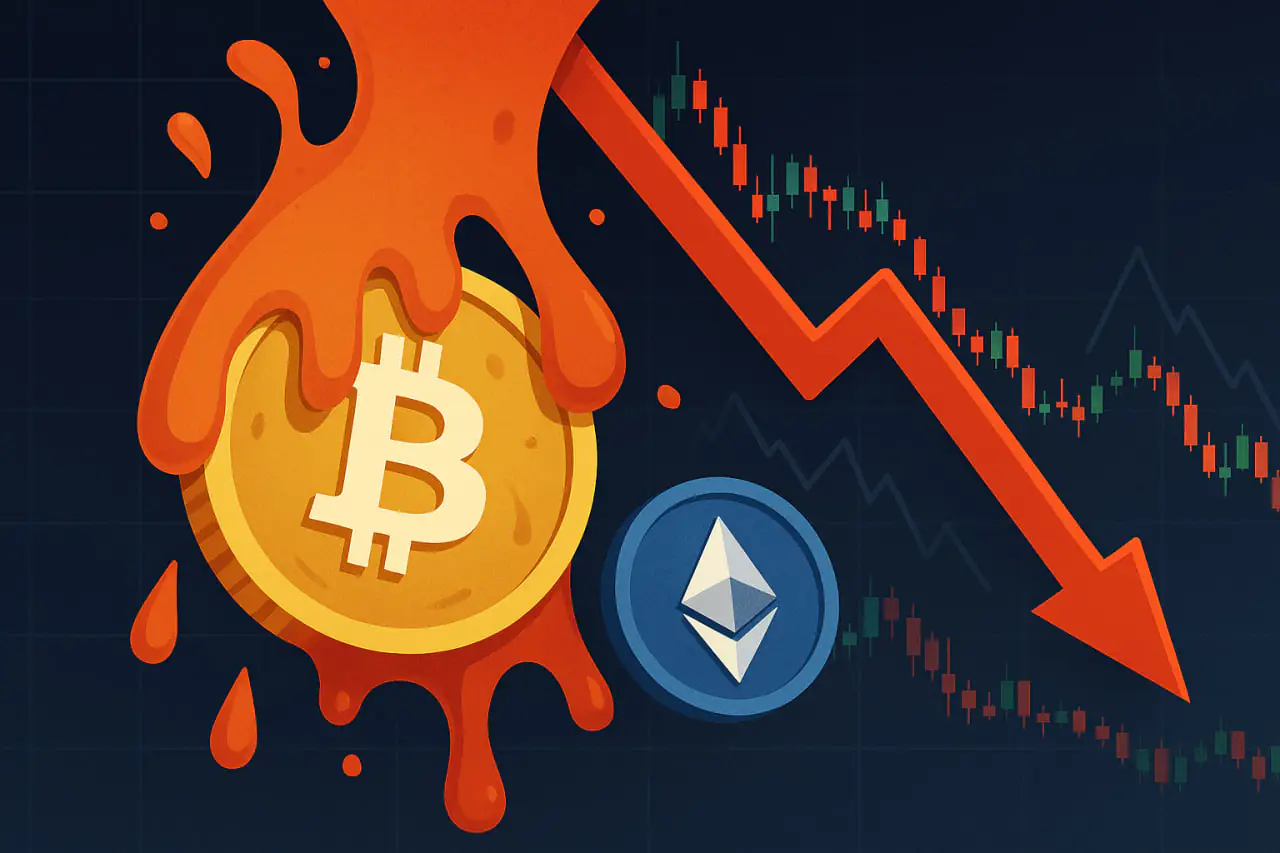
Bitcoin and Ethereum ETFs experienced significant net outflows totaling $90 million and $131 million respectively on March 19, signaling a reversal from earlier inflows and a cooling of institutional demand amid weakening price momentum. The broad-based outflows from major issuers like BlackRock and Fidelity suggest a shift in institutional sentiment, with investors becoming more reactive to short-term price movements and contributing to downside pressure. The alignment of negative ETF flows with consolidating spot prices for BTC and ETH indicates a potential loss of upward momentum, as the market relies less on ETF inflows to absorb selling pressure. While Solana ETFs saw minimal activity and XRP ETFs stalled, the overall trend of outflows from major crypto ETFs points to a cautious institutional stance, reflected in the 'extreme fear' sentiment and subdued Altcoin Season Index.
XRP is consolidating near a critical $1.45 support level, with increasing trading volume across major exchanges suggesting building momentum for a potential breakout. The asset's price action is tightening within a six-year compression pattern, indicating a significant expansion phase may be imminent, with analyst projections suggesting a potential $3-$8 range. Elevated trading volumes on platforms like Binance and Upbit, coupled with XRP recently surpassing BNB in market cap and strong regional demand in South Korea, signal growing institutional and retail interest.
Global finance leaders increasingly view digital asset solutions as essential for competitiveness, indicating a significant shift in institutional adoption trends. Stablecoins are evolving beyond payment tools to become a primary treasury management instrument, with 74% of finance leaders recognizing their potential to enhance cash-flow efficiency. Fintech firms are leading the charge in digital asset integration, with a notable portion accepting stablecoin payments and driving demand for comprehensive custody and orchestration services. The strong demand for integrated custody and compliance solutions highlights a maturing institutional market seeking reliable infrastructure partners for digital asset operations.

Ondo Finance's expansion to over 250 tokenized assets, including major institutional products like BlackRock's IBIT, signifies a maturing RWA market and increased adoption of tokenized securities. The integration of Ondo's offerings by major exchanges like Bitget and Binance, with Bitget capturing significant trading volume, highlights growing accessibility and demand for tokenized traditional assets within the crypto ecosystem. The RWA sector's substantial growth, reaching $27.35B in distributed value and demonstrating strong performance, positions tokenized stocks as a significant and rapidly expanding segment within digital finance.
XRP's potential $3 price target in April hinges on a confluence of catalysts including Fed rate decisions and the CLARITY Act, coupled with sustained low open interest, mirroring conditions that previously fueled a significant rally. While XRP's price action is tied to macroeconomic factors and regulatory developments, Remittix presents an alternative investment thesis focused on immediate revenue generation from its live payment infrastructure, aiming for substantial returns independent of XRP's speculative drivers. The article contrasts XRP's reliance on external catalysts and market momentum with Remittix's operational revenue model, suggesting that projects with tangible utility and early traction in large markets like cross-border payments offer a more predictable and potentially higher upside than established assets awaiting broader market shifts.
Signal context only. Validate with price action, liquidity, and risk limits before taking a position.
The World Gold Council's 'Gold as a Service' proposal aims to standardize tokenized gold infrastructure, potentially increasing fungibility and liquidity for assets like XAUT and PAXG by creating shared backend systems for custody, compliance, and redemption. Bybit's launch of a yield-bearing product on Tether Gold (XAUT) simultaneously addresses gold's traditional weakness of earning no yield, suggesting a market push to make tokenized gold more competitive with stablecoins. The WGC's initiative, backed by its success with the GLD ETF, signals a significant institutional effort to overhaul the tokenized gold market, aiming to bridge the gap between the $5 billion tokenized gold market and the $163 billion traditional gold ETF market. While the 'Gold as a Service' proposal is conceptual and requires industry adoption, it represents a potential structural upgrade for the tokenized gold sector, aiming to attract broader investor participation by simplifying trust and accessibility.
