
Navigating Crypto News

CoinFeather
Navigating Crypto News
Quick market read from this story
The SEC's ruling on 91 ETF applications, including those for XRP, SOL, LTC, and DOGE, signals a potential expansion of institutional access, which could drive capital towards projects with established products and verified presales.
Pepeto is positioned as a key beneficiary of increased institutional interest, with its upcoming Binance listing and projected 100x-300x returns, aiming to capture retail investors seeking significant gains beyond percentage-based returns.
While DOGE and LINK are mentioned as potentially benefiting from broader market trends and infrastructure, the article emphasizes Pepeto's presale as the primary opportunity for substantial, multi-fold returns, contrasting it with the more modest gains expected from established assets.
Deep Dive
The cryptocurrency market is experiencing a significant shift as the SEC faces a deadline to rule on 91 pending crypto ETF applications, potentially opening the door for institutional capital into a wider range of digital assets. This development follows a recent joint SEC and CFTC ruling that classified 16 major tokens as digital commodities, unblocking the ETF pipeline. Meanwhile, the retail sector is actively seeking high-return opportunities, with the unified trading platform Pepeto emerging as a strong contender, having already attracted over $8 million in capital and anticipating a Binance listing with projections of 100x to 300x returns.
The SEC's decision on March 27th impacts applications for ETFs covering 24 different tokens, including prominent ones like XRP, Solana, Litecoin, and Dogecoin. This regulatory clarity is expected to drive institutional interest, benefiting projects with established products. Bitcoin is currently testing the $72,000 mark, with Ethereum's open interest at multi-month highs, indicating growing leverage and activity in the market.
Amidst the institutional influx, Pepeto is positioning itself as a key investment opportunity. The platform emphasizes capital protection with features like zero-fee trades on PepetoSwap, a cross-chain bridge, and a risk scorer for contract reviews. The project has undergone a SolidProof audit and is developed by a team including the creator of the original Pepe coin and a former Binance expert. Having raised over $8 million during a period of market fear, Pepeto offers a 193% APY staking reward. Analysts project significant returns, with current entry prices around $0.000000186, drawing parallels to early investments in SHIB that yielded substantial profits.
Dogecoin (DOGE) is trading around $0.91, closely following Bitcoin's price movements. Potential integrations could see it recover to $0.15, offering a 50% return over months. Chainlink (LINK) is priced at $8.92, holding above $9, with its oracle infrastructure supporting a potential recovery to $12, representing a roughly 30% gain.
The current market environment, marked by SEC ETF rulings and expanding institutional access, signals the beginning of a new cycle phase. Opportunities similar to those that enriched early investors in previous cycles are emerging. The Pepeto presale is presented as such an opportunity, with its upcoming Binance listing expected to convert presale gains into realized returns. The platform's official website remains the access point for this presale.
Source, catalyst, and sector overlap from the latest feed.
Macro investor Lawrence Lepard forecasts Bitcoin reaching $200,000, driven by the structural devaluation of the US dollar due to increased money printing and fiscal deficits. The Federal Reserve's return to quantitative easing, even at a gradual pace, is identified as a key catalyst for Lepard's bullish Bitcoin outlook, suggesting a potential acceleration of monetary expansion. Lepard positions Bitcoin as a superior store of value compared to gold in the current macroeconomic environment, citing its potential for greater upside and increasing institutional adoption. The analysis suggests a potential systemic risk within 12-18 months, where the US dollar's reserve status could be significantly challenged, prompting a flight to hard assets like Bitcoin.
Ripple CEO Brad Garlinghouse predicts the CLARITY Act will pass by the end of May 2026, signaling a potential shift towards regulatory clarity for digital assets in the US. The potential passage of the CLARITY Act, coupled with recent joint SEC/CFTC confirmations of certain assets as commodities, suggests a more favorable regulatory environment is developing for the US crypto market. Ripple's strategic positioning with its stablecoin RLUSD, focusing on payments infrastructure rather than yield, allows it to navigate the stablecoin yield debate with less direct conflict, potentially benefiting its market entry. Garlinghouse's confidence, based on recent meetings in Washington, implies that legislative progress on digital asset regulation is more imminent than previously perceived, which could unlock significant institutional interest and adoption.
Ripple's CEO disclosed substantial crypto holdings of $60-70 billion, excluding escrowed XRP, signaling significant financial strength and capacity for further ecosystem development and institutional offerings. The launch of Ripple's RLUSD stablecoin, driven by payments operations and post-SVB concerns, positions the company to capture institutional demand for compliant stable assets, potentially impacting the stablecoin market dynamics. Garlinghouse's commentary on market consolidation and regulatory clarity, referencing the GENIUS Act and SEC/CFTC alignment, suggests a maturing stablecoin landscape where established players like Ripple are poised to benefit from increased institutional adoption.
Litecoin is currently testing a critical support zone between $50 and $60, a level that has historically shown strong buyer interest and led to significant bounces. The current price action suggests a potential for a rally towards $100 if the $50-$60 support holds, with further upside targets at $150 and $200+ if bullish momentum builds. Failure to maintain support above the $50-$60 range would invalidate the bullish setup and could lead to a deeper correction phase for LTC.
Tron's integration with Anchorage Digital, a federally chartered U.S. crypto bank, provides institutional investors with a regulated pathway to access the network, potentially increasing demand and utility for TRX. The combination of institutional custody support and Tron's existing high transaction volume, particularly with USDT stablecoin flows, positions the network for significant growth in real-world blockchain usage and financial settlement. The announcement of a $1 billion TRON AI Fund signals a strategic push into the agentic economy, aiming to leverage the network's low-cost, predictable execution for automated financial flows, which could drive future adoption and innovation. TRX price is exhibiting a bullish reversal pattern with a potential breakout nearing the $0.3200 resistance level, supported by fundamental developments in institutional adoption and AI integration, suggesting near-term upside potential.
Cardano's Foundation approval of the budget framework and Orion Fund signals progress in governance and institutional integration, potentially boosting investor confidence despite ADA's current price weakness. The listing of Midnight's NIGHT token on CoinSpot and its partnership with Monument Bank for tokenizing deposits expands Cardano's ecosystem reach and highlights the growing interest in privacy solutions and RWA integration. ADA is testing a critical support zone between $0.249-$0.259; a failure to hold this level could signal further downside, while a bounce could lead to a test of the $0.547 resistance, indicating a key inflection point for near-term price action.
XRP is demonstrating rare strength against Bitcoin amidst a broader market downturn, potentially driven by anticipation of SEC ETF decisions, suggesting short-term uncorrelated price action is possible. Despite current resilience, XRP faces a significant technical risk of a -63% drawdown against BTC if it fails to hold key support levels, indicating a precarious bullish divergence. The upcoming SEC ETF deadline on March 27 is a key catalyst, with potential liquidity inflows offering temporary support to XRP, but the long-term bearish scenario for the XRP/BTC pair remains intact.
XRP ETFs are experiencing a significant decline in demand, with March potentially marking the first negative monthly net flow since their launch, indicating a shift in investor sentiment following initial hype. The underperformance of XRP ETFs coincides with a price drop below $1.40 and a broader crypto market downturn, suggesting that ETF flows are highly sensitive to underlying asset performance and overall market conditions. Despite recent outflows, cumulative inflows since launch remain substantial at $1.21 billion, suggesting that while short-term sentiment is bearish, longer-term holding positions may still be intact, warranting a 'watchlist' approach. The article suggests that a price recovery for XRP could reignite demand for its ETFs, implying that the current negative trend may be temporary and contingent on broader market and XRP-specific price action.
ONDO's price action is re-entering a historical accumulation zone, coinciding with increased whale transactions, suggesting potential smart money accumulation amidst widespread holder losses. The partnership between Franklin Templeton and Ondo to tokenize ETFs on-chain represents a significant validation of the RWA narrative and could drive substantial demand for ONDO as a gateway asset. While technicals show accumulation and a strong RWA narrative is emerging, ONDO's price faces immediate resistance at the 200-day EMA, with a clear catalyst needed to confirm a sustained upward trend beyond $0.46. The tokenization of traditional assets like ETFs by a $1.7T manager via Ondo signifies a maturing RWA sector, potentially attracting institutional capital and increasing the utility of ONDO within DeFi.
The listing of Cardano Midnight (NIGHT) on CoinSpot, Australia's leading crypto exchange, expands accessibility for a privacy-focused asset and signals growing demand for such solutions. Following its Binance listing, the CoinSpot addition could drive further adoption for NIGHT, potentially mirroring the 13% price surge observed previously. NIGHT's market capitalization nearing $1 billion and its current trading above the $0.045 support level suggest continued interest, though traders should monitor for potential breaches to $0.043.
Dogecoin faces significant selling pressure, with over $448 million in crypto liquidations impacting long positions, suggesting a vulnerable market sentiment. The $0.08 support level is critical for DOGE, as historical price action indicates this zone has previously halted declines and preceded significant rallies. Macroeconomic headwinds, including rising U.S. Treasury yields and a stronger dollar, are pressuring risk assets like Dogecoin, contributing to its year-to-date losses. A breakdown below the $0.08 support could lead to further downside towards $0.07, while holding this level may preserve the potential for a recovery pattern.
Shiba Inu's price is showing early recovery signs driven by increased whale accumulation and a growing holder base, suggesting a potential shift from its prolonged downtrend. Technical indicators and on-chain data, including rising holder numbers and declining exchange balances, support a bullish outlook, hinting at reduced selling pressure and potential price appreciation. Significant whale accumulation of SHIB tokens, coupled with ongoing token burns and a high percentage of long-term holders, indicates strong conviction and could fuel a near-term price breakout.
Bitcoin's drop to a monthly low below $66,000, coinciding with broader market downturns and geopolitical uncertainty, suggests increasing bearish sentiment among traders. The significant liquidation of over $500 million in crypto positions, predominantly long, indicates a sharp deleveraging event driven by the price decline. Major crypto-related stocks like MicroStrategy (MSTR) and BitMine Immersion Technologies (BMNR) hitting monthly lows alongside Bitcoin highlights the correlated risk between digital assets and their publicly traded counterparts. The shift in sentiment on prediction markets, with a 64% chance now favoring a drop to $55,000 over an increase to $84,000, signals a potential continuation of the downward trend in the short term.
Coinbase's aggressive promotion of prediction markets via notifications is drawing user criticism, raising concerns about the exchange's shift towards gambling-like activities. The controversy highlights potential conflicts between user trust in crypto trading and the exchange's monetization strategies, impacting brand perception. Regulatory scrutiny on prediction markets, coupled with user backlash, suggests potential headwinds for Coinbase's partnership with Kalshi and similar ventures.
Live Feed
Loading the broader stream in the same flow as the homepage feed.

Bitcoin's technical structure has deteriorated, with key support levels broken, suggesting a potential decline to $61,700 if macro pressures persist. Elevated Treasury yields and Middle East risk are creating a challenging macro backdrop, increasing the downside pressure on Bitcoin. Donald Trump's social media posts represent a significant political catalyst that could influence Bitcoin's price direction over the weekend, with de-escalation potentially leading to a relief rally and hardened rhetoric exacerbating losses. The market is currently trading based on the potential for further downside rather than rebuilding previous support, making $66,900 and $68,000 critical reclaim levels for any bullish recovery.
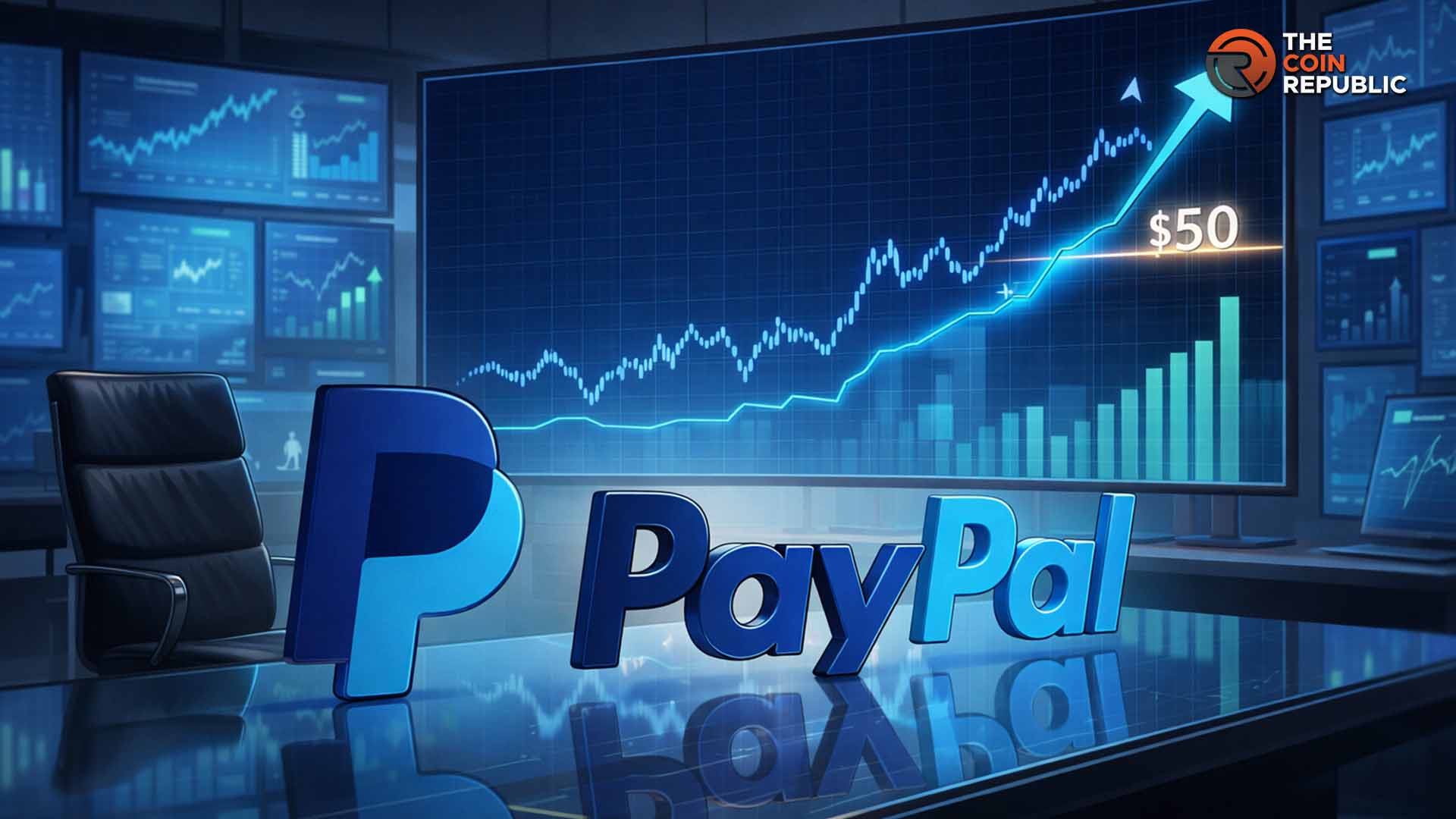
PayPal's stock shows a technical recovery with a potential path to $50 if key resistance at $45.71 is broken, indicating a short-term bullish outlook for the stock price. The significant global expansion of PYUSD to 70 markets, utilizing Solana as the default payment blockchain, represents a fundamental catalyst for PayPal's crypto integration and potential adoption. Despite positive technicals and PYUSD expansion, a rising put-call ratio suggests underlying trader caution, implying that the stock's recovery may face headwinds and downside risk below $43 support. The upcoming Q1 2026 earnings report under the new CEO is a critical juncture for PayPal, potentially validating its turnaround strategy and influencing future price action, especially given its historically cheap valuation.

A newly published working paper sponsored by the European Central Bank is drawing criticism for claiming that major decentralized finance protocols are heavily centralized in practice.

Intercontinental Exchange's final $600 million investment in Polymarket, totaling $1.6 billion, solidifies its commitment despite a competitive fundraising landscape and increasing regulatory headwinds. The substantial investment by ICE into Polymarket highlights institutional confidence in prediction markets, yet the sector faces significant regulatory pressure from potential insider trading bans. Polymarket's funding round, while significant, is overshadowed by rival Kalshi's larger valuation and fundraising, indicating a competitive dynamic within the prediction market space. The ongoing regulatory scrutiny, including proposed bans on insider trading and executive orders, poses a material risk to the operational and growth trajectory of prediction market platforms like Polymarket.
XRP is consolidating around its 200-week EMA, a historically strong support level, indicating a critical juncture that could lead to a significant price move. The $1.35 level is identified as a key pivot; a break above could target $1.74, while failure to hold the 200-week EMA might lead to a retest of support between $0.90-$0.70. Despite short-term price indecision and a weekly loss of 7.4%, XRP exhibits strong social momentum, leading major cryptocurrencies in positive mentions on X, suggesting sustained investor confidence. The current technical setup presents a textbook consolidation pattern, with strong long-term support, active social sentiment, and defined price levels suggesting a potential breakout is imminent.
Umbra's public privacy wallet launch on Solana, powered by Arcium's encrypted compute, signifies a significant advancement in on-chain privacy for retail and institutional users. The integration of compliance tools like viewing keys and geo-blocking within the privacy wallet addresses regulatory concerns, potentially easing adoption for businesses and institutions. The release of an SDK for developers to build native privacy applications on Solana, leveraging Arcium's infrastructure, could foster a new wave of privacy-centric dApps and enhance the Solana ecosystem. While the technology is promising, the actual market impact will depend on user adoption rates and the successful integration of the SDK by other projects, suggesting a 'watchlist' approach for immediate trading.
XRP's sustained positive sentiment on X, driven by its real-world utility in cross-border payments and AI-enhanced security on the XRP Ledger, suggests growing investor confidence beyond speculative hype. The mention of XRP in U.S. congressional hearings regarding payment readiness indicates increasing regulatory and policy attention, potentially signaling a more favorable or at least recognized environment for its adoption. Analysts observing an organic accumulation phase for XRP, without leverage, implies that sophisticated investors may be positioning for future price appreciation based on its fundamental strengths and utility.

California's executive order banning public officials from using insider information on prediction markets signals increased regulatory scrutiny on novel financial platforms. The move, mirroring federal legislative efforts, suggests a growing trend of applying traditional insider trading rules to emerging digital asset markets, potentially impacting platforms like Polymarket and Kalshi. While the order directly targets public officials, it highlights broader concerns about market integrity and the potential for exploitation in prediction markets, which could lead to further platform-level changes or regulatory actions.

David Sacks leaves office with wins for crypto infrastructure, while Bitcoin holders are still waiting David Sacks is out of the formal White House crypto czar role after exhausting the 130-day limit attached to his special government employee status. The change closes the clearest window for a scorecard. The record is substantial, yet it falls […] The post White House crypto czar leaves office after securing crypto wins for banks and institutions instead of Bitcoin appeared first on CryptoSlate.

Mastercard's $1.8 billion acquisition of BVNK, a stablecoin settlement infrastructure provider, signals a significant shift towards integrating regulated digital asset rails into traditional payments, driven by the high cost and inefficiency of existing correspondent banking systems. The substantial premium paid for BVNK highlights the value placed on its multi-jurisdictional licensing and regulatory compliance, indicating that for legacy finance, regulatory approval is the primary product in the stablecoin infrastructure space, not just the technology itself. This acquisition is poised to significantly impact cross-border payments, particularly remittances to emerging markets, by potentially reducing fees from 6-8% to 1-2% through the elimination of intermediaries, thereby improving financial access for unbanked populations. The move by Mastercard, alongside potential actions from Visa and Stripe's acquisition of Bridge, suggests a race among major payment networks to establish stablecoin settlement strategies, intensifying competition between regulated infrastructure and faster, but potentially fragile, unregulated alternatives.

David Sacks' departure from the crypto czar role creates uncertainty regarding the future of key crypto initiatives like the Clarity Act and Strategic Bitcoin Reserve, potentially causing delays. The transition of David Sacks to a broader tech advisory role at PCAST, alongside prominent tech leaders, signals a potential shift in US technology policy focus away from solely crypto. The absence of a designated crypto czar may lead to a leadership vacuum, impacting the pace and execution of crypto-related policy development within the administration.
Geopolitical tensions and rising oil prices are driving traditional markets to six-month lows, creating a risk-off environment that could spill over into crypto if sustained. The S&P 500 and Nasdaq's prolonged decline, now on track for its fifth consecutive weekly loss, signals a shift from growth focus to risk aversion, impacting investor sentiment across asset classes. Uncertainty surrounding potential escalation in the Middle East and its impact on global energy supply chains is the primary driver of current market volatility, making it difficult to predict a near-term stock market bottom.
Signal context only. Validate with price action, liquidity, and risk limits before taking a position.
