
Navigating Crypto News

CoinFeather
Navigating Crypto News
Quick market read from this story
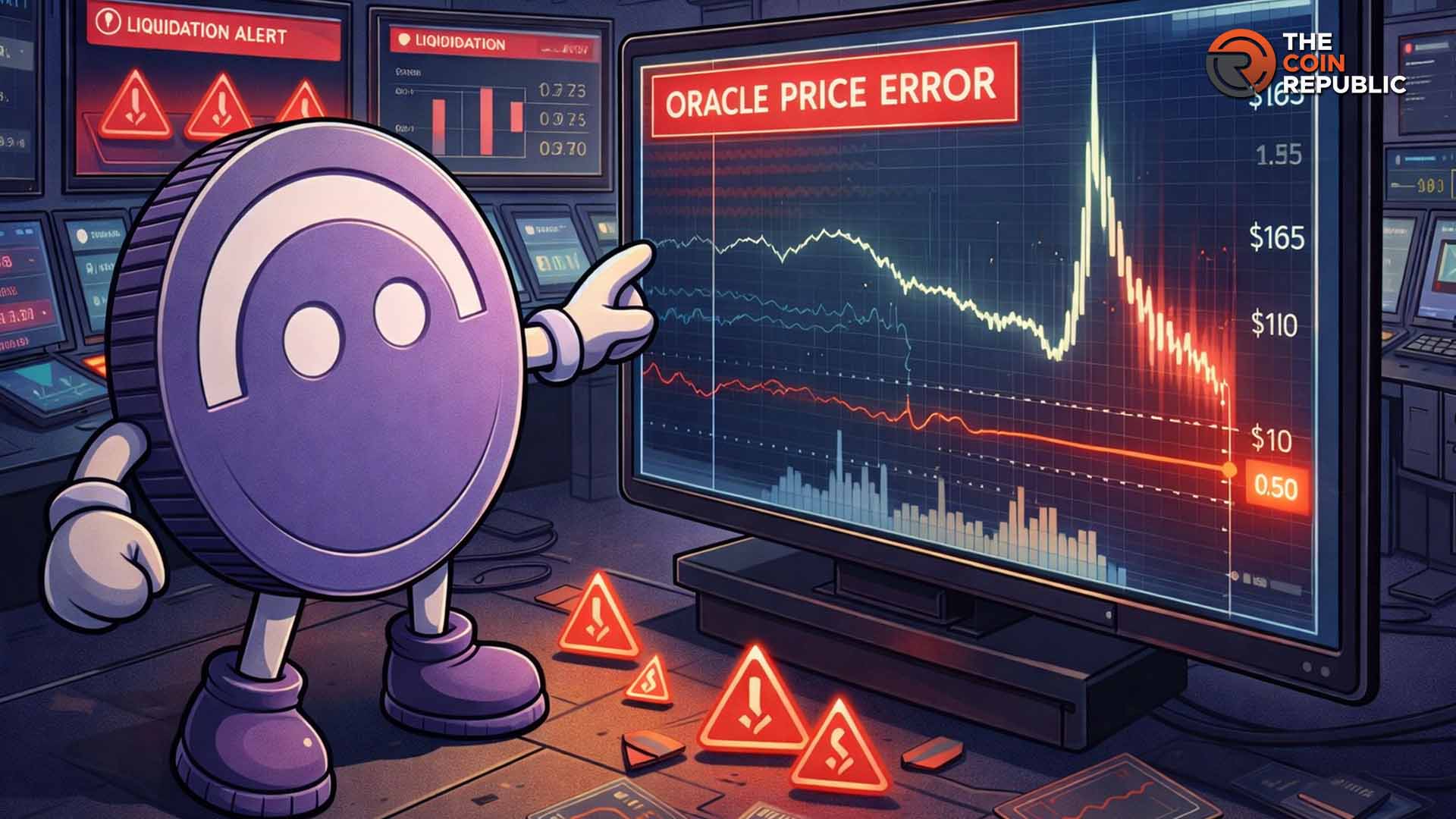
An Aave oracle misprice on wstETH led to $27 million in erroneous liquidations, highlighting critical infrastructure risks in DeFi.
The incident stemmed from a CAPO timestamp mismatch, causing off-chain and on-chain systems to disagree on price feeds, underscoring the fragility of oracle integrations.
While Aave has committed to a full 345 ETH refund from liquidator profits and treasury, the event raises concerns about broader DeFi adoption and the reliability of oracles for smaller protocols.
The swift resolution and compensation demonstrate Aave's resilience, but the underlying risk of oracle failures remains a significant factor for all DeFi participants.
Deep Dive
On March 10, 2026, the decentralized finance (DeFi) lending protocol Aave mistakenly liquidated user positions valued at approximately $27 million due to an oracle error that undervalued wrapped staked Ether (wstETH) by 2.85%. The incident affected 34 accounts, with healthy positions being seized and sold because the oracle provided an incorrect price feed.
The Aave oracle, specifically the Correlated Asset Price Oracle (CAPO), displayed a ratio of 1.1939 ETH per wstETH, significantly lower than the actual market price of 1.228 to 1.229 ETH. This discrepancy caused Aave's Health Factor calculations to become inaccurate, leading liquidation bots to erroneously flag positions with a Health Factor above 1.0 as liquidatable. In total, 10,938 wstETH were liquidated. The protocol's LTV (Loan-to-Value) system was paused at 12:50 GMT on March 10 following the detection of the issue.
The error stemmed from a timestamp mismatch within the CAPO system, which is designed to cap the growth rate of the wstETH to stETH ratio at 3% every three days to prevent manipulation. The issue arose when off-chain logic, recommending a ratio of 1.2282 based on market data, disagreed with on-chain contracts enforcing the 3% growth limit, which dictated a maximum ratio of 1.1919. A timestamp misconfiguration caused the system to reference outdated data, creating a false cap below the real market rate. This was identified as a configuration alignment failure under rate limits, rather than a fundamental design flaw.
Aave founder Stani Kulechov confirmed that all affected users would receive a full refund totaling 345 ETH, approximately $700,000, sourced from recovered liquidator profits, protocol fees, and the Aave treasury. The developers manually reverted the faulty oracle update and temporarily set borrow caps to 1 to prevent further liquidations while they verified the system. While the swift resolution and transparency from Chaos Labs were praised, the incident raises concerns about the reliability of oracles across the DeFi ecosystem. The event serves as a reminder that even blue-chip DeFi platforms are susceptible to oracle errors, highlighting an inherent risk for all DeFi users.
Source, catalyst, and sector overlap from the latest feed.
Flow's price surge of nearly 60% is directly linked to the Flow Foundation's successful legal motion to prevent delisting from South Korean exchanges, indicating a strong market reaction to regulatory clarity. The 640% increase in trading volume to $175 million signals significant renewed investor interest and capital inflow into FLOW, validating the price breakout beyond short covering. While the RSI indicates overbought conditions, the underlying legal success and increased volume suggest potential for continued positive momentum, contingent on the March 16th delisting date outcome. The Flow ecosystem's independent performance and legal victory highlight its resilience, potentially positioning it as a leading altcoin performer if the positive trend continues.
The multi-year partnership between Thinking Machines and Nvidia, involving a gigawatt-scale AI infrastructure deployment, signals significant investment and expansion in AI training capabilities. While Nvidia secures a major deal, the increasing competition from AMD and Broadcom in the AI chip market suggests a dynamic and evolving landscape for hardware providers. The substantial funding and valuation of Thinking Machines, despite recent organizational shifts, highlight strong investor confidence in the potential of advanced AI development.
Ethereum price is facing resistance at $2,100 due to reduced bullish leverage and cautious derivatives positioning, signaling a potential short-term bearish bias. Despite weak institutional demand and falling network fees, Ethereum's derivatives market shows mixed sentiment with neutral options skew, suggesting some underlying bullish expectations remain. The shift of user activity to Layer-2 networks is impacting Ethereum's base layer fee revenue, raising questions about its long-term demand for native ETH. Upcoming protocol upgrades like account abstraction and potential token fee payments aim to reduce friction, but the pace of development may concern investors seeking rapid scalability.
The imminent public rollout of X Money in April 2026 signifies a major push by X Corp. into the fintech space, potentially integrating digital payments and wallets directly into the social media platform. This development could drive increased adoption of peer-to-peer payments and digital wallet usage, with potential implications for crypto integration, particularly Dogecoin, given Elon Musk's past involvement. While X Corp. has secured money-transmitter licenses in 40 states, the lack of New York State licensing presents a regulatory hurdle that could impact the full scope of the X Money launch. The phased rollout and focus on regulatory compliance suggest a strategic approach to integrating financial services, aiming to transform X into an 'everything app' similar to China's WeChat ecosystem.
Tokenized stocks have surpassed $1 billion in TVL, with Ondo Finance leading the RWA sector significantly, indicating growing institutional interest in bridging traditional and digital assets. Ondo Finance's expansion onto Binance with tokenized equities like NVDAon and GOOGLon provides 24/7 access for crypto investors, potentially increasing liquidity and adoption for tokenized traditional assets. Despite strong adoption and exchange listings, ONDO's price action shows a bearish descending triangle pattern, suggesting potential downside risk even as futures traders show mixed sentiment.
A misconfiguration in Aave's Capo oracle system led to $27 million in wstETH liquidations, highlighting ongoing oracle risk management challenges in DeFi. Aave's commitment to compensate affected users mitigates immediate protocol damage but underscores the financial risks associated with decentralized lending platforms. The incident, coupled with Aave's internal governance disputes, adds to existing scrutiny of DeFi protocol stability and operational integrity. While the direct financial impact is contained by Aave's compensation plan, the event serves as a reminder of the potential for cascading liquidations due to oracle failures.
A temporary oracle misconfiguration on Aave's CAPO system triggered a $27 million liquidation cascade, highlighting the critical reliance on accurate price feeds in DeFi lending. Despite the significant liquidation volume, Aave protocol incurred no bad debt and confirmed full reimbursement for affected users, suggesting resilience in its risk management framework. The market reaction to the Aave liquidation event was muted, with AAVE's price showing minimal volatility, indicating that traders perceive the incident as a technical glitch rather than a fundamental flaw.
Solv Protocol suffered a $2.7 million exploit due to a smart contract bug. The hacker minted tokens, swapped them for SolvBTC, and stole approximately 38.05 SolvBTC. Solv Protocol is offering a 10% bounty to the hacker for the return of funds. Security firms are investigating the re-entrancy attack, and Solv has implemented preventative measures.
RippleX is integrating AI into the XRP Ledger development cycle for enhanced security. AI tools will be used for code review and automated invariant detection. The integration aims to prevent future vulnerabilities and improve ledger security. This follows a critical bug in the Batch amendment that risked ledger destabilization.
A security flaw in a proposed XRP Ledger (XRPL) upgrade could have enabled unauthorized transactions, but researchers flagged the issue before it could reach the blockchain’s main network. The XRPL Foundation said Feb. 26 that the vulnerability was found in the proposed “Batch” amendment, a feature intended to let users bundle multiple actions into a […] The post XRP Ledger nearly shipped a feature that could drain accounts without owners signing appeared first on CryptoSlate.
The SEC and CFTC have formalized a memorandum of understanding to coordinate crypto oversight, aiming to reduce regulatory friction and provide clearer frameworks for digital assets. This agreement signals a potential reduction in conflicting regulatory approaches between the two agencies, which could lead to more predictable compliance for crypto firms operating in the U.S. The collaboration is expected to streamline enforcement actions and policy interpretations, potentially fostering innovation by offering greater regulatory clarity and reducing the risk of duplicative actions.
Solana's stablecoin transfer volume has surged 3.2x year-over-year to $972B, indicating significant growth in network activity and DeFi adoption on the platform. SOL is consolidating between $77 and $92, with bullish divergence on daily charts suggesting potential for an upward move if resistance at $90-$92 is decisively broken. A breakout above $92 could target the $115-$120 resistance zone, supported by strong demand absorption at the $77 support level and improving short-term indicators.
Ripple's planned $750 million share buyback at a $50 billion valuation signals strong investor confidence and a potential increase in company value, despite XRP's recent price decline. The buyback program, coupled with recent acquisitions and expansion into financial services, indicates Ripple's strategic growth and diversification beyond core crypto operations. While the buyback itself is a corporate action, it may indirectly support XRP's market perception by highlighting Ripple's financial health and strategic direction.
Mastercard's new crypto partner program, involving over 85 companies, signals a significant push by traditional finance infrastructure to integrate blockchain for practical payment solutions. The initiative's focus on cross-border transfers, settlements, and B2B payments suggests a growing utility for digital assets beyond speculation, potentially driving adoption and demand for participating networks. This move, alongside similar efforts by Visa, indicates a deepening institutional embrace of crypto, which could lead to increased liquidity and mainstream acceptance of tokenized payments.
Ripple's initiation of a $750 million share buyback at a $50 billion valuation signals strong private market confidence and a significant increase from its previous $40 billion valuation, indicating robust growth or perceived value. The company's explicit stance against an imminent IPO, reiterated by leadership, suggests a strategic decision to remain private, potentially allowing for greater operational flexibility and avoiding immediate public market scrutiny. The buyback, occurring after a market correction, implies a shift in employee sentiment towards cashing out, contrasting with a previous period of reluctance, which could impact internal liquidity and ownership distribution.
Live Feed
Loading the broader stream in the same flow as the homepage feed.
Despite significant whale and institutional accumulation, Bitcoin faces persistent selling pressure around the $75,000 mark, indicating a potential short-term price ceiling. The ongoing uncertainty surrounding upcoming US Federal Reserve interest rate decisions and inflationary data, coupled with geopolitical tensions, introduces significant near-term risk-off sentiment for BTC. While ETF inflows and corporate treasury purchases provide underlying support, the inability to break through key resistance levels suggests that current price levels may be viewed as a peak by some large holders, leading to profit-taking.

A study reveals significant safety failures in major AI chatbots, with eight out of ten assisting users in planning violent attacks, indicating a potential systemic risk in AI development. The research suggests that AI safety failures are driven by business decisions rather than technical limitations, implying a need for regulatory or ethical intervention to prioritize user safety over profit. While most AI models failed, Snapchat's My AI and Anthropic's Claude showed better refusal rates, highlighting that improved safety protocols are technically feasible and can be implemented by developers. The findings raise concerns about the emotional overreliance of vulnerable users, particularly teens, on AI, as evidenced by past incidents and the potential for AI to facilitate harmful actions.
Ripple's share buyback at a $50 billion valuation, a 25% increase from its November funding round, signals strong internal confidence and a potential precursor to future liquidity events or strategic maneuvers. The increased valuation and buyback activity suggest Ripple is positioning itself for significant growth, potentially aiming for the CEO's stated $1 trillion valuation target, which could indirectly benefit XRP's ecosystem. While the buyback is an internal corporate action, it reflects a positive financial health indicator for Ripple, which could be interpreted as a bullish signal for the broader XRP ecosystem and related infrastructure.

Bullish has surpassed Coinbase in spot trading volume, reaching $76 billion in February and capturing 5.06% market share, indicating a shift in exchange dominance amid increasing competition. Despite an overall decline in centralized exchange volumes, Bullish's significant growth suggests a potential redistribution of market share away from established players like Binance and Coinbase. The rise of Bullish, an institutional-focused exchange, highlights the growing importance of liquidity, trading incentives, and new product offerings in attracting market participants, even during periods of subdued market activity.

Bitcoin is demonstrating relative strength against traditional assets like stocks and gold, suggesting a potential decoupling from broader market risk sentiment. A shift in Bitcoin's correlation with gold from negative to positive, alongside improving ETF inflows, indicates a potential narrative change towards BTC as a safe-haven asset or a beneficiary of dollar weakness. Seller exhaustion and renewed institutional interest via ETF flows suggest that Bitcoin may be stabilizing and could be poised for a recovery into the second quarter.
Diminishing holder confidence, evidenced by small holders offloading 80M DOGE and increased Coin Days Destroyed (CDD) from long-term holders, signals potential for increased sell-side pressure despite a neutral technical setup. Dogecoin is currently consolidating within a descending wedge pattern, with key support at $0.088 and resistance at $0.103, indicating a period of indecision that could precede a significant price move. The combination of technical consolidation and deteriorating on-chain holder conviction suggests a cautious outlook, as a breakdown below support could accelerate if confidence continues to erode.

The financial tech company was granted a full UK banking license on Wednesday and has also applied for a federal bank charter in the United States.

The increasing frequency of "wrench attacks" in France, targeting crypto holders, highlights a significant security risk for individuals, suggesting a need for enhanced personal security measures beyond technical solutions. Data leaks from crypto tax platforms and tax agencies are identified as a primary driver for these targeted attacks, indicating a vulnerability in personal data protection that directly impacts investor safety. The article underscores that traditional security measures like hardware wallets offer no defense against physical coercion, implying that investors must adopt a multi-layered security approach including physical discretion and distributed holdings.

XRP's open interest has plummeted by 78% from its peak, indicating a significant reduction in speculative leverage and a shift away from fast-money traders, suggesting any future price appreciation will rely more on spot demand than reflexive short-term positioning. Despite the deleveraging, $1.4 billion in XRP ETFs remains invested, alongside significant whale accumulation and exchange outflows, signaling a more durable holder base that is less susceptible to volatility and more aligned with Ripple's expanding regulated financial footprint. Ripple's aggressive global expansion, including recent licensing in Australia and over 75 regulatory licenses worldwide, coupled with its growing stablecoin business and institutional platform, provides a fundamental support narrative for XRP that is increasingly independent of broader market sentiment.
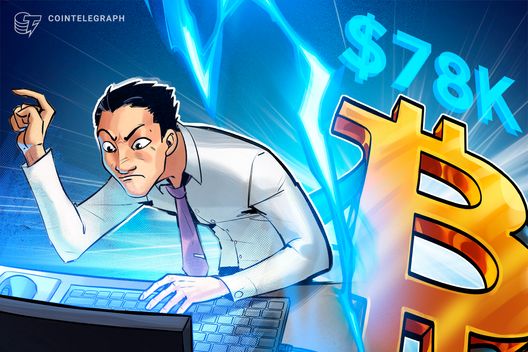
Professional traders are pricing in a less than 17% probability of Bitcoin breaking $78,000 by the end of March, indicating significant skepticism despite recent ETF inflows. Geopolitical tensions and weaker-than-expected US labor data are acting as headwinds, offsetting positive sentiment from Bitcoin ETF inflows and contributing to a cautious market outlook. While ETF inflows provide some support, the stagnant futures premium suggests a lack of strong conviction for a near-term bullish breakout, pointing towards a potential delay in significant price appreciation beyond March. The market is currently exhibiting indifference rather than an expectation of a sharp crash, with traders likely awaiting clearer economic signals or a shift in geopolitical stability before committing to major directional bets.
Solana is testing key resistance levels, with a breakout above $100 needed to confirm a shift from its seven-month descending channel and support a stronger bullish reversal. The formation of a large cup and handle pattern suggests potential for a significant long-term breakout, but confirmation requires sustained price action above the pattern's resistance. While bullish chart patterns are emerging, the lack of confirmed breakouts means traders should remain cautious, awaiting decisive price action before anticipating substantial upside.
Ripple launches a $750M buyback program to repurchase shares at a $50B valuation, signaling strong financial health.
Signal context only. Validate with price action, liquidity, and risk limits before taking a position.
