
Navigating Crypto News

CoinFeather
Navigating Crypto News

Quick market read from this story
North Korean IT workers are generating significant revenue, estimated at $1 million per month, by exploiting IT job markets and potentially engaging in hacking activities, highlighting ongoing state-sponsored threats to the crypto industry.
The discovery of a shared, weak password "123456" for coordinating crypto payments underscores operational vulnerabilities that could be exploited by security researchers or malicious actors.
While these actors are generating substantial funds, they are noted as less sophisticated than other North Korean groups, suggesting a tiered threat landscape within state-sponsored cybercrime.
The conversion of crypto earnings to fiat via Chinese bank accounts and the use of VPNs indicate established methods for laundering illicit funds and evading sanctions.
Source, catalyst, and sector overlap from the latest feed.
Binance co-founder CZ envisions a future where crypto is seamlessly integrated into daily life, akin to the internet today, suggesting a potential shift from speculative discussion to practical utility within five years. The optimistic outlook for crypto adoption is supported by industry predictions and forecasts for significant market growth and stablecoin volume, indicating a potential for increased institutional and retail integration. AI is seen as a potential accelerant for blockchain development and adoption, with CZ highlighting its role in increasing coding speed and enabling AI agents to utilize crypto, suggesting a synergistic growth path for both technologies. Countries that embrace both AI and blockchain are predicted to gain a significant advantage, underscoring the strategic importance of these technologies for national economic development and competitiveness.
Live Feed
Loading the broader stream in the same flow as the homepage feed.

The approvals by the Hong Kong Monetary Authority, the territory's central bank, mark the first batch under the Stablecoins Ordinance, which took effect in August 2025.

Bitcoin's recent 7.5% rally to $72,000, influenced by geopolitical de-escalation, is characterized as a bear market bounce by Glassnode, with a sustained recovery contingent on reclaiming the $81,600 Short-Term Holder Cost Basis. Despite a temporary reduction in volatility and positive ETF flows, underlying market participation remains thin, indicated by weak spot volumes and defensive options positioning, suggesting the current rally faces structural resistance from 'trapped holders'. A decisive reclaim of $81,600, coupled with cooling long-term holder realized losses, would signal a genuine regime shift, while failure to hold support levels below $78,000 would confirm the bounce as a mere volatility event within the ongoing bear phase.

The post Crypto News: Bull Signals Keep Stacking, And One Presale Has Every Trader Watching In 2026 appeared first on Coinpedia Fintech News Crypto news this week confirms the next leg up is closer than most wallets think, with CME Group filing to launch SUI futures on May 4 and Arthur Hayes declaring Hyperliquid the only token his fund is buying. The sharpest traders are front running the bull cycle instead of waiting for proof. The last run …

The stock has plunged roughly 99% from its May 2025 peak as pressure builds on the bitcoin treasury firm.
Solana charts show a possible breakdown below the 50 day SMA or a breakout retest that could drive recovery.

A hotter-than-expected US CPI report, driven by energy prices, could pressure Bitcoin towards the $68,000-$69,000 support levels by strengthening stagflation concerns. The market is sensitive to the CPI outcome, with a 'hot' print likely to be bearish for risk assets like Bitcoin, while 'cool' inflation could trigger a relief rally. Geopolitical uncertainty combined with rising inflation presents a challenging macro environment, limiting the Federal Reserve's options and potentially reducing consumer spending. Bitcoin's sensitivity to macro data suggests a potential downside liquidity sweep is more probable in the near term, especially if inflation remains elevated.
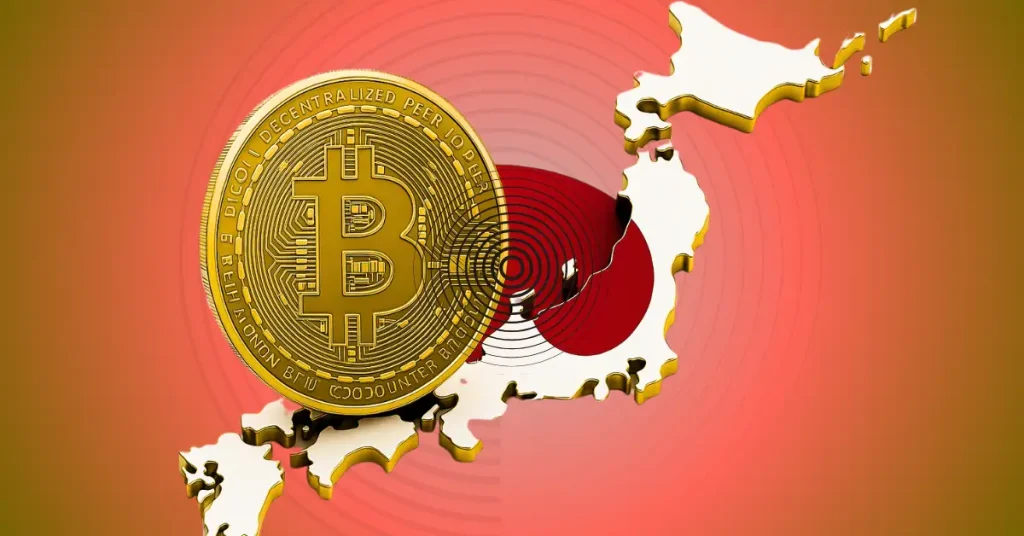
The post Japan Approves Bill to Classify Crypto as Financial Product appeared first on Coinpedia Fintech News Japan’s cabinet approved a bill to classify cryptocurrencies as financial products, moving Bitcoin and Ethereum under securities-style regulation. The change shifts crypto from payment instruments to investment assets, introduces insider trading bans, and aims to boost institutional participation in the world’s fifth-largest economy. Japan Officially Reclassifies Crypto Under Financial Instruments For years, Japan treated crypto …
DASH price is approaching a critical resistance zone around $40-$41, which aligns with the upper boundary of a descending channel, suggesting a potential continuation of the downtrend unless a decisive breakout occurs. Despite a recent 9-10% surge and improved momentum indicators like RSI and CMF, the broader bearish structure remains intact, indicating that the current rally may be a lower high setup rather than a confirmed trend reversal. A sustained move above $50-$52 is required to invalidate the current bearish structure and signal a significant trend change, making this level the key focus for traders monitoring DASH.
Ethereum is at a critical juncture, with a short-term falling wedge pattern suggesting a potential breakout, but facing significant resistance at the $2,402 level which must be cleared to invalidate the broader bearish structure. The current price action is interpreted as a corrective wave within a larger bearish trend, meaning a breakout above $2,402 is required to signal a potential local bottom and a shift in momentum. Traders should monitor the $2,402 resistance level closely, as a failure to break through it could lead to a continuation of the bearish trend, with potential downside targets identified around $1,972-$1,818 and lower.

Monero's price action is exhibiting characteristics of a Wyckoff accumulation pattern, suggesting that prolonged consolidation may be nearing completion and setting the stage for a potential upward breakout. On-chain and derivatives data indicate a shift in market sentiment, with selling pressure being absorbed and early signs of demand returning, which could precede a momentum-driven price expansion. Traders should monitor the $380-$400 supply zone for a potential breakout target, while the $300-$330 support zone remains critical for maintaining the bullish accumulation structure.

XRP is consolidating near $1.34, indicating a period of price stability with defined short-term resistance at $1.42 and support at $1.28, suggesting cautious trading sentiment. Despite current consolidation, optimism is building around XRP due to growing whale accumulation and expectations of increased institutional adoption, which could signal potential future upside. Long-term price predictions for XRP, including reaching $1,000, are gaining traction, though these are highly speculative and should be viewed with caution by traders focused on near-term price action.

The CLARITY Act's potential passage in the Senate represents a significant regulatory development, aiming to provide clear frameworks for digital assets and potentially curb innovation migration offshore. Urgency from Treasury, SEC, and CFTC officials suggests a strong push for legislative action, indicating a desire to establish regulatory clarity for the crypto industry within the U.S. The proposed division of regulatory authority between the SEC and CFTC for different token types could reshape the landscape for digital asset classification and compliance.
Bittensor's TAO experienced a significant 20-27% price drop, erasing $900 million in market cap due to a major contributor's exit and accusations of centralized control, impacting its decentralized AI narrative. The sell-off was exacerbated by a large dump of approximately 37,000 TAO tokens and triggered over $9 million in long liquidations, signaling a shift from a bullish trend to potential breakdown. TAO is currently testing critical support around the 50-day moving average near $250; a hold could lead to a rebound, while a break below would signal a deeper correction towards $200-$220. The core development involves a fundamental shock from Covenant AI's departure and accusations against Bittensor's leadership, raising questions about ecosystem stability and the project's core decentralized AI thesis.

Japan's reclassification of crypto as a financial instrument under FIEA, coupled with a reduced 20% tax rate on 105 approved tokens, significantly enhances the attractiveness of regulated Japanese exchanges for both retail and institutional investors. The introduction of insider trading prohibitions for crypto in Japan creates a more secure environment, paving the way for traditional financial institutions like Nomura and SBI to launch crypto ETF products and further integrate digital assets. The establishment of a two-tier tax system, favoring 105 vetted tokens while leaving others at higher rates, creates a strong incentive for traders to utilize licensed Japanese exchanges, potentially consolidating liquidity and driving adoption of approved assets. The new regulatory framework in Japan, aligning with EU's MiCA, positions the country as a more credible jurisdiction for digital assets, potentially attracting cross-border institutional flows and increasing the international standing of Japanese-listed tokens.

Telegram CEO Pavel Durov alleges WhatsApp's end-to-end encryption is a "consumer fraud," claiming Meta employees and third parties can access user messages, which could erode trust in centralized communication platforms. The allegations against WhatsApp's privacy protocols, if substantiated, could drive users towards more privacy-focused alternatives like Telegram, potentially impacting user acquisition for both platforms. While the core news focuses on messaging app privacy, Durov's concurrent announcement of a significant performance upgrade to The Open Network (TON) blockchain suggests a strategic effort to highlight Telegram's ecosystem strengths.
Signal context only. Validate with price action, liquidity, and risk limits before taking a position.
Japan's reclassification of crypto as a financial instrument aligns it with traditional securities, signaling a move towards greater regulatory integration and investor protection. The enforcement of insider trading bans and annual disclosure mandates for issuers suggests a maturing regulatory environment, potentially increasing institutional confidence in the Japanese market. The planned legalization of crypto ETFs by 2028, coupled with reduced tax rates, indicates a strategic effort by Japan to foster mainstream adoption and attract capital into the digital asset space.
