
Navigating Crypto News

CoinFeather
Navigating Crypto News
Quick market read from this story
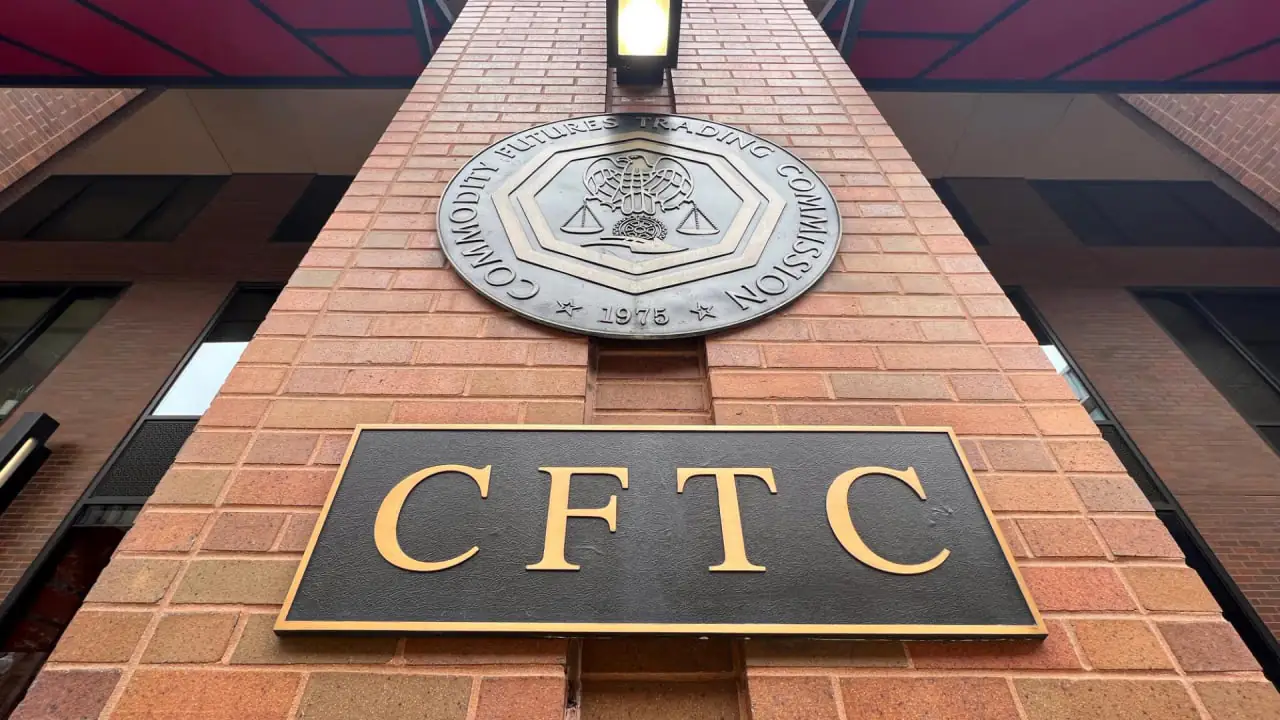
The CFTC's permanent ban on KuCoin for US users, coupled with a $500,000 civil penalty and prior $297 million criminal fines, highlights the regulatory risks for centralized exchanges operating without proper registration in the US.
Binance's launch of energy commodity perpetuals, alongside similar moves by Bybit, MEXC, and OKX, signifies a growing trend of crypto exchanges expanding into traditional asset derivatives, offering 24/7 trading and leveraging volatility in markets like oil.
The contrast between KuCoin's regulatory penalty and Hyperliquid's record oil contract volume on a decentralized platform raises critical questions about future crypto enforcement, particularly concerning decentralized derivatives and their regulatory oversight.
Deep Dive
A US federal court has issued a consent order permanently prohibiting the crypto exchange KuCoin, operated by Peken Global Limited, from serving American users. This resolution stems from a civil enforcement action brought by the Commodity Futures Trading Commission (CFTC). The order mandates that KuCoin implement robust geographic restrictions and IP blocking to prevent access by US customers, transitioning from temporary to permanent restrictions.
KuCoin was fined $500,000 by the CFTC for operating without registration, a penalty significantly less than the $110 million in fees it generated from US users. The court did not require disgorgement of these fees, acknowledging KuCoin's cooperation and prior payments in a parallel criminal case. In January 2025, KuCoin pleaded guilty in the criminal case, agreeing to approximately $297 million in fines and forfeitures for operating an unlicensed money transmitting business. The CFTC also dropped claims against affiliated entities, focusing the ban solely on Peken Global. Additionally, Dubai's Virtual Assets Regulatory Authority ordered KuCoin-branded entities to cease all virtual asset activities within the emirate due to unlicensed operations.
On April 1, Binance launched three new USDT-margined perpetual contracts for energy commodities: WTI crude oil (CLUSDT), Brent crude oil (BZUSDT), and natural gas (NATGASUSDT). These contracts offer 24/7 trading, no physical delivery, and up to 100x leverage. CLUSDT and BZUSDT represent 1,000 barrels of oil each, while NATGASUSDT represents 10,000 MMBtu of natural gas. The launch coincides with significant volatility in the energy market, with crude oil prices rising due to geopolitical tensions. Binance's move follows its January 2026 launch of gold and silver perpetual contracts, marking the third real-world asset class integrated into its derivatives platform within three months.
The trend of crypto platforms expanding into commodities trading has been growing throughout March. Bybit launched its crude oil perpetual contract on March 24 with up to 50x leverage. MEXC listed natural gas perpetual futures on March 18, experiencing a surge in trading volume. OKX introduced crude oil and copper contracts on March 4 and formally reclassified these assets under a new “Commodities” category. The decentralized platform Hyperliquid has become a primary venue for 24/7 oil trading following its HIP-3 upgrade. As of March 26, commodity perpetuals accounted for over 67% of Hyperliquid's total trading volume, with open interest in oil contracts reaching a record $1.43 billion that week.
The CFTC's action against KuCoin represents a clear resolution for a centralized exchange with identifiable operators and documented revenue from US users. However, the rise of decentralized platforms like Hyperliquid, which operate via smart contracts without central operators, presents a new regulatory challenge. While the CFTC effectively closed KuCoin's US operations, the question of how regulators will address decentralized commodity trading platforms remains unanswered. This divergence highlights the evolving landscape of crypto enforcement, with decentralized platforms handling significant trading volumes, such as Hyperliquid's $1.43 billion in oil open interest, while centralized exchanges face traditional enforcement actions.
Source, catalyst, and sector overlap from the latest feed.
Bitcoin and Ethereum ETFs saw a positive net inflow on March 30th, marking a reversal after several days of outflows, suggesting that the most aggressive selling pressure may have subsided for now. While Bitcoin ETFs experienced a modest inflow, the overall trend for March was negative, indicating that institutional investors used the mid-March rally to reduce exposure. Ethereum ETFs attracted small inflows, but institutional accumulation by entities like Bitmine, which accelerated holdings during a market downturn, provides a contrasting signal of conviction. Solana and XRP ETFs continue to struggle, with outflows and inactivity suggesting a lack of institutional traction compared to Bitcoin and Ethereum products.
The introduction of the "Mined in America Act" signals a significant shift in U.S. policy towards domesticating Bitcoin mining infrastructure, aiming to reduce reliance on China and bolster national security. Formalizing a Strategic Bitcoin Reserve and creating a "Mined in America" certification for miners could introduce sustained, institutionalized buy pressure and incentivize domestic production, potentially impacting Bitcoin's supply dynamics and market stability. By framing the bill as an energy, manufacturing, and defense initiative, lawmakers are attempting to build bipartisan support, suggesting Bitcoin's integration into broader U.S. strategic planning is gaining traction beyond purely financial considerations. While the bill's passage is uncertain, its introduction highlights Bitcoin's growing geopolitical significance and the U.S. government's increasing focus on controlling critical digital asset infrastructure.
The significant pivot of major Bitcoin miners like MARA Holdings and Core Scientific towards AI infrastructure, backed by substantial debt financing from Wall Street institutions, signals a structural shift in the mining sector's capital allocation priorities. The recent 6% drop in Bitcoin's hashrate, attributed to geopolitical events in Iran, highlights the concentration risk within the mining industry and its vulnerability to external shocks. The divergence between miners focused on AI infrastructure and those continuing Bitcoin accumulation, exemplified by MARA Holdings versus American Bitcoin, indicates a potential bifurcation in the future business models within the Bitcoin mining ecosystem. Institutional financing of the transition from Bitcoin mining to AI data centers suggests a perceived stability and profitability in AI infrastructure that may outweigh the perceived risk-reward of Bitcoin mining for some large players.
Ethereum is consolidating at a critical multi-year trendline, with historically low realized volatility suggesting a significant price move is imminent. The ETH/BTC ratio is testing a key threshold, indicating potential altcoin outperformance if momentum continues, which could signal broader market participation. While multiple technical indicators align, the lack of confirmed breakouts means the current support level could either lead to a strong recovery or a decisive breakdown.
Midnight Network has officially launched, introducing a privacy-focused blockchain designed to bridge traditional finance with digital assets, potentially attracting institutional capital seeking enhanced data security. Monument Bank's plan to tokenize £250 million in retail deposits on Midnight represents a significant real-world adoption case for a regulated U.K. bank on a public blockchain, testing the network's institutional thesis. Despite the launch and institutional backing from entities like Google Cloud and MoneyGram, the NIGHT token's price has fallen over 90% from its peak, indicating market skepticism or a disconnect between development progress and token valuation. The dual-token model (NIGHT and DUST) aims to stabilize transaction costs and support long-term sustainability through a buy-back mechanism, a key innovation for enterprise adoption compared to volatile gas fees.
US prosecutors have charged an individual in connection with the 2021 Uranium Finance hacks, signaling continued enforcement action on past DeFi exploits. The revival of this case, spurred by a significant $31 million crypto seizure, highlights the long-term investigative capabilities of authorities in tracing and recovering stolen digital assets. This development underscores the risks associated with DeFi exploits and the potential for delayed but impactful legal repercussions for perpetrators, even years after the event.
Aave V4's launch on Ethereum introduces a novel hub-and-spoke architecture, fundamentally altering credit market dynamics by separating liquidity and risk across distinct markets. The new credit framework's ability to support diverse collateral and risk profiles, with risk-based borrowing rates, suggests a more sophisticated and potentially more efficient DeFi lending environment. Aave's phased rollout strategy, prioritizing security with strict controls and a dedicated security council, indicates a cautious approach to managing the complexities of V4 and mitigating potential risks.
ONGC's Daman project commencing gas production is a positive development for India's domestic energy supply, potentially reducing reliance on imports and aligning with projected demand growth. The successful and timely execution of the Daman project, delivering gas to the Hazira plant in under two years, highlights ONGC's operational efficiency and project management capabilities. Despite broader market weakness, ONGC's stock performance shows resilience, driven by this specific project milestone, suggesting that fundamental operational news can still drive asset prices.
Ethereum's upcoming Glamsterdam upgrade in June, aiming to significantly increase transaction capacity, historically precedes bullish price action for ETH, suggesting potential upside towards $2700-$2900 if the upgrade proceeds as planned. AI tokens have demonstrated strong recent performance with significant market cap growth, indicating a potential consolidation phase after initial gains, which could present buying opportunities for traders monitoring price action. Polkadot's recent permanent supply cap and upcoming staking economics upgrade, coupled with its classification as a 'Digital Economy' asset, position DOT for potential upside if it reclaims key resistance levels. The article highlights several key catalysts across different sectors including regulatory developments (CLARITY Act), protocol upgrades (Ethereum Glamsterdam, Uniswap V4), and tokenomics adjustments (Polkadot supply cap), suggesting a potentially active market in April and June.
A significant $53 million Bitcoin short position opened on Hyperliquid, coupled with broader geopolitical tensions, indicates a shift towards risk-off sentiment, pressuring Bitcoin's price and suggesting it's still treated as a risk asset during macro stress. Regulatory uncertainty and a lack of clear guidance on Bitcoin activity in the US are creating compliance concerns for institutional investors, potentially limiting long-term capital deployment despite some on-chain accumulation signals. The failure of Bitcoin to hold above $67,000, combined with mixed corporate buying signals and cautious macro data releases, suggests that short-term price action will likely be dictated by external geopolitical and economic factors rather than internal crypto market dynamics.
The upcoming $2.2 billion FTX creditor distribution on March 31 presents a significant liquidity test for Bitcoin, coinciding with a challenging macro environment characterized by rising oil prices and tightening financial conditions. While historically a routine event, the FTX payout's timing amidst geopolitical pressure and a risk-off market sentiment increases the probability of short-term selling pressure on Bitcoin, potentially testing its ability to hold key support levels. The market's reaction to the FTX distribution will be a crucial indicator of Bitcoin's correlation with broader risk assets, with potential outcomes ranging from renewed downward pressure to a surprising decoupling if demand absorbs the liquidity.
The introduction of options trading for the Hashdex Nasdaq CME Crypto Index ETF (NCIQ) provides institutional investors with crucial risk management tools, potentially lowering barriers to entry for broader crypto asset allocation. This development signifies a maturation of the crypto ETF market, enabling sophisticated TradFi-like strategies such as hedging, income generation, and defined-outcome structures, which were previously unavailable for diversified crypto baskets. The availability of options on a diversified crypto ETF, beyond single-asset ETFs, could lead to increased adoption and more complex product development, mirroring trends seen in traditional equity markets.
Live Feed
Loading the broader stream in the same flow as the homepage feed.
Bharti Airtel's Nxtra subsidiary securing $1 billion in funding, primarily for AI data center expansion, signals significant investment in AI infrastructure growth within India. The funding round, involving major private equity firms, indicates strong investor confidence in the AI data center sector despite Bharti Airtel's recent stock price decline. Nxtra's strategic goal to scale to 1 GW capacity and target ~25% market share highlights aggressive expansion plans, potentially impacting the competitive landscape for data center services. The partnership with Google for a gigawatt-scale AI data center campus underscores the increasing demand for advanced AI computing infrastructure and its integration with major tech players.
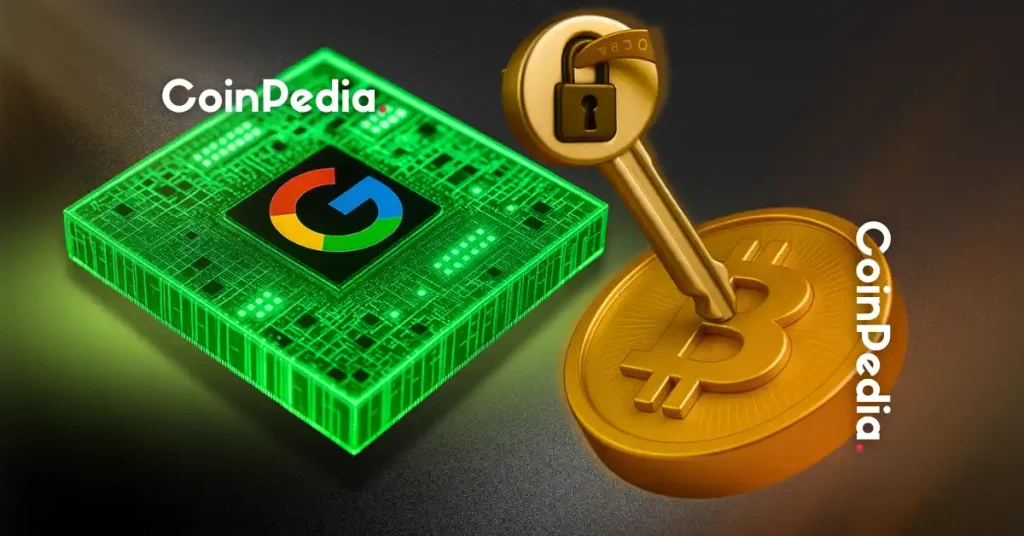
Google's Quantum AI research highlights a potential future threat to approximately 6.9 million BTC, particularly older P2PK addresses, by enabling private key derivation from public keys once quantum computers reach sufficient power. The estimated timeline for quantum attacks is compressed, with a superconducting quantum computer potentially breaking a Bitcoin private key in under 10 minutes, raising concerns about transaction security and the need for quantum-resistant solutions. While a significant portion of Bitcoin's supply is flagged as vulnerable, analysts suggest that newer address formats (78% of current addresses) offer protection until coins are spent, and the broader network's resilience may mitigate systemic risk. The quantum computing threat, though not immediate, adds a layer of long-term security concern to Bitcoin's current market struggles, prompting discussions on protocol upgrades and potential regulatory frameworks for digital assets.

New research on Shor's algorithm and quantum computing advancements suggests a non-negligible 10% chance of private keys for Bitcoin and Ethereum being compromised by 2032. The primary threat from quantum computing is to signature cryptography (wallet and transaction security), not Bitcoin mining, indicating a shift in focus for potential vulnerabilities. While the threat is not immediate, the accelerated timeline and potential for rapid key recovery in minutes by future quantum systems warrant attention for long-term security planning in the crypto space.

Nakamoto Holdings' sale of 284 BTC for $20 million, despite its treasury strategy, signals potential liquidity pressures exacerbated by its recent acquisitions and existing loan obligations. The company's significant stock decline of 99% from its peak and a widening pre-tax loss highlight underlying financial challenges, suggesting further asset sales may be necessary. This development indicates a potential shift in corporate treasury strategies, where companies holding significant Bitcoin reserves might face pressure to liquidate assets to manage operational costs and debt.

Samson Mow's claim that Elon Musk is 'going hard into BTC' based on a recent tweet, while speculative, aligns with his prior predictions and could signal renewed interest from a high-profile figure. While Musk's past engagement with Bitcoin included significant investment and payment acceptance, his current actions are primarily symbolic, lacking concrete financial commitment that would directly impact market dynamics. Mow's broader 2026 predictions, including a $1.33 million BTC price target and MSTR stock surge, remain highly speculative and are not directly supported by current market events.
Two distinct analyst interpretations of Solana's chart suggest divergent near-term paths, with one anticipating a repeat of past recovery patterns and the other a deeper correction before significant upside. Despite differing short-term outlooks, both analyses project substantial long-term upside potential for Solana, with targets reaching as high as $1,000, contingent on holding key support levels. The market may interpret these analyses as a signal to accumulate Solana during potential dips, given the overarching bullish long-term narrative presented by both analysts.

The sale of a Thai condo for 7 BTC after being purchased for 2,900 BTC in 2015 highlights the significant opportunity cost of early Bitcoin spending, underscoring Bitcoin's substantial appreciation against traditional assets. This transaction serves as a stark illustration of Bitcoin's outperformance compared to traditional assets like gold and the S&P 500 over the past decade, reinforcing its potential as a long-term store of value. The narrative of early crypto adopters making significant real estate decisions, both buying and selling, provides context for the evolving relationship between digital assets and tangible property.
Dogecoin mining in 2026 requires specialized ASIC hardware, making traditional PC or mobile mining obsolete and unprofitable. Merged mining with Litecoin offers a key advantage for Dogecoin miners, allowing simultaneous rewards without additional energy costs. Profitability for Dogecoin mining is heavily dependent on low electricity costs and efficient ASIC hardware, with market volatility and competition being significant factors. The article serves as an educational guide for potential Dogecoin miners, detailing the necessary equipment, process, and profitability considerations for 2026.

Nakamoto's sale of $20 million in Bitcoin at a discount to its valuation signals potential liquidity needs or a strategic shift away from holding large BTC reserves. The company's decision to wind down healthcare operations and focus on BTC Inc and UTXO Management indicates a pivot towards core Bitcoin-related businesses, potentially impacting its operational structure and future revenue streams. Exiting a significant portion of its Metaplanet stake at a loss, coupled with the Bitcoin sale, suggests a period of financial restructuring and a potential reduction in speculative investments. The sharp decline in Nakamoto's share price and previous Nasdaq compliance issues highlight underlying financial distress, making future capital raises or strategic partnerships critical for survival.

Keyrock's Series C funding round, led by SC Ventures and including Ripple, at a $1.1 billion valuation signals continued institutional confidence in digital asset market makers and infrastructure providers. The new capital infusion is earmarked for balance sheet strengthening, service expansion, and potential acquisitions, indicating Keyrock's strategic intent to grow market share and enhance its offerings in market making, asset management, and OTC trading. Keyrock's expansion into asset and wealth management via the Turing Capital acquisition, coupled with this significant funding, positions the firm as a more comprehensive financial services provider bridging traditional finance and crypto.

TRX price has broken a descending trendline and is showing signs of accumulation, suggesting potential upside towards $0.37 if immediate resistance at $0.33-$0.35 is overcome. On-chain data indicates stable liquidity and fading selling pressure, with significant treasury holdings and stablecoin activity supporting the network's underlying strength. The shift from accumulation outflows to stable flows as price trends upward suggests a transition from consolidation to early expansion, reinforcing bullish momentum. Despite a confirmed breakout in structure and bullish momentum, the development still requires confirmation at resistance levels to solidify the upward trajectory.
Signal context only. Validate with price action, liquidity, and risk limits before taking a position.
