
Navigating Crypto News

CoinFeather
Navigating Crypto News
Quick market read from this story
Cardano and Ethereum are exhibiting sideways price action and subdued network activity, indicating a neutral short-term outlook for these established Layer-1s.
BlockDAG is gaining market attention ahead of its upcoming trading phase, with its reported high transaction throughput and fast confirmation times positioning it as a project to watch in the current market environment.
The current market conditions present a mixed signal, with established assets facing resistance while newer projects like BlockDAG are generating interest, suggesting a potential shift in focus for traders seeking growth opportunities.
Source, catalyst, and sector overlap from the latest feed.
Institutional adoption is accelerating with Charles Schwab opening a waitlist for direct ETH spot trading, signaling a shift away from indirect exposure like ETFs and potentially unlocking access for millions of retail clients. Significant corporate accumulation of ETH by Bitmine Immersion Technologies and a strategic shift by the Ethereum Foundation to stake rather than sell ETH are creating structural demand and reducing sell pressure, despite current price stagnation. While on-chain metrics and institutional interest suggest underlying strength, ETH's price action and technical indicators remain neutral-to-bearish, highlighting a divergence that warrants close observation of future demand catalysts. Upcoming Ethereum protocol upgrades in 2026, including Glamsterdam and Hegota, aim to significantly enhance scalability and decentralization, laying the groundwork for future network growth and adoption.
Live Feed
Loading the broader stream in the same flow as the homepage feed.
Reports indicate Iran is potentially accepting cryptocurrency and Chinese yuan for passage fees through the Strait of Hormuz, a critical global oil chokepoint. While Iran's tightening control over the Strait of Hormuz is confirmed by multiple sources, the specific details and scale of crypto payments remain unverified, suggesting a need for caution. The potential monetization of passage through Hormuz via crypto could represent a novel geopolitical revenue stream, though its broader market impact is currently limited by verification gaps.
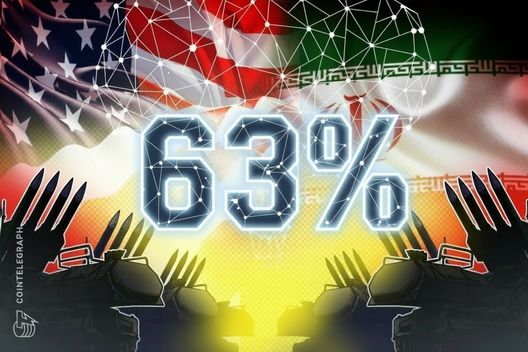
Geopolitical tensions surrounding potential US-Iran conflict are creating significant uncertainty for risk assets, as evidenced by fluctuating odds on prediction markets. Despite heightened geopolitical rhetoric, Bitcoin and the S&P 500 have shown muted reactions, suggesting that current market pricing may have already incorporated some level of geopolitical risk. The mixed signals from the US administration regarding Iran create a volatile environment for traders, making it difficult to establish clear directional bias for risk assets.

Polymarket's removal of the Iran rescue market highlights the increasing scrutiny and regulatory pressure on prediction markets, potentially impacting their growth and operational scope. Congressional Democrats' proposed legislation to ban contracts tied to elections, war, and government actions signals a significant regulatory risk for the prediction market sector. The CFTC's lawsuits against states attempting to bypass federal oversight and the NFL's requests to avoid objectionable contracts indicate a broader trend of increased regulatory assertion across various market segments. Despite regulatory headwinds, the entry of institutional players like JPMorgan and Kalshi's margin trading license suggest underlying market expansion and potential for future innovation in prediction markets.
Geopolitical tensions surrounding Iran and the Strait of Hormuz continue to drive crude oil prices near $140, indicating persistent supply disruption fears impacting energy markets. Traders are increasingly factoring in ongoing military risks and supply concerns, showing reduced sensitivity to diplomatic statements and shifting deadlines from President Trump. The elevated oil prices and associated supply fears are being monitored on derivatives platforms like Hyperliquid, which has seen significant trading volume and open interest in commodity-linked futures. The extended deadline and heightened rhetoric from President Trump introduce further uncertainty, potentially increasing market volatility and sensitivity to any escalation or de-escalation in the region.

Traditional finance is rapidly integrating blockchain technology for securities trading and settlement, directly challenging DeFi's claim to the future of finance by offering regulated, 24/7 operations. The recent Drift exploit, resulting in a $285 million loss and significant TVL drop, highlights systemic risks in DeFi's control and governance layers, pushing institutional capital towards more regulated, permissioned tokenization infrastructure. DeFi's composability advantage is under threat; for open protocols to capture institutional capital, they must demonstrate enhanced governance discipline, stricter security standards, and transparent risk management to mitigate contagion risks. The market is bifurcating into two paths: a bull case where DeFi enhances its security and captures $16B-$33B of on-chain capital, and a bear case where traditional finance dominates, leaving DeFi with under $3B in retail and reflexive flows.
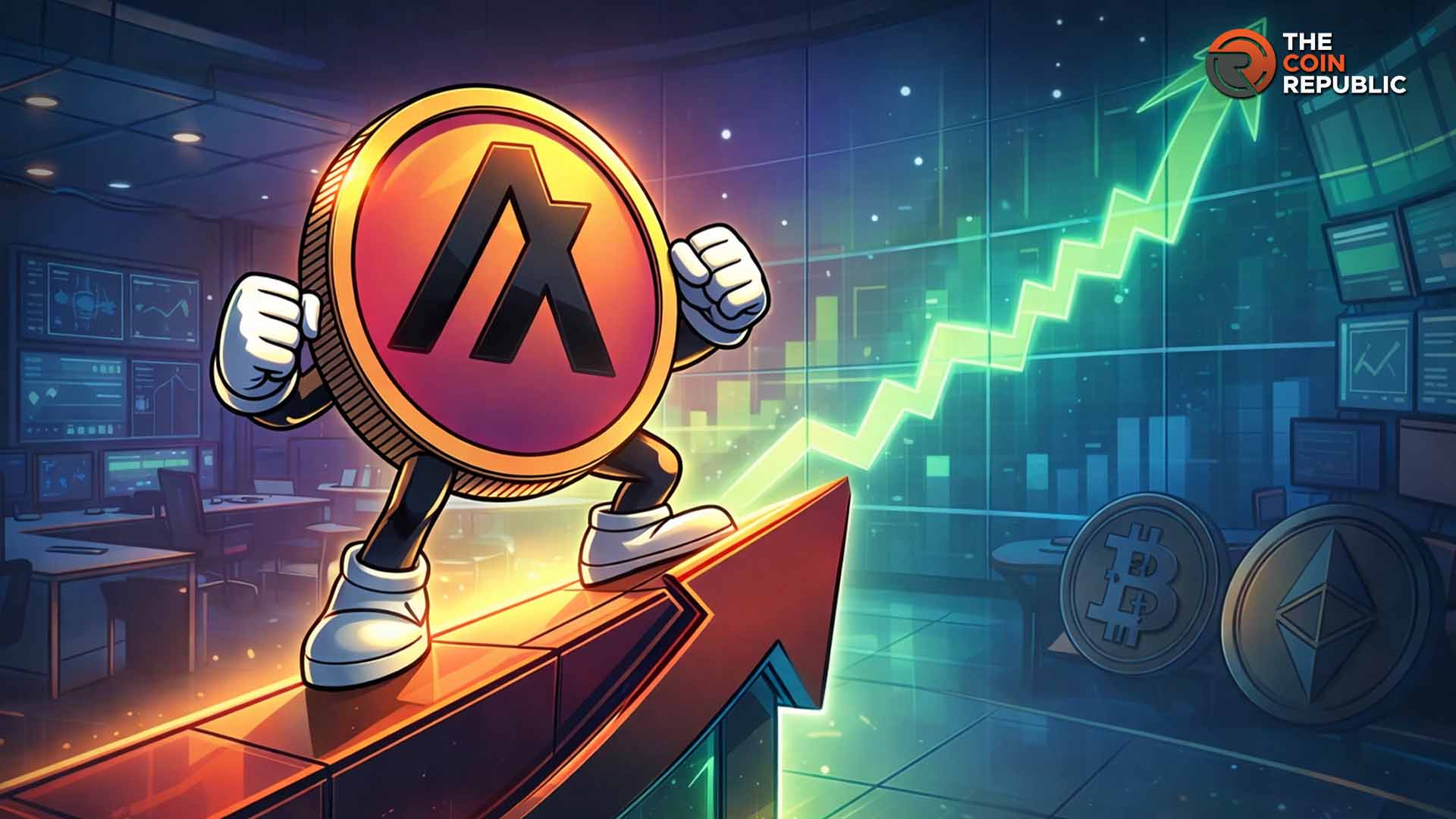
Algorand's ALGO experienced a significant 57% price surge, marking its best week since July 2025, driven by its mention in Google's research on post-quantum cryptography. Despite the recent rally, ALGO shows signs of being overbought with potential for short-term profit-taking, indicated by spot outflows and a doubling of derivatives open interest. The integration of ALGO staking on Revolut and Algorand's strong position in Real-World Assets (RWA) with over $425 million in tokenized assets provide underlying fundamental support beyond the quantum cryptography news. While the quantum cryptography news and RWA developments offer long-term bullish potential, current market conditions and technical indicators suggest a likely short-term correction before any sustained recovery.
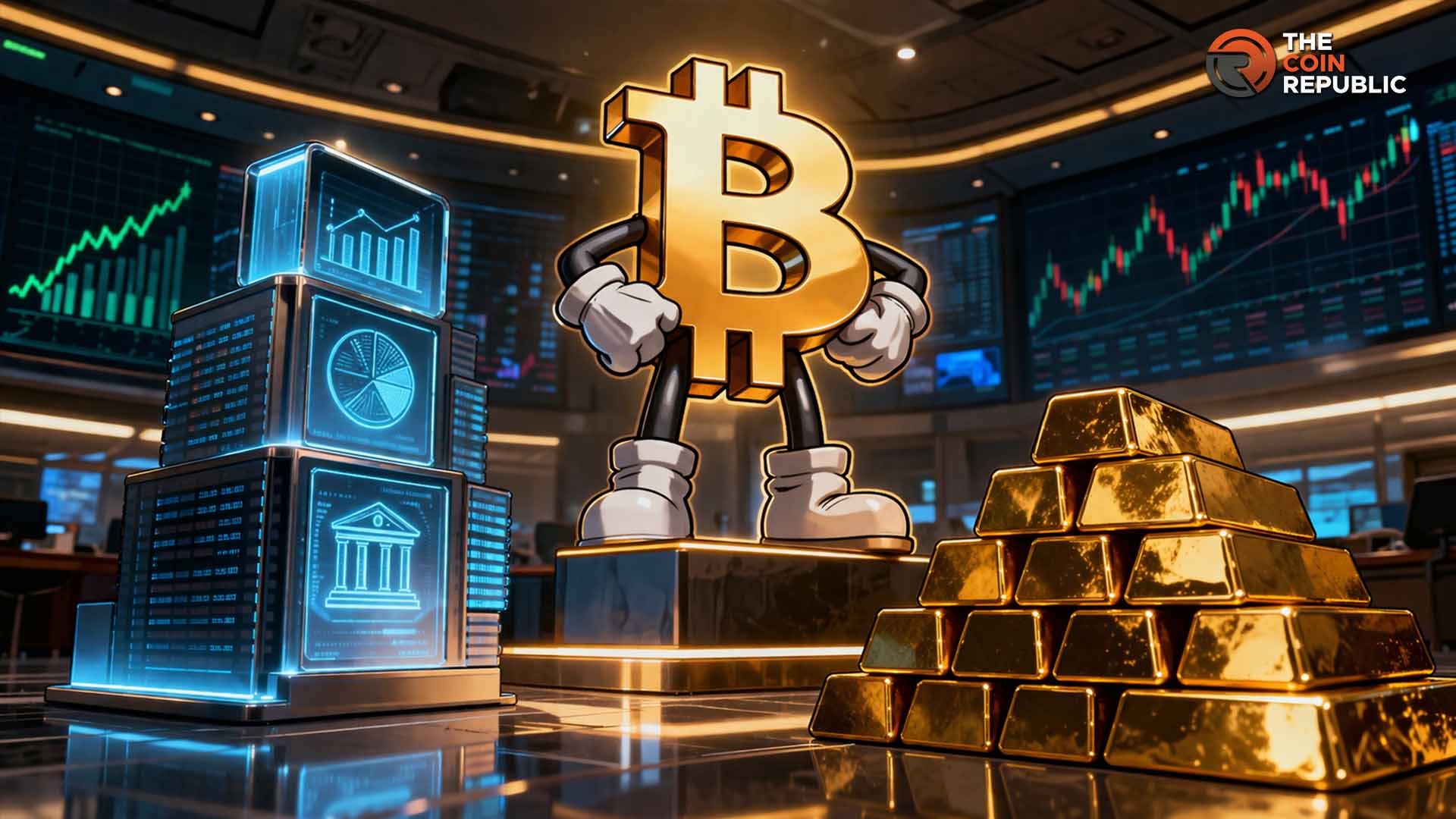
Bitcoin ETFs are projected to surpass gold ETFs in assets under management, driven by growing institutional demand and Bitcoin's multifaceted utility beyond a simple store of value. Strong inflows into Bitcoin ETFs contrast with outflows from gold ETFs, indicating a significant shift in investor preference towards digital assets for portfolio diversification and growth exposure. The comparison of Bitcoin ETFs to gold ETFs highlights a maturing market perception, suggesting that Bitcoin is increasingly viewed as a legitimate investment asset with broader applications than traditional safe havens.
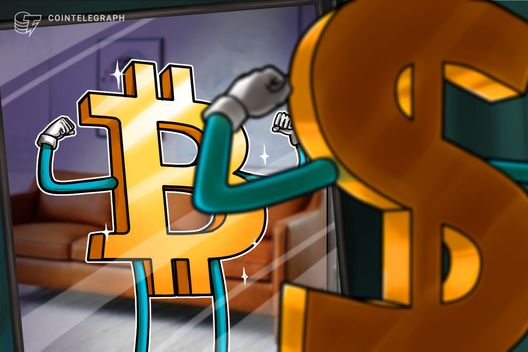
The assertion that Bitcoin and the US dollar share a symbiotic relationship, driven by the dominance of BTC/USD trading pairs, suggests that increased Bitcoin adoption could indirectly bolster dollar demand, contrary to common narratives of Bitcoin undermining fiat. The analysis highlights how stablecoins, particularly Tether (USDT), function as a bridge, reinforcing the US dollar's global financial standing through their backing and trading pair dominance. China's regulatory approach, banning Bitcoin and stablecoins to promote its CBDC (digital yuan), underscores the geopolitical tension between centralized digital currencies and decentralized cryptocurrencies for capital control. Despite China's bans, the significant hash rate controlled by Chinese mining pools indicates the persistent challenge of enforcing complete prohibition on decentralized networks.
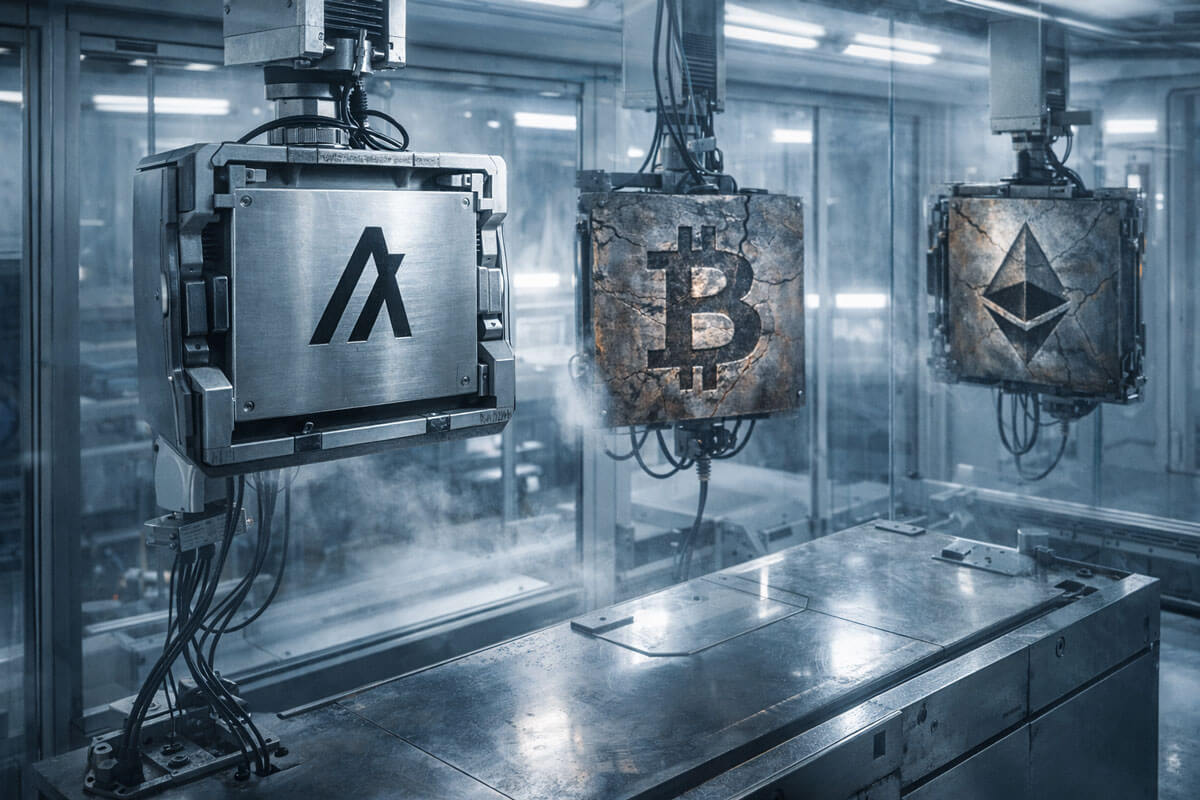
Algorand's ALGO token experienced a significant 50% price surge, driven by a Google Quantum AI paper highlighting its post-quantum cryptography implementation as a live example, contrasting with the perceived slower migration paths for Bitcoin and Ethereum. The Google paper has intensified scrutiny on Bitcoin and Ethereum's quantum vulnerability, particularly concerning legacy addresses and the complexity of migrating large, established networks, suggesting potential long-term risks for these foundational Layer 1s. Algorand's proactive development in post-quantum cryptography, including Falcon digital signatures and state proofs, positions it as a potential leader in quantum-resistant blockchain technology, attracting trader attention and validating its technical roadmap.

Bitcoin's correlation with global central bank easing has turned negative since 2024, indicating it now leads rather than lags monetary policy, a structural shift attributed to the influence of spot Bitcoin ETFs. The introduction of spot Bitcoin ETFs has altered market dynamics, shifting price drivers from retail reacting to macro news to institutions positioning ahead of policy changes, making BTC a forward-looking asset. This evolution suggests that crypto-native drivers and institutional flows may now hold more sway over Bitcoin's price than traditional monetary policy signals, potentially altering how traders interpret macro events.
Signal context only. Validate with price action, liquidity, and risk limits before taking a position.
No explicit catalyst tagged.
Algorand's price surge of over 40% is directly linked to Google's quantum computing paper, which cited ALGO 32 times as a benchmark for post-quantum cryptography, positioning it as a leader in quantum-resistant technology. The Google paper significantly lowers the estimated qubit requirement to break Bitcoin's cryptography, accelerating the perceived urgency for quantum-resistant solutions and highlighting Algorand's existing implementations like Falcon signatures and State Proofs. Algorand's recent integrations with SWIFT for ISO 20022 and Visa Principal membership, coupled with its established RWA tokenization market share, suggest a strategic build-out that positions it favorably for institutional adoption amidst quantum threats. While Bitcoin and Ethereum are still developing quantum-resistant roadmaps, Algorand's proactive integration of NIST-standardized post-quantum cryptography and features like native rekeying offer a tangible advantage, potentially justifying its current market premium.
