
Navigating Crypto News

CoinFeather
Navigating Crypto News

Quick market read from this story
The assertion that Bitcoin and the US dollar share a symbiotic relationship, driven by the dominance of BTC/USD trading pairs, suggests that increased Bitcoin adoption could indirectly bolster dollar demand, contrary to common narratives of Bitcoin undermining fiat.
The analysis highlights how stablecoins, particularly Tether (USDT), function as a bridge, reinforcing the US dollar's global financial standing through their backing and trading pair dominance.
China's regulatory approach, banning Bitcoin and stablecoins to promote its CBDC (digital yuan), underscores the geopolitical tension between centralized digital currencies and decentralized cryptocurrencies for capital control.
Despite China's bans, the significant hash rate controlled by Chinese mining pools indicates the persistent challenge of enforcing complete prohibition on decentralized networks.
Source, catalyst, and sector overlap from the latest feed.
Robert Kiyosaki reiterates his long-term bullish stance on Bitcoin, gold, and silver as hedges against inflation and rising debt, framing current economic conditions as a continuation of trends initiated in 1974. Kiyosaki's advocacy for Bitcoin as 'real money' and a scarce asset suggests a potential for significant price appreciation during future economic downturns, aligning with his previous $750,000 BTC forecast. Despite Kiyosaki's bullish outlook on Bitcoin as a store of value, recent data indicates a spike in bearish sentiment among social media participants, which could present a contrarian buying opportunity if historical patterns hold.
Live Feed
Loading the broader stream in the same flow as the homepage feed.

Polymarket's removal of the Iran rescue market highlights the increasing scrutiny and regulatory pressure on prediction markets, potentially impacting their growth and operational scope. Congressional Democrats' proposed legislation to ban contracts tied to elections, war, and government actions signals a significant regulatory risk for the prediction market sector. The CFTC's lawsuits against states attempting to bypass federal oversight and the NFL's requests to avoid objectionable contracts indicate a broader trend of increased regulatory assertion across various market segments. Despite regulatory headwinds, the entry of institutional players like JPMorgan and Kalshi's margin trading license suggest underlying market expansion and potential for future innovation in prediction markets.
Geopolitical tensions surrounding Iran and the Strait of Hormuz continue to drive crude oil prices near $140, indicating persistent supply disruption fears impacting energy markets. Traders are increasingly factoring in ongoing military risks and supply concerns, showing reduced sensitivity to diplomatic statements and shifting deadlines from President Trump. The elevated oil prices and associated supply fears are being monitored on derivatives platforms like Hyperliquid, which has seen significant trading volume and open interest in commodity-linked futures. The extended deadline and heightened rhetoric from President Trump introduce further uncertainty, potentially increasing market volatility and sensitivity to any escalation or de-escalation in the region.

Bitcoin ETFs are projected to surpass gold ETFs in assets under management, driven by growing institutional demand and Bitcoin's multifaceted utility beyond a simple store of value. Strong inflows into Bitcoin ETFs contrast with outflows from gold ETFs, indicating a significant shift in investor preference towards digital assets for portfolio diversification and growth exposure. The comparison of Bitcoin ETFs to gold ETFs highlights a maturing market perception, suggesting that Bitcoin is increasingly viewed as a legitimate investment asset with broader applications than traditional safe havens.

Kevin Warsh's potential Fed chairmanship signals a hawkish monetary policy stance, prioritizing balance sheet reduction over immediate rate cuts, which could reduce liquidity and pressure risk assets like Bitcoin and Ethereum. Market expectations for rate cuts have significantly diminished, with probabilities for June and July cuts collapsing, indicating a shift towards a tighter monetary environment that historically correlates with lower crypto valuations. While Warsh expresses skepticism towards altcoins and CBDCs, his nuanced view of Bitcoin as a 'policeman of monetary policy' and a 'generation's gold' suggests a potential differentiation in how he perceives Bitcoin versus the broader crypto market. The upcoming Senate hearing on April 16 is a critical event for crypto markets, as Warsh's confirmation of his monetary policy priorities could lead to immediate price action, with potential for further downside if he signals continued hawkishness.

SIREN's drastic 65% weekly decline highlights the extreme risk associated with high supply concentration, as a single whale cluster controls nearly 90% of its tokens, leading to significant downside for retail participants. Ethena (ENA) faces selling pressure from a ~$14.7M token unlock for contributors and early investors, compounded by a six-month low in active addresses, suggesting limited organic demand to absorb the new supply. LayerZero (ZRO) experienced selling pressure from Alameda Research's ~$15.3M token offload, overshadowing positive news of institutional interest from Worldpay and Global Payments. Midnight (NIGHT) launched its mainnet but is facing community concerns over its one-way bridge to Cardano and ongoing Glacier Drop airdrop unlocks, creating liquidity risks and adding selling pressure.
Pi Network faces resistance around $0.30 with a key protocol deadline approaching, suggesting potential short-term price pressure if support levels are breached. Hyperliquid's market cap surpassing $1.3 billion indicates growing traction in the derivatives space, with potential for further upside towards $45 if current momentum continues. BlockDAG is attracting significant market attention due to its reported 79,900% growth and upcoming trading phase, positioning it as a project to watch for potential upside as it moves towards broader exchange listings.
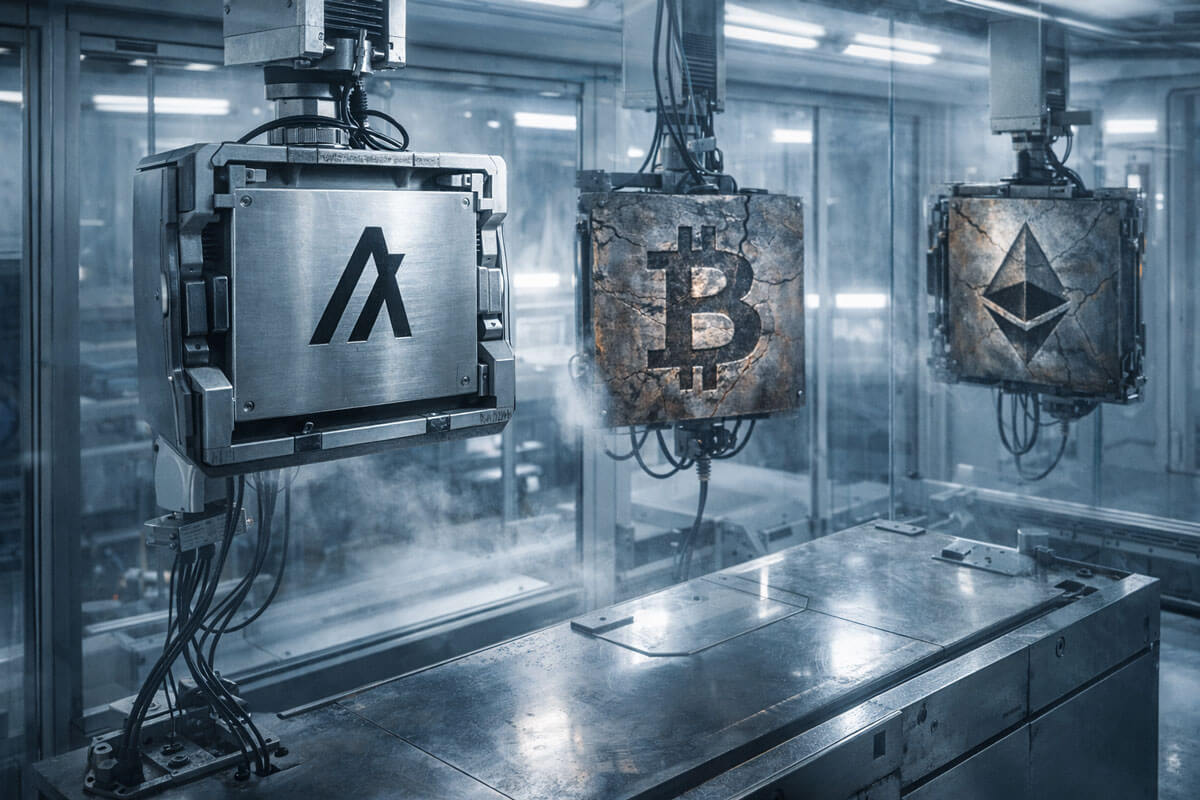
Algorand's ALGO token experienced a significant 50% price surge, driven by a Google Quantum AI paper highlighting its post-quantum cryptography implementation as a live example, contrasting with the perceived slower migration paths for Bitcoin and Ethereum. The Google paper has intensified scrutiny on Bitcoin and Ethereum's quantum vulnerability, particularly concerning legacy addresses and the complexity of migrating large, established networks, suggesting potential long-term risks for these foundational Layer 1s. Algorand's proactive development in post-quantum cryptography, including Falcon digital signatures and state proofs, positions it as a potential leader in quantum-resistant blockchain technology, attracting trader attention and validating its technical roadmap.

Bitcoin's correlation with global central bank easing has turned negative since 2024, indicating it now leads rather than lags monetary policy, a structural shift attributed to the influence of spot Bitcoin ETFs. The introduction of spot Bitcoin ETFs has altered market dynamics, shifting price drivers from retail reacting to macro news to institutions positioning ahead of policy changes, making BTC a forward-looking asset. This evolution suggests that crypto-native drivers and institutional flows may now hold more sway over Bitcoin's price than traditional monetary policy signals, potentially altering how traders interpret macro events.

Michael Saylor's rebuttal to Peter Schiff highlights Bitcoin's 36% annualized return since August 2020, outperforming gold and the S&P 500, suggesting a strong long-term thesis for MicroStrategy's (MSTR) strategy despite current unrealized losses. The ongoing debate between Saylor and Schiff underscores the market's uncertainty regarding the sustainability of a public company's Bitcoin treasury strategy, particularly if Bitcoin experiences prolonged stagnation or downturns. While Schiff warns of potential MSTR share price collapse due to Bitcoin's performance relative to its peak, Saylor's data suggests a focus on longer timeframes and Bitcoin's superior performance as a reserve asset, implying a bullish outlook for MSTR's core strategy.
Rising oil prices and geopolitical risks are diverting capital from risk assets, pressuring Bitcoin and XRP as traders anticipate inflation data that could influence Fed policy. The upcoming April 9th inflation report is a critical catalyst, with a higher-than-expected reading likely to reinforce a hawkish Fed stance and extend the downturn in cryptocurrencies. While current sentiment is bearish due to macro pressures, a CPI print that meets or beats forecasts could trigger a significant short squeeze, potentially reversing the trend for Bitcoin and XRP.

The Solana price is under pressure, trading below $80 and underperforming the market due to lingering effects from the $285 million Drift Protocol hack, indicating significant ecosystem security concerns impacting investor confidence. Solana's Total Value Locked (TVL) has fallen from over $9 billion to $5.5-$6 billion, signaling a capital outflow and reduced DeFi activity, which limits the potential for a near-term price recovery. SOL is testing critical support around $75-$78, with a breakdown potentially leading to further downside towards $73 and $67-$70, while a reclaim of $85-$86 is needed for short-term bullish momentum. The combination of a weak price structure and declining TVL suggests a fragile hold at support rather than a strong base, implying elevated downside risk and limited upside potential in the immediate trading horizon.
XRP's muted trading volumes and open interest during the holiday period suggest a lack of immediate directional conviction from market participants. Key price levels for XRP are identified at $1.27 support and $1.39 resistance, with a break below $1.11 or above $2 indicating potential trend shifts. Broader market sentiment, particularly concerning U.S. inflation data (PCE), will be a significant factor influencing XRP's price action in the near term.

Strong US jobs data initially suggests reduced Fed rate cut urgency, pressuring Bitcoin as a risk asset due to tighter financial conditions and higher yields. Hidden labor market weaknesses, including falling participation and specific sector catch-up hiring, introduce a plausible scenario for a Fed pivot if future data confirms this trend. Bitcoin's immediate reaction to the jobs report indicates a sensitivity to macro liquidity channels, with future price action contingent on upcoming inflation data and subsequent Fed policy signals. The market is pricing in a scenario of sustained higher rates, as evidenced by the cross-asset move on April 3rd, making upcoming labor and inflation reports critical for reassessing this thesis.
XRP's growing network activity and whale accumulation, despite a price slump, suggests underlying network strength that could be catalyzed by potential regulatory clarity from the CLARITY Act. Allegations of North Korean hacker involvement in SHIB development, stemming from the Drift Protocol hack, introduce supply chain risk and potential vulnerabilities, warranting caution for SHIB holders. The movement of a 13-year-old Bitcoin wallet and a general trend of long-term holder capitulation indicate potential market bottoming signals, though current macroeconomic pressures and inflation data remain key watchpoints. Bitcoin's resilience above $67,000 amidst hawkish Fed rhetoric and high oil prices presents a potential short-squeeze scenario if key inflation data is absorbed without significant price drops.
Signal context only. Validate with price action, liquidity, and risk limits before taking a position.
Tether
USDT
No explicit catalyst tagged.
Traders are observing potential downside risk for Bitcoin as Bollinger Bands indicate an impending volatile breakout, with analysts predicting a sweep of sub-$60,000 lows. Unusual selling activity from large holders ('whales') on Binance, characterized by significant volume distribution via TWAP bots, suggests strategic profit-taking or repositioning despite sideways price action. The current market structure, which has favored sweeping highs over lows, may be shifting, potentially leaving Bitcoin vulnerable to a capitulation event if support levels break.
