
Navigating Crypto News

CoinFeather
Navigating Crypto News
Quick market read from this story
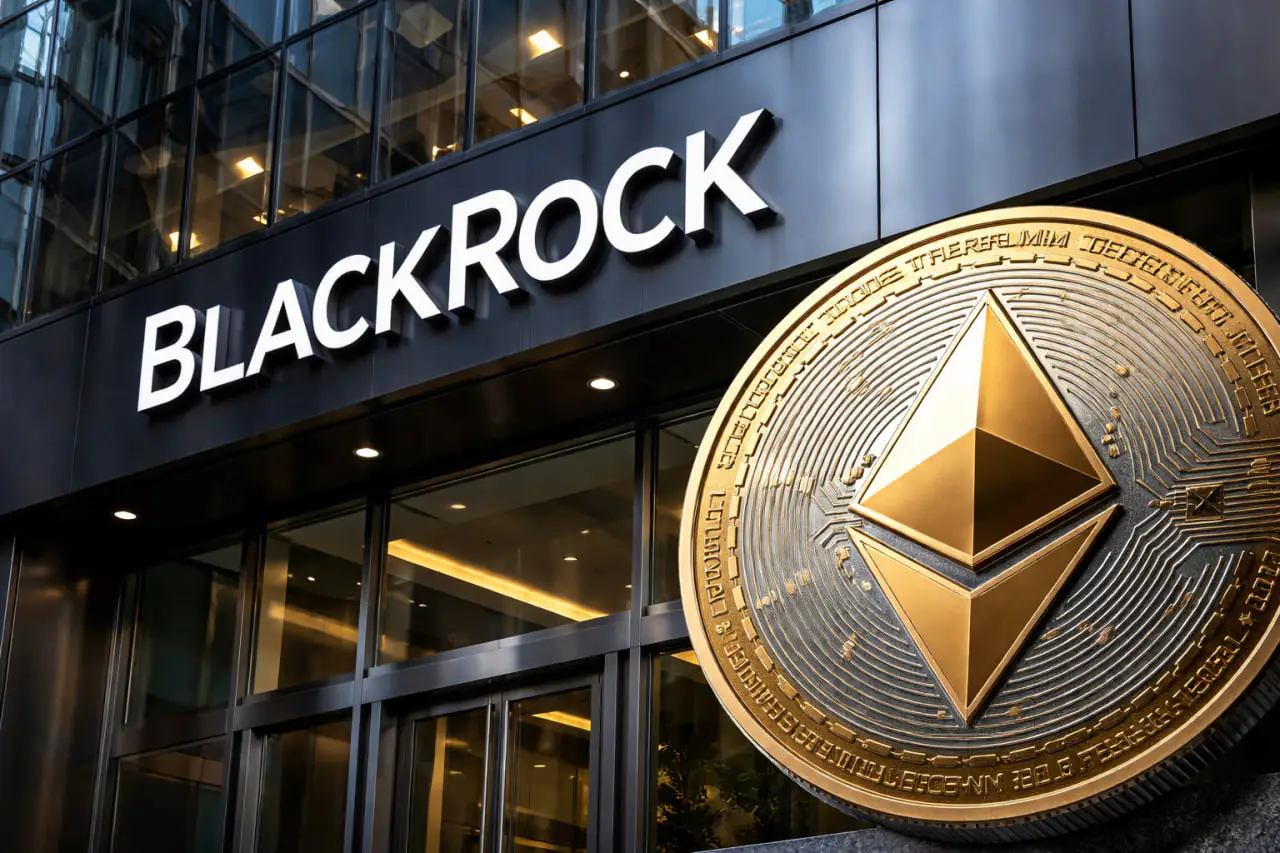
BlackRock's launch of the iShares Staked Ethereum Trust ETF introduces a novel product that combines spot ETH price exposure with staking rewards, potentially offering a higher total return than existing non-staking ETFs.
The ETF's aggressive introductory fee structure of 0.12% for the first $2.5 billion in assets, significantly lower than the standard 0.25%, is designed to rapidly capture market share from competing Ethereum ETFs.
This development represents a structural evolution in the crypto ETF market, as it's the first U.S. spot Ethereum ETF to directly incorporate staking yield, which could drive ETH staking demand and reduce circulating supply.
The launch coincides with a technically constructive short-term outlook for Ethereum, with positive RSI and MACD indicators suggesting improving momentum entering the ETF's trading debut.
Deep Dive
BlackRock launched its iShares Staked Ethereum Trust ETF on March 12, 2026, marking a significant evolution in the U.S. spot crypto ETF market. This new ETF is the first to offer investors not only price exposure to Ethereum but also a share of the staking rewards generated by the network itself.
The ETF introduces a promotional fee structure designed to rapidly accumulate assets. For the first 12 months, a 0.12% fee waiver applies to the initial $2.5 billion in assets. Assets exceeding this threshold during the waiver period will be charged the standard 0.25% rate. After the 12-month period, all assets will revert to the standard 0.25% Sponsor's Fee. This tiered waiver makes the iShares Staked Ethereum Trust more cost-effective than existing U.S. spot Ethereum ETFs for the first year.
For example, an investor placing $100 million would pay approximately $120,000 annually during the waiver period, compared to $250,000 under the standard rate of BlackRock's other ETH ETF. The fee structure is applied uniformly across all holders based on a weighted average calculation.
The iShares Staked Ethereum Trust's key innovation is its mandate to stake a portion of the Trust's ether holdings and pass the resulting network rewards to investors. Ethereum's proof-of-stake consensus mechanism, implemented in September 2022, generates yield for validators who lock up ETH to secure the network. Historically, this yield has ranged between 3% and 5% annually.
Previously, U.S.-listed spot Ethereum ETFs tracked only the spot price, excluding staking income. BlackRock's new product aims to enhance returns by incorporating this native yield. For a $2 billion fund earning a 3.5% annual staking yield, this could generate approximately $70 million in gross staking income per year, potentially outperforming non-staking ETFs.
The launch coincided with a modestly constructive technical picture for Ethereum. On March 12, Ethereum recovered to consolidate around the $2,078 level. The Relative Strength Index (RSI) reading of 62.48 indicated dominant buying momentum without reaching overbought territory. The Moving Average Convergence Divergence (MACD) indicator also showed a positive and expanding histogram, suggesting building bullish impulse.
Volume increased during the recovery phase, supporting the upward price momentum. These technical indicators suggested Ethereum was entering its staked ETF launch window with improving short-term momentum.
The launch of the iShares Staked Ethereum Trust is seen as the most significant structural development in the U.S. crypto ETF market since the approval of spot Ethereum products. By combining spot price exposure with staking yield, BlackRock offers a product distinct from existing options.
The introductory fee of 0.12% on the first $2.5 billion presents a direct challenge to competitors like Fidelity's FETH and Grayscale's mini ETH trust, which had previously seen significant inflows. The market will be closely watching whether allocators shift from existing holdings or if the new product attracts fresh capital.
For Ethereum, the ETF's launch is a positive demand signal. Inflows into the iShares Staked Ethereum Trust require backing by ETH, a portion of which will be staked, reducing circulating supply and increasing the total amount of ETH locked in the staking mechanism.
Source, catalyst, and sector overlap from the latest feed.
Key Takeaways South Korea’s tax authority is deploying an AI system to monitor 8 billion crypto transactions annually, ahead of […] The post South Korea Deploys AI Tax Surveillance Tool as Crypto Regulation Tightens appeared first on Coindoo.
The landmark MOU between the SEC and CFTC establishes a clear jurisdictional framework, classifying Bitcoin and Ethereum as commodities, which should reduce regulatory uncertainty and potentially encourage institutional adoption. This agreement signals a significant shift from an enforcement-led approach to a more coherent regulatory environment, effectively ending the 'Wild West' era for crypto in the US and providing a clearer path for innovation and compliance. While not solving all issues, the MOU's focus on coordinated oversight and data sharing aims to reduce duplicative burdens on firms, fostering a more streamlined operational landscape for crypto businesses.
Spot crypto ETFs saw a net inflow of $174 million on March 11, reversing a recent trend of outflows and suggesting some institutional investors view current price levels as potential entry points. Despite the positive ETF flows, market sentiment remains cautious, indicated by the Fear & Greed Index at 26, suggesting that sustained price recovery is contingent on broader macro conditions and stabilization above key price levels. Institutional demand for Bitcoin ETFs is increasingly concentrated in BlackRock's IBIT, while Ethereum ETFs showed balanced inflows across multiple issuers, indicating a potential shift in preferred investment vehicles. Solana ETFs, despite offering staking yields, have not attracted significant institutional demand, with recent flows remaining minimal, reflecting broader price weakness and competition within the ETF market.
The FDIC's proposed rule to exclude payment stablecoins from federal deposit insurance, including pass-through coverage, signals a clear regulatory stance that stablecoins are not equivalent to bank deposits. This regulatory clarification, stemming from the GENIUS Act, creates a distinct advantage for tokenized deposits issued by FDIC-insured banks over non-bank stablecoin issuers, potentially driving institutional capital towards regulated banking products. The divergence in compliance paths between Circle and Tether, with Tether launching a new OCC-supervised token, highlights the evolving landscape and potential market shifts driven by these new regulatory requirements. The FDIC's proposal, by reinforcing the GENIUS Act's prohibition on government safety nets for stablecoins, suggests that issuers must rely solely on their own reserve infrastructure, increasing counterparty risk for users of non-bank stablecoins.
Aave founder Stani Kulechov proposes a significant DAO governance overhaul, suggesting professional teams handle day-to-day decisions to improve efficiency and mitigate political maneuvering. The proposed changes aim to address Aave's governance cracks, highlighted by concentrated voting power (three wallets controlling over 58%) and recent departures of key contributors due to funding and IP disputes. While Aave maintains a substantial $26.5B TVL, the ongoing governance dysfunction poses a risk to its competitive edge in the DeFi sector, potentially impacting investor confidence and future development. Kulechov's call for reform aligns with broader industry trends towards modular governance and liquid democracy, suggesting a potential shift in how DAOs operate to foster more effective decision-making.
BlackRock's launch of the ETHB staking ETF introduces a novel product combining spot ETH exposure with staking yields, potentially attracting institutional capital seeking yield in a regulated wrapper. The ETHB ETF's structure, which sells staking rewards for dividend distribution, differentiates it from existing spot ETH ETFs and could influence investor rotation towards yield-generating products. While the ETF launch is a positive development for Ethereum's institutional adoption, current market data shows mixed flows for ETH ETFs, suggesting that immediate price impact may be tempered by broader market sentiment and technical levels.
BlackRock's aggressive 50% fee cut on its new Staked Ethereum ETF (ETHB) signals a strong push for market share, potentially drawing capital from existing ETH ETFs and intensifying competition in the spot Ethereum ETF market. The launch of ETHB, which offers passive income through ETH staking, introduces a yield-generating product directly into the traditional finance ETF structure, potentially setting a new standard for crypto-related ETFs. BlackRock's reliance on third-party staking providers, including one acquired by a direct competitor (Bitwise), highlights the critical role of specialized infrastructure in the maturing crypto ETF landscape and could influence future partnership strategies. The strategic fee reduction and the inclusion of staking rewards as dividends suggest BlackRock is prioritizing rapid adoption and AUM growth for ETHB, aiming to capture a significant portion of the growing institutional interest in Ethereum.
The Bitcoin-to-gold ratio is exhibiting a bullish divergence on the RSI, suggesting a potential bottom for BTC's long-term trend against gold and indicating fading selling pressure. Significant outflows from gold ETFs contrasted with increasing inflows into Bitcoin ETFs, signaling a potential capital rotation favoring Bitcoin as a risk-on asset. Despite current macro volatility, historical data suggests that periods following US midterm elections have historically led to strong Bitcoin performance, presenting an "opportunity within risk.". The increasing share of Bitcoin ETF trading volume, while still nascent compared to traditional markets, points to growing institutional interest and potential for further expansion.
The presence of Goldman Sachs on XRP and Solana ETF holder lists is primarily attributed to market-making and trading desk activities, not a strategic conviction in the underlying assets. While institutional involvement in crypto ETFs is noted, the article suggests that large financial institutions' ETF holdings often reflect operational functions rather than direct investment in the asset's long-term potential. Genuine institutional conviction in crypto assets is better indicated by dedicated crypto hedge funds' holdings, which may have been instrumental in seeding these ETFs, rather than by traditional banks' trading desk positions. The market's interpretation of Goldman Sachs' ETF holdings as a bullish signal for XRP is likely overstated, as the actual impact on token demand may be minimal if it represents a shift in existing exposure rather than new capital inflow.
BlackRock's new ETHB fund launches with a competitive 0.12% introductory fee, passing 82% of staking rewards to investors, positioning it against Grayscale's offerings. The introduction of ETHB, which offers direct staking rewards, is expected to attract investors seeking yield and potentially draw capital from direct ETH holdings and competitor products. With BlackRock entering the staked ETH ETF market, increased institutional adoption and potential capital inflows into Ethereum staking products are anticipated.
Binance has delisted 21 cryptocurrencies from its Binance Alpha platform, citing failure to meet listing standards, which signals a tightening of quality control for emerging projects on the exchange. While the delisting removes these tokens from active trading on Binance Alpha, users retain the ability to sell them via supported interfaces, mitigating immediate liquidity concerns for existing holders. The mass delisting highlights the inherent risks associated with early-stage or experimental blockchain projects often listed on platforms like Binance Alpha, reinforcing the need for due diligence by investors.
Ripple has significantly increased RLUSD token burning activity across Ethereum and XRP Ledger, removing 51 million tokens in 24 hours, which signals a potential strategy to manage supply and potentially enhance token value or stability. The simultaneous minting and burning of RLUSD indicates active management of the stablecoin's supply, suggesting a dynamic approach to liquidity and circulation control by Ripple. While RLUSD burns are occurring, the concurrent minting of RLUSD suggests that the net supply change may not be drastically negative, requiring closer monitoring of the overall supply dynamics rather than just burn events.
Rising oil prices above $100 per barrel have a limited direct impact on Bitcoin mining costs, as only 8-10% of global hashrate operates in oil-sensitive power markets. The primary risk to Bitcoin miners from geopolitical shocks and rising oil prices stems from potential negative macroeconomic sentiment affecting BTC's price, rather than direct increases in electricity costs. Miner profitability is significantly more sensitive to Bitcoin's price fluctuations than to changes in electricity expenses, suggesting that broader market risk sentiment is a key factor for mining economics. While direct exposure is limited, the indirect effect of oil price surges on Bitcoin's price due to macroeconomic stress presents a more substantial concern for the network and its participants.
XRP is exhibiting technical patterns reminiscent of its 2017 surge, suggesting a potential for significant upside if historical trends repeat. A breakout above the $1.78–$2.30 resistance zone is identified as a key catalyst for a bullish phase, with analysts projecting a target of $22.24 based on a 1,500% rally scenario. Despite recent price consolidation and trading below the 200-day moving average, XRP's resilience and the formation of a symmetrical triangle pattern indicate a potential for a major upward move. The mention of $1.4 billion in spot XRP ETF inflows, though potentially misattributed or referring to a different context given XRP's current ETF status, highlights speculative interest and potential institutional sentiment if such products were to materialize.
Live Feed
Loading the broader stream in the same flow as the homepage feed.

The U.S. Senate's bipartisan vote to ban CBDCs within a housing bill signals a growing legislative concern over potential government-controlled digital currencies, potentially impacting future stablecoin development and adoption. While the Senate has passed a CBDC ban, its inclusion in a housing bill facing House uncertainty creates a low probability of immediate legislative impact, suggesting a 'watch and wait' scenario for market participants. The Senate's move to ban CBDCs until at least 2030, coupled with the Digital Chamber's support for private sector-led innovation, indicates a preference for market-driven stablecoins over a government-issued digital dollar.

OP Labs, a core developer for the Optimism Ethereum L2 network, has undergone layoffs to 'narrow focus,' signaling a strategic shift towards efficiency rather than financial distress. The restructuring at OP Labs, while not directly a financial crisis, could imply potential challenges in execution or a need to consolidate resources for future development within the competitive L2 scaling landscape. The OP token has seen a minor price dip following the news, indicating a short-term market reaction to organizational changes within a key Ethereum ecosystem contributor.

Vitalik Buterin redefines Ethereum as "global shared memory." Explore his three key pillars: data availability, spam protection and smart contracts.
Shiba Inu (SHIB) has experienced a notable 4.2% price rally, outperforming the broader market and reclaiming a spot among the top 30 cryptocurrencies by market capitalization, surpassing Zcash (ZEC). The price surge for SHIB occurred despite a decline in its 24-hour trading volume and while the market remains in an accumulation phase, suggesting a speculative driver rather than broad market sentiment. The outperformance of speculative SHIB over utility-focused ZEC highlights current market risk appetite, with upcoming macroeconomic data releases on Friday potentially influencing near-term trends.

Shibarium's block indexing has reached 41%, indicating ongoing recovery and potential for improved data accuracy on its explorer. The ongoing indexing progress on Shibarium, coupled with recent server migrations and RPC updates, suggests a focus on enhancing network performance and reliability. Despite past issues with token and NFT display, the lack of reported asset loss and the introduction of the SOU initiative signal a commitment to user support and ecosystem stability.

The significant offloading of $274 million in BTC by Two Prime, with proceeds withdrawn in USDT, suggests a potential shift in holdings that could pressure short-term price action. Despite the large BTC transfers by Two Prime, the article highlights strong institutional buying from MicroStrategy and Strive Inc., indicating sustained demand from major players that may counterbalance selling pressure. Analysts remain optimistic about Bitcoin's long-term outlook, citing bullish divergences in the Bitcoin-to-gold ratio and continued range-bound trading, suggesting a potential for future upside despite current consolidation.

Victims of an alleged $328 million crypto Ponzi scheme are suing JPMorgan Chase, alleging the bank provided essential banking infrastructure and ignored red flags. The lawsuit claims JPMorgan processed investor deposits and facilitated transfers, creating a false appearance of legitimate profits for the fraudulent operation. This legal action highlights the increasing scrutiny on financial institutions regarding their role in facilitating alleged crypto-related fraud and the potential for significant legal and reputational risk.
The lawsuit against JPMorgan Chase for allegedly facilitating a $328M crypto Ponzi scheme highlights significant regulatory and compliance risks for financial institutions involved in digital asset transactions. Investors in the Goliath Ventures scheme lost $328M due to alleged Ponzi tactics, with JPMorgan accused of processing over $253M in deposits and failing to report suspicious activity. The case underscores the critical importance of robust KYC/AML procedures for banks handling cryptocurrency flows, as alleged failures could lead to substantial legal and financial repercussions. This development could lead to increased scrutiny on banking partnerships with crypto firms and potentially influence future regulatory frameworks for financial institutions operating in the digital asset space.

Bitcoin is demonstrating resilience above $70,000 despite a broader market sell-off driven by surging oil prices and credit concerns, suggesting a potential shift in its safe-haven narrative. Rising oil prices and geopolitical tensions in the Middle East are now the dominant factors influencing global asset pricing, overshadowing traditional economic indicators like labor market reports. Institutional demand for Bitcoin may be evolving beyond simple price exposure, with growing interest in infrastructure that unlocks its financial utility, potentially supporting long-term value. The correlation between oil prices and crypto markets is strengthening, indicating that geopolitical events are becoming a primary catalyst for crypto price action in the near term.

Ark Invest's analysis suggests that while quantum computing poses a long-term risk to Bitcoin's cryptography, current quantum capabilities are insufficient to pose an imminent threat, allowing time for network adaptation. The report highlights that approximately 35% of Bitcoin's supply is held in address types theoretically vulnerable to future quantum attacks, including significant amounts potentially held by Satoshi Nakamoto. Despite the long-term concern, Ark Invest anticipates a gradual progression of quantum computing capabilities, providing the Bitcoin community ample opportunity to implement quantum-resistant cryptography and migrate funds to secure addresses. The market's reaction to previous quantum computing concerns, such as Jefferies' strategist's recommendation, indicates that narrative shifts around existential threats can influence investor sentiment and asset allocation, even if the threat is not immediate.

The CFTC's shift from adversary to regulator for prediction markets signals a maturing regulatory landscape, potentially reducing legal uncertainty for platforms like Polymarket and Kalshi. The proposed permanent rules and current guidance from the CFTC provide a clearer framework for prediction market operations, which could encourage further institutional interest and development in this niche sector. By asserting exclusive jurisdiction, the CFTC aims to consolidate oversight, which may streamline compliance for platforms and reduce the risk of conflicting regulations from state authorities.

Vitalik Buterin reframes Ethereum's core utility as a decentralized 'public bulletin board' and 'global shared memory', shifting focus from complex smart contracts to reliable data storage and verification. This perspective suggests Ethereum's value proposition can be simplified to infrastructure for secure data posting and retrieval, potentially broadening its appeal beyond DeFi and dApps to systems requiring censorship-resistant record-keeping. While emphasizing simplicity, Buterin acknowledges the role of ETH for spam prevention and enabling new payment systems, indicating that economic incentives remain crucial for network integrity and functionality. The mention of PeerDAS upgrades highlights ongoing technical developments that enhance Ethereum's data capacity, making its 'bulletin board' function more scalable and practical for future applications.
Ripple's substantial 41 million RLUSD token burn signals a strategic effort to manage supply and enhance token scarcity, potentially supporting its value amidst rising stablecoin demand. The significant RLUSD burn, coupled with Ripple's partnership with Mastercard for on-chain fiat settlements, indicates a push for broader corporate adoption and utility of stablecoins in payment ecosystems. By actively rebalancing RLUSD supply and maintaining stable reserves, Ripple aims to solidify its position in the stablecoin market, which could influence investor confidence and demand for its offerings.

Dogecoin's current price is 87% below its all-time high, with recent social media sentiment analysis suggesting a potential correlation between decreased 'altseason' chatter and subsequent price recoveries. The upcoming launch of X's payment feature, while described as fiat-only, introduces speculative interest in potential future crypto integrations, given Elon Musk's past support for Dogecoin. Short-term price action for Dogecoin faces key resistance at $0.10 and $0.16, with support levels identified at $0.086 and $0.0799, indicating a defined trading range.
Signal context only. Validate with price action, liquidity, and risk limits before taking a position.
