
Navigating Crypto News

CoinFeather
Navigating Crypto News

Quick market read from this story
The CFTC's shift from adversary to regulator for prediction markets signals a maturing regulatory landscape, potentially reducing legal uncertainty for platforms like Polymarket and Kalshi.
The proposed permanent rules and current guidance from the CFTC provide a clearer framework for prediction market operations, which could encourage further institutional interest and development in this niche sector.
By asserting exclusive jurisdiction, the CFTC aims to consolidate oversight, which may streamline compliance for platforms and reduce the risk of conflicting regulations from state authorities.
Deep Dive
The Commodity Futures Trading Commission (CFTC) has issued new guidelines and proposed permanent rules for prediction market firms operating in the U.S., marking a significant shift from its previous adversarial approach. This new policy stance aims to provide clear oversight for platforms like Polymarket and Kalshi, which the agency now recognizes as a
Source, catalyst, and sector overlap from the latest feed.
The U.S. Senate's bipartisan vote to ban CBDCs within a housing bill signals a growing legislative concern over potential government-controlled digital currencies, potentially impacting future stablecoin development and adoption. While the Senate has passed a CBDC ban, its inclusion in a housing bill facing House uncertainty creates a low probability of immediate legislative impact, suggesting a 'watch and wait' scenario for market participants. The Senate's move to ban CBDCs until at least 2030, coupled with the Digital Chamber's support for private sector-led innovation, indicates a preference for market-driven stablecoins over a government-issued digital dollar.
Live Feed
Loading the broader stream in the same flow as the homepage feed.

The US war spending of $11.3 billion in six days, equivalent to nearly half of the government's Bitcoin holdings, highlights the potential for large-scale fiscal events to drive demand for alternative assets like Bitcoin. Arthur Hayes's thesis suggests that escalating geopolitical conflicts and associated government borrowing could increase inflation fears, potentially driving investors towards Bitcoin as a hedge against traditional financial system instability. Despite the significant war expenditure, the US government's Bitcoin reserve is legally restricted from being sold, indicating that this specific holding is not a source of wartime financing and remains a separate strategic asset.

Alkimi's integration with the Sui blockchain and Walrus infrastructure addresses significant inefficiencies and fraud within the online advertising market, potentially unlocking substantial value for advertisers and publishers by reducing intermediary fees and improving transparency. The platform's ability to process millions of transactions daily and provide auditable, real-time data on ad campaign performance offers a compelling use case for blockchain in a traditionally opaque industry, signaling broader adoption potential for 'AdFi' solutions. With major brands already utilizing Alkimi and its technology aligning with increasing privacy regulations like the EU's Digital Services Act, the development suggests a growing demand for verifiable and transparent advertising models, potentially impacting traditional adtech players.
Chainlink's leading development activity on Solana, coupled with its critical role in AI infrastructure and institutional adoption via ETFs, signals sustained relevance and potential upside despite current price levels. Solana's Alpenglow upgrade targeting sub-150ms finality, alongside significant ETF inflows, indicates a strong technical roadmap and institutional interest that could drive future network performance and adoption. The diverse development across Solana's ecosystem, from oracles and cross-chain solutions to AI and RWA, suggests a maturing network with broad utility, positioning it for potential growth as infrastructure improves. While price action for many Solana-based projects is currently weak, the high level of developer activity and ongoing infrastructure upgrades suggest a focus on fundamental building, potentially creating future value.

Ethereum's price action is transitioning from liquidation-driven volatility to organic spot demand, suggesting a more stable, accumulation-focused market phase. The launch of BlackRock's Ethereum staking ETF (ETHB) provides institutional and retail investors with a regulated avenue for yield generation, potentially increasing ETH demand and adoption. While technical indicators suggest a neutral short-term momentum, the combination of reduced leverage and new institutional products points to a potentially sustainable upward trend for ETH.
Strive's acquisition of $50 million in STRC Strategy stock and 179 BTC signals a strategic diversification and continued accumulation of digital assets, potentially influencing its capital structure and risk profile. The increase in ASST stock price post-announcement suggests positive market reception to Strive's investment strategy and its commitment to digital credit products like SATA. Strive's CEO highlights the multi-trillion dollar potential of Digital Credit, with recent adjustments to SATA's dividend and reserve aiming to improve credit quality and reduce volatility, indicating a focus on product maturation.

Eightco's $125 million fundraise, with significant contributions from BitMine and Ark Invest, signals strong institutional confidence in its AI and blockchain strategy, potentially driving future growth and adoption. The strategic investments in OpenAI and MrBeast's Beast Industries, alongside existing holdings in Worldcoin and Ethereum, position Eightco at the nexus of AI, creator economy, and decentralized identity, creating synergistic opportunities. The appointment of Tom Lee to the board and Brett Winton as an advisor highlights a strategic alignment with key players in the crypto and venture capital space, enhancing Eightco's market influence and strategic direction.
Solana's price is consolidating between $80 and $94, indicating a potential accumulation phase with declining volatility. A decisive breakout above $94, supported by rising volume, could signal the next upside move towards $105 and $113, driven by improving market sentiment and ecosystem developments. Failure to break the $94 resistance may lead to continued range-bound trading near the $80 support, suggesting a cautious outlook until a clear trend emerges. Positive catalysts like ETF interest and stablecoin ecosystem expansion are bolstering investor confidence, but the price action remains dependent on breaking key resistance levels.

Vitalik Buterin redefines Ethereum as "global shared memory." Explore his three key pillars: data availability, spam protection and smart contracts.
Ripple has significantly increased RLUSD token burning activity across Ethereum and XRP Ledger, removing 51 million tokens in 24 hours, which signals a potential strategy to manage supply and potentially enhance token value or stability. The simultaneous minting and burning of RLUSD indicates active management of the stablecoin's supply, suggesting a dynamic approach to liquidity and circulation control by Ripple. While RLUSD burns are occurring, the concurrent minting of RLUSD suggests that the net supply change may not be drastically negative, requiring closer monitoring of the overall supply dynamics rather than just burn events.
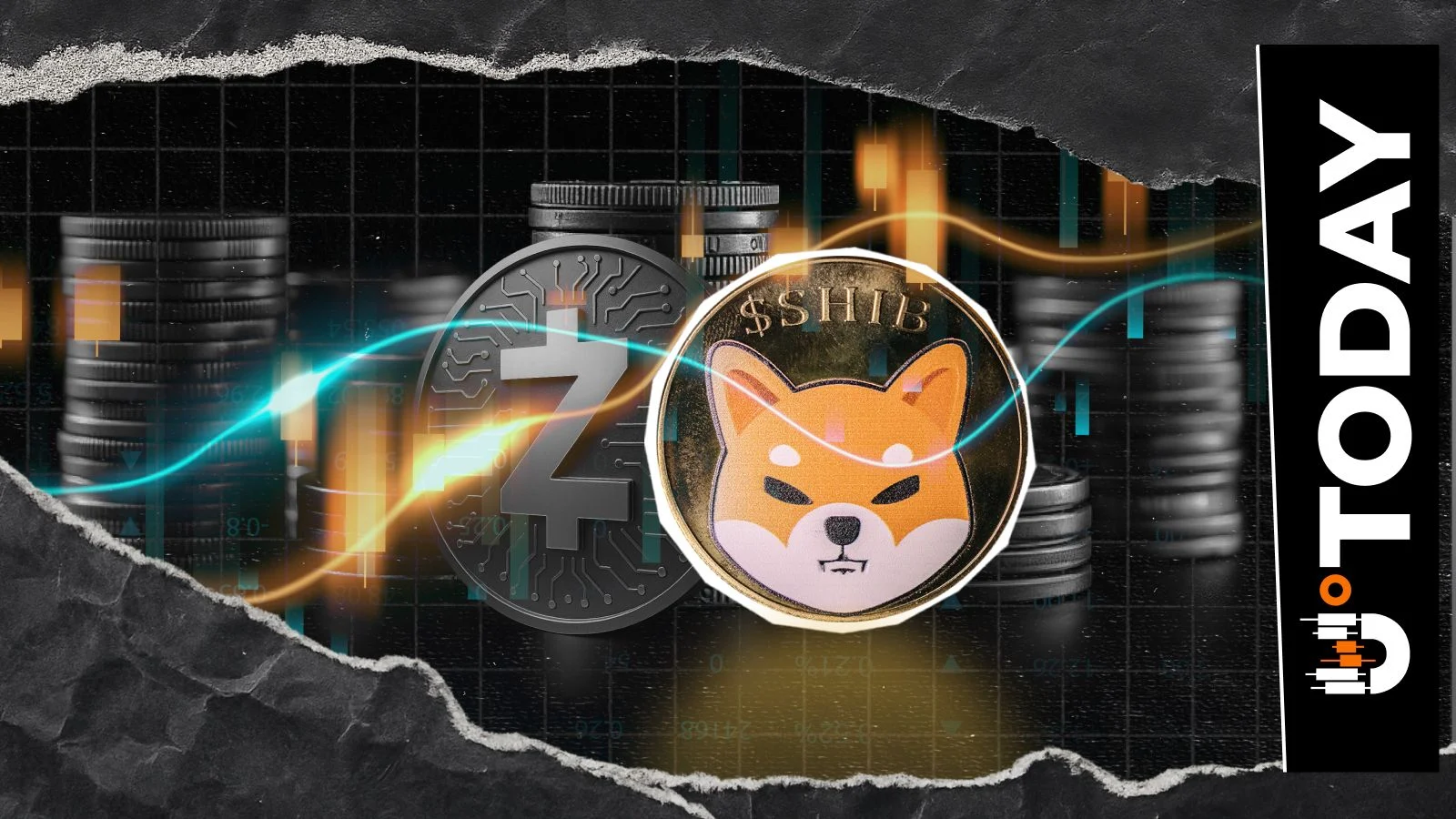
Shiba Inu (SHIB) has experienced a notable 4.2% price rally, outperforming the broader market and reclaiming a spot among the top 30 cryptocurrencies by market capitalization, surpassing Zcash (ZEC). The price surge for SHIB occurred despite a decline in its 24-hour trading volume and while the market remains in an accumulation phase, suggesting a speculative driver rather than broad market sentiment. The outperformance of speculative SHIB over utility-focused ZEC highlights current market risk appetite, with upcoming macroeconomic data releases on Friday potentially influencing near-term trends.

River price is testing a critical $18-$20 resistance zone, which represents the neckline of a significant inverted head and shoulders pattern, suggesting a potential trend reversal if confirmed above $20. Technical indicators like RSI and CMF show early bullish signals with room for upward movement, while increasing whale activity indicates accumulation ahead of a possible breakout. The recent price surge is supported by a fundamental narrative boost from a new partnership with DIA for oracle infrastructure integration, enhancing reliability for lending markets. On-chain activity, including transfer counts and wallet growth, shows a V-shaped recovery, signaling renewed user interaction and an expanding holder base crucial for sustaining a breakout.
Signal context only. Validate with price action, liquidity, and risk limits before taking a position.
OP Labs, a core developer for the Optimism Ethereum L2 network, has undergone layoffs to 'narrow focus,' signaling a strategic shift towards efficiency rather than financial distress. The restructuring at OP Labs, while not directly a financial crisis, could imply potential challenges in execution or a need to consolidate resources for future development within the competitive L2 scaling landscape. The OP token has seen a minor price dip following the news, indicating a short-term market reaction to organizational changes within a key Ethereum ecosystem contributor.
