
Navigating Crypto News

CoinFeather
Navigating Crypto News

Quick market read from this story
BitMEX co-founder Ben Delo's substantial donation to Reform UK highlights significant personal financial backing for political movements, irrespective of the donation's currency type.
The ongoing discussion and proposed moratorium on crypto donations in the UK underscore regulatory scrutiny and potential future restrictions on crypto's role in political finance.
While the donation itself is a private financial transaction, the context of potential regulatory action against crypto donations could influence market sentiment around regulatory risk in the UK.
Source, catalyst, and sector overlap from the latest feed.
TD Cowen analyst Lance Vitanza identifies three crypto stocks (Nakamoto, SharpLink, Strive) with potential to outperform Bitcoin ETFs due to aggressive coin accumulation and staking yield capture. The analysis suggests that these companies, despite recent price declines, offer a unique value proposition through direct asset holdings and synergistic business operations. SharpLink Gaming's focus on Ether treasury and staking yields, potentially exceeding ETPs, presents a specific opportunity for investors seeking ETH exposure beyond direct holding. Strive's acquisition of Semler Scientific positions it as a potential consolidator in the crypto treasury space, offering a strategic advantage in a market where other companies trade at a discount.
Live Feed
Loading the broader stream in the same flow as the homepage feed.
Geopolitical tensions surrounding the U.S.-Iran ceasefire and potential Strait of Hormuz disruptions are driving significant volatility in crude oil prices, overriding previous sell-offs and highlighting supply-side risks. The market is reacting sharply to news flow, with traders balancing diplomatic efforts against immediate supply concerns, suggesting a short-term trading environment heavily influenced by headline risk. Despite geopolitical drivers, steady demand signals and OPEC+'s cautious production strategy are providing underlying support, creating a complex price environment where supply constraints are a key factor.

A severe vulnerability in a third-party Android SDK exposed millions of crypto wallets to potential data theft, highlighting systemic risks in the mobile application ecosystem. While no active exploitation has been reported, the incident underscores the critical need for robust security audits of SDKs used by wallet providers to protect user PII and financial data. The swift mitigation across the Android ecosystem suggests a proactive approach to security, but the potential for future exploits remains a concern for mobile-first crypto users.
A significant withdrawal of 327 million DOGE from Robinhood to an unknown wallet suggests a large holder is moving assets off-exchange, potentially reducing sell-side liquidity. Large outflows from exchanges are typically interpreted as a bullish signal, as reduced available supply can lead to upward price pressure if demand remains constant or increases. While the direct impact of this single whale transaction is uncertain, it aligns with a broader pattern of accumulation that could support Dogecoin's price in the near term.

The increasing risk of advanced AI models being weaponized for cyberattacks is leading major AI labs like OpenAI and Anthropic to restrict access to their most powerful cybersecurity tools, signaling a shift towards controlled, invite-only releases for frontier models. This controlled release strategy for potent AI cybersecurity tools suggests a proactive approach by AI developers to mitigate regulatory scrutiny and potential misuse, positioning them as responsible actors in a sensitive domain. The trend of frontier AI models being distributed like classified research, rather than public products, implies that access to cutting-edge AI capabilities will become a privilege for vetted organizations, potentially creating a divide between defenders and attackers. The inadequacy of current AI safety benchmarks like Cybench to measure the capabilities of frontier models highlights the rapidly evolving nature of AI risks and the challenges in establishing effective safety protocols.
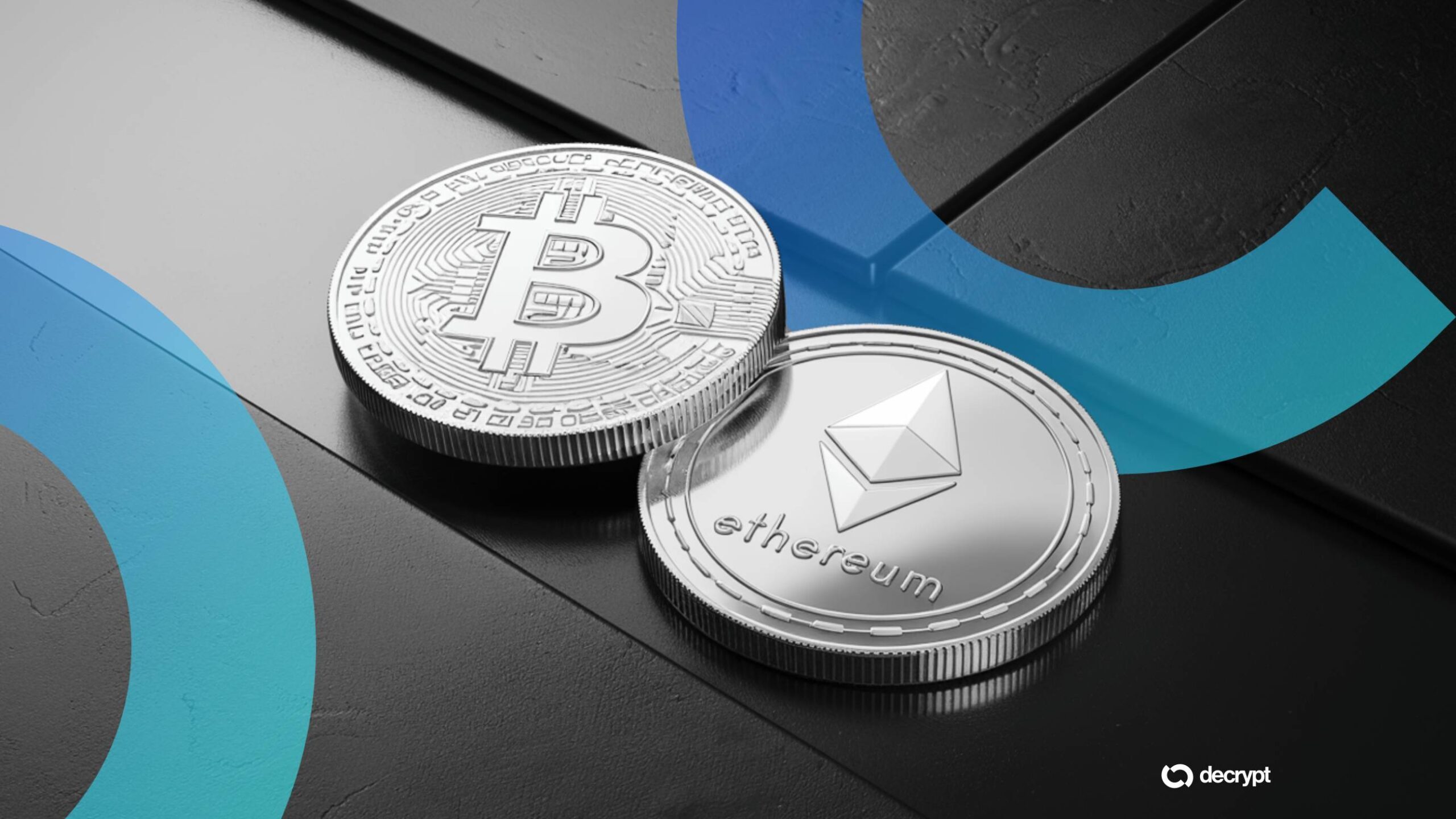
A significant surge in Bitcoin and Ethereum open interest, totaling over $4.3 billion, indicates traders are opening net new long positions, suggesting a renewed appetite for risk and potential upside momentum. The increase in coin-denominated open interest, coupled with positive Coinbase Premium for both BTC and ETH, points to genuine U.S. investor demand re-engagement, moving beyond short liquidations and signaling a potential reversal of recent bearish price action. Traders are front-running anticipated improvements in broader risk sentiment, potentially driven by macro events like the U.S.-Iran ceasefire, which could sustain the bullish trajectory if geopolitical stability holds.
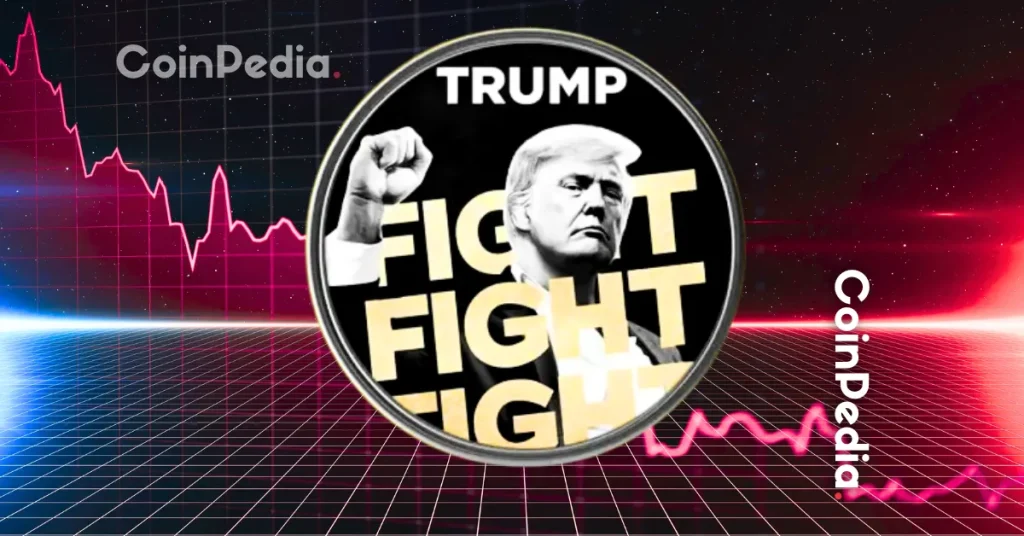
Donald Trump's potential attendance at a TRUMP memecoin event, despite the token's significant price decline, highlights the speculative nature of celebrity-endorsed memecoins and may attract short-term speculative interest. The TRUMP and MELANIA memecoins have experienced substantial price drops from their peaks, indicating high volatility and potential risks for investors, even with high-profile associations. The event's structure, offering exclusive entry to top holders, suggests a focus on community engagement and token holder incentives rather than fundamental utility, typical of the memecoin sector.

Established Layer-1 projects SUI and Chainlink are experiencing market pressure despite strong underlying technology, indicating broader market sentiment is outweighing individual project fundamentals. BlockDAG is in a presale phase with a low entry price, attracting attention ahead of its transition to public trading and potential exchange listings. The current market environment presents a dichotomy between established, range-bound assets and emerging projects with future catalysts, requiring careful risk assessment for traders. Despite Chainlink's adoption of cross-chain solutions and RWA integrations, its price remains constrained below key moving averages, suggesting limited short-term upside without new catalysts.

ETH price action above $2,150, supported by strong spot demand and a historically undervalued macro indicator, suggests a potential retest of March highs near $2,385 and a possible move towards $2,500. The Capriole Macro Index Oscillator at -2.42 indicates ETH is in a rare undervalued zone, historically preceding significant trend reversals and rallies, similar to patterns observed in mid-2022 and late-2023. Sustained spot CVD and a gradually rising futures CVD, coupled with a positive funding rate, point to controlled accumulation and a potential bullish continuation if futures positioning expands.
The launch of the Coinbase Store of Value Index, blending Bitcoin and gold with dynamic allocation, signals institutional adaptation to inflation risks and a search for alternative safe-haven assets beyond traditional gold. The index's inverse volatility allocation strategy aims to balance Bitcoin's growth potential with gold's stability, potentially offering improved risk-adjusted returns and smaller drawdowns compared to fixed allocations, reflecting evolving portfolio construction. This development highlights a growing institutional demand for hybrid investment solutions that integrate digital assets with traditional ones, driven by macroeconomic uncertainty and a desire for assets resistant to monetary expansion.

The substantial $8.5 billion loan secured by CoreWeave, backed by Meta Platforms, signals a significant shift in institutional financing from volatile crypto mining collateral to predictable, cash-flow-driven AI infrastructure. This transition from 'MinerFi' to 'ComputeFi' highlights the inherent fragility of crypto mining finance, which relied on depreciating hardware as collateral, contrasting with the stability offered by active AI compute with contracted customers. CoreWeave's success in securing this large financing round, coupled with its substantial backlog and diversified customer base, positions it as a leader in the 'neocloud' market, potentially drawing further institutional capital away from traditional crypto mining operations.

Layer-1 blockchains are showing divergent performance, with BNB Chain and TRON leading in user activity, suggesting potential capital rotation towards these ecosystems despite Ethereum's absence from the top 5. While user activity is a key adoption metric, it does not directly translate to price strength, as demonstrated by Sei's struggle despite high traffic, highlighting the importance of analyzing both usage and market structure for investment decisions. BNB and TRON show potential for price appreciation based on technical indicators and user growth, while NEAR and Solana exhibit cyclical price behavior influenced by broader altcoin sentiment, indicating varied investment profiles within the top Layer-1s.

Pyth Network's launch of a data marketplace challenges traditional financial data monopolies by offering a pay-on-demand model, potentially lowering costs for institutions and increasing competition in the $50 billion data industry. The integration of seven new institutional data providers, including Fidelity Investments and Euronext, signals growing adoption of blockchain-based data solutions by established financial players. Pyth's 'pull' data model contrasts with traditional 'push' oracle models, offering a more cost-effective and flexible solution for users who only require specific data feeds, which could drive demand for oracle services. The expansion into FX, precious metals, and crude oil swaps, alongside previous government data initiatives, indicates Pyth's strategic move to broaden its data offerings beyond crypto-native assets.

YouTube's introduction of AI avatar generation for Shorts signifies a move towards enhanced creator tools, potentially increasing engagement and content diversity on the platform. The integration of AI video generation, powered by Google's Veo 3.1, aligns with broader industry trends and highlights the growing utility of AI in content creation. While the feature aims to enhance user safety and creativity with watermarks and disclosures, the underlying AI technology raises ongoing concerns about deepfake proliferation and misuse.

Siren (SIREN) exhibits a significant 324% weekly gain, largely driven by a recovery from a prior sharp decline, indicating potential volatility rather than sustained new price discovery. Venice Token (VVV) benefits from a recent Bithumb listing and privacy-focused AI inference product launch, suggesting targeted adoption in specific markets. Morpho (MORPHO) shows steady growth driven by its role as a lending protocol and a notable ETH deployment from the Ethereum Foundation, highlighting institutional interest in DeFi infrastructure. JUST (JST) and DeXe (DEXE) demonstrate moderate gains attributed to token buyback programs, regional exchange listings, and narrative rotations towards governance, indicating a broader market uplift.

Cardano founder Charles Hoskinson's public dispute with the XRP community, fueled by personal attacks, highlights a perceived difference in decentralization philosophies between the two networks. The ongoing online conflict between Hoskinson and Ripple CEO Brad Garlinghouse, particularly concerning the CLARITY Act, suggests potential friction in regulatory approaches and industry lobbying efforts. While the exchange is contentious, it does not present a direct trading catalyst for either ADA or XRP, as it primarily revolves around philosophical and personal disagreements rather than fundamental protocol changes or market-moving events.
Signal context only. Validate with price action, liquidity, and risk limits before taking a position.
No sector mapping available.
The prediction market sector is consolidating around regulated entities like Kalshi, which now holds 89% of U.S. volume, indicating a potential shift away from crypto-native platforms facing regulatory uncertainty. A key legal battle between federal regulators and states over the classification of prediction markets as financial instruments versus gambling will significantly shape the future growth and operational framework of the industry. The increasing involvement of major exchanges like Binance and experimentation by others suggests growing institutional interest in prediction market products, potentially driving mainstream adoption if regulatory clarity is achieved. While crypto-native platforms like Polymarket are losing ground, their continued presence and the broader interest from exchanges highlight the underlying demand for event-based trading, creating a watch-and-wait scenario for market participants.
