
Navigating Crypto News

CoinFeather
Navigating Crypto News

Quick market read from this story
The substantial $8.5 billion loan secured by CoreWeave, backed by Meta Platforms, signals a significant shift in institutional financing from volatile crypto mining collateral to predictable, cash-flow-driven AI infrastructure.
This transition from 'MinerFi' to 'ComputeFi' highlights the inherent fragility of crypto mining finance, which relied on depreciating hardware as collateral, contrasting with the stability offered by active AI compute with contracted customers.
CoreWeave's success in securing this large financing round, coupled with its substantial backlog and diversified customer base, positions it as a leader in the 'neocloud' market, potentially drawing further institutional capital away from traditional crypto mining operations.
Source, catalyst, and sector overlap from the latest feed.
ETH price action above $2,150, supported by strong spot demand and a historically undervalued macro indicator, suggests a potential retest of March highs near $2,385 and a possible move towards $2,500. The Capriole Macro Index Oscillator at -2.42 indicates ETH is in a rare undervalued zone, historically preceding significant trend reversals and rallies, similar to patterns observed in mid-2022 and late-2023. Sustained spot CVD and a gradually rising futures CVD, coupled with a positive funding rate, point to controlled accumulation and a potential bullish continuation if futures positioning expands.
Live Feed
Loading the broader stream in the same flow as the homepage feed.
Geopolitical tensions surrounding the U.S.-Iran ceasefire and potential Strait of Hormuz disruptions are driving significant volatility in crude oil prices, overriding previous sell-offs and highlighting supply-side risks. The market is reacting sharply to news flow, with traders balancing diplomatic efforts against immediate supply concerns, suggesting a short-term trading environment heavily influenced by headline risk. Despite geopolitical drivers, steady demand signals and OPEC+'s cautious production strategy are providing underlying support, creating a complex price environment where supply constraints are a key factor.
The CLARITY Act's advancement, supported by Ripple CEO and SEC Chair, signals a potential shift towards regulatory clarity in the US, which could reduce offshore migration of crypto businesses. A White House report challenging the efficacy of a stablecoin yield ban may influence negotiations on the CLARITY Act, potentially easing restrictions on consumer benefits from stablecoin holdings. The ongoing debate over stablecoin yield provisions within the CLARITY Act highlights a key hurdle to legislative progress, indicating that resolution of this specific issue is critical for broader market structure reform.
A significant withdrawal of 327 million DOGE from Robinhood to an unknown wallet suggests a large holder is moving assets off-exchange, potentially reducing sell-side liquidity. Large outflows from exchanges are typically interpreted as a bullish signal, as reduced available supply can lead to upward price pressure if demand remains constant or increases. While the direct impact of this single whale transaction is uncertain, it aligns with a broader pattern of accumulation that could support Dogecoin's price in the near term.
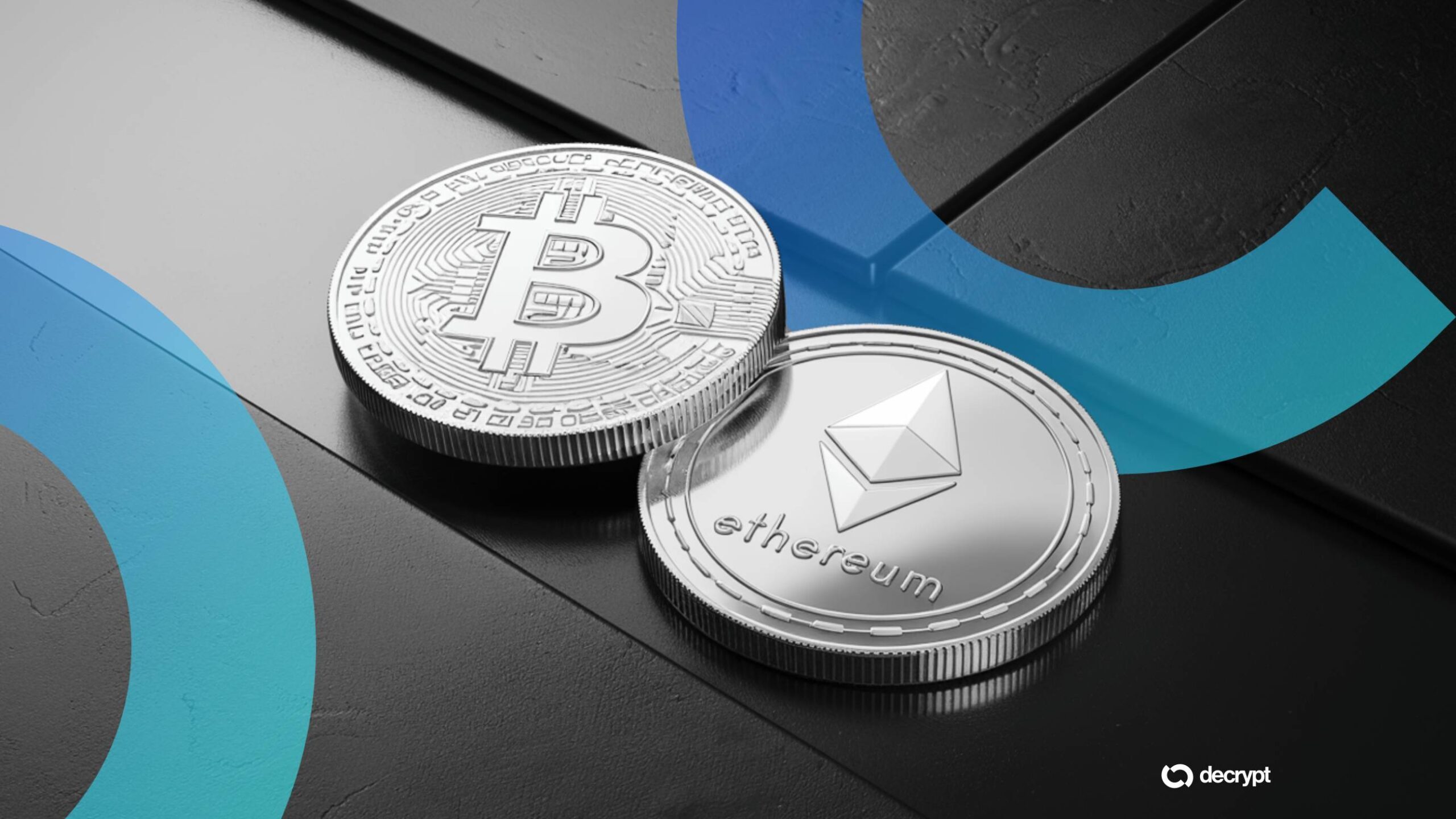
A significant surge in Bitcoin and Ethereum open interest, totaling over $4.3 billion, indicates traders are opening net new long positions, suggesting a renewed appetite for risk and potential upside momentum. The increase in coin-denominated open interest, coupled with positive Coinbase Premium for both BTC and ETH, points to genuine U.S. investor demand re-engagement, moving beyond short liquidations and signaling a potential reversal of recent bearish price action. Traders are front-running anticipated improvements in broader risk sentiment, potentially driven by macro events like the U.S.-Iran ceasefire, which could sustain the bullish trajectory if geopolitical stability holds.
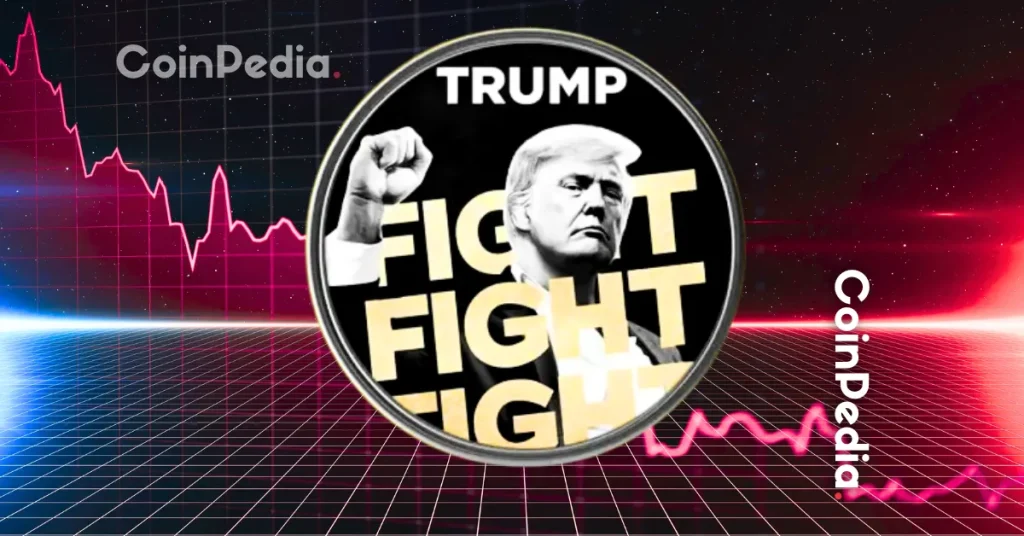
Donald Trump's potential attendance at a TRUMP memecoin event, despite the token's significant price decline, highlights the speculative nature of celebrity-endorsed memecoins and may attract short-term speculative interest. The TRUMP and MELANIA memecoins have experienced substantial price drops from their peaks, indicating high volatility and potential risks for investors, even with high-profile associations. The event's structure, offering exclusive entry to top holders, suggests a focus on community engagement and token holder incentives rather than fundamental utility, typical of the memecoin sector.

US Treasury Secretary Scott Bessent's call for swift passage of the CLARITY Act signals a critical juncture for US crypto regulation, with potential implications for capital flows and project domiciles. The warning that projects are moving offshore due to regulatory uncertainty highlights a competitive disadvantage for the US, suggesting that inaction could lead to a loss of innovation and market share. The upcoming April 13 markup, following agreement on stablecoin provisions, presents a key catalyst for the CLARITY Act, with potential to unlock clearer operational frameworks for digital assets.
The launch of the Coinbase Store of Value Index, blending Bitcoin and gold with dynamic allocation, signals institutional adaptation to inflation risks and a search for alternative safe-haven assets beyond traditional gold. The index's inverse volatility allocation strategy aims to balance Bitcoin's growth potential with gold's stability, potentially offering improved risk-adjusted returns and smaller drawdowns compared to fixed allocations, reflecting evolving portfolio construction. This development highlights a growing institutional demand for hybrid investment solutions that integrate digital assets with traditional ones, driven by macroeconomic uncertainty and a desire for assets resistant to monetary expansion.

US Treasury Secretary Scott Bessent is actively pushing for the CLARITY Act's passage, framing it as crucial for maintaining US global financial leadership and mitigating market volatility. The CLARITY Act aims to establish a clear regulatory framework for crypto, potentially unlocking significant institutional investment by reducing legal ambiguity and fostering a 'pro-innovation' environment. Disagreements over stablecoin yields have been a key hurdle, but recent White House economic refutations of harm to banks suggest a potential path forward for the legislation. With a stated goal of Senate approval in April and presidential signing by mid-year, the CLARITY Act represents a significant regulatory catalyst that could reshape the US crypto landscape.
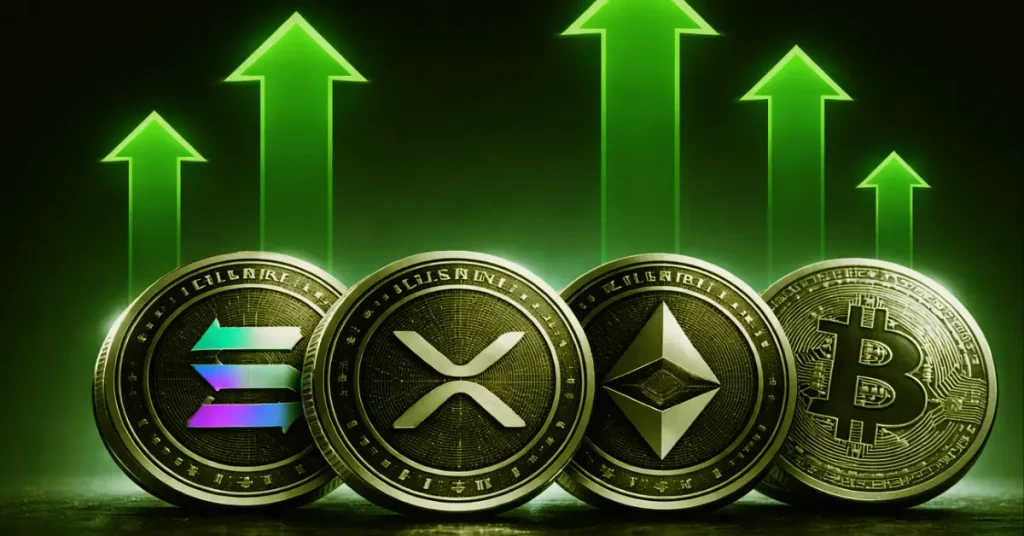
Layer-1 blockchains are showing divergent performance, with BNB Chain and TRON leading in user activity, suggesting potential capital rotation towards these ecosystems despite Ethereum's absence from the top 5. While user activity is a key adoption metric, it does not directly translate to price strength, as demonstrated by Sei's struggle despite high traffic, highlighting the importance of analyzing both usage and market structure for investment decisions. BNB and TRON show potential for price appreciation based on technical indicators and user growth, while NEAR and Solana exhibit cyclical price behavior influenced by broader altcoin sentiment, indicating varied investment profiles within the top Layer-1s.

Siren (SIREN) exhibits a significant 324% weekly gain, largely driven by a recovery from a prior sharp decline, indicating potential volatility rather than sustained new price discovery. Venice Token (VVV) benefits from a recent Bithumb listing and privacy-focused AI inference product launch, suggesting targeted adoption in specific markets. Morpho (MORPHO) shows steady growth driven by its role as a lending protocol and a notable ETH deployment from the Ethereum Foundation, highlighting institutional interest in DeFi infrastructure. JUST (JST) and DeXe (DEXE) demonstrate moderate gains attributed to token buyback programs, regional exchange listings, and narrative rotations towards governance, indicating a broader market uplift.
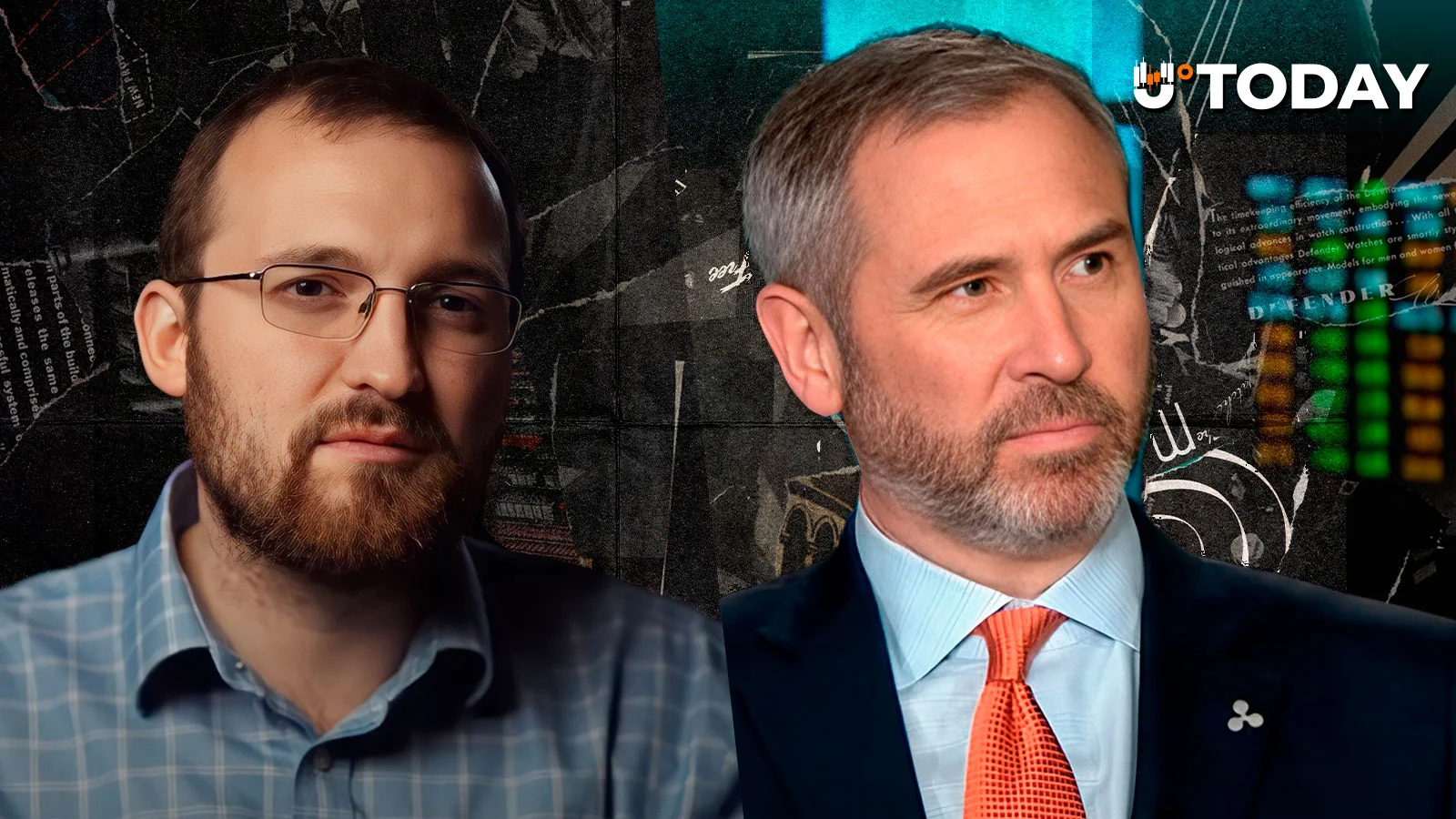
Cardano founder Charles Hoskinson's public dispute with the XRP community, fueled by personal attacks, highlights a perceived difference in decentralization philosophies between the two networks. The ongoing online conflict between Hoskinson and Ripple CEO Brad Garlinghouse, particularly concerning the CLARITY Act, suggests potential friction in regulatory approaches and industry lobbying efforts. While the exchange is contentious, it does not present a direct trading catalyst for either ADA or XRP, as it primarily revolves around philosophical and personal disagreements rather than fundamental protocol changes or market-moving events.
Signal context only. Validate with price action, liquidity, and risk limits before taking a position.
US senators are investigating potential conflicts of interest regarding President Trump's involvement with a memecoin, raising questions about whether his attendance at a related event is being used to generate fees. The inquiry into Trump's memecoin activities occurs amidst ongoing, stalled discussions in Congress regarding digital asset market structure legislation. The potential for "selling access" to the presidency in relation to memecoin promotion highlights ethical concerns that could influence regulatory sentiment and future legislative actions.
