
Navigating Crypto News

CoinFeather
Navigating Crypto News

Quick market read from this story
US Treasury Secretary Scott Bessent's call for swift passage of the CLARITY Act signals a critical juncture for US crypto regulation, with potential implications for capital flows and project domiciles.
The warning that projects are moving offshore due to regulatory uncertainty highlights a competitive disadvantage for the US, suggesting that inaction could lead to a loss of innovation and market share.
The upcoming April 13 markup, following agreement on stablecoin provisions, presents a key catalyst for the CLARITY Act, with potential to unlock clearer operational frameworks for digital assets.
Source, catalyst, and sector overlap from the latest feed.
Cardano's price is testing critical support at $0.25, with significant long liquidations indicating bearish sentiment in the derivatives market. Despite price weakness, Cardano whale wallets holding over 10 million ADA have reached a four-month high, suggesting accumulation by large holders amidst selling pressure. The immediate price action for ADA hinges on defending the $0.24-$0.25 support zone; a break below could lead to further declines towards $0.22, while reclaiming the 50-day EMA at $0.268 is key for a bullish reversal. The current market structure for ADA is fragile, trading below key moving averages with mixed momentum indicators, suggesting a potential range-bound or downward trend until stronger buying conviction emerges.
Live Feed
Loading the broader stream in the same flow as the homepage feed.
BlockDAG (BDAG) is attracting significant market attention due to its early-stage positioning and upcoming exchange listings, suggesting potential for increased trading activity and price appreciation. Shiba Inu (SHIB), Bonk (BONK), and FLOKI are in consolidation phases with key resistance levels to overcome, indicating a need for stronger momentum to signal a trend reversal. The article highlights a contrast between the emerging attention on BlockDAG and the consolidation patterns of established meme coins like SHIB, BONK, and FLOKI, presenting different risk/reward profiles for traders. Upcoming exchange listings and ecosystem developments for BlockDAG in April, May, and June are key catalysts that market participants will monitor for potential price impact.
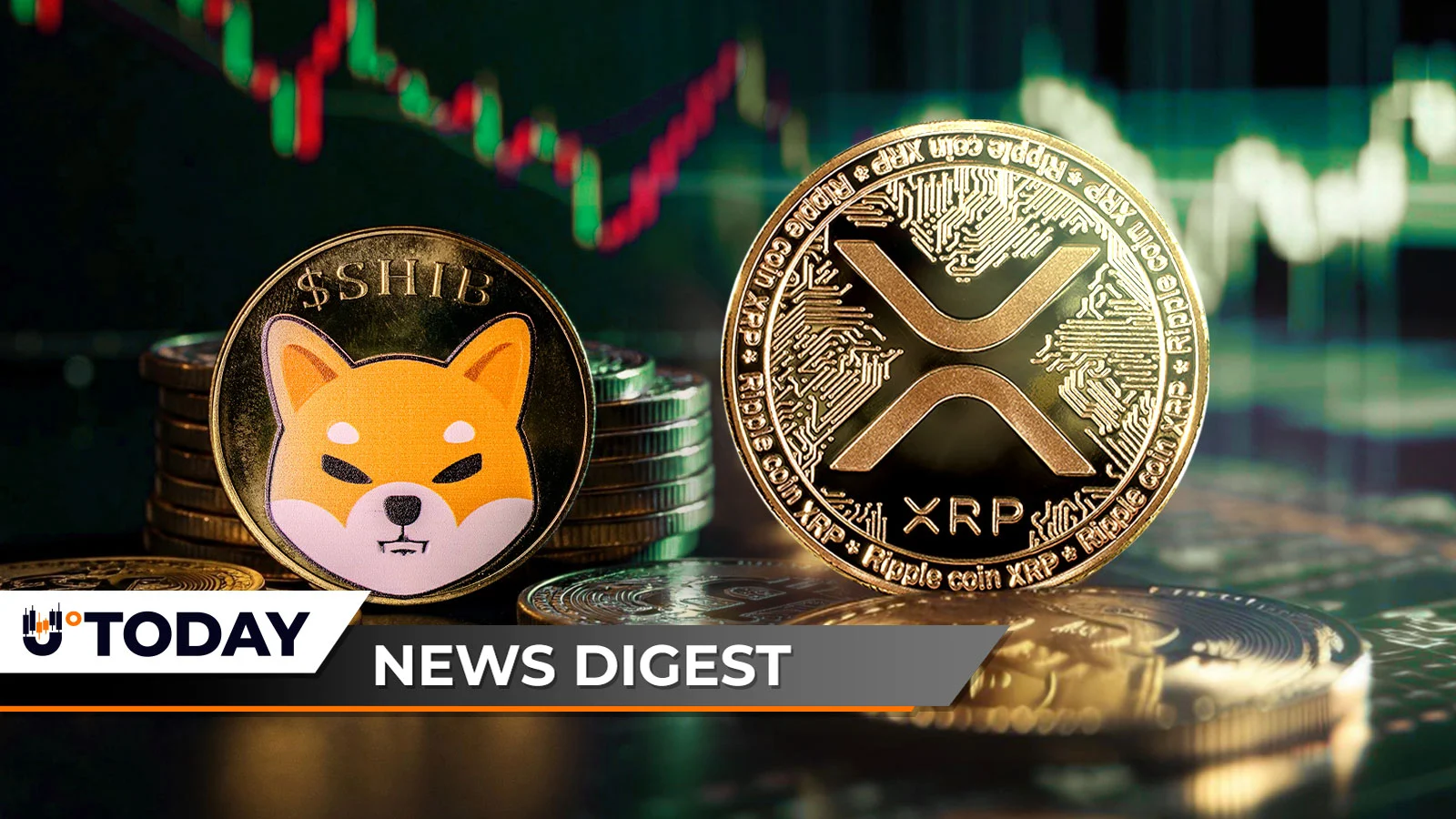
XRP ETF inflows show a notable short-term rotation away from Bitcoin and Ethereum, driven by outflows in the larger assets rather than direct XRP accumulation. The significant surge in Shiba Inu's burn rate, while small in absolute value, signals increasing investor demand and potential bullish sentiment for the meme token. Michael Saylor's refutation of Adam Back as Satoshi Nakamoto, based on direct communication evidence, dismisses a recent investigative claim and maintains the mystery around Bitcoin's creator.

Securitize's appointment of a former SEC director and Coinbase capital markets head signals a strategic move to bolster its position in the growing Real-World Asset (RWA) tokenization sector. The hiring of Brett Redfearn, who has experience at both the SEC and a major exchange, could indicate Securitize's intent to navigate regulatory landscapes more effectively and attract traditional finance interest. This development aligns with increasing institutional demand for RWA tokenization, suggesting Securitize aims to leverage its new leadership to capture a larger share of this expanding market segment.
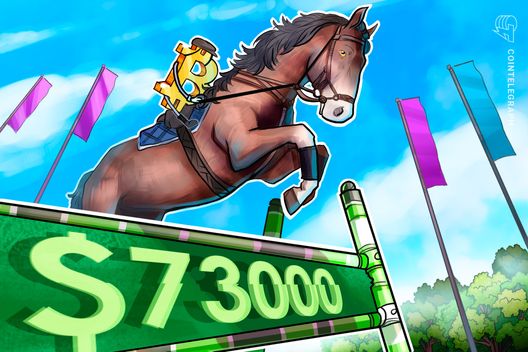
Bitcoin's resilience above $72,000 is driven by its status as a scarce asset amidst rising US recession risks and a weakening dollar, overriding immediate inflation concerns. Geopolitical tensions surrounding Iran and potential ceasefire violations pose a significant risk to Bitcoin's recent gains, with traders fearing a potential drop below $68,000 if tensions escalate. Despite weak US economic data and sticky inflation, the market is not pricing in immediate credit or AI infrastructure risks, suggesting Bitcoin's price action is more sensitive to geopolitical sentiment than domestic economic indicators currently. The inverse correlation between oil prices and risk assets like Bitcoin highlights the market's sensitivity to geopolitical events, suggesting that any de-escalation could lead to a reversal of recent gains.
Geopolitical tensions surrounding the U.S.-Iran ceasefire and potential Strait of Hormuz disruptions are driving significant volatility in crude oil prices, overriding previous sell-offs and highlighting supply-side risks. The market is reacting sharply to news flow, with traders balancing diplomatic efforts against immediate supply concerns, suggesting a short-term trading environment heavily influenced by headline risk. Despite geopolitical drivers, steady demand signals and OPEC+'s cautious production strategy are providing underlying support, creating a complex price environment where supply constraints are a key factor.

TD Cowen analyst Lance Vitanza identifies three crypto stocks (Nakamoto, SharpLink, Strive) with potential to outperform Bitcoin ETFs due to aggressive coin accumulation and staking yield capture. The analysis suggests that these companies, despite recent price declines, offer a unique value proposition through direct asset holdings and synergistic business operations. SharpLink Gaming's focus on Ether treasury and staking yields, potentially exceeding ETPs, presents a specific opportunity for investors seeking ETH exposure beyond direct holding. Strive's acquisition of Semler Scientific positions it as a potential consolidator in the crypto treasury space, offering a strategic advantage in a market where other companies trade at a discount.

A severe vulnerability in a third-party Android SDK exposed millions of crypto wallets to potential data theft, highlighting systemic risks in the mobile application ecosystem. While no active exploitation has been reported, the incident underscores the critical need for robust security audits of SDKs used by wallet providers to protect user PII and financial data. The swift mitigation across the Android ecosystem suggests a proactive approach to security, but the potential for future exploits remains a concern for mobile-first crypto users.
A significant withdrawal of 327 million DOGE from Robinhood to an unknown wallet suggests a large holder is moving assets off-exchange, potentially reducing sell-side liquidity. Large outflows from exchanges are typically interpreted as a bullish signal, as reduced available supply can lead to upward price pressure if demand remains constant or increases. While the direct impact of this single whale transaction is uncertain, it aligns with a broader pattern of accumulation that could support Dogecoin's price in the near term.

The increasing risk of advanced AI models being weaponized for cyberattacks is leading major AI labs like OpenAI and Anthropic to restrict access to their most powerful cybersecurity tools, signaling a shift towards controlled, invite-only releases for frontier models. This controlled release strategy for potent AI cybersecurity tools suggests a proactive approach by AI developers to mitigate regulatory scrutiny and potential misuse, positioning them as responsible actors in a sensitive domain. The trend of frontier AI models being distributed like classified research, rather than public products, implies that access to cutting-edge AI capabilities will become a privilege for vetted organizations, potentially creating a divide between defenders and attackers. The inadequacy of current AI safety benchmarks like Cybench to measure the capabilities of frontier models highlights the rapidly evolving nature of AI risks and the challenges in establishing effective safety protocols.
A significant surge in Bitcoin and Ethereum open interest, totaling over $4.3 billion, indicates traders are opening net new long positions, suggesting a renewed appetite for risk and potential upside momentum. The increase in coin-denominated open interest, coupled with positive Coinbase Premium for both BTC and ETH, points to genuine U.S. investor demand re-engagement, moving beyond short liquidations and signaling a potential reversal of recent bearish price action. Traders are front-running anticipated improvements in broader risk sentiment, potentially driven by macro events like the U.S.-Iran ceasefire, which could sustain the bullish trajectory if geopolitical stability holds.
Donald Trump's potential attendance at a TRUMP memecoin event, despite the token's significant price decline, highlights the speculative nature of celebrity-endorsed memecoins and may attract short-term speculative interest. The TRUMP and MELANIA memecoins have experienced substantial price drops from their peaks, indicating high volatility and potential risks for investors, even with high-profile associations. The event's structure, offering exclusive entry to top holders, suggests a focus on community engagement and token holder incentives rather than fundamental utility, typical of the memecoin sector.

Established Layer-1 projects SUI and Chainlink are experiencing market pressure despite strong underlying technology, indicating broader market sentiment is outweighing individual project fundamentals. BlockDAG is in a presale phase with a low entry price, attracting attention ahead of its transition to public trading and potential exchange listings. The current market environment presents a dichotomy between established, range-bound assets and emerging projects with future catalysts, requiring careful risk assessment for traders. Despite Chainlink's adoption of cross-chain solutions and RWA integrations, its price remains constrained below key moving averages, suggesting limited short-term upside without new catalysts.
Signal context only. Validate with price action, liquidity, and risk limits before taking a position.
The filing of the first spot Pepe Coin ETF by Canary Capital signals growing institutional interest in meme coins beyond major cryptocurrencies, potentially broadening the scope of crypto investment products. Despite the ETF filing, Pepe Coin's price has declined, indicating that current market conditions and weak investor demand for meme coin ETFs are limiting the immediate positive impact on the asset's price. Canary Capital's expansion into meme coin ETFs, including filings for other meme tokens, suggests a strategic diversification into niche crypto assets, which could set a precedent for future product development in the space.
