
Navigating Crypto News

CoinFeather
Navigating Crypto News
Quick market read from this story
BlockDAG (BDAG) is attracting significant market attention due to its early-stage positioning and upcoming exchange listings, suggesting potential for increased trading activity and price appreciation.
Shiba Inu (SHIB), Bonk (BONK), and FLOKI are in consolidation phases with key resistance levels to overcome, indicating a need for stronger momentum to signal a trend reversal.
The article highlights a contrast between the emerging attention on BlockDAG and the consolidation patterns of established meme coins like SHIB, BONK, and FLOKI, presenting different risk/reward profiles for traders.
Upcoming exchange listings and ecosystem developments for BlockDAG in April, May, and June are key catalysts that market participants will monitor for potential price impact.
Source, catalyst, and sector overlap from the latest feed.
BlockDAG's Batch 4 opens at $0.0000061, marking a pre-trading phase distinct from the current market performance of established assets like SUI and LINK. SUI faces technical pressure with bearish indicators and a price below its 200-day moving average, suggesting a cautious outlook despite ongoing development in gaming and NFTs. Chainlink (LINK) shows strong utility in RWA tokenization and CCIP adoption but struggles to break above the $9 resistance level, indicating its price action is currently range-bound. BlockDAG's upcoming roadmap includes DEX and liquidity rewards in May, followed by Super App, lending, and dApp launches in June, signaling a planned expansion phase post-TGE.
Live Feed
Loading the broader stream in the same flow as the homepage feed.
TD Cowen maintains a 'buy' rating on Strategy despite a reduced price target, indicating continued confidence in the Bitcoin treasury firm's long-term prospects. Analysts initiated coverage on Sharplink with a 'buy' rating, highlighting its superior Ethereum staking yield potential compared to ETFs, suggesting a favorable outlook for the Ethereum treasury company. Sharplink's staking revenue is projected to cover operating costs even with depressed ETH prices, providing a defensive fundamental for the company's valuation. The reduced price target for Strategy reflects lower expectations for future Bitcoin prices, suggesting a cautious outlook on Bitcoin's immediate upside potential from the analyst's perspective.
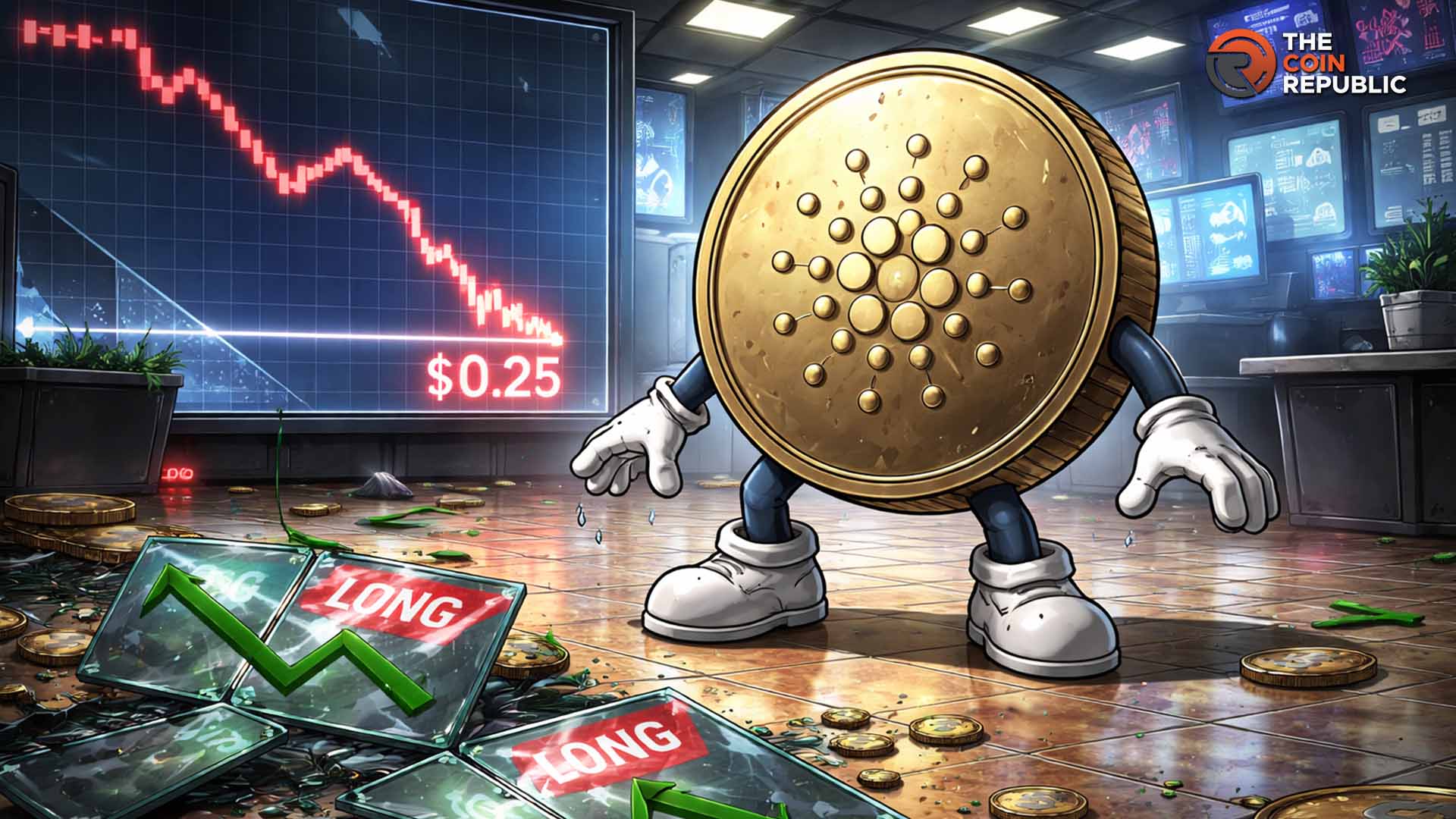
Cardano's price is testing critical support at $0.25, with significant long liquidations indicating bearish sentiment in the derivatives market. Despite price weakness, Cardano whale wallets holding over 10 million ADA have reached a four-month high, suggesting accumulation by large holders amidst selling pressure. The immediate price action for ADA hinges on defending the $0.24-$0.25 support zone; a break below could lead to further declines towards $0.22, while reclaiming the 50-day EMA at $0.268 is key for a bullish reversal. The current market structure for ADA is fragile, trading below key moving averages with mixed momentum indicators, suggesting a potential range-bound or downward trend until stronger buying conviction emerges.

Florida's Attorney General has launched an investigation into OpenAI, citing national security, child safety, and criminal misuse concerns related to ChatGPT. This regulatory action signals increasing government scrutiny of AI technologies, potentially impacting development and adoption across the sector. While the investigation focuses on OpenAI, it reflects a broader trend of regulatory pressure on AI chatbots, which could spill over to other AI-related crypto projects. OpenAI has pledged cooperation, highlighting the ongoing tension between AI innovation and public safety concerns that market participants must monitor.

Securitize's appointment of a former SEC director and Coinbase capital markets head signals a strategic move to bolster its position in the growing Real-World Asset (RWA) tokenization sector. The hiring of Brett Redfearn, who has experience at both the SEC and a major exchange, could indicate Securitize's intent to navigate regulatory landscapes more effectively and attract traditional finance interest. This development aligns with increasing institutional demand for RWA tokenization, suggesting Securitize aims to leverage its new leadership to capture a larger share of this expanding market segment.
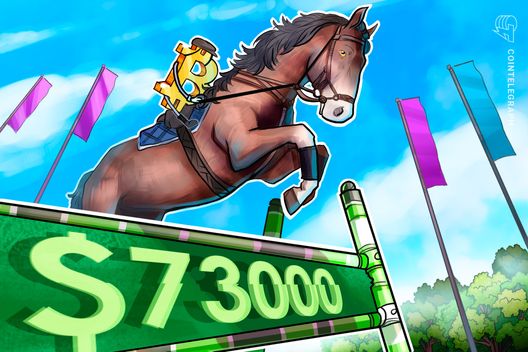
Bitcoin's resilience above $72,000 is driven by its status as a scarce asset amidst rising US recession risks and a weakening dollar, overriding immediate inflation concerns. Geopolitical tensions surrounding Iran and potential ceasefire violations pose a significant risk to Bitcoin's recent gains, with traders fearing a potential drop below $68,000 if tensions escalate. Despite weak US economic data and sticky inflation, the market is not pricing in immediate credit or AI infrastructure risks, suggesting Bitcoin's price action is more sensitive to geopolitical sentiment than domestic economic indicators currently. The inverse correlation between oil prices and risk assets like Bitcoin highlights the market's sensitivity to geopolitical events, suggesting that any de-escalation could lead to a reversal of recent gains.

The US Treasury's expansion of cybersecurity threat intelligence to digital asset companies signals a proactive governmental stance on mitigating risks within the growing crypto sector. This initiative, fulfilling policy recommendations, suggests increased regulatory attention and potential for enhanced security standards across blockchain platforms. The move comes amid rising frequency and sophistication of cyber threats targeting crypto, including state-affiliated hacking groups, highlighting the sector's vulnerability and the need for improved defenses.

Bitcoin's price surge above $72,000 is primarily driven by easing geopolitical tensions, overshadowing negative corporate news for Circle and Bullish. Circle's significant price drop is attributed to analyst downgrades citing concerns over shrinking margins from revenue-sharing agreements on stablecoin platforms. Bullish faces downward pressure from a downgrade due to its premium valuation relative to peers and weakening crypto activity impacting revenue streams. The market is bifurcating, with macro sentiment lifting Bitcoin while specific crypto-related equities like Circle and Bullish are impacted by company-specific fundamental concerns.

Circle's stock decline of nearly 10% follows a sell rating from Compass Point, signaling potential downside risk for investors holding CRCL shares. The Drift Protocol exploit, while not directly involving Circle, has heightened concerns about counterparty risk and DeFi platform stability, indirectly impacting sentiment towards stablecoin issuers like Circle. Despite analyst concerns and regulatory uncertainty, Bernstein maintains a positive outlook on Circle, citing strong USDC adoption and reserve income, suggesting underlying business resilience. The market is closely watching regulatory developments in the US, as stalled progress on market structure legislation and lobbying against yield-bearing stablecoins create an uncertain environment for Circle and its products.
Geopolitical tensions surrounding the U.S.-Iran ceasefire and potential Strait of Hormuz disruptions are driving significant volatility in crude oil prices, overriding previous sell-offs and highlighting supply-side risks. The market is reacting sharply to news flow, with traders balancing diplomatic efforts against immediate supply concerns, suggesting a short-term trading environment heavily influenced by headline risk. Despite geopolitical drivers, steady demand signals and OPEC+'s cautious production strategy are providing underlying support, creating a complex price environment where supply constraints are a key factor.
The CLARITY Act's advancement, supported by Ripple CEO and SEC Chair, signals a potential shift towards regulatory clarity in the US, which could reduce offshore migration of crypto businesses. A White House report challenging the efficacy of a stablecoin yield ban may influence negotiations on the CLARITY Act, potentially easing restrictions on consumer benefits from stablecoin holdings. The ongoing debate over stablecoin yield provisions within the CLARITY Act highlights a key hurdle to legislative progress, indicating that resolution of this specific issue is critical for broader market structure reform.

TD Cowen analyst Lance Vitanza identifies three crypto stocks (Nakamoto, SharpLink, Strive) with potential to outperform Bitcoin ETFs due to aggressive coin accumulation and staking yield capture. The analysis suggests that these companies, despite recent price declines, offer a unique value proposition through direct asset holdings and synergistic business operations. SharpLink Gaming's focus on Ether treasury and staking yields, potentially exceeding ETPs, presents a specific opportunity for investors seeking ETH exposure beyond direct holding. Strive's acquisition of Semler Scientific positions it as a potential consolidator in the crypto treasury space, offering a strategic advantage in a market where other companies trade at a discount.

A severe vulnerability in a third-party Android SDK exposed millions of crypto wallets to potential data theft, highlighting systemic risks in the mobile application ecosystem. While no active exploitation has been reported, the incident underscores the critical need for robust security audits of SDKs used by wallet providers to protect user PII and financial data. The swift mitigation across the Android ecosystem suggests a proactive approach to security, but the potential for future exploits remains a concern for mobile-first crypto users.

The increasing risk of advanced AI models being weaponized for cyberattacks is leading major AI labs like OpenAI and Anthropic to restrict access to their most powerful cybersecurity tools, signaling a shift towards controlled, invite-only releases for frontier models. This controlled release strategy for potent AI cybersecurity tools suggests a proactive approach by AI developers to mitigate regulatory scrutiny and potential misuse, positioning them as responsible actors in a sensitive domain. The trend of frontier AI models being distributed like classified research, rather than public products, implies that access to cutting-edge AI capabilities will become a privilege for vetted organizations, potentially creating a divide between defenders and attackers. The inadequacy of current AI safety benchmarks like Cybench to measure the capabilities of frontier models highlights the rapidly evolving nature of AI risks and the challenges in establishing effective safety protocols.
A significant surge in Bitcoin and Ethereum open interest, totaling over $4.3 billion, indicates traders are opening net new long positions, suggesting a renewed appetite for risk and potential upside momentum. The increase in coin-denominated open interest, coupled with positive Coinbase Premium for both BTC and ETH, points to genuine U.S. investor demand re-engagement, moving beyond short liquidations and signaling a potential reversal of recent bearish price action. Traders are front-running anticipated improvements in broader risk sentiment, potentially driven by macro events like the U.S.-Iran ceasefire, which could sustain the bullish trajectory if geopolitical stability holds.
Signal context only. Validate with price action, liquidity, and risk limits before taking a position.
Established Layer-1 projects SUI and Chainlink are experiencing market pressure despite strong underlying technology, indicating broader market sentiment is outweighing individual project fundamentals. BlockDAG is in a presale phase with a low entry price, attracting attention ahead of its transition to public trading and potential exchange listings. The current market environment presents a dichotomy between established, range-bound assets and emerging projects with future catalysts, requiring careful risk assessment for traders. Despite Chainlink's adoption of cross-chain solutions and RWA integrations, its price remains constrained below key moving averages, suggesting limited short-term upside without new catalysts.
