
Navigating Crypto News

CoinFeather
Navigating Crypto News

Quick market read from this story
Bitcoin has shown resilience by recovering from weekend lows, driven by easing geopolitical tensions and positive shifts in international relations.
The market is observing a potential pattern repetition in Bitcoin's consolidation period, with some traders anticipating a downside retest similar to previous cycles.
Crypto-related stocks like Circle, Coinbase, and MicroStrategy are experiencing gains, indicating a broader market recovery sentiment influenced by macro events.
Source, catalyst, and sector overlap from the latest feed.
Kraken's confirmation of an extortion attempt, despite no system breach or client fund risk, highlights ongoing security vulnerabilities within exchanges and the persistent threat of insider-related data access. The exchange's refusal to pay criminals and collaboration with law enforcement signals a firm stance against extortion, potentially setting a precedent for handling similar incidents. The incident, affecting a small fraction of clients (2,000 out of millions), suggests that while the direct financial impact is contained, the reputational risk and the broader implications for exchange security remain significant.
Live Feed
Loading the broader stream in the same flow as the homepage feed.

Justin Sun's public accusation of World Liberty Financial (WLFI) embedding backdoor controls and treating the community as a 'personal ATM' signals a severe governance dispute and potential smart contract vulnerability. The escalating public feud between a major token holder and the project's core team, coupled with WLFI token's all-time low price, suggests significant internal discord and investor distrust. The dispute's timing and political undertones, referencing past SEC settlements and potential future scrutiny, indicate that regulatory and political risks may significantly impact the project's valuation and operational stability.
XRP witnessed $19.3M in weekly inflows as assets under management (AUM) reached $2.46 billion.
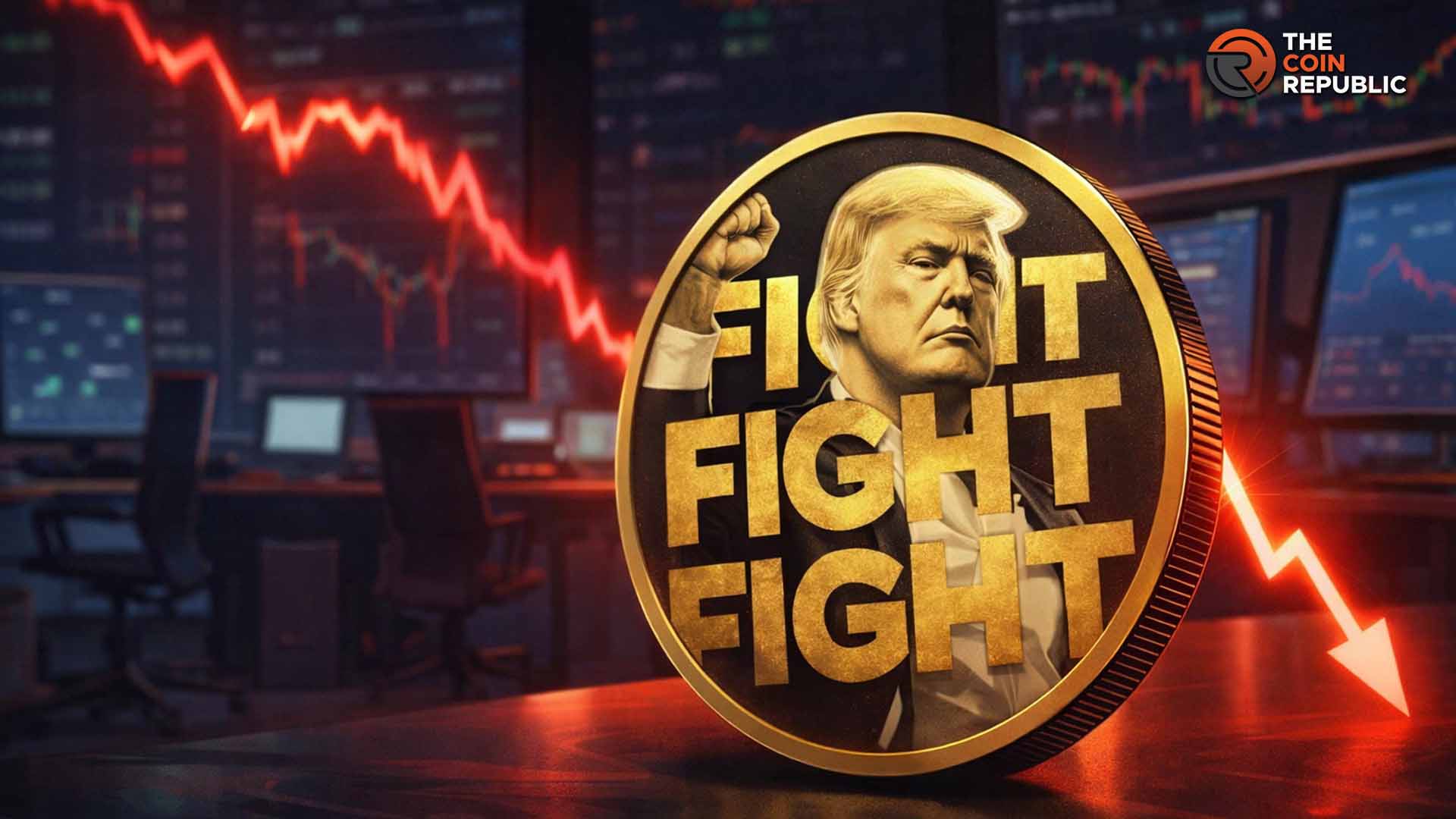
The TRUMP token is experiencing a significant price decline of nearly 30% over the past month, despite increased whale accumulation, indicating a bearish sentiment despite event-driven hype. The upcoming Mar-a-Lago event, which requires token holdings for entry, is failing to catalyze a price surge, suggesting that speculative demand for event access is not translating into sustained buying pressure. Declining trading volume and momentum suggest that traders are adopting a cautious stance, potentially anticipating further price drops or awaiting clearer fundamental catalysts beyond event speculation. While whale accumulation aims to secure event access, historical patterns suggest that such short-term demand spikes often precede price declines as early participants take profits.

This publication is sponsored and written by a third party. Coindoo does not endorse or assume responsibility for the content, […] The post IPO Genie Presale Progresses From Early Phase to Phase 81 appeared first on Coindoo.
Bitcoin experienced a significant short liquidation cascade, with bears losing 108 times more than bulls due to a rapid 1% price spike to $72,530. The price action suggests a potential short squeeze, with liquidity above $72,000 being targeted, indicating short-term volatility driven by derivatives market dynamics. Bitcoin's correlation with crude oil and safe-haven assets highlights its emerging role as a risk-hedging tool amid geopolitical uncertainty, particularly concerning energy supply. A correction to $70,540 could trigger substantial long liquidations ($114.5 million), suggesting potential for further volatility and mirroring the recent short squeeze event.

Ethereum price has reclaimed the $2,200 level, but the rally lacks conviction as it remains within a rising channel and faces resistance at $2,300-$2,400. Momentum indicators like RSI and MACD show slowing momentum, suggesting the current price action may be a rejection rather than a sustained breakout. While on-chain activity shows signs of recovery, it has not accelerated in line with the price, indicating a potential disconnect that could limit upside. Traders should remain cautious, as a failure to hold $2,200 support could lead to a decline towards $2,000-$2,050, emphasizing a reactive approach over predictive positioning.
XRP's perpetual futures open interest has seen a dramatic 96% decline over six months, indicating extreme caution among derivatives traders following a significant crash in October 2025. The sustained low open interest suggests a lack of conviction from futures traders to re-engage with high-leverage positions, despite short-term price rebounds, signaling a weak derivative market sentiment for XRP. The prolonged downturn in XRP's derivatives market, evidenced by the sharp drop in open interest, points to a potential lack of institutional or speculative interest in short-term price movements.
Geopolitical tensions in the Middle East, specifically a naval blockade targeting Iranian oil shipments, are driving crude oil prices higher, creating a risk-off sentiment in traditional markets. Goldman Sachs' disappointing fixed income trading results are weighing on the Dow Jones Industrial Average, highlighting potential cracks in the financial sector amidst ongoing earnings season. The S&P 500 is exhibiting a flat performance as markets remain in a holding pattern, balancing rising geopolitical risks against hopes for diplomatic solutions and upcoming earnings reports. While oil prices surge due to supply disruption fears, ongoing diplomatic efforts and the potential for further negotiations introduce uncertainty, preventing decisive market movements.
Ripple has burned 29.9 million RLUSD tokens on Ethereum, indicating active treasury management and potential supply adjustments for its stablecoin. The RLUSD burn follows recent minting activity, suggesting dynamic rebalancing of the stablecoin supply across different ledgers. While the RLUSD burn is a direct event, the article also includes a significant long-term prediction of stablecoin volume reaching $1.5 quadrillion by 2035, driven by wealth transfer and adoption.

The Hyperbridge exploit, while resulting in limited direct financial loss due to shallow liquidity, highlights systemic risks in cross-chain bridges, potentially pressuring DOT's price near all-time lows. The vulnerability in Hyperbridge's MMR proof replay mechanism underscores the critical need for robust input validation in cross-chain communication protocols. Despite the exploit targeting Hyperbridge's Ethereum gateway, the incident negatively impacts market perception of the Polkadot ecosystem, driving DOT towards historical lows. The limited realized profit from the exploit, capped at $240,000 due to market depth, serves as a stark reminder of how AMM liquidity dynamics can mitigate damage from large-scale token minting attacks.
Ondo Finance's no-action request to the SEC regarding recording securities entitlements on Ethereum Mainnet could establish a regulatory precedent for tokenized securities, potentially paving the way for broader adoption of RWAs on public blockchains. If approved, this filing would provide the first formal regulatory confirmation that public blockchain infrastructure can integrate with the US securities recordkeeping system, offering a clear reference point for other tokenization firms. The SEC's current stance under Chair Paul Atkins, moving away from enforcement-first and publicly backing tokenization, suggests a more favorable environment for such filings, although a response is still pending.
Ice Open Network has reversed its potential shutdown, announcing a restructuring and renewed focus on scaling to target a $1 billion market cap. The project's recent 50% surge follows a 93% crash, attributed by the CEO to a single service provider's token unlock and sale, highlighting significant tokenomic vulnerabilities. Despite the rebound, the current market cap remains critically low relative to the stated target, indicating substantial community trust and adoption challenges ahead. The narrative of restructuring and cost-cutting, coupled with the unverified explanation for the crash, suggests a high degree of uncertainty and potential for further volatility.
Signal context only. Validate with price action, liquidity, and risk limits before taking a position.
No explicit catalyst tagged.
Circle's CEO Jeremy Allaire stated the company will only freeze USDC funds under court order, contrasting with Tether's proactive approach to illicit funds. This policy, while aligning with traditional finance legal processes, creates a window for exploiters, as highlighted by recent multi-million dollar hacks where USDC remained unfrozen. The debate over discretionary freezing versus legal process intervention raises questions about centralized control versus DeFi principles, potentially impacting trust in stablecoins. While Circle's stance prioritizes legal compliance, the criticism and comparison to Tether's rapid response suggest potential reputational risk and user concern over fund security.
