
Navigating Crypto News

CoinFeather
Navigating Crypto News
Quick market read from this story
XRP's perpetual futures open interest has seen a dramatic 96% decline over six months, indicating extreme caution among derivatives traders following a significant crash in October 2025.
The sustained low open interest suggests a lack of conviction from futures traders to re-engage with high-leverage positions, despite short-term price rebounds, signaling a weak derivative market sentiment for XRP.
The prolonged downturn in XRP's derivatives market, evidenced by the sharp drop in open interest, points to a potential lack of institutional or speculative interest in short-term price movements.
Source, catalyst, and sector overlap from the latest feed.
Bitcoin experienced a significant short liquidation cascade, with bears losing 108 times more than bulls due to a rapid 1% price spike to $72,530. The price action suggests a potential short squeeze, with liquidity above $72,000 being targeted, indicating short-term volatility driven by derivatives market dynamics. Bitcoin's correlation with crude oil and safe-haven assets highlights its emerging role as a risk-hedging tool amid geopolitical uncertainty, particularly concerning energy supply. A correction to $70,540 could trigger substantial long liquidations ($114.5 million), suggesting potential for further volatility and mirroring the recent short squeeze event.
Live Feed
Loading the broader stream in the same flow as the homepage feed.

A Polymarket trader capitalized on a UFC scoring error, turning a $500 bet into $252,000, highlighting the potential for event-driven opportunities in prediction markets. The incident underscores how external factors, such as officiating mistakes, can significantly impact betting outcomes and market sentiment, independent of athlete performance. Polymarket's partnerships with sports leagues like the UFC and MLB suggest a growing trend of integrating prediction markets into traditional sports, potentially increasing user engagement and liquidity.

Kraken's refusal to pay extortionists for stolen customer data signals a commitment to security principles, potentially bolstering user trust despite the incident. The incident, involving potential viewing of data for ~2,000 individuals, highlights ongoing security risks for exchanges and the need for robust insider threat mitigation. While no customer funds were at risk, the extortion attempt and ongoing investigation could create short-term uncertainty for Kraken's IPO plans and user sentiment.

The CLARITY Act faces a critical two-week deadline in the Senate Banking Committee, with potential failure to pass before the Memorial Day break or subsequent election focus posing a significant risk to its enactment. The bill's passage is crucial for establishing clear regulatory frameworks for digital assets, potentially resolving the decade-long reliance on SEC enforcement actions and court rulings. A key sticking point, the debate over stablecoin yields and potential impact on bank deposits, highlights the significant lobbying efforts and economic considerations influencing crypto regulation. Failure to pass the CLARITY Act before the November elections could significantly complicate its future, especially if political control shifts, impacting the certainty for exchanges, developers, and investors.
Strong institutional inflows into XRP ETPs totaling $120 million indicate sustained large investor interest, contrasting with weakening retail sentiment. A significant divergence between institutional accumulation and retail bearishness suggests a potential contrarian buying opportunity or a setup for a relief rally. XRP's price action is consolidating above a critical long-term support zone between $0.75 and $0.80, a level that could precede a significant move if a breakout from its nine-year ascending triangle pattern occurs. The confluence of substantial ETP inflows, negative crowd sentiment, and key technical support levels creates a notable market tension point for XRP traders to monitor.

Anthropic's Claude Mythos Preview demonstrates advanced autonomous cyber attack capabilities, successfully completing a complex 32-step network simulation, signaling a significant escalation in AI-driven security threats. The AI's ability to autonomously discover and exploit vulnerabilities at an expert level, as validated by the UK AI Safety Institute, poses a new and amplified risk to crypto infrastructure, particularly DeFi protocols reliant on complex systems. While the AI's offensive capabilities are concerning, its potential to identify and fix vulnerabilities could also be leveraged for proactive security enhancements within the crypto ecosystem.

Meta's pivot from its previous metaverse avatar efforts to a photorealistic AI clone of Mark Zuckerberg signals a significant shift in strategic focus towards AI-driven internal operations and employee engagement. The development of a scalable, AI-powered leadership presence for employees indicates a potential future where AI interfaces play a more direct role in corporate communication and management, impacting internal workflows. Meta's substantial projected capital expenditure for AI development, coupled with recent AI model releases like Muse Spark, suggests a strong commitment to advancing AI capabilities that could have broader implications for the tech sector.

The widespread withdrawal limits and negative outlooks from ratings agencies in private credit signal a significant liquidity crisis, potentially impacting broader financial markets and investor confidence. The increasing disconnect between reported NAV and public market valuations for private credit assets suggests a growing incentive for investors to exit, potentially leading to forced selling or price discovery challenges. While direct systemic risk comparable to 2008 is not yet evident, the structural vulnerabilities of private credit—illiquid assets funded by semi-liquid structures—create a pathway for confidence erosion and potential repricing. Bitcoin could face initial selling pressure due to liquidity scarcity but may benefit long-term from its transparency and continuous price discovery compared to opaque private markets facing stress.

Jito's partnership with KODA in South Korea signals a strategic move to capture institutional interest in staking yield, leveraging anticipated regulatory clarity. The collaboration targets both wealth management product development and corporate treasury yield generation, indicating a dual approach to institutional adoption of JitoSOL. This expansion into South Korea, alongside previous efforts in Europe, suggests a growing global institutional demand for liquid staking derivatives like JitoSOL. The development occurs against a backdrop of South Korea tightening its crypto regulations, implying a focus on compliant and secure institutional access.
Ripple's RLUSD stablecoin is being integrated into Ghana's tax system, aiming to automate calculation and remittance for MSMEs, which could significantly improve efficiency and formalize trade. The initiative leverages blockchain settlement rails to connect private commerce with public revenue systems, potentially serving as a model for other emerging markets with large informal economies. The use of RLUSD, validated for its 1:1 peg and full reserve backing, alongside USDC on the XRP Ledger, signals growing enterprise adoption of stablecoins for practical financial infrastructure.

The SEC's staff statement clarifies that software facilitating crypto wallet transactions will not be classified as a broker-dealer, potentially reducing regulatory burdens for interface developers. This regulatory clarity from the SEC provides a more defined operational framework for crypto asset interfaces, signaling a more permissive stance from U.S. regulators. The SEC's interim guidance on user interfaces for crypto transactions aims to allow industry progress while permanent rules are considered, indicating a pragmatic approach to evolving technology.

Crypto-aligned super PACs are actively deploying capital, with Fellowship PAC spending $300,000 to support a Republican candidate, signaling increased industry involvement in US political landscapes. The substantial funding from crypto-aligned entities like Fellowship PAC ($100 million war chest) and Fairshake PAC ($130 million in 2024) indicates a strategic effort to influence regulatory outcomes through political engagement. The ongoing legislative gridlock on crypto market structure bills, such as the CLARITY Act, juxtaposed with significant PAC spending, highlights the tension between industry lobbying efforts and regulatory progress ahead of the midterms.

BlockDAG's expansion to 13 exchanges signifies increased accessibility and potential for broader market adoption, contrasting with the stable price ranges of established assets like BNB and XRP. The article highlights a market bifurcation where established cryptocurrencies like Binance Coin and XRP exhibit stability driven by liquidity and ecosystem usage, while projects like BlockDAG focus on early-stage growth through exchange listings. BlockDAG's current fixed allocation price of $0.0000061 presents a pre-market discovery phase, with future pricing expected to be determined by open market conditions post-listing.
Institutional investors injected $1.1 billion into crypto funds, marking the strongest weekly inflows since January, driven by improved macro conditions and ETF demand. Bitcoin ETFs saw significant inflows of $833.2 million, while Ethereum reversed prior outflows with $196.5 million, indicating renewed institutional interest in major digital assets. The simultaneous increase in both bullish bets (Bitcoin/Ethereum inflows) and downside hedges (short-Bitcoin products) suggests sophisticated positioning by institutions preparing for potential volatility. Morgan Stanley's entry into the Bitcoin ETF market, alongside plans for Ethereum and Solana ETFs, signals growing institutional adoption and product development within the crypto space.

Justin Sun's public accusation of World Liberty Financial (WLFI) embedding backdoor controls and treating the community as a 'personal ATM' signals a severe governance dispute and potential smart contract vulnerability. The escalating public feud between a major token holder and the project's core team, coupled with WLFI token's all-time low price, suggests significant internal discord and investor distrust. The dispute's timing and political undertones, referencing past SEC settlements and potential future scrutiny, indicate that regulatory and political risks may significantly impact the project's valuation and operational stability.
Bitcoin experienced a relief bounce to $72,530, mirroring US stock market sentiment following news of the US blockade of the Strait of Hormuz, which appears to have less impact than initially feared. Despite the short-term recovery, traders remain cautious, with warnings of a potential "Bart Simpson" pattern and a retest of lower support levels around $70.5k, suggesting the risk of a price correction persists. The market's reaction indicates a de-escalation narrative is prevailing, where geopolitical rhetoric is expected to soften, leading to a fading of 'panic' in crypto markets despite ongoing uncertainty.
XRP witnessed $19.3M in weekly inflows as assets under management (AUM) reached $2.46 billion.
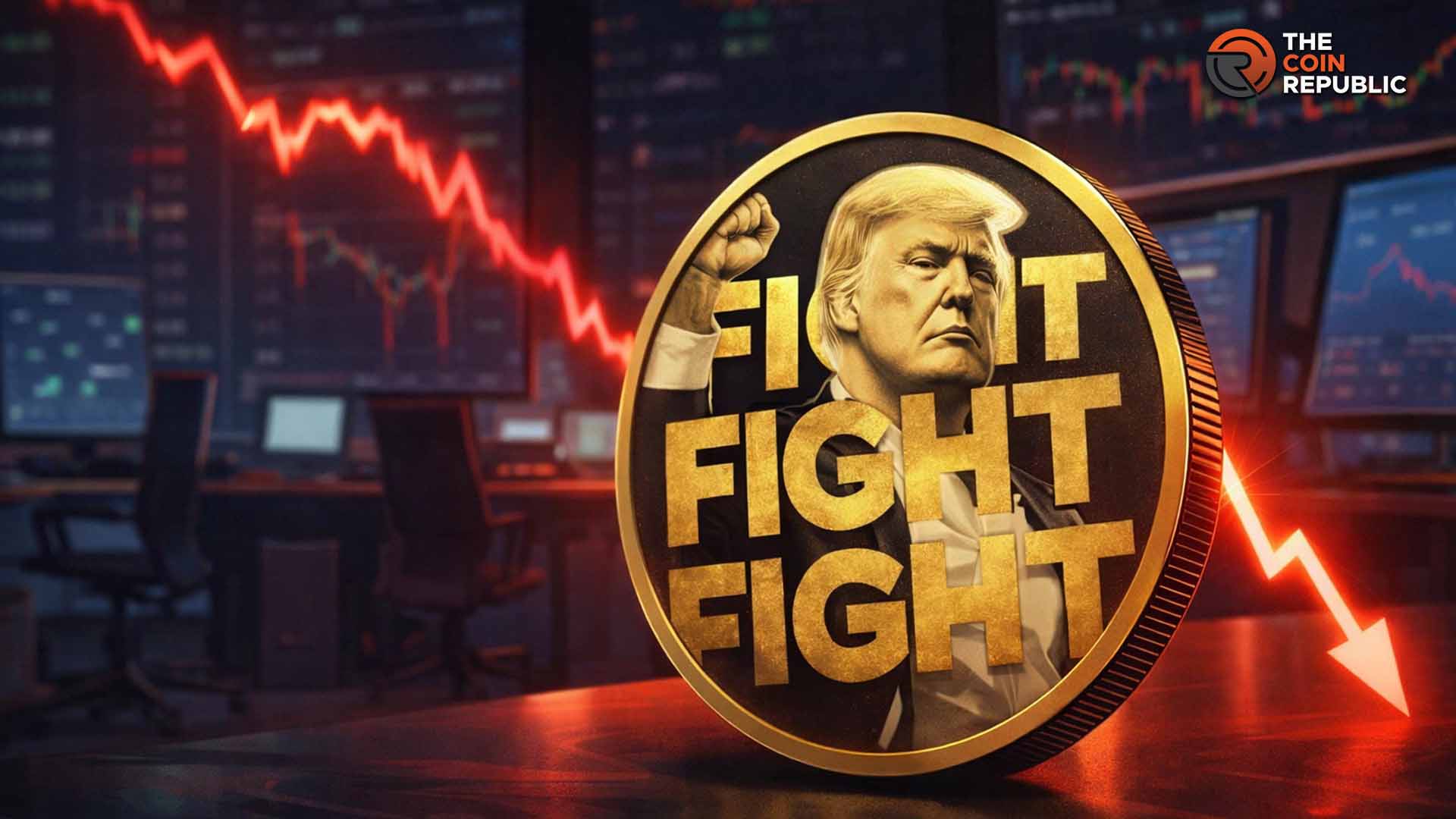
The TRUMP token is experiencing a significant price decline of nearly 30% over the past month, despite increased whale accumulation, indicating a bearish sentiment despite event-driven hype. The upcoming Mar-a-Lago event, which requires token holdings for entry, is failing to catalyze a price surge, suggesting that speculative demand for event access is not translating into sustained buying pressure. Declining trading volume and momentum suggest that traders are adopting a cautious stance, potentially anticipating further price drops or awaiting clearer fundamental catalysts beyond event speculation. While whale accumulation aims to secure event access, historical patterns suggest that such short-term demand spikes often precede price declines as early participants take profits.

Crypto lending in Latin America is expanding due to currency instability and limited traditional credit access, presenting a practical use case for holding volatile assets while accessing stable liquidity. The growth of crypto lending in LATAM is driven by demand for USD liquidity and a hedge against inflation, with platforms like Clapp offering flexible credit-line models that cater to irregular cash flows and diverse collateral needs. Users in Latin America are leveraging crypto loans for essential financial needs such as accessing USD liquidity, hedging against inflation, managing business cash flow, and portfolio rebalancing, rather than purely for speculation. While crypto lending offers benefits, users must navigate risks including volatility-driven liquidations, currency mismatches, regulatory fragmentation, and platform counterparty risk, necessitating a conservative approach with low LTV and reliable platforms.
Signal context only. Validate with price action, liquidity, and risk limits before taking a position.
No explicit catalyst tagged.
Ripple has burned 29.9 million RLUSD tokens on Ethereum, indicating active treasury management and potential supply adjustments for its stablecoin. The RLUSD burn follows recent minting activity, suggesting dynamic rebalancing of the stablecoin supply across different ledgers. While the RLUSD burn is a direct event, the article also includes a significant long-term prediction of stablecoin volume reaching $1.5 quadrillion by 2035, driven by wealth transfer and adoption.
