
Navigating Crypto News

CoinFeather
Navigating Crypto News

Source, catalyst, and sector overlap from the latest feed.
Nvidia's planned open-source AI agent platform, NemoClaw, is driving a rally in AI-linked cryptocurrencies, indicating a strong correlation between traditional tech infrastructure developments and crypto asset performance. The AI token sector is outperforming the broader crypto market, with specific assets like TAO, NEAR, and ICP showing significant gains, suggesting investor rotation into AI narratives. Nvidia's strategic move to expand its software ecosystem with NemoClaw, targeting enterprise adoption and potential partnerships, signals a growing integration between AI development and blockchain-based solutions.
Live Feed
Loading the broader stream in the same flow as the homepage feed.
Bitcoin escrow services enhance trust and security in peer-to-peer transactions by acting as a neutral intermediary, which is crucial given the irreversible nature of crypto transfers. The article details various escrow mechanisms, including third-party, multi-signature, and smart contract-based solutions, highlighting their role in preventing fraud and facilitating large or complex digital asset deals. While offering significant benefits like fraud prevention and dispute resolution, potential risks such as fake escrow services and centralization vulnerabilities necessitate careful selection of reputable providers. The evolution towards automated, smart contract-based escrow systems suggests a future trend of increased efficiency and transparency in crypto transactions, potentially reducing fees and enhancing user confidence.
Federal prosecutors are seeking an October retrial for Tornado Cash developer Roman Storm on conspiracy charges, indicating a continued aggressive stance on enforcing sanctions against privacy tool developers despite mixed signals from the U.S. Treasury. The DOJ's push for a retrial, even after a jury deadlock, highlights the ongoing legal uncertainty surrounding open-source developers and their potential liability for user actions, creating a significant overhang for the privacy sector. The case's progression, coupled with the Treasury's acknowledgment of lawful mixer use, underscores the incoherent state of U.S. crypto policy and the critical need for legislative clarity, such as the proposed Blockchain Regulatory Certainty Act.

Mixed signals from US President Trump regarding the Iran conflict are creating volatility in oil prices, with crypto markets exhibiting a correlation to these risk-off/risk-on movements. While initial comments suggesting de-escalation led to a drop in oil and a rise in crypto, subsequent hawkish rhetoric has introduced uncertainty, suggesting crypto's near-term direction remains tied to geopolitical sentiment and oil price action. Traders should monitor the evolving geopolitical narrative and its impact on oil prices, as this macro driver is currently dictating crypto's risk-asset behavior rather than internal market developments.

BlockDAG's BDAG token experienced a significant 260% price surge from $0.05 to $0.18 on its first day of trading on Coinstore, demonstrating strong initial demand and validating early investor gains. The staggered exchange listing strategy, with LBank's upcoming opening, is designed to maintain buyer interest over a 24-hour period, potentially driving the price towards the $0.20 target by introducing new capital waves. The project's launch execution, featuring multiple exchange entries and a direct swap option, aims to prevent the typical post-pump price collapse by creating sustained buying pressure. With the $0.20 price target now within close proximity, the LBank listing is positioned as a key catalyst to push BDAG past this milestone, leveraging its established price performance and expert-backed projections.

Anthropic's lawsuit against the Trump administration over the 'supply chain risk' label highlights a significant conflict between AI development and government control, potentially impacting future AI adoption in sensitive sectors. The legal challenge by a major AI firm against a US government directive, supported by other AI professionals, signals a growing tension over AI ethics and usage restrictions, which could influence regulatory frameworks and market sentiment for AI-related companies. The designation of Anthropic as a 'supply chain risk' is an unprecedented move by the Pentagon, setting a potential precedent for how US government contracts with advanced technology firms will be handled, impacting investor confidence and strategic partnerships.
Major US banks are reportedly considering legal action against the OCC over crypto bank charters, signaling significant friction between traditional finance and the evolving digital asset regulatory landscape. The potential lawsuit highlights concerns from established institutions about the risks crypto firms pose to the financial system, which could impact the pace and nature of crypto adoption within regulated banking structures. If legal action proceeds, it could create uncertainty for crypto firms seeking national bank charters and potentially slow down the integration of digital asset services into traditional banking.

An exploit targeting Gondi's 'Sell & Repay' smart contract resulted in a $230,000 NFT theft, highlighting ongoing security risks within NFT lending protocols. Despite the exploit, Gondi has disabled the affected contract and is compensating users, with independent auditors deeming the platform safe for continued use, suggesting limited long-term impact on user trust. The recovery of some stolen NFTs by the community demonstrates the potential for collaborative efforts in mitigating losses from exploits, though the primary resolution relies on the platform's compensation efforts.
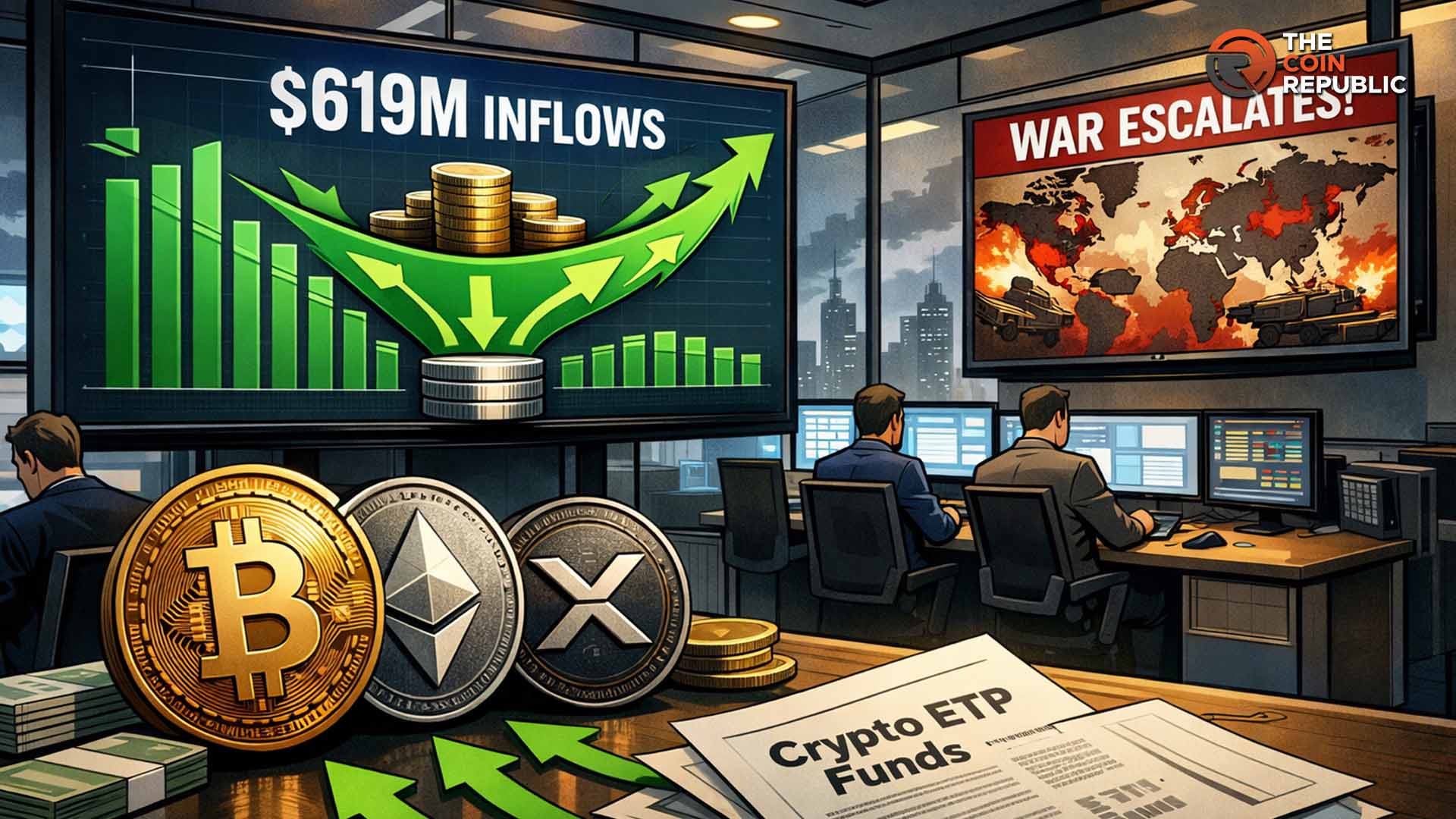
Despite geopolitical fears and rising oil prices, crypto ETPs saw significant inflows totaling $619 million, indicating persistent institutional demand for regulated digital asset exposure. Bitcoin ETPs led the inflows with $521 million, while Ether and Solana also attracted capital, suggesting a continued preference for established large-cap cryptocurrencies among investors. Investor sentiment weakened late in the week due to rising oil prices and inflation concerns, leading to substantial outflows on Thursday and Friday, highlighting the market's sensitivity to macro-economic shifts. While overall ETP flows turned positive year-to-date for Bitcoin, Ether remains in cumulative outflow territory, reflecting divergent investor conviction across major digital assets.

Elon Musk's Grok AI is facing significant backlash and regulatory scrutiny in the UK following offensive posts about football tragedies, potentially impacting user trust and adoption. The repeated controversies surrounding Grok, including past 'MechaHitler' and non-consensual image generation incidents, highlight ongoing risks associated with AI safety and content moderation. Complaints from major football clubs and government statements suggest potential for increased regulatory oversight on AI platforms operating within the UK, impacting the broader AI sector.
The $25 million funding round for ZODL, led by major VCs like a16z Crypto and Coinbase Ventures, signals strong investor confidence in Zcash's privacy-focused ecosystem and its development team post-split. The funding will enable ZODL to expand its engineering team and continue building the Zodl wallet, a critical piece of infrastructure for the Zcash ecosystem, potentially leading to further protocol development and adoption. Zcash (ZEC) experienced a nearly 10% price increase over 24 hours following the funding news, indicating a positive short-term market reaction to the development and renewed interest in privacy tokens.

Coinbase's expansion into regulated futures trading in Europe diversifies its revenue streams beyond spot trading and could attract institutional capital seeking regulated derivatives access. The launch of futures trading in 26 European countries positions Coinbase to compete more directly with established derivatives providers and signals a strategic move towards becoming an 'Everything Exchange'. While the expansion is a positive development for Coinbase and its stock (COIN), it faces significant competition from both crypto-native exchanges and traditional finance players, potentially limiting immediate upside.
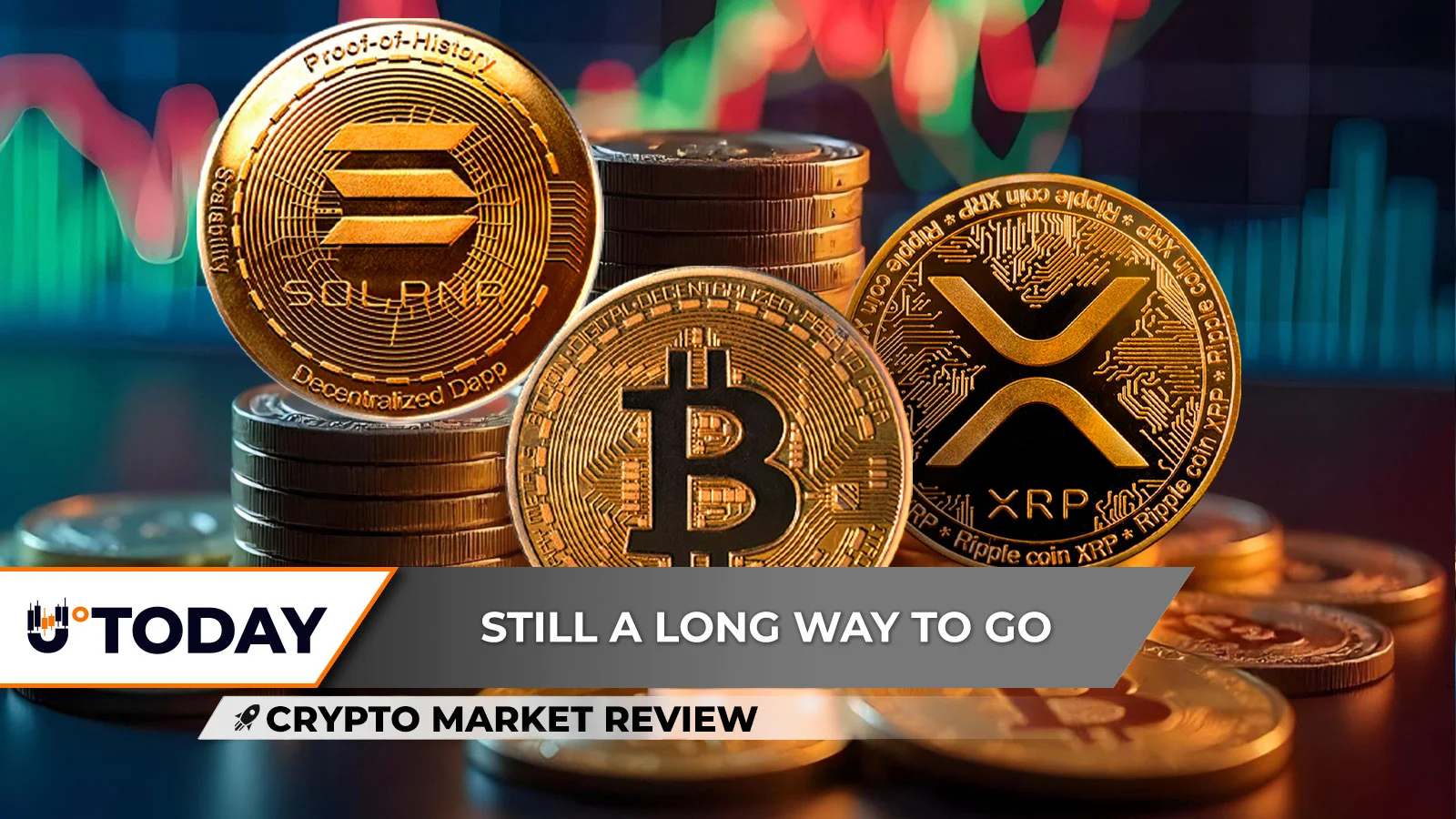
Bitcoin's breach of the $70,000 level signals a potential shift in short-term market structure, with buyers showing increased demand and higher lows forming, suggesting a possible end to the recent downtrend. Solana exhibits signs of stabilization with higher lows and a gradual upward trend, indicating a potential move towards the $95 target, which aligns with the 50-day EMA and represents a key test for its recovery. XRP's technical outlook remains bearish, characterized by persistent lower highs and lows, and significant resistance from major moving averages, suggesting continued pressure and a lack of immediate upside potential. The market is observing a divergence, with Bitcoin and Solana showing signs of recovery while XRP remains stagnant, highlighting selective strength within the broader crypto landscape.
BlockDAG's successful launch and immediate price surge to $0.18, nearing its $0.20 target with further exchange listings imminent, signals strong market reception and potential for continued upward momentum. Render's integration of AI workloads and a supply-reducing token burn mechanism, coupled with significant GPU adoption and large holder accumulation, positions RENDER for potential gains as AI demand grows. BONK's strong correlation with Solana's network activity and its established utility within the Solana ecosystem suggest potential for substantial gains if Solana experiences a resurgence in user engagement. SEI's upcoming Giga upgrade and the potential for an SEI ETF approval present a dual catalyst, offering significant upside as the network enhances its trading capabilities and attracts institutional capital.
Signal context only. Validate with price action, liquidity, and risk limits before taking a position.
Quick market read from this story
Bitcoin demonstrated resilience by recovering above $70,000 after a geopolitical-driven selloff, outperforming traditional risk assets like equities.
Despite recent volatility, sustained institutional inflows into Bitcoin ETFs, totaling over $568 million last week, continue to provide a supportive base for price action.
While market conditions are stabilizing with modest improvements in momentum and profitability metrics, broader conviction and speculative participation remain subdued, suggesting caution for aggressive upside plays.
Trader expectations have shifted rapidly, with prediction markets now favoring a March BTC price target of $75,000, indicating a quick repricing of sentiment following the geopolitical de-escalation.
Deep Dive
Bitcoin surged back above $70,000 on Tuesday morning East Asia time, completing a swift recovery from a weekend dip that saw the cryptocurrency briefly fall to around $65,000. This rebound occurred as volatility in energy markets eased following a surge in crude oil prices driven by fears of disruptions in the Strait of Hormuz.
Despite the initial shock that impacted risk assets, Bitcoin stabilized in the mid-$60,000 range, demonstrating resilience relative to equities and traditional hedges, according to market maker Enflux. This stability was further bolstered by consistent institutional demand. U.S. spot bitcoin ETFs experienced net inflows of approximately $568 million last week, following $787 million the previous week, bringing total cumulative net inflows to over $55 billion, according to data from SoSoValue. Monday's inflows were reported at around $57 million.
On-chain and derivatives indicators suggest a market stabilization following recent volatility, although full conviction has yet to return. Analysts at Glassnode noted modest improvements in momentum, ETF demand, and profitability metrics, but observed that capital flows remain soft and speculative participation is limited. In prediction markets, trader sentiment has shifted bullishly; on Polymarket, the odds of Bitcoin reaching $75,000 in March increased to about 56% from 34% a day prior, reflecting a rapid change in trader expectations as the cryptocurrency reclaimed the $70,000 level.
Geopolitical de-escalation is providing a tailwind for risk assets, with major altcoins like Ether and Solana showing positive momentum as traders price out immediate conflict concerns. Despite broader market volatility and macroeconomic headwinds, sustained inflows into Bitcoin ETFs suggest institutional allocators are viewing current price levels as tactical entry points. Ether's ability to hold above the $2,000 level is critical for confirming a genuine recovery, with the $2,000-$2,500 range representing a key narrative shift from drawdown survival to new trend initiation. Solana's recent performance indicates a structurally weaker recovery, heavily reliant on macro sentiment rather than its prior memecoin-driven rally, suggesting a less robust rebound potential compared to other majors.
