
Navigating Crypto News

CoinFeather
Navigating Crypto News
Quick market read from this story
Bitcoin escrow services enhance trust and security in peer-to-peer transactions by acting as a neutral intermediary, which is crucial given the irreversible nature of crypto transfers.
The article details various escrow mechanisms, including third-party, multi-signature, and smart contract-based solutions, highlighting their role in preventing fraud and facilitating large or complex digital asset deals.
While offering significant benefits like fraud prevention and dispute resolution, potential risks such as fake escrow services and centralization vulnerabilities necessitate careful selection of reputable providers.
The evolution towards automated, smart contract-based escrow systems suggests a future trend of increased efficiency and transparency in crypto transactions, potentially reducing fees and enhancing user confidence.
Deep Dive
Bitcoin and other cryptocurrencies offer fast, borderless digital payments but lack transaction reversibility, posing a challenge for trust between unknown parties. Bitcoin escrow services act as a crucial intermediary, holding funds until agreed-upon conditions are met, thereby preventing fraud and ensuring obligations are fulfilled.
A Bitcoin escrow service is a secure arrangement where a neutral third party temporarily holds cryptocurrency. The buyer sends Bitcoin to the escrow service, which then releases it to the seller only after the buyer confirms receipt of the agreed product or service. This process protects buyers by ensuring funds are not released until delivery and assures sellers that funds are committed before delivery.
These services are vital for peer-to-peer crypto trades, freelance payments, large over-the-counter (OTC) Bitcoin deals, and digital asset marketplaces, addressing the permanence of crypto transactions and the need for trust.
The typical Bitcoin escrow process involves several steps:
In case of disputes, the escrow provider mediates and decides on fund distribution.
Escrow services can be categorized into third-party services, multi-signature escrows (requiring multiple keys for fund release), and smart contract escrows (automated through blockchain programs). Key advantages include enhanced security against scams, greater trust between parties, dispute mediation, and suitability for high-value deals.
Despite their benefits, escrow services carry risks such as fake escrow platforms designed for scams, potential additional fees, and centralization risks if the service itself is compromised. It is crucial to use reputable services with a proven track record.
Bitcoin escrow is commonly used in peer-to-peer trading, freelance payments, OTC crypto deals, and sales of digital assets like NFTs. The future of crypto escrow points towards increased automation via smart contracts and decentralized systems, promising reduced fees and enhanced transparency.
Source, catalyst, and sector overlap from the latest feed.
Aon's successful stablecoin insurance premium payment on Ethereum and Solana signifies a tangible step towards integrating digital assets into traditional financial services, potentially increasing demand for stablecoins in institutional use cases. The use of both USDC and PYUSD across multiple blockchains by a major broker like Aon highlights the growing maturity and interoperability of stablecoin infrastructure, suggesting broader adoption potential beyond speculative trading. This development, supported by regulatory clarity like the proposed GENIUS Act, positions stablecoins as practical tools for streamlining financial operations, which could lead to increased efficiency and reduced costs in the insurance sector. Collaboration with major players like Coinbase and Paxos underscores the institutional readiness for stablecoin-based transactions, signaling a shift from experimental use to functional integration within corporate treasury and risk management.
The Ethereum Foundation's initiation of a 70,000 ETH staking program, utilizing Bitwise's enhanced security tools, signals a strategic move to reduce circulating supply and potentially support ETH price stability. Bitmine's significant accumulation of ETH, adding 60,976 ETH in a week to reach 4.535 million ETH, indicates strong conviction in the asset's long-term value and contributes to demand pressure. Combined treasury staking by the Ethereum Foundation and continued accumulation by entities like Bitmine suggest a tightening supply dynamic, which could be a precursor to price appreciation if demand remains consistent. Analyst price targets ranging up to $5,700, coupled with on-chain metrics suggesting a potential market bottom, provide a bullish outlook for ETH, supported by recent price action and accumulation trends.
The prediction that AI agents could drive the next crypto boom suggests a fundamental shift from human-centric to machine-to-machine commerce, potentially creating significant demand for blockchain infrastructure. If AI agents transact autonomously, cryptocurrencies could become the native financial layer for a new machine economy, bypassing traditional banking systems and increasing the utility of blockchain-based assets. Ripple's $5 million commitment to AI-driven DeFi highlights institutional recognition of this emerging trend, signaling potential for future development and investment in this niche.
Ripple CEO Brad Garlinghouse projects a positive outlook for XRP investors over a five-year horizon, emphasizing long-term adoption and institutional demand over short-term price fluctuations. The narrative suggests XRP's utility in future payment systems and blockchain settlement, supported by increasing institutional interest in tokenization and stablecoins, could drive significant value. Analysts observe XRP potentially in a capitulation or consolidation phase, a pattern historically preceding significant upward price movements, with specific Fibonacci extensions noted as potential targets. Despite past resistance and market doubt, Ripple's continued focus on building payment infrastructure and expanding services like Ripple Payments, which has processed over $100 billion, underpins a strategy centered on gradual, utility-driven growth.
PEPE is testing a critical demand zone around $0.0000031-$0.0000035, which historically has acted as a launchpad for significant rallies. Analysts suggest a potential 781% upside move if PEPE can sustain this support level and attract renewed buying pressure, indicating a possible short-term recovery scenario. Failure to hold the $0.0000031 support level could lead to further downside, highlighting the importance of this price area for near-term price action.
Tron's membership in the Agentic AI Foundation signals a strategic pivot towards integrating blockchain infrastructure with the burgeoning AI agent ecosystem, potentially driving demand for its low-fee, high-throughput transaction capabilities. The collaboration highlights a growing recognition within the crypto space that AI agents will require robust, scalable blockchain solutions for efficient, high-volume transactions, positioning Tron as a potential beneficiary. Tron's focus on AI integration, coupled with its current leading position in blockchain revenue, suggests a narrative of real-world usage driving network metrics, which could attract further investor attention.
Traditional banking institutions are considering legal action against the OCC's chartering of crypto firms, signaling a significant regulatory battle that could impact the operational landscape for digital asset companies in the U.S. The potential lawsuit highlights a fundamental conflict between established banks seeking to maintain regulatory parity and crypto firms aiming for broader market access, potentially creating a two-tiered system with differing oversight. This regulatory friction could lead to increased legal uncertainty for crypto and fintech companies pursuing national charters, potentially delaying their expansion or forcing them to adapt to new compliance requirements.
Ripple's achievement of $100 billion in processed volume validates blockchain-based payment infrastructure for institutional use, signaling growing adoption beyond remittance. The milestone, coupled with the rapid growth of its stablecoin RLUSD to $1 billion market cap, suggests increasing institutional trust and utility for Ripple's integrated financial solutions. With over 75 regulatory licenses and strategic acquisitions enhancing custody and payment capabilities, Ripple is positioning itself as a comprehensive enterprise-grade financial infrastructure provider, potentially impacting traditional payment systems.
Despite geopolitical turmoil and an oil surge impacting traditional markets, Bitcoin demonstrated resilience due to significant demand from OTC traders and institutional flows, indicating a potential return of confidence in risk assets. MicroStrategy's continued accumulation of Bitcoin, alongside substantial inflows into US-listed Bitcoin ETFs, signals strong institutional conviction and provides a fundamental support layer against broader market volatility. The convergence of large wallet accumulation, consistent OTC demand, and ETF inflows suggests that Bitcoin's price stability during the oil shock was driven by strategic buying rather than a lack of market interest, potentially setting a bullish tone for near-term price action. The carry trade strategy involving shorting MSTR stock against Bitcoin ETFs highlights sophisticated market participants hedging risk while positioning for potential upside in BTC, reinforcing its role as a distinct asset class.
A bold $11 million Bitcoin price prediction by 2036, driven by AI-induced deflationary pressures, suggests a potential paradigm shift in monetary policy that could favor scarce digital assets. The narrative suggests that if AI accelerates deflation, central banks may maintain easy money policies, potentially driving significant capital rotation into crypto infrastructure plays like Pepeto. Pepeto's presale success and focus on exchange infrastructure, including a cross-chain bridge and zero-tax engine, position it as a potential beneficiary of increased crypto trading volume driven by new capital inflows. The article draws a parallel between Pepeto's current stage and early BNB's trajectory before its Binance listing, highlighting the potential for significant upside if the project executes its roadmap and secures a major exchange listing.
Live Feed
Loading the broader stream in the same flow as the homepage feed.

Bitcoin's current price action at $68K is creating a divergence in market sentiment, with some analysts predicting a repeat of the 2021 crash while others, citing models like Stock-to-Flow, anticipate significant upside. The return of institutional ETF inflows in early March is a key factor to monitor, as its sustainability will indicate whether this is a temporary blip or a sustained demand shift, potentially impacting Bitcoin's price trajectory. The critical support level at $60,000 is a key technical indicator for traders; failure to hold this level could trigger a significant liquidity hunt towards the $50,000-$55,000 range, mirroring bearish scenarios from 2021. Despite bullish long-term projections from models like S2F, renewed criticism regarding their accuracy and the influence of macro factors like Fed policy and geopolitical risks suggest a cautious approach is warranted.

Flow's price predictions for 2026-2030 range significantly, with optimistic targets up to $17 by 2030, contingent on successful ecosystem growth and adoption of its EVM expansion for consumer apps and gaming. The recent burning of 50.3 million FLOW tokens aims to reduce inflation and strengthen the token economy, a positive development for long-term holders if it supports price stability. Technical analysis suggests FLOW is at a critical support level, with a potential recovery towards $1.36 by end-2026 if key resistance levels are broken, but a failure to hold support could prolong the downtrend. Flow's strategic focus on large consumer apps, Web3 gaming, and digital identity, supported by its EVM expansion, positions it for potential recovery, though sustained developer and user activity are crucial.

The crypto market rally, driven by a significant drop in oil prices and positive geopolitical commentary, suggests a potential shift in investor sentiment towards risk-on assets. The coordinated release of oil reserves by G7 nations and the IEA, coupled with Trump's comments on the Iran conflict, are creating a more favorable macro environment for cryptocurrencies. While the overall market is up, the significant liquidations in derivatives markets indicate underlying volatility that traders should monitor closely.

Bitcoin's reclaim of the $70,000 level, driven by easing macro conditions and falling oil prices, signals a potential shift in risk appetite favoring crypto assets. The correlation between oil prices and Bitcoin's price action highlights the increasing influence of macroeconomic factors on digital asset markets, suggesting traders should monitor commodity trends closely. With Bitcoin testing resistance around $72,000-$74,000, a sustained break above this zone could trigger further upside, while holding above $68,000 is crucial for maintaining the near-term bullish structure. The stabilization of altcoins alongside Bitcoin suggests improving market sentiment, potentially leading to broader crypto market gains if the macro tailwinds persist.

Pudgy World's successful launch, prioritizing user experience over crypto integration, signals a potential shift in NFT gaming strategy towards broader market appeal. The 9% jump in PENGU token price post-launch indicates positive market reception to the game's debut and its non-crypto-centric approach. By mimicking the user-friendly interface of legacy games like Club Penguin, Pudgy World aims to attract a mass audience, potentially driving adoption beyond the typical crypto user base. The project's success hinges on its ability to retain players through engaging gameplay rather than speculative tokenomics, a critical lesson learned from past crypto gaming failures.
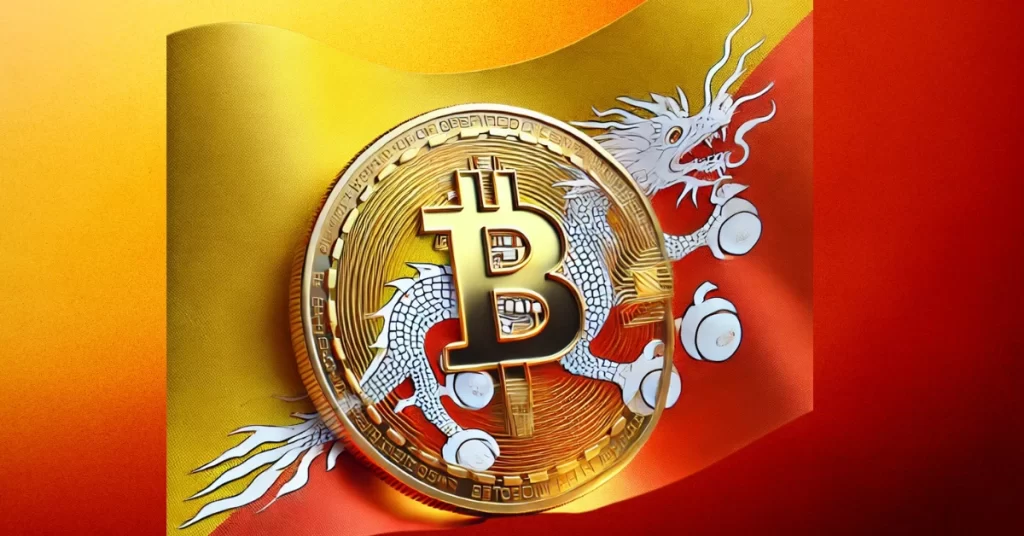
Bhutan's government continues its pattern of regular Bitcoin sales, moving approximately $11 million in BTC, reinforcing a structured approach to managing its holdings. These consistent, albeit moderate, sales by a sovereign entity suggest a potential ongoing source of sell pressure on Bitcoin, though the amounts are unlikely to disrupt the broader market significantly. The government's continued holding of a substantial portion of its Bitcoin indicates a long-term strategy rather than a complete divestment, implying a balanced approach to its crypto assets.

Bhutan's periodic sale of Bitcoin, estimated at $11.85 million in this instance, suggests a consistent strategy to monetize its holdings, potentially impacting short-term market supply. The nation's Bitcoin sales, previously linked to QCP Capital, indicate ongoing engagement with institutional market makers, signaling a mature approach to managing its digital asset reserves. Bhutan's utilization of Bitcoin proceeds for healthcare, environmental initiatives, and public servant salaries highlights a real-world application of crypto assets for national development, reinforcing adoption narratives. With approximately 5,400 BTC remaining, Bhutan continues to be a significant holder, and its trading activity warrants monitoring for potential market influence, especially given the context of reduced mining profitability post-halving.
Litecoin's price predictions for 2026 range from $100 to $150, suggesting a potential recovery and growth phase driven by its established position as a reliable payment network. The next Litecoin halving event is anticipated in July 2027, a recurring supply-side catalyst that historically influences price action and could support upward momentum leading into that period. Despite long-term bullish forecasts, current technicals indicate Litecoin is in a consolidation phase, with key support at $52-$54 and resistance at $59-$60, suggesting a range-bound market in the near term. Litecoin's on-chain activity shows stable network usage and accumulation, supporting gradual upside potential rather than immediate speculative surges, aligning with its role as a stable payment asset.

Vitalik Buterin's vision for 'one-click' distributed staking via DVT-lite could significantly lower institutional barriers to ETH staking, potentially increasing demand and decentralization. The Ethereum Foundation's successful test of DVT-lite with 72,000 ETH demonstrates a practical step towards simplifying staking infrastructure, reducing risks associated with single-node failures. Despite current price action, the substantial queue for ETH staking highlights persistent demand, suggesting that ease of access through technologies like DVT-lite could unlock further capital inflows. The development of DVT-lite addresses a core decentralization challenge by making complex staking operations more accessible, which could have long-term implications for Ethereum's network security and validator distribution.

Arbitrum's price is currently consolidating near a key demand zone, with potential for a short-term recovery towards $0.12-$0.13 if support holds. Long-term price predictions for ARB suggest a potential rise to $1.20 by the end of 2026 and $6 by 2030, contingent on sustained recovery and market growth. The article presents a price prediction analysis for Arbitrum (ARB) across multiple years, highlighting its role as an Ethereum Layer-2 scaling solution and its recent price volatility.

US prosecutors are seeking a retrial for Tornado Cash co-founder Roman Storm on charges of conspiracy to commit money laundering and violate sanctions, indicating a continued legal battle that could impact sentiment around privacy-focused crypto infrastructure. The retrial request, set for October, highlights the ongoing legal uncertainty surrounding developers of privacy tools, potentially creating a chilling effect on innovation in the sector. Despite a jury's inability to reach a verdict on these specific charges previously, the prosecution's persistence suggests a strong intent to establish legal precedent, which could influence regulatory approaches to DeFi and privacy technologies.
The DOJ's pursuit of a retrial for Roman Storm on money laundering and sanctions charges signals continued regulatory pressure on privacy-enhancing crypto tools. Despite a prior conviction, the unresolved charges and proposed October retrial create ongoing legal uncertainty for Tornado Cash and its associated developers. Industry criticism highlights concerns that aggressive prosecution could hinder U.S. leadership ambitions in the crypto sector, potentially impacting innovation.

Nvidia's planned open-source AI agent platform, NemoClaw, is driving a rally in AI-linked cryptocurrencies, indicating a strong correlation between traditional tech infrastructure developments and crypto asset performance. The AI token sector is outperforming the broader crypto market, with specific assets like TAO, NEAR, and ICP showing significant gains, suggesting investor rotation into AI narratives. Nvidia's strategic move to expand its software ecosystem with NemoClaw, targeting enterprise adoption and potential partnerships, signals a growing integration between AI development and blockchain-based solutions.
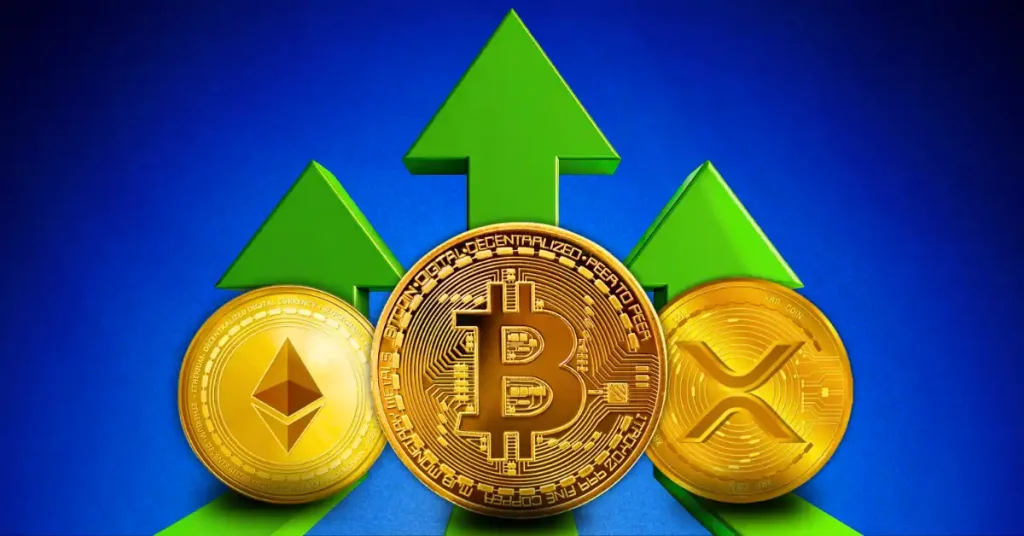
Geopolitical de-escalation has triggered a short-term relief bounce across major cryptocurrencies, with Bitcoin facing immediate resistance around $69,500. Ethereum is trading within a defined range, showing potential for a short-to-medium term move higher if it can overcome significant resistance near $2,150. XRP is currently range-bound and holding support, but requires a fresh catalyst beyond geopolitical optimism to achieve a meaningful upward breakout. The current market rally is driven by hope, and the coming days will be crucial to determine if this sentiment is supported by fundamental developments.

Institutional investors, including major firms like Electric Capital and Goldman Sachs, funneled over $540 million into US spot Solana ETFs during Q4, indicating significant Wall Street adoption of SOL-based investment products. Despite a subsequent 30% price drop in SOL since Q4, cumulative inflows into Solana ETFs have remained strong, suggesting sustained institutional interest beyond short-term price fluctuations. The substantial ETF holdings, representing approximately 4.3 million SOL tokens, highlight a growing integration of Solana into traditional finance, potentially influencing future price discovery and market sentiment.
Signal context only. Validate with price action, liquidity, and risk limits before taking a position.
