
Navigating Crypto News

CoinFeather
Navigating Crypto News
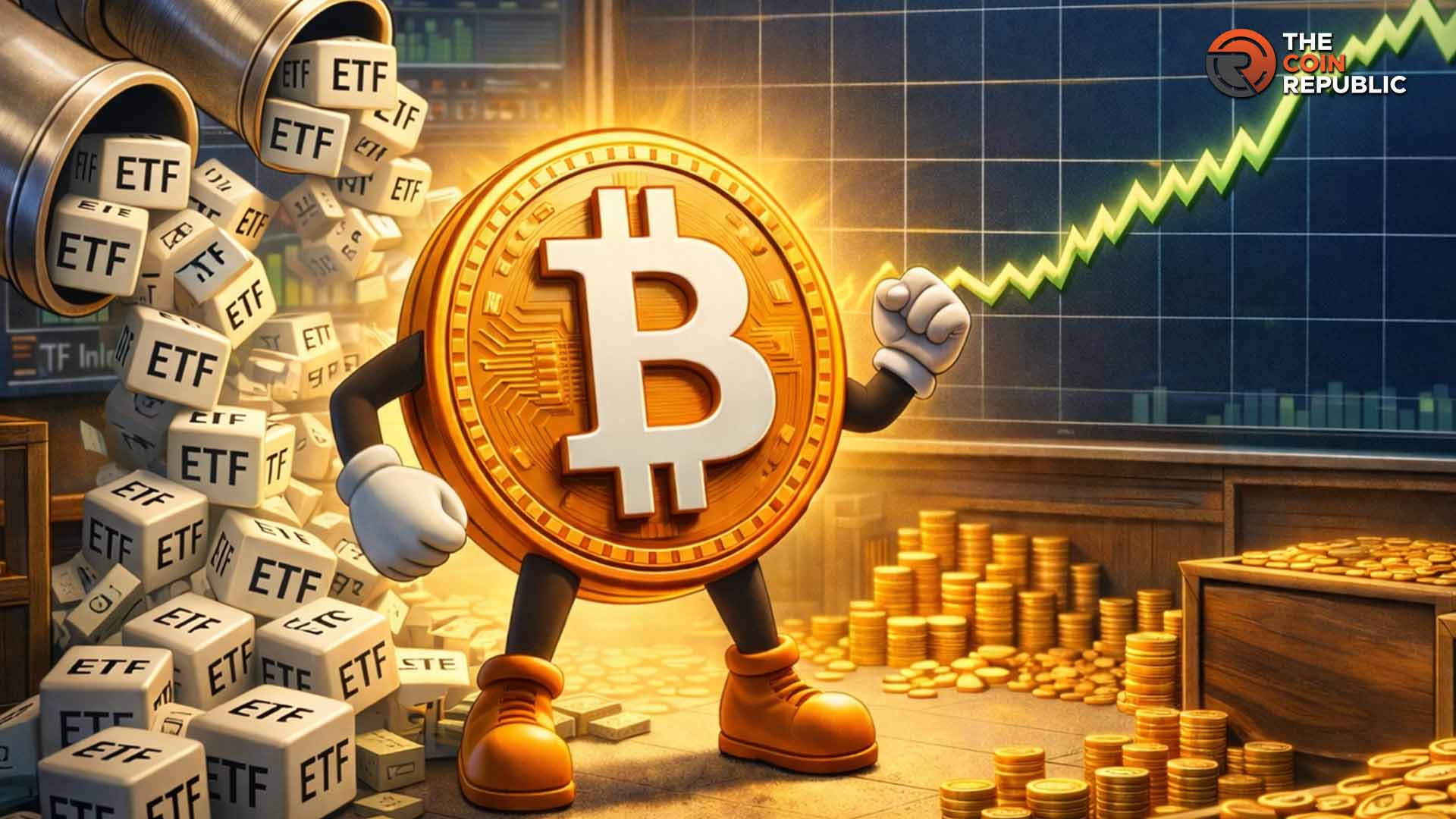
Quick market read from this story
Strong positive inflows into US Bitcoin ETFs, totaling $167 million, signal renewed institutional demand and a potential shift in market sentiment.
The resurgence in ETF inflows, particularly led by BlackRock's IBIT, suggests that institutional investors are re-engaging with Bitcoin, potentially supporting a sustained price above $70,000.
The recovery in Bitcoin's price to over $71,000, coinciding with improved global risk sentiment, indicates that macroeconomic factors and geopolitical events can significantly influence short-term price action.
Deep Dive
Spot Bitcoin ETFs in the United States experienced a substantial rebound on Monday, March 9, attracting inflows totaling $167.1 million. This surge followed a period of significant outflows and coincided with a recovery in Bitcoin's market price, which rallied beyond $71,000. The positive trend reflects a recovery in global market risk sentiment.
BlackRock's iShares Bitcoin Trust (IBIT) led the inflows, bringing in $109.3 million. Fidelity Investments' Wise Origin Bitcoin Fund (FBTC) followed with $60.1 million in new investments. Other funds, including the VanEck HODL ETF and Bitwise BITB ETF, saw smaller increases of $4.9 million and $4.5 million, respectively. This turnaround marks a significant shift from recent days, where spot Bitcoin ETFs registered net outflows of $348.9 million on March 6 and $227.9 million on March 5. The data, sourced from Farside Investors, highlights a recovery in institutional demand amid the crypto market's rebound. BlackRock's IBIT continues to dominate, with cumulative inflows exceeding $62.5 billion, significantly more than other issuers. Fidelity's FBTC holds the second-largest cumulative inflow at approximately $10.9 billion.
The Bitcoin (BTC) price advanced past the $71,000 mark during Asian trading hours, recovering from a recent dip to approximately $65,000. This recovery is attributed to strengthening risk sentiment, partly influenced by statements from Donald Trump suggesting a potential end to the conflict in Iran. This eased investor concerns that had previously driven them towards safer assets.
Crypto analyst Michaël van de Poppe noted on X that the market's reaction, including Bitcoin's rise back above $69,000, indicated a positive sign. He observed, "Trump says ‘War is very much complete in Iran.’ Markets say: sure, we’ll tank oil immediately. That’s a great sign. Bitcoin back up to $69K+, that’s also a good sign."
Previously, Bitcoin experienced a sharp decline in February, falling from $95,000 to $65,000 amidst increased trade volume. Following this drop, BTC began consolidating above the $65,000 support level, establishing what analysts consider a 'higher low'. The price range between $65,117 and $65,872 is identified as a crucial support zone where buyers have intervened. Immediate resistance levels are noted around $74,500, with a wider range between $76,000 and $80,600. These levels previously acted as support when BTC traded above $120,000 but now present resistance following a nearly 47% plunge from its peak.
Technically, Bitcoin has been trading below a short-term moving average during its correction phase. However, as it regains momentum, the trading volume has decreased compared to the previous selloff, suggesting the current rebound is occurring under more favorable market conditions.
Source, catalyst, and sector overlap from the latest feed.
Solana ETFs are attracting significant institutional capital ($540M) despite a substantial 57% price drop in SOL, indicating a potential disconnect between product demand and underlying asset performance. The strong inflows into Solana ETFs, with nearly half of holdings from institutional investors via 13F filings, suggest a growing acceptance of regulated crypto products by traditional finance, even amidst price volatility. Despite robust ETF demand, SOL price remains technically pressured within a bearish flag pattern between $75-$93, suggesting that short-term price action may continue to favor downside until a clear breakout occurs. The divergence between ETF inflows and SOL's price weakness raises questions about whether this demand represents new capital or a migration of existing holdings into a more familiar ETF structure, impacting future price discovery.
Geopolitical tensions are driving capital flight from traditional assets like Dubai real estate, which has seen an 18% decline, while Bitcoin has shown resilience, rising approximately 5.4% during the same period. The contrasting performance suggests Bitcoin is acting as a potential safe haven or uncorrelated asset during periods of geopolitical uncertainty, unlike traditional real estate markets. While Bitcoin ETFs experienced some outflows, overall weekly flows remain net-positive, indicating continued institutional interest despite broader market volatility. The surge in private jet charters from Dubai highlights a significant capital exodus, contrasting with Bitcoin's ability to absorb market shocks and maintain price levels.
Ripple's payment network processing over $100 billion and its RLUSD stablecoin reaching $1 billion market cap signifies significant adoption and utility growth, potentially increasing demand for XRP as a settlement asset. The article highlights historical XRP price patterns correlating with the 100 EMA, suggesting potential accumulation zones and future upside targets between $6-$9 and $20-$25 if broader market conditions improve. Increased institutional interest in blockchain settlement solutions, coupled with Ripple's expanding payment infrastructure, could drive demand for XRP as a bridge currency for cross-border transactions.
Sonic Labs' launch of the USSD stablecoin, backed by tokenized Treasuries, aims to inject much-needed liquidity into its Layer 1 network which has seen a significant decline in activity and total value locked. The USSD stablecoin's integration with Frax's frxUSD infrastructure and its backing by established products like BlackRock's BUIDL and WisdomTree's WTGXX signal a strategic move to leverage real-world asset yield for on-chain utility. By providing a native, permissionless stablecoin, Sonic Labs seeks to reduce fragmentation and simplify capital inflow, potentially revitalizing user activity and developer adoption on the platform. Despite the launch, Sonic faces a challenging market reality with its native token (S) trading significantly below its all-time high, indicating that the stablecoin's success will depend heavily on its ability to drive tangible ecosystem growth.
Nasdaq and Kraken's collaboration signals a significant step towards integrating traditional equities with blockchain technology, potentially expanding market access for global investors. The partnership aims to preserve issuer rights and shareholder protections within a regulated framework, addressing key concerns for institutional adoption of tokenized stocks. The planned 2027 operational launch suggests a long-term strategic play, indicating that tokenized equities are moving beyond experimentation towards becoming a core component of market infrastructure. This development could pave the way for 24/7 trading of equities and ETFs, fundamentally altering traditional market hours and accessibility for international participants.
Ether's funding rates have turned negative, indicating a shift towards bearish sentiment in the derivatives market despite recent price attempts above $2,100. Weak demand for ETH spot ETFs, evidenced by significant outflows, coupled with staking yields underperforming stablecoin yields, suggests institutional caution and a lack of conviction in near-term price appreciation. While Ethereum developers are advancing upgrades like account abstraction and the Hegota fork, these technical improvements have not yet translated into increased on-chain activity or demand for ETH, highlighting a disconnect between development and market sentiment. The current market conditions for ETH show low conviction for a bullish breakout, but also a lack of worsening bearish signals, suggesting a neutral to cautious outlook for the immediate trading horizon.
Despite a significant 45% price drawdown for XRP, the recently launched XRP ETFs have demonstrated remarkable capital retention, indicating strong community dedication rather than typical retail flight. The resilience of XRP ETFs, with substantial cumulative inflows despite recent outflows and a drop in Total Net Assets (TNA) from $1.65 billion to $971 million, suggests underlying investor conviction. Bloomberg analyst Eric Balchunas's commentary highlights the unusual strength of XRP ETF performance in a challenging market, attributing it to 'super fans' and suggesting a unique market dynamic for the asset.
Ripple is aggressively retooling the XRP Ledger into a comprehensive institutional-grade DeFi platform, integrating native lending, AMMs, and KYC-compliant trading to move beyond its initial payments focus. The significant growth in tokenized assets to $2.3 billion and the RLUSD stablecoin's market cap to $1.59 billion, alongside $1.24 billion in XRP ETF inflows, signals increasing institutional adoption and demand for XRPL-based financial products. While XRPL's TVL remains modest, the ongoing infrastructure build-out, including an upcoming EVM-compatible sidechain and privacy features, positions it as a potential competitor in the institutional DeFi space, supported by partnerships with major banks like Deutsche Bank and Société Générale. Regulatory clarity from the SEC settlement has removed a key overhang, potentially unlocking further institutional confidence and driving adoption, though the ultimate success hinges on translating these developments into substantial settlement volume.
Solana ETFs are attracting significant institutional capital, with 49% of assets identified via 13F filings, indicating a strong preference from crypto-native investment firms and market makers despite recent token price declines. XRP ETFs show a contrasting investor profile, with only 16% of assets identifiable through 13F filings, suggesting a larger reliance on retail investors for demand and asset stability. The differing investor bases for Solana and XRP ETFs highlight evolving market dynamics, with Solana drawing more industry-specific institutional flows and XRP appealing more directly to retail sentiment.
Senator Alsobrooks is pushing for a compromise on crypto market structure legislation, indicating that both the crypto industry and banks will need to make concessions for the bill to advance. The core sticking point appears to be stablecoin yield payments, with banking groups advocating for a ban due to concerns about deposit flight and systemic risk. The ongoing debate over stablecoin yields is directly stalling progress on broader crypto market regulation, highlighting the significant influence of traditional finance on legislative outcomes. The sentiment from Senator Alsobrooks suggests a push towards regulating crypto assets as 'bank-like products' requiring 'bank-like protections,' which could impose stricter compliance measures on the industry.
US lawmakers are proposing legislation to explicitly ban prediction market contracts on war, death, and assassination, removing regulatory discretion. The proposed "DEATH BETS Act" aims to codify a ban on such contracts, irrespective of CFTC leadership, addressing concerns over national security and insider profit. This regulatory push, coupled with the CFTC's announced plans to expand oversight, signals increased scrutiny on prediction markets and their potential for misuse. The development could impact platforms offering event contracts, potentially leading to delistings or stricter compliance requirements for specific contract types.
Australia's ASIC fintech chief advocates for regulating crypto based on economic substance rather than technological form, aligning with existing financial laws. This approach contrasts with bespoke crypto regulations in the US and EU, suggesting a potential shift towards integrating digital assets into established financial frameworks. The ASIC's stance implies that tokenized securities and stablecoins will be subject to existing securities and payment services legislation, respectively, potentially reducing regulatory arbitrage opportunities. By focusing on intermediaries and economic functions, Australia aims to provide clearer rules and enhance market integrity, though decentralized offerings may still present classification challenges.
Ripple's acquisition of BC Payments Australia and its AFSL positions the company to expand its payments business in a key market, signaling a strategic move towards regulatory compliance and operational growth. The acquisition is expected to close by April 1, marking a significant step in Ripple's international licensing strategy and potentially paving the way for broader adoption of its services in Australia. This development, coupled with ongoing regulatory discussions in Australia, could alleviate 'debanking' issues for crypto firms and foster a more favorable environment for institutional digital asset interest.
Live Feed
Loading the broader stream in the same flow as the homepage feed.
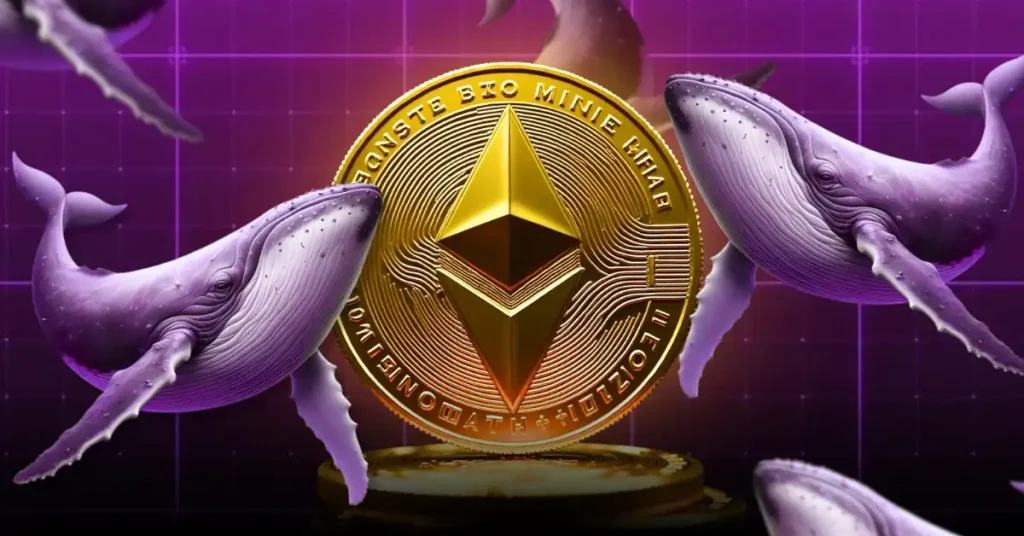
Ethereum's network activity, including active addresses and wallet growth, is surging, indicating increasing fundamental demand that historically precedes price rallies. A significant whale withdrawal of $92M worth of ETH from an exchange suggests accumulation, potentially tightening liquidity and supporting upward price pressure. While ETH consolidates near $2,000, the combination of strong on-chain metrics and whale accumulation presents a bullish divergence, suggesting potential for a breakout above resistance levels.

Societe Generale's EURCV stablecoin expansion to Stellar, now live on four blockchains, signals a strategic push by traditional finance into diverse blockchain ecosystems, potentially increasing institutional adoption of regulated digital assets. The deployment on Stellar, chosen for its transaction speed and low fees, highlights the network's suitability for institutional flows and cross-border payments, positioning it as a key infrastructure for regulated stablecoins. With EURCV being the first MiCA-compliant euro stablecoin issued by a bank, its expansion across multiple chains, including Stellar, positions it to capture significant market share as European regulatory clarity solidifies, potentially impacting other euro stablecoins. While EURCV's market cap has grown significantly, its modest daily trading volume suggests that the true test of its impact will be sustained institutional adoption and its role in tokenized asset markets.

Aave founder Stani Kulechov argues DAOs require a hybrid governance model, blending decentralized decision-making with clear leadership for operational efficiency and accountability. The debate highlights a critical challenge in DAO evolution: balancing true decentralization with the practical need for agile execution and leadership, potentially impacting future DAO structures. Recent governance disputes within Aave, including a failed proposal on brand asset transfer and a delegate's exit, underscore the immediate need for these governance reforms.

Bitwise CIO Matt Hougan projects Bitcoin could reach $1 million within 10 years by capturing just 17% of the growing global store-of-value market, assuming historical growth rates for both gold and Bitcoin's market share continue. The analysis hinges on the continued expansion of the total store-of-value market, projected to reach $121 trillion in a decade, suggesting Bitcoin's potential upside is tied to broader macro trends and increasing institutional adoption. Despite the bullish outlook, recent market divergence shows Bitcoin has not consistently acted as a safe-haven asset like gold, with notable investors like Ray Dalio questioning its long-term store-of-value narrative.

Bitwise CIO Matt Hougan projects Bitcoin could reach $1 million by 2036, driven by an anticipated expansion of the global store of value market to $121 trillion. The forecast assumes Bitcoin captures 17% of the store of value market, a significant increase from its current under 4% share, indicating substantial potential for market cap growth. Despite market risks, Hougan views this $1M BTC price target as conservative, supported by institutional investor interest, suggesting a potentially robust long-term outlook for Bitcoin.

Ripple's acquisition of an Australian Financial Services License (AFSL) via BC Payments Australia significantly expands its regulatory moat, enabling comprehensive cross-border transaction management within Australia. This strategic move positions Ripple to streamline payments for entrepreneurs by bypassing traditional correspondent banks, potentially increasing its APAC payment volume further. With over 75 global licenses and approvals, Ripple's consistent pursuit of regulatory compliance across key jurisdictions like the UK, EU, and UAE, alongside its US OCC conditional approval, signals a robust strategy for institutional adoption.

X Money's upcoming April 2026 launch, featuring a 6% APY savings account and P2P payments, signals a significant move into traditional finance by a major social media platform, potentially drawing users away from existing fintech services. While the initial launch will be fiat-only, the stated roadmap for later 2026 includes crypto and stock trading, indicating a phased integration that could eventually impact digital asset markets and trading platforms. The announcement caused a short-term price reaction in DOGE, highlighting the market's sensitivity to Elon Musk's involvement in financial services, despite the absence of direct crypto integration at launch. X's acquisition of money transmitter licenses in over 40 states positions it as a serious contender in the payments space, though regulatory hurdles in key markets like New York remain a potential challenge.

Ripple's planned acquisition of an Australian Financial Services License via BC Payments Australia signifies a strategic expansion into a key APAC market, aiming to offer its full payments suite. The move is supported by a near doubling of Ripple's APAC payments volume in 2025, indicating strong regional demand and potential for further growth in cross-border transactions. While the acquisition is pending, it positions Ripple to enhance its regulated footprint globally, with over 75 licenses worldwide, and participate in Australia's digital asset infrastructure initiatives like Project Acacia. The mention of XRP trading at $1.38, up 0.3%, suggests a minor market reaction to the news, but the primary focus remains on Ripple's operational and regulatory expansion rather than direct XRP price catalysts.
Institutional adoption and expanding use cases in DeFi, stablecoins, and RWA present a bullish outlook for crypto in 2026, suggesting potential for continued growth beyond speculative interest. Despite potential upside, extreme volatility and regulatory uncertainty remain significant risks for crypto investors in 2026, necessitating a cautious approach and diversification. The comparison of Bitcoin to 'digital gold' highlights its potential as a store of value, but its higher volatility compared to gold requires investors to assess their risk tolerance carefully.

Bitcoin's resilience above $70,000 is being tested, with buyers needing to consolidate gains to avoid a return to previous consolidation patterns. Easing energy price fears due to the IEA's proposed oil reserve release could marginally strengthen the case for Fed rate cuts, positively influencing risk assets like Bitcoin. While Bitcoin shows signs of buyer confidence, holding above $70,000 and breaking the $73,000 resistance level are crucial for sustained upward momentum. The correlation between Bitcoin and the S&P 500 remains high, indicating that crypto markets will likely follow any signals from the upcoming Fed meeting.

Despite a significant increase in XRP Ledger transactions to 2.7 million daily, XRP's price remains rangebound between $1.34 and $1.44, indicating that on-chain activity is not currently translating into upward price momentum. The growing value of tokenized real-world assets on the XRP Ledger, approaching $461 million, suggests underlying ecosystem development, but traders are prioritizing technical levels due to thin liquidity and lack of clear directional catalysts. XRP's consolidation pattern between $1.34 and $1.44, with declining volume, suggests a potential breakout is building, but traders are awaiting confirmation of a break above resistance or support to signal the next significant price move. The current market environment for XRP is characterized by low trading volume and a lack of specific token catalysts, leading to a neutral sentiment as participants await a decisive break of key technical levels.

Bitcoin options market data indicates a significant shift in trader sentiment, with a notable decrease in downside hedging and a growing probability (35%) of BTC reaching above $80,000 by the end of June. The recovery in Bitcoin's skew from -25% to approximately +10% suggests traders are becoming more confident, potentially reducing demand for protective puts and increasing bullish positioning. The current options pricing and recovering skew suggest a market expectation for Bitcoin to trade towards the $80,000 level between June and September, implying potential near-term upside.

Elon Musk's X Money launch, offering a 6% yield on fiat balances, directly competes with stablecoin products and could create regulatory arbitrage if launched before stablecoin legislation passes. Despite the announcement of X Money, Dogecoin experienced a speculative rally and subsequent reversal, highlighting its historical sensitivity to Musk's pronouncements rather than confirmed integration. The 6% APY offered by X Money, if sustained, represents a significant challenge to traditional savings accounts and money market funds, potentially drawing capital away from other yield-generating products. The regulatory landscape for yield-bearing products is a key factor, as X Money's fiat-based approach could be viewed differently than stablecoin yields, creating a potential advantage for the platform.

Despite record network activity on Ethereum, Ether's price has declined approximately 30% over the past six months, indicating a decoupling between on-chain usage and market valuation. Capital outflows from Ethereum, evidenced by exchange flow data showing ether moving to trading venues faster than bitcoin, suggest elevated selling pressure despite the surge in active addresses and smart contract calls. Ethereum's declining share of transaction fees and protocol revenue, with Layer-2 solutions like Base and Polygon capturing significant economic activity, highlights a shift in value accrual away from the base layer. The diminished correlation between on-chain activity and ETH price, a departure from previous market cycles, suggests that incremental usage growth now has less explanatory power for the token's valuation.

Nvidia's CEO Jensen Huang asserts that AI's massive infrastructure buildout will create significant job growth, countering fears of widespread job displacement. The projected trillions of dollars in infrastructure investment for AI, encompassing energy, chips, and data centers, signals a substantial economic expansion opportunity. While some companies cite AI for layoffs, Huang's perspective suggests a net positive job creation outlook driven by the demand for skilled labor in AI infrastructure development and maintenance.
Signal context only. Validate with price action, liquidity, and risk limits before taking a position.
