
Navigating Crypto News

CoinFeather
Navigating Crypto News
Quick market read from this story
The maturation of the crypto market has led to the rise of specialized hedge funds, indicating increased institutional adoption and sophisticated capital deployment strategies.
Crypto hedge funds are diversifying beyond simple token trading, engaging in venture capital, early-stage token investments, and complex trading strategies, signaling a deeper integration into the broader financial ecosystem.
The continued growth and influence of crypto hedge funds suggest they will play an increasingly significant role in driving innovation, providing liquidity, and shaping capital allocation within the digital asset space.
The article highlights key players like Pantera Capital, Multicoin Capital, and Grayscale Investments, underscoring their impact on venture funding, early-stage projects, and providing regulated access to digital assets for institutional investors.
Deep Dive
The cryptocurrency market has evolved significantly, transitioning from a niche retail asset to a global financial sector attracting substantial institutional capital. Crypto hedge funds are now pivotal players, offering sophisticated trading strategies, venture capital for blockchain startups, and essential liquidity to digital asset markets. These specialized funds employ strategies tailored to digital assets, including algorithmic trading, arbitrage, early-stage token investments, and venture funding, managing billions and influencing blockchain innovation.
Founded in 2003 and shifting focus to crypto in 2013, Pantera Capital is recognized as a pioneer in institutional cryptocurrency investing. The firm manages diverse funds covering venture equity, early-stage token projects, and liquid trading strategies. Pantera's long-term philosophy emphasizes backing foundational infrastructure projects, having previously invested in influential companies like Ripple and Bitstamp.
Established in 2017, Multicoin Capital is known for its aggressive, research-driven approach and bold early investments. The fund gained significant traction with its investment in the Solana ecosystem. Multicoin specializes in both liquid token trading and venture capital, focusing on disruptive blockchain technologies and often taking concentrated positions in projects it strongly believes in, particularly in areas like DeFi, Web3 infrastructure, and DePIN.
Founded by former Coinbase employee Olaf Carlson-Wee, Polychain Capital was among the first funds dedicated to blockchain token investments. The firm concentrates on early-stage blockchain infrastructure and token networks, investing across decentralized finance, interoperability protocols, and Web3 infrastructure. Polychain's strength lies in identifying emerging ecosystems early, leading to substantial returns.
Founded by Mike Novogratz, Galaxy Digital operates as a diversified digital asset investment firm, integrating asset management, trading, investment banking, and venture capital. It provides institutional investors with access to crypto trading, asset management, staking services, and blockchain venture investments. Galaxy manages billions in digital assets and actively launches funds to capitalize on market volatility.
Co-founded by Coinbase co-founder Fred Ehrsam and Matt Huang, Paradigm focuses on venture investments in crypto infrastructure, supporting developers of next-generation decentralized financial systems. The firm has raised multi-billion-dollar funds and invests in influential projects. Paradigm combines venture capital with deep technical research, employing a team of engineers, cryptographers, and economists to analyze protocols.
Grayscale Investments is a leading digital asset manager, best known for its crypto investment trusts like the Grayscale Bitcoin Trust (GBTC), which offer regulated exposure to digital assets for institutional and accredited investors. The firm has expanded its offerings to include diversified crypto funds and ETFs tracking multiple digital assets, serving as a key gateway between traditional finance and the crypto ecosystem.
Crypto hedge funds are integral to the digital asset investment landscape, driving innovation through institutional capital, advanced trading, and startup funding. As institutional adoption grows, these funds are expected to play an increasingly significant role in capital allocation, market liquidity, and technological advancement, offering sophisticated investment strategies for accredited investors.
Source, catalyst, and sector overlap from the latest feed.
Over $50 billion in XRP supply is currently underwater, indicating significant unrealized losses for a large portion of holders and suggesting potential selling pressure if prices do not recover. The substantial unrealized losses on XRP highlight broader altcoin market weakness, with many tokens trading near all-time lows, which could prolong investor caution. XRP faces a critical juncture where a sustained price recovery is needed to move underwater supply back into profit and restore market sentiment, otherwise, prolonged weakness risks capitulation. On-chain data reveals that 36.8 billion XRP tokens are held at a loss, underscoring the magnitude of the current market drawdown and the challenges for investors who bought at higher price points.
Bitcoin escrow services enhance trust and security in peer-to-peer transactions by acting as a neutral intermediary, which is crucial given the irreversible nature of crypto transfers. The article details various escrow mechanisms, including third-party, multi-signature, and smart contract-based solutions, highlighting their role in preventing fraud and facilitating large or complex digital asset deals. While offering significant benefits like fraud prevention and dispute resolution, potential risks such as fake escrow services and centralization vulnerabilities necessitate careful selection of reputable providers. The evolution towards automated, smart contract-based escrow systems suggests a future trend of increased efficiency and transparency in crypto transactions, potentially reducing fees and enhancing user confidence.
Aon's successful stablecoin insurance premium payment on Ethereum and Solana signifies a tangible step towards integrating digital assets into traditional financial services, potentially increasing demand for stablecoins in institutional use cases. The use of both USDC and PYUSD across multiple blockchains by a major broker like Aon highlights the growing maturity and interoperability of stablecoin infrastructure, suggesting broader adoption potential beyond speculative trading. This development, supported by regulatory clarity like the proposed GENIUS Act, positions stablecoins as practical tools for streamlining financial operations, which could lead to increased efficiency and reduced costs in the insurance sector. Collaboration with major players like Coinbase and Paxos underscores the institutional readiness for stablecoin-based transactions, signaling a shift from experimental use to functional integration within corporate treasury and risk management.
The Ethereum Foundation's initiation of a 70,000 ETH staking program, utilizing Bitwise's enhanced security tools, signals a strategic move to reduce circulating supply and potentially support ETH price stability. Bitmine's significant accumulation of ETH, adding 60,976 ETH in a week to reach 4.535 million ETH, indicates strong conviction in the asset's long-term value and contributes to demand pressure. Combined treasury staking by the Ethereum Foundation and continued accumulation by entities like Bitmine suggest a tightening supply dynamic, which could be a precursor to price appreciation if demand remains consistent. Analyst price targets ranging up to $5,700, coupled with on-chain metrics suggesting a potential market bottom, provide a bullish outlook for ETH, supported by recent price action and accumulation trends.
The prediction that AI agents could drive the next crypto boom suggests a fundamental shift from human-centric to machine-to-machine commerce, potentially creating significant demand for blockchain infrastructure. If AI agents transact autonomously, cryptocurrencies could become the native financial layer for a new machine economy, bypassing traditional banking systems and increasing the utility of blockchain-based assets. Ripple's $5 million commitment to AI-driven DeFi highlights institutional recognition of this emerging trend, signaling potential for future development and investment in this niche.
US spot Bitcoin ETFs saw a return of $167 million in inflows, reversing recent outflows and indicating renewed investor interest as BTC approached $70,000. Despite a broader crypto market rebound, altcoin ETFs for ETH, XRP, and SOL experienced continued outflows, suggesting a divergence in investor sentiment between Bitcoin and other major cryptocurrencies. The geopolitical easing, particularly regarding potential de-escalation in the Middle East, appears to have positively influenced Bitcoin's price and ETF flows, while altcoin outflows persist.
Significant capital is flowing into AI infrastructure development, evidenced by AirTrunk's record $1.24B green loan for its Tokyo data center expansion. The substantial financing underscores the growing demand for cloud services and AI-specific computing power in key markets like Japan. This development highlights the increasing intersection of traditional finance and the digital infrastructure required for AI, potentially benefiting companies involved in hardware and cloud services.
Ripple executive Markus Infanger positions XRP as the central 'glue' for institutional DeFi, highlighting its role in liquidity and settlement on the XRP Ledger. The XRP Ledger's auto-bridging feature is emphasized as a mechanism enabling efficient cross-asset transactions, even without direct trading pairs, by using XRP as an intermediary. Ongoing development of institutional lending tools on XRPL suggests a strategic push to establish the ledger as a comprehensive platform for blockchain-based financial services. The narrative suggests XRP is being developed to serve as a foundational asset for a more integrated and efficient decentralized financial ecosystem.
South Korean regulators are intensifying AML and KYC enforcement, signaling a stricter operating environment for domestic crypto exchanges. Bithumb's potential six-month partial business suspension, primarily affecting new user withdrawals, highlights the direct impact of regulatory compliance failures on exchange operations. The ongoing scrutiny of Bithumb, Coinone, and GOPAX indicates a broader trend of regulatory review across major South Korean crypto platforms, potentially impacting market liquidity and user confidence.
Hyperliquid's permissionless market has achieved a record $1.2 billion in open interest, driven by tokenized futures on commodities and equities, indicating growing adoption of decentralized platforms for traditional asset trading. The platform's success highlights its utility for price discovery during traditional market closures, particularly for assets like oil, gold, and silver, suggesting a potential shift in how these markets are accessed. With a majority of top markets being non-crypto pairs, Hyperliquid is demonstrating significant traction in the tokenized Real World Assets (RWA) space, validating its platform for meaningful RWA trading volumes. The significant open interest in tokenized equity and oil futures on Hyperliquid suggests a growing demand for decentralized derivatives on traditional assets, potentially impacting traditional financial market participants.
Live Feed
Loading the broader stream in the same flow as the homepage feed.
Hyperliquid's HYPE token experienced a significant price surge driven by a technical breakout above key resistance levels, indicating renewed investor interest. A 178% increase in 24-hour trading volume, coupled with robust derivatives activity totaling $2.85 billion, suggests strong speculative positioning and potential for continued upward momentum. The bullish sentiment is further supported by a long/short ratio skewed towards longs on Binance and widespread trading volume across major exchanges, pointing to broad market participation. Short liquidations during the rally likely exacerbated price increases, a common phenomenon that can accelerate upward trends when triggered by significant price movements.
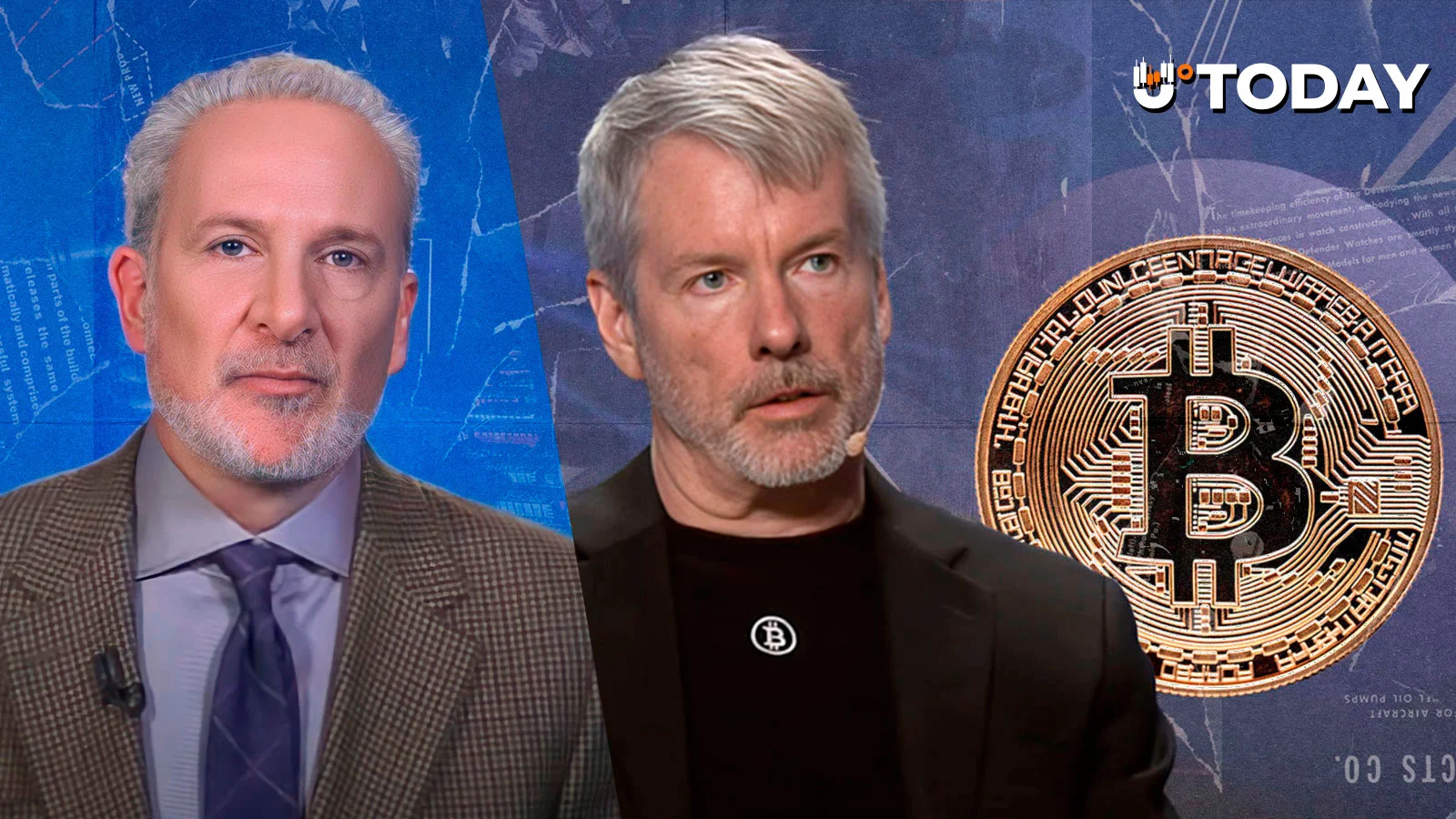
Peter Schiff's critique of MicroStrategy's STRC preferred stock highlights a potential cash flow crunch by 2026, suggesting a forced liquidation of Bitcoin holdings if dividend payments cannot be sustained. The core risk identified is MicroStrategy's reliance on issuing STRC to fund Bitcoin purchases, creating a recursive debt structure that requires either new capital or Bitcoin sales to service its high yield. If MicroStrategy is forced to sell Bitcoin, it could introduce significant selling pressure on BTC, especially if the market perceives this as a systemic risk to corporate Bitcoin treasury strategies.
Ethereum's price is approaching key resistance levels above $2,000, with record leverage indicating aggressive speculative positioning by traders. High leverage and concentrated short liquidations near $2,030 suggest a potential for accelerated price swings due to cascading liquidations if resistance breaks. Increased derivatives activity and leverage, while signaling potential volatility, do not necessarily translate to sustained spot demand, warranting caution. The current market structure, characterized by elevated leverage and proximity to resistance, creates a volatile setup where a breakout could be amplified by short squeezes.

Veteran trader Peter Brandt's "banana split" technical analysis suggests Bitcoin is poised for a significant upward move, as the current consolidation forms a rounded bottom on a decade-long macro support line. The confluence of a short-term rounded bottom ('little banana') forming directly on Bitcoin's long-term upward-curving channel support ('big banana') historically precedes major parabolic rallies. Despite recent price action testing resistance above $70,000, Brandt's analysis implies that accumulated momentum within the consolidation bowl could fuel a substantial breakout, making this a critical juncture for BTC.

Robert Kiyosaki's warning of a 2026 market collapse, citing unresolved 2008 crisis issues and rising global debt, suggests a potential flight to perceived safe-haven assets. The author's recommendation of hard assets like gold, silver, and cryptocurrencies as hedges against financial turbulence indicates a potential increase in demand for these assets if such a crisis materializes. While Kiyosaki's pronouncements often generate discussion, the lack of specific actionable data or new catalysts means this remains a speculative outlook rather than an immediate trading signal.

Bitcoin ETFs experienced significant net inflows of $167.1 million, indicating renewed institutional interest and supporting BTC's push above $70,000. Despite a general market uptrend, Ethereum and Solana ETFs saw substantial outflows totaling $51.3 million and $2.5 million respectively, suggesting a divergence in institutional sentiment towards these altcoins. XRP ETFs recorded the largest outflows at $18.11 million, highlighting potential investor caution or profit-taking in XRP despite its price increase. The mixed ETF flows, with strong BTC inflows contrasting with altcoin outflows, suggest a flight to perceived safety within the crypto market, favoring Bitcoin over other major digital assets.

Bitmine, the largest public ETH holder, transferred $19.5 million in ETH to Coinbase Prime, a move often associated with institutional custody and not necessarily indicative of selling pressure. Despite recent large ETH acquisitions, Bitmine's holdings have significantly decreased in value from their peak, suggesting unrealized losses rather than active liquidation. The transfer to Coinbase Prime, a platform used for institutional trading and custody, could signal internal rebalancing, staking preparations, or potential over-the-counter (OTC) trading activity, maintaining a neutral short-term outlook for ETH price action. While the article notes Bitmine's chairman believes crypto is in the 'late stages of a mini-crypto winter,' the specific ETH transfers to Coinbase Prime do not provide a direct catalyst for immediate price movement.

Renewed institutional demand for Bitcoin is evident as U.S. spot ETFs recorded $167.1 million in net inflows on March 9, reversing recent outflows. BlackRock's IBIT and Fidelity's FBTC were the primary drivers of inflows, highlighting continued strong interest in their regulated Bitcoin investment products. The overall positive inflow trend suggests a potential shift in market sentiment, indicating that investors may be increasing their exposure to Bitcoin via ETFs.

Spot Bitcoin ETFs are experiencing renewed institutional inflows, signaling a potential end to the accumulation phase and a shift towards broader market participation. Pepeto's presale is attracting significant capital by highlighting its exchange infrastructure, cross-chain bridge, and risk dashboard, positioning it as a high-potential alternative to projects like Bitcoin Hyper. The narrative suggests that early investors in projects with strong exchange infrastructure, like Pepeto, could see substantial returns upon listing, contrasting with the perceived limited utility of Bitcoin Hyper. The return of consistent ETF inflows suggests a positive market sentiment, which could benefit well-positioned presale projects with clear utility and upcoming exchange listings.

Bitcoin's current price action at $68K is creating a divergence in market sentiment, with some analysts predicting a repeat of the 2021 crash while others, citing models like Stock-to-Flow, anticipate significant upside. The return of institutional ETF inflows in early March is a key factor to monitor, as its sustainability will indicate whether this is a temporary blip or a sustained demand shift, potentially impacting Bitcoin's price trajectory. The critical support level at $60,000 is a key technical indicator for traders; failure to hold this level could trigger a significant liquidity hunt towards the $50,000-$55,000 range, mirroring bearish scenarios from 2021. Despite bullish long-term projections from models like S2F, renewed criticism regarding their accuracy and the influence of macro factors like Fed policy and geopolitical risks suggest a cautious approach is warranted.

Tron's membership in the Agentic AI Foundation signals a strategic pivot towards integrating blockchain infrastructure with the burgeoning AI agent ecosystem, potentially driving demand for its low-fee, high-throughput transaction capabilities. The collaboration highlights a growing recognition within the crypto space that AI agents will require robust, scalable blockchain solutions for efficient, high-volume transactions, positioning Tron as a potential beneficiary. Tron's focus on AI integration, coupled with its current leading position in blockchain revenue, suggests a narrative of real-world usage driving network metrics, which could attract further investor attention.

Flow's price predictions for 2026-2030 range significantly, with optimistic targets up to $17 by 2030, contingent on successful ecosystem growth and adoption of its EVM expansion for consumer apps and gaming. The recent burning of 50.3 million FLOW tokens aims to reduce inflation and strengthen the token economy, a positive development for long-term holders if it supports price stability. Technical analysis suggests FLOW is at a critical support level, with a potential recovery towards $1.36 by end-2026 if key resistance levels are broken, but a failure to hold support could prolong the downtrend. Flow's strategic focus on large consumer apps, Web3 gaming, and digital identity, supported by its EVM expansion, positions it for potential recovery, though sustained developer and user activity are crucial.
The crypto market rally, driven by a significant drop in oil prices and positive geopolitical commentary, suggests a potential shift in investor sentiment towards risk-on assets. The coordinated release of oil reserves by G7 nations and the IEA, coupled with Trump's comments on the Iran conflict, are creating a more favorable macro environment for cryptocurrencies. While the overall market is up, the significant liquidations in derivatives markets indicate underlying volatility that traders should monitor closely.
Signal context only. Validate with price action, liquidity, and risk limits before taking a position.
